
Translated material
Colta.ru
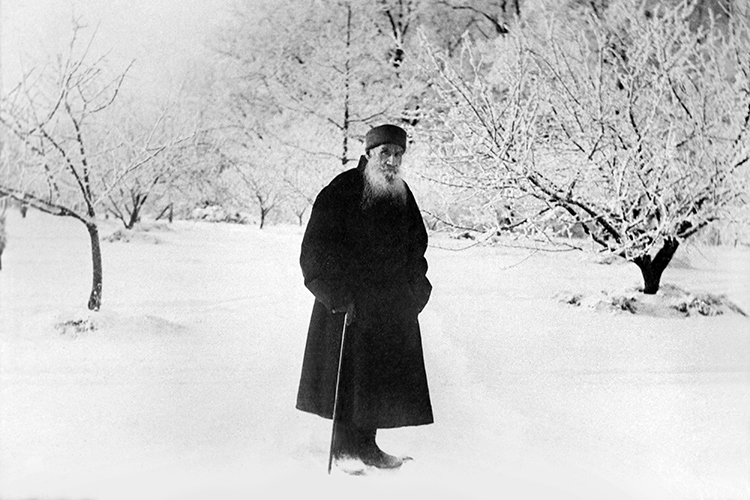
There is something strange in the Russian reception of Leo Tolstoy.
The irregular, for several decades interrupted diaries, uncertained letters, thoughts thrown halfway and sketches remaining in drafts, which failed autobiographical projects - this author can hardly be called “whole”, “powerful”, “monologue”. The despising moralist would hardly have experienced Arzamas horror and certainly would not be happy that he (albeit at the ninth ten) began to refuse memory.
Irina Paperno wrote, perhaps, the most human book about Tolstoy in recent years - and do not see that almost every page has three footnotes. The creator of the original (anti-anti-historical concept, his own religious and moral teaching and the radical political program, the largest Russian writer lived for 82 years in doubt, with distrust of someone else's and (especially) his word, always internally ready for a coup and circulation; Somehow it is not like unconditional moral authority, generator of aphorisms, guru.
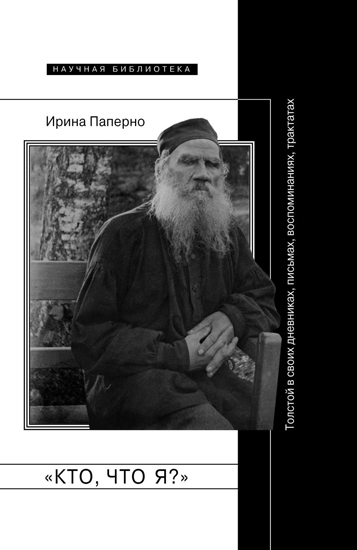 © New Literary Review, 2018
Without attracting 12 volumes of his “artistic chatter”, Paperno explores that and how Tolstoy wrote about himself - from the “History of yesterday” and ending with the late, with an unchanged reservation “if I am alive” (or simply “E.B.”), daily notes. It is discovered that hopelessly solipsyic Tolstoy non-fiction anticipated the search for modernists with their interest in a fragment, sleep and torn causal relationships. The fact that for Tolstoy was a logical continuation of his frankness and some even naive stubbornness turned out to be in demand by the authors who would raise the article “What is art?”
A difficult connection of conservative (returning to Augustine, falling out of the pre -marked time and place, unite with God) and revolutionary (destroy the exploitation, abandon meat, abolish schools) intentions, eternal splitness, inappropriation of any, even the most fundamental, sentences, it seems, to explain why Tolstoy is so close to us. It is much more difficult to stand up with a person who turned any “we” into “I”, took personal responsibility for the dysfunction of others and tried to live not in a lie on the era before Solzhenitsyn. The book of Paperno is a chronicle of this long experiment, equating the action to the word, actions to views, life to ideals. The experiment is equally artistic (so masterpieces appeared like the “master and employee”) and biographical, which ended on November 7, 1910 at Astapovo station.
Irina Paperno. “Who, what am I?”: Tolstoy in his diaries, letters, memories, treatises. - M.: New Literary Review, 2018. 232 p.
The transcript of the discussion of Andrei Zorin and Grigory Yudin “Why Tolstoy? Personality, freedom, state ”, held on August 15 in the RSL, Colta.ru will publish on Monday, September 3.