
Translated material
Agony. Should I hope for the split of the elite?
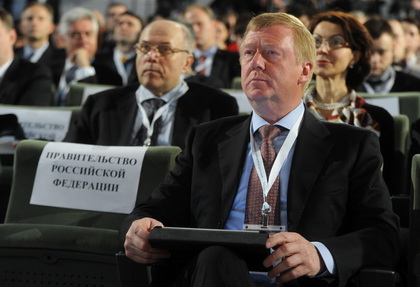
A number of successful world transformations were a consequence of the collapse of the old ruling class, the allocation of pragmatists from it, which went to an alliance with an anti -systemic opposition. Sometimes representatives of the old regime became the initiators of the democratic transformation (hence the well -known slogan of the last wave of democratization - "undemocrats can become democrats"). The experience of democratic revolutions of the last 50 years (primarily in Latin America, Spain and South Africa) gave rise to the belief that the most successful scenario of democratic transit is a “pact” between pragmatists and opposition. Not without the influence of this conviction, the hope of the split of the Russian elite and the possibility of our own “Pact” (“round table”) became a mantra of the Russian liberal opposition.
Some facts say that unanimity in our ruling corporation has really become a fiction. This is also evidenced by disputes about what to do with the economy (once again an exacerbated conflict between statesmen and systemic liberals), the unexpectedly critical attitude of some ministers towards the “law of Herod” (though critics quickly faded). Add to this the fierce struggle of clans for resources. Finally, it is obvious that repressive authoritarianism causes discontent of the oligarchy and Sislibs, which has long been adulthood by aggressive exaltation of the power bureaucracy. Further rolling of Russia to repressions, and, consequently, the inevitable closure of the country means that the “non -illegal” part of the regime will lose not only the opportunity to sit “on two chairs” - serve the Kremlin and claim a liberal image, but also lose its international role, i.e. It will not be in demand as an intermediary between the Kremlin and the West.
But does the list of the ruling class indicate the attributing split of the ruling class? Wandering, grumbling, discontent, even participation in demonstrations - is not a sign of the readiness of part of the ruling elite to oppose himself to the Putin Kremlin and another part of the elite. Writing reports with calls for changes and Alarmist warnings, even Putin’s public criticism, while fit into the framework allowed by the regime. The split of the ruling class in authoritarian countries was reflected in the open output of dissatisfied groups on the stage with its program and their appeal to society. Moreover, what is important: the split of the ruling classes has always occurred against the background (or was the result) of mass public discontent, the beginning of the paralysis of power and the appearance of a radical opposition outside the regime. All the reformers who came out of the bowels of the old regime rose in the wave of a public upsurge. What do we have in Russia today? Applicants for the role of Russian Suarez or de Clerk in the Putin team are not visible. There is no pressure from outside, which would help to get out of the shadow to potential candidates for this role. Although, looking at the Kremlin grouping, it is even difficult to assume that one of her representatives could bear frontier ideas.
But let's imagine that a public crisis comes, people go out into the streets and our ruling class still breaks, self-determination of its fragments occurs and a political struggle begins between them. In order for the split of the Russian elite to become an impetus for transformation, at least two prerequisites are needed. Firstly, the readiness of pragmatists to go against their interests and support the rule of law, which means their willingness to lose power. (And who would be decided inside the ruling team?) Secondly, the existence of a structured influential opposition outside the system.
If there is no one of these conditions, the split of the Russian elite will inevitably lead to the apical coup. The most likely attempt by part of the ruling elite to maintain power through the transition to the militaristic-insulating dictatorship. This scenario has more chances and due to the presence of a mobilized traditionalist base, and because Russia is already moving in a repressive gutter, and because soft authoritarianism is no longer able to ensure the power of the ruling elite. This scenario would be the natural completion of the building that Putin began to erect - but without him.
How likely is the revolution of royalists-Sislibs? Their track record says that there is no reason to hope that in the event of a political and public crisis, they suddenly decide to fight for the transition to a legal state. Their actions and rhetoric indicate that even that part of the sislibs that demonstrates anti -mode (critical in relation to Putin) behavior is unlikely to be ready for antisystem behavior. And why, if they can still get in the framework of the autocracy (already under the new leader), in which they always found their role. But anti -systemicity threatens them with unpredictable consequences.
Let me remind you that the bourgeoisie and liberals-technocrats not only in Russia, but also in other transition societies have always tried to find protection behind the leader. So in the case of the Cisibov coup, we can expect a return to the new version of the Yeltsin regime. However, sooner or later, the Yeltsin-2 regime will have a need for self-defense (primarily from society), and this regime will look for new Putin. Everything will return to its own circles: the next team of the Praetorians will again prevail over the national team of oligarchs-technocrats, which have never been distinguished by special courage. The bright victory of Chubais over Korzhakov-Soskovts in 1996 has long become a story that is hardly given to repeat itself: Chubais lost its former courage, and the Praetorians became pale. Anyway, in politics it is difficult to enter the same river twice, especially if the river changed the course. Putin's current rule is evidence. It would seem that the leader is the same, and the Kremlin has not changed, and even the president’s ratings are stunning, but the leader returned not to triumph, but to attend his political funeral.
Paradoxical, but the script with the Cishes coup, if we talk about the tasks of transformation for Russia, is much worse than the scenario of the Praetorian dictatorship: the Royalist revolution is guaranteed to lead to even greater discrediting both the right state and the ideas of freedom. However, we mentioned this scenario only out of academic interest. And in order to show that any imitation makes a public fracture complicate much more than the unambiguity of the trend.
In short, you should not hope for a quick split in the Russian elite or that it will facilitate Russia's exit from the autocracy. As in the case of Putin’s departure, a split can lead to a new form of personalist power. Unjustified hopes for the apical break only distract us from the need to work on an anti -system alternative. Meanwhile, only the formation of such an alternative and its support in society can create a situation where individual representatives of the ruling class will begin to look for the opportunity to jump from the Kremlin Titanic. Representatives of the ruling class (hardly its first echelon) can become participants in the general democratic pact, but on the conditions of the opposition, and not frontiers from the authorities. This Russian transformation will most likely differ from democratic revolutions in other countries.