
Translated material
Printing the silence
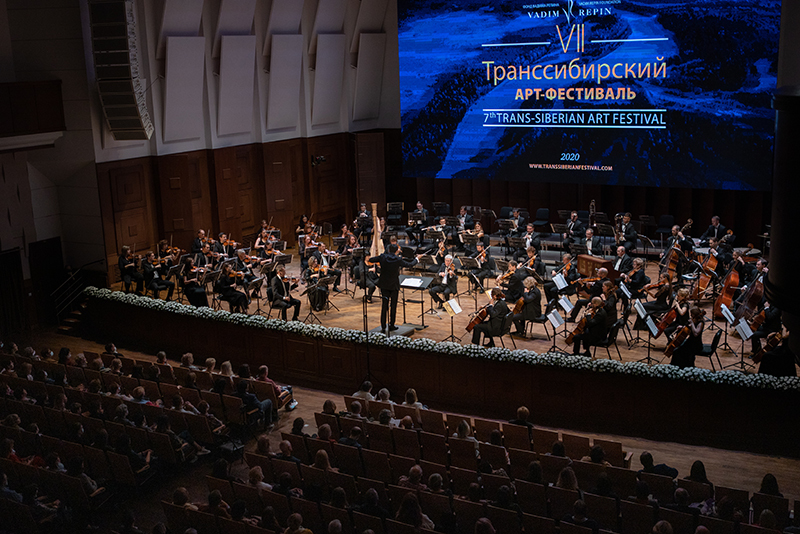
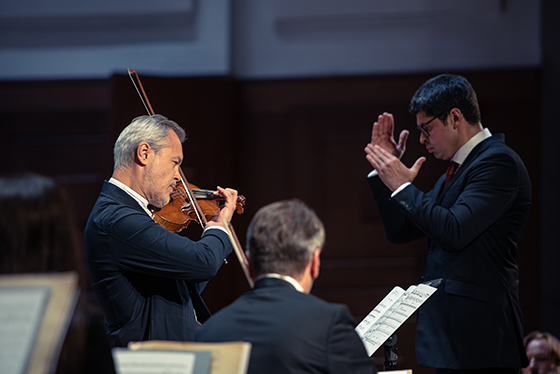
In the Novosibirsk Philharmonic, after a half -year break, the Trans -Siberian festival interrupted by Pandemia continued. His artistic director Vadim Repin and the Novosibirsk Academic Symphony Orchestra, under the direction of Valentin Uryupin, played an exquisite program that has developed into a holistic crystal, despite the difference of the styles and moods presented in it. It is symbolic that “printed the silence” the premiere of Arvo Pyart - the main singer and poet of silence. His work “La Sindone” (“Shroud”) is dedicated to Vadim Repin and Andres Mustono Remain of the 2006 orchestral composition. His premiere was supposed to become one of the central events of the spring Trans -Siberian festival. But in the spring everything turned out in a certain way - part of the concerts was moved, part was transferred online. A break in concert life has largely became fatal, but not for this program: it seems that she only won from the circumstances that delayed her, profitably embedded in a series of anniversary concerts - a few days ago, Arvo Pyart turned 85.
It was delighted with what ease of multidirectional composer aspirations formed in this program a coherent series of events of human life. In anticipation of the tragic revelations of Pyurt and passionate statements of the fourth Syuman symphony, the Maurice Rael cycle “My mother-gushing” took the image of childhood: fresh and slender consonance-as in bewilderment, raised infant face. Valentin Uryupin, cooperation with which Vadim Repin has repeatedly called one of his main successes, interprets this ease impeccably accurately; The Novosibirsk Orchestra under his control demonstrates a magnificent form.
But childhood of course. Freshness was replaced by the tragedy of Passakali for the violin and the Pyart orchestra - a graphic sound gesture depicting a measured path along the dried Calvary. Violin variations are deployed above the heavy step Ostinato . The skeleton of Passakali is concern and nag, notes, as Vadim Repin said at a press conference, is not enough, and therefore it is difficult to fulfill them inexpressibly.
Essentially, the addition of a solo batch to the orchestra score that followed the “cloakie” plays an important conceptual role: the expression of high grief requires a hero, requires an examination of what is happening. What is a raincoat, if not the main symbol of human bitterness? The origin of the Turin raincoat, the thoughts of which are the basis of this essay, can be anything: the investigations only confuse the plot, offering to interpret the appearance of the face on the fabric into which the Savior was wrapped, then in one or the other. Pyart does not ask. He makes a manifestation, printing on the canvas visible and procedural. The centrifugal deployment of thematism gradually, the stitch behind the stitch embroids the image. At the climax of the orchestral tutti , the face appeared, but there was no catharsis - the topic is too bitter. The shock is only set off with thin vibrophone flickering indifferent to the emergence of heavenly spheres.
 © Alexander Ivanov / Trans-Siberian art festival
The small fourth Symphony of Schumann, who completed the program, returned us to human active emotionality - but already at a new, mature level. Valentin Uryupin proposed an unexpected interpretation, appealing to Mozart's Jupiter-it was a real high classicism without any sentimental conventions and the Florestans and Evezebiev Theater. The world before our eyes turned over and revived harmoniously and harmoniously, amazing everything with new faces and capabilities.
Right in front of the quarantine, the organized festivals of the festival with strong -willed effort carried out several concerts, which largely became visible - the fifth Beethoven and the Shostakovich trio of Solletinsky’s memory were performed online. The Beethoven “Theme of Fate” sounded super -chicly at the end of March, it was specially not to invent such correspondences. This high tragedy resonating with what is happening in the world has now turned out to be classicist-light updating of life, purifying triumph. It is joyful here not only to the resumption of normal concert activity, according to which everyone was terribly missed (a ovation only on the stage and the orchestra has not yet issued a note - a vivid certificate). It is joyful how subtly sometimes it turns out in the providence to arrange some important points of reference.
The further history of the festival will unfold during this fall: let's hope that all its intentions will be destined this time without interference.