
Translated material
Sziget state
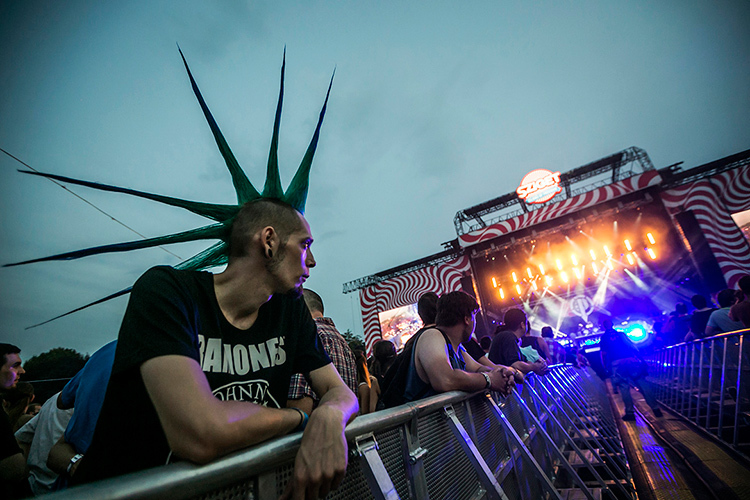
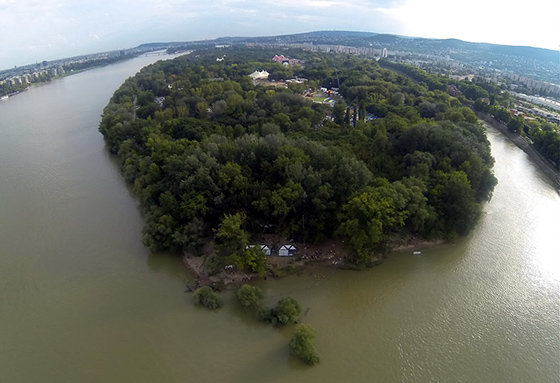
Sziget is often called "Hungarian Glastonbury." For 23 years, the festival, passing on the island of the training in the middle of the Danube, half an hour by public transport from the Imperial Center of Budapest, has become one of the symbols of Hungary - along with paprika, Ferenz leaf and a cube of Rubik. Sziget has not yet become legendary, like the All -British Glasto, and has not yet completely sold the tickets until the list of speaking artists. But he already took a place in the top ten European Summer Festivals of Category A. This year Sziget broke his own record, collecting 430 thousand visitors from 95 countries of the world in a week, which gave an occasion to the EURONEWS channel to report a tourist boom that provoked a festival in 1.7 million Budapest.
They even go to Sziget from Brazil, because the festival offers young people the experience of a weekly emigration into a separate state on an island, where they are not refueling politicians and police, but musicians, artists and artists. The organizers of Sziget are operating with might and main a little anarchist idea - they call the visitors to the Szitizens festival , that is, the “zets”, and invite them to arrange Grinkard. The official Sziget guide, which is outstanding to everyone entering the island, can be confused with a passport, and in the festival you can even arrange a marriage (however, the popularity of this service is most likely explained by the fact that this union is not power outside the island). Sziget motto - "Island of Freedom!" At the same time, Sziget not only entertains: the festival fundamentally opens against racism and any kind of discrimination and does not forget to remind its visitors about it. One of the large and central venues of the Magic Mirror festival promoted LGBT-tolerance not only with night discos with travesty and drag show, but also with daytime discussions, Teddy Awards and open meetings with Pussy Riot .
 © Sziget Festival
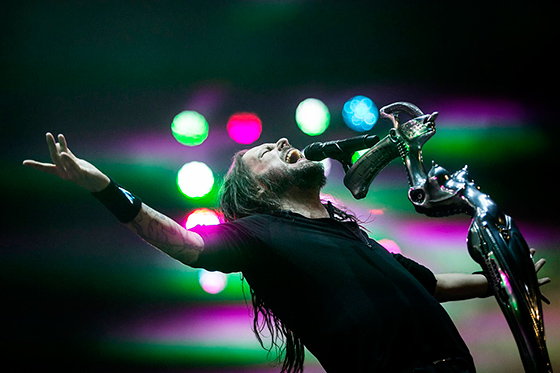
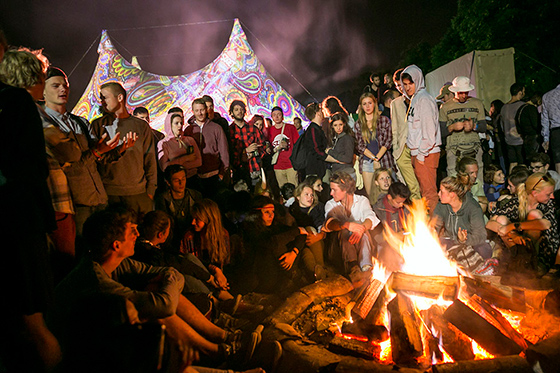
Why not live in a state where his "anti -aircraft" have the opportunity to have fun how they want? Concerts of all stripes are waiting for them-from opera arias and Senegal drummers to the Caver-band AC/DC and Robbie Williams, night dancing under the DJs until six in the morning, a hangover beach vacation with cocktails spilled into large plastic buckets, boulevards and squares, dotted with food, drinks and all sorts of sorts Street circus performances, sports fun, as well as discussions, film screenings, optical labyrinths and even their own chess championship. Most of Sziget visitors come to the island among the Danube with a tent, on which the flag of his country is put on, and does not leave its territory for days, sometimes making sorties to the nearest Auchan hypermarket. They do not need - over 23 years of practices, Hungarian organizers properly debugged the infrastructure of the festival and settled the territory of the island. The most pleasant impression of Sziget , whose budget was exceeded for 15 million euros, does not even make a headliner’s performances, but the level of service and comfort in this giant camp: a well-maintained and decorated territory, well lit by at night, instantly cleaned of garbage-dantry fields, irrigated by water in the most heat, contactless cash calculations in almost round-the-clock tents with minimal bursts, enough toilets and showers that remain clean, beach with Danube, etc. Sziget minimizes an extreme experience associated with grandiose tent openers: immersion in the all -consuming mud, which has become a signature detail of the same Glastonbury (and, by the way, perhaps Sziget was just lucky with the weather - there was dryness and heat).
 © Sziget Festival
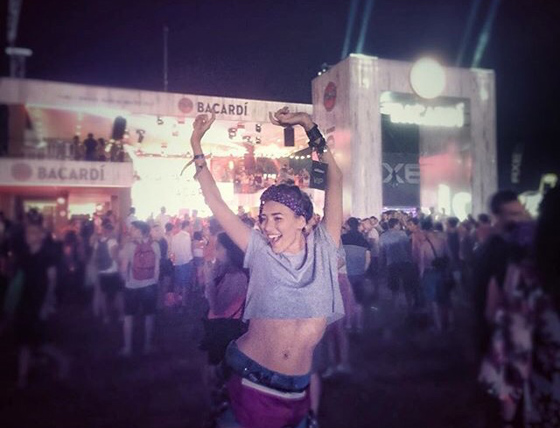
The Hungarian festival, which are performed by artists from 47 countries of the world-from Angola to Japan, has already reached such a scale that it can be considered as a micromodel not even of the European Union, but some kind of supranational education of the future. No wonder their embassies and representative offices on Sziget are produced by both countries and transnational companies. For example, Italians this year intensively advertised the Apulia region. And Bacardi built opposite the main scene of the festival a separate two -story club named after their famous roma and at any quiet minute was arranged by parties with Cuba Libre, dancing models, popular DJs and dancing Kolya Serga, Regina Todorenko and Alexander Anatolyevich - for the winners of the Bacardi Music competition GateAway and other guests of the festival.
 © Bacardi Music GateAway
Russia on Sziget this year was modestly represented by the Naada India group, the EDM -Dije Arty and Vidzhe Anima , as well as the activist duo Pussy Riot , which took part in the discussion of freedoms in Russia, and the Babuska cake, which did not observe the festival’s peak moments.
 © Sziget Festival
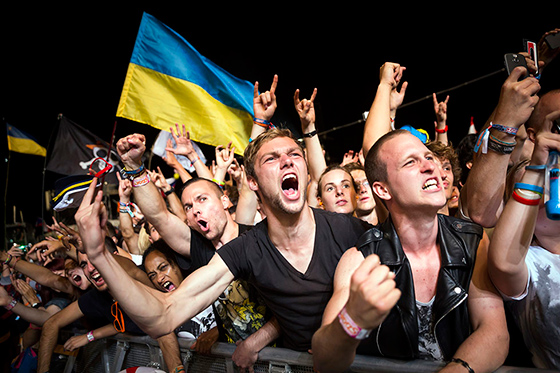
Ukraine had much more representative delegation on Sziget - both artists and spectators. The performance of the young Kiev group Onuka , which connects the crystal sound of the national bandura, the Ukrainian language and export synth-pop, turned almost into a patriotic rally-hundreds of spectators gathered in front of the stage waved the artists with a yaw-clatter flag and shouted “Glory to Ukraine”. A deservedly large audience was collected by Ukrainian stars of the World Music "Dahabrah" , performing the acoustic Slavic techno. The Ukrainians also considered one of the festival headlines-the multinational punk-pancreatic of Gogol Bordello , led by a native of Kiev, Evgeny Gudzem, who put the field in front of the main stage at the hottest time of the day. The Russians also consider their Gogol Bordello - for example, the creator of “Our Radio” Mikhail Kozyrev calls Evgeny Gudza, who screams the international audience “And I swear, having pissed out two fingers that the music has gone from“ MUS Sounds ””, the most important popularizer of the Russian language. Gudz himself refuses to be the messenger of any culture-Ukrainian, Slavic or gypsy: “People are like a sponge. The longer I live in New York, the longer I travel around the world, the more I absorb different influences. To be an ambassador of a certain culture means too much responsibility. I am an artist. Today I want to do one thing, and tomorrow another. I do not have to be always right and sometimes I could be mistaken. ”
 © Sziget Festival
Musicians are also people and sometimes may be mistaken, but their mistakes are not as tragic as politicians' mistakes. Wandering through the seething fun and interethnic fraternation of Sziget , it was impossible to drive away the idea that Russia also had a festival, which considered itself a “peninsula of freedom” and for 20 years could grow to an international -known brand, bringing the state to the state reputation and economic benefits - we are talking about Kubana , which was expelled from the Krasnodar Territory to Latvia. But now in Russia, internationalism and all kinds of freedoms are not in honor: we have a public hunt for musicians showing the slightest signs of free -thinking, and demonstratively pressing the Hungarian geese. It is not surprising that the popularizer of the Russian language and Songs of Vysotsky Evgeny Gudz refuses to talk with Russian journalists about politics and the question when Gogol Bordello will come to Russia, answers multiplying: “When the time comes.”
In the meantime, the Russians will have to go abroad for freedom.
The author thanks the project Bacardi Music GateAway for organizing a trip to Sziget