
Translated material
Store chilled
When the London designer Thomas Twets studied at the Royal College of Arts, he decided to make a Toster with his own hands. The most common, which are sold in Britain for 3 pounds and 94 pence. And to make it from scratch - that is, not to use ready -made details (there were about 400 inside the store copy), and start with raw materials. For the next nine months, Twets traveled to mothballed mines in search of iron ore and mica, made a horn in the backyard, relying on medieval engravings (later technologies do not suggest that someone would melt iron alone), and pierced copper pins for Shtepsel.
Twets without hesitation replaced blacksmiths with a garden vacuum cleaner and launched a microwave oven, because he did not set the task of depicting an authentic medieval artisan to himself with a historical reconstructor. It-like, probably, the readers of the book “Toster” , as well as one and a half million spectators of his 11-minute lecture -occupied another question: what if the civilization breaks in some sensitive place and there will be nowhere to take the finished toaster? The Toster, which turned out in the end, allowed to include himself in the outlet and even worked for five seconds. What to do with more complex equipment? In 1986, the shuttle “Challenger” exploded live with seven astronauts on board, and in NASA they considered the idea to return to Saturn v missiles, which 15 years before they carried people to the moon. It turned out that not all the drawings were preserved. The engineers, who were 40 at the start of the lunar project. Commercial companies, 15 years ago by order of NASA , stamping some cords or plugs, managed to close. The atomic war was not needed for the technique to become uninvited.
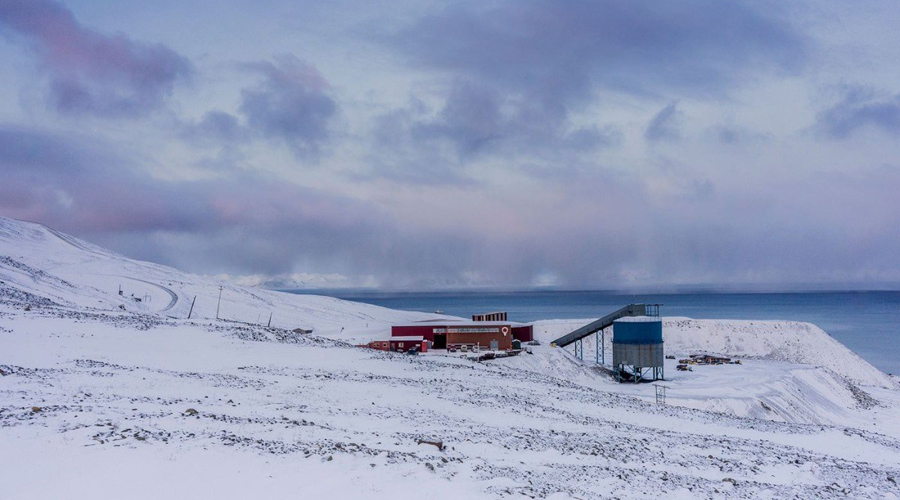
From 2019, it seems that it has become easier to preserve knowledge-after all, we live in the digital world, and the digitized mice and a bookworm do not eat. And the easiest way to start with things that were digital from the very beginning. In November, Microsoft offered its Megarahiv project called Arctic Code Vault . In a specially selected round date - 02.02.2020, February 2, 2020 - will create an archival copy of the largest website of computer programs with open code - Github.com ( Microsoft bought it from the founders last fall). They will all print and hide them on the Spitsbergen Archipelago, 1300 kilometers from the North Pole. Formally, he belongs to Norway, in fact divided between Norway and Russia, which had mined coal for almost a hundred years. One of the former mines was made by the storage of the code: it will lie at a 150-meter depth behind thick iron doors.
In total, a kilometer (and even inside the same mine) in 2008 was built by the World Bank of Seeds, better known as the "Judgment Day". The choice of place looks rather consistent - so that on Judgment Day does not get up twice. If humanity surviving after the end of the world sends a messenger for seeds here, then on the way he will be able to wrap all the programs for the archive of all programs.
Or, to be precise, almost all. What is hidden at the icons on the desktop of office computers - Word and Excel , PowerPoint and Photoshop will not get into the archive. These are commercial products protected by copy. Their source code was not published and will not be, while they are sold in a finished, collected form and ask the buyer to activate the key. What will remain at all if all these programs are taken out of brackets? The results of the work of another 40 million programmers, GitHub answers on a page with statistics . The source code of the cryptocurrency Bitcoin . The code of the Linux operating system, which drives the vast majority of servers in the world. The main libraries of Google and Facebook to work with what is called artificial intelligence . 35 of the 50 richest corporations in the world laid out their code in open access over the past year. If you decide to rebuild civilization from scratch, you may need all this earlier than Word and Excel .
Why, after all, the code-and not carefully selected and ready to launch useful programs that are not protected by a copy? Because in terms of meaning, the github is closer to the drawing library than the tools of the tools. And the addressee of such a library is rather an archaeologist who wants to figure out where the civilization came from. Not in the general philosophical sense, but why does a conditional toaster have a particular button on the side. And whether you need it when you need to build your toaster from scratch without toasters.
GITHUB from the very beginning - even before any plans for the next millennium - was conceived so that the archaeologist who has stated such questions was convenient. But this is not a feature of a particular site, but a feature of the code in general.
In the wording “Code is the texts of programs” the main word is “texts”. They are designed that another person will read them (and only then - a computer). Because usually this text is collective and most likely readers are its other writers. For example, 676 people (the number of participants are the first thing GitHub shows on the page of each project), and so that the 676th could add something of its own, the first 675 had to keep it in mind, setting out their thoughts in C ++ , worked on the Bitcoin code.
That's exactly why the GitHub project stores the code as a diary of corrections and addings: here one participant uploaded his text, the other added a phrase to it. The most useful technique is to unscrew the story back and watch how complex systems grow from simple and understandable blanks. To understand 15 million lines of the Linux nucleus code, it is worth starting reading not from the beginning and not from the end, but from the first version of 10 239 lines, which 28 years ago wrote on his own and published the Finnish student Linus Torvalds . (The GIT system, on which GitHub is based, is the same “Diary of a Rights” - invented, by the way, it.) And this favorably distinguishes the code on Github from the prose composed by the author alone and sent to the publisher in a finished form. If Dostoevsky had GitHub , one could unscrew the story of a line back and see how a long scene of a tea party with a scandal, losing details, turns into a dry line of the synopsis “Ivan drinks tea”.
* * *
The promised shelf life of the code on Svalbard is 1000 years. Neither hard drives of computers, nor DVDs live so much. Worse than their fragility-the risk that in 20 years they will have nowhere to stick: try in a few hours to find in Moscow a place where you can read texts from a discota of 20 years ago, found when repairing somewhere behind the cabinet. Therefore, they decided to take the key part of the code and print so that, if necessary, a person could read it without complex devices. It is enough to have a powerful magnifier and a flashlight: each portion of data is a frame with microscopic letters on thousand -seques bobbins with a film , invented specifically for a thousand -year storage in the cold of the Norwegian company PIQL . Bobs will be spent even more on code in the form of QR codes.
Over time, bobbins think to be replaced with small square glass plates , in the thickness of which the information is engraved by a laser, with a lifetime of 10,000 years. One such scientists from Microsoft showed journalists in early November - it was recorded entirely by the 1978 Superman film. The video for an example was chosen consciously - because just film studios know well what to lose the entire archive of SURM. In 1937, in New Jersey the 20th Century Fox film storage caught fire (the film was then made of combustible and explosive nitrocellulose), and most of the mute films shot at the studio until 1932 was lost irreversibly-there were no more copies left anywhere in the world.
Glass or film solves the problem of preservation, but do not solve the problem of usefulness-it is difficult to bequeath something useful of objects of their life even to a grandson born 50 years later than you, not only to people who will live in 10,000 years. A popular quote from the Golden Calf - “I do not need an eternal needle for primus, I am not going to live forever” - also that the designed future may not take place: in 2019, eternity has not yet ended, and the needle is no longer needed for primacy.
Another thing is that the layout of any archives for the future is a good reason to arrange a census and re -study what is right now, and your own ideas about the future. The capsules of time, which in some 1959 were laid in the walls of the youth palaces for Komsomol members of the distant communist 2019, forced to at least formulate in an accompanying letter, which the authors of the message expect from this 2019. When in 1977 the Voyager-1 and Voyager-2 spacecraft sent to fly outside the solar system, a 30-centimeter gold plate was fixed on the surface of each: on one side-the main sounds of the earth (a gramophone needle was attached to the plates to read them), brief information about the sender on the other. Since the knowledge of English or Russian did not expect from the addressees, they depicted all the most important things about the knowledge of mankind with signs: the location of the sun relative to Pulsars, the energy levels of the hydrogen atom, the signal coding scheme. Bach performed by Glenna Gulda, Stravinsky and Azerbaijani drums on the musical half. Under the pressure of the astronomer Sagan, the author of this whole venture, Chuck Berry entered the selection, and the Beatles were expelled after long disputes.
Arctic Code Vault is another time capsule for an indefinite addressee. If the idea of a record for the “voyage” was to take only the most important thing and present civilization in the format of the hit parade, then the GITHUB task is directly opposite-to freeze technical knowledge in all variety. The Torvalds code will wait for eternity in the mine next to the code of the Chinese high school student, who started an account on the Github.com website for the sake of a one -time educational project. In 2019, the code is written and laid out on GitHub not only and not so much programmers-but, for example, also scientists. Konstantin Batygin from Kaltha, the author of the hypothesis about the ninth planet far beyond the orbit Pluto and the most popular astronomer in Russia (after the interview with Dudya ), posts on Twitter a photo with a python programming textbook, because this is the same routine tool of a scientist as a telescop. Linguists write scripts for the analysis of tweets. Even the signatures in support of the defendant of the “Moscow case” Konstantin Kotov, who went to the colony for four years just because he reached peaceful rallies, his colleagues-programmers began to collect in the form of files sent to Github .
The cast of this mixture of code, texts, comments and amendments is perhaps the best way to tell a person from the 3019th than civilization was preoccupied with a thousand years ago. Even if he does not have an urgent task to collect and program your toaster immediately after the end of the world.