
Translated material
Apotheosis of imitation. Part 1
In society
 Apotheosis of imitation. Part 1
April 27, 2010 George Satarov
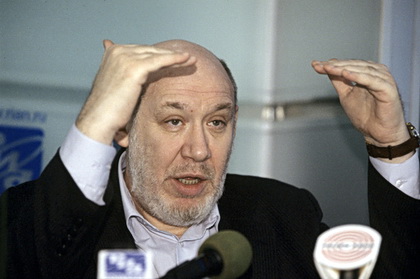 It happens in life like this: the most insignificant events, familiar and therefore not noticed, suddenly clarify the situation and, thereby, gain the importance of their disproportionate. This happened with the signing on April 14 of this year of the presidential decree, which introduced the National Strategy for Combating Corruption. The decree is called: "On the national strategy of counteracting corruption and the national plan of anti -corruption for 2010–2011." I did not want to write about them, and about the strategy, and about the plan, because I read them. And this reading did not arouse intellectual activity. But I was surprised that no one paid attention to Medvedev’s decree. But still-the president ... corruption ... struggle ... strategy ... How can this be uninteresting? Why? What is behind this? What follows from this? The answers to these questions seemed important to me, and therefore I decided to return to the decree.
To begin with, which could be the most important in other times and under other circumstances - with the content of the decree, and therefore, from a strategy and a new plan. In this case, the “content” will have to be slightly delved into, because its meaninglessness leads to the claims. I understand that the readers of the Hedgehog are not one of those who are seriously related to texts emanating from the Kremlin or government. But in this case, I draw your attention to the text, since it allows us to draw some conclusions.
I already had to discuss on the pages of the Hedgehog the first national plan for countering corruption, which appeared in May 2008. Therefore, we have a certain reference point. Taking it into account, we can say definitely: if the compilers of the document set themselves the task of creating something more mediocre, useless, unprofessional than that old plan, then they succeeded. But it was a difficult task. Several illustrations substantiating my sincere compliment.
To begin with, the proposed strategy (i.e. strategy in the normal sense of the word) is not. This follows directly from the text, which says that it (strategy) is a “constantly improved system of measures”, which makes it indistinguishable from the plan, which was presented in the presentation of the authors and is a list of measures, in fact updated. True, an attempt was made to give a strategy strategy by introducing four non -binding principle into it. One of them, by the way, is formulated as follows: “stability of the main elements of the system of measures to counteract corruption”, which contradicts the “strategy” given above, if only because the “main elements” are not highlighted, and stability is poorly associated with constant update. But these are trifles, signs of familiar negligence, hack.
It is interesting to read what prompted to create a strategy after the first plan. It turns out that this happened as a result of a “analysis of the situation associated with various manifestations of corruption in the Russian Federation” and “based on the general assessment of the effectiveness of the existing system of measures to counteract corruption”. It is significant that no one saw either the “analysis of the situation” or the “general assessment”. There may be two reasons for our general ignorance. The first: both exists, but it was made unknown by someone, it is not known how, with an unknown result, and is contained in the deepest secret. The second reason: none of this is in vain, we are simply deceived, as always, as always.
If the first version is true, then this means that the anti -corruption policy is closed from the people, and this doomes it to failure, which I had to write about repeatedly. If the second version is true, then the failure becomes even more inevitable, because the policy cannot be performed without the analysis of the sphere of regulation of this policy and without analyzing the results of previous regulation attempts.
Let us now dwell on the tasks of the strategy. There are three of them, one another more beautiful.
First: "a) the formation of the legislative and organizational foundations of corruption corresponding to the needs of the time." Here, after all, what is characteristic: what are the “needs of time”, the strategy does not explain, so you can sculpt anything. This depreciates the prudence of the developers. Moreover, there is no task to take into account the “needs of the place”, which would also be not celebrated. Finally, in connection with the presence of this task, declared by the first, the suspicion creeps up that the current “legislative and organizational foundations” do not correspond to the needs of time. For two years now, at least have not corresponded. Or maybe more. Let me remind you that the last “National Plan ...” announced that the legislative foundations of counteracting corruption have been created in Russia. Now we are offered to think that it is they who do not correspond. From the maxims suggested to us, it also follows that the Council (like its presidium), designed to fight corruption, also does not correspond, being, undoubtedly, the organizational basis. But the most interesting is what. After reading at the beginning about the need to “correspond to time”, below in the document - in parts regarding both the strategy and the plan - you will not find a word about it.
The second task (we quote the first, more or less significant half of it): “B)“ Organization of the execution of legislative acts and management decisions in the field of combating corruption ”. Think about this text. There is a national plan for combating corruption, the council works, laws have been adopted. Now the case is small: it is necessary to organize the implementation of these laws and management decisions. Does this mean that they have not yet been performed? And if they were executed, then why organize execution? So, were not performed? No, you answer! And one more question. And what, problems only with laws and solutions in the field of combating corruption? And in the rest of the "regions" everything is performed? Some rhetorical questions! And complete bewilderment.
And the third task (deserves complete citation): “c)“ ensuring the implementation by members of the Company by the norms of anti -corruption behavior, including the application in the necessary cases of coercion measures in accordance with the legislative acts of the Russian Federation ”. Read and you will get a chance to enjoy the moment of intellectual insight! For those alien to these joys, I explain. It is in the formulation of this task that the essence of the “compliance with the needs of time” is revealed, i.e. The novelty and originality of the approach. The essence of the idea is what, if simply. It is necessary to make sure that they are not given bribes (and not taken). Then there will be no corruption, and no one needs to punish. He wanted to give (take it), but he could not: he only held out his hand, and he was a bhat on his hand: “Do not take (do not come), cattle!”. The measure of coercion. For several years, such "bam" - and will go out. Good idea.
Only there is a nuance: who will make the Batz and how many of them will be needed? Information for thought. According to the study of the Indem Foundation, in 2005 a minimum of 48,000,000 (forty -eight million) corruption transactions occurred (emphasizing - at least). Try to figure out how many controllers with authority are needed for BAC, if in advance it is not very known who, who, who, where and when ... is a pity. They probably also calculated and realized that it was difficult, it would not work. Therefore, they do not remember further in the strategy or in the new plan of these tasks, as, indeed, about the principles.
One principle was mentioned above. The remaining three are no less discredit this word. Here is the principle “A”: “The recognition of corruption of one of the systemic threats to the security of the Russian Federation.” Agree: extremely informative; After all, it would be strange to score a strategy if there was no such threat. But in connection with this deep formulation, questions arise again. Why is this a principle? Was it not a conclusion from the missing diagnosis? What are the other "system threats"? After all, if they are, then maybe they somehow correlate with corruption? Maybe then it would be useful to consider them together? Or are there more important than corruption among them? All these questions would be appropriate if they could be addressed to someone who really wants to limit corruption, at least somehow understands the problem, has at least some resources to solve the problem. But there are no such on the top of the power pyramid in Russia. Therefore, these questions are purely rhetorical. This is just a form of demonstrating the mediocrity of a document called a strategy.
The principle of “B” is worthy of quoting: “The use of measures of corruption of measures to prevent corruption to prevent corruption, the criminal prosecution of persons who committed corruption crimes, and (or) eliminate the consequences of corruption, with the leading role at the present stage of the prevention of corruption”. It is not the originality of the idea that is important here. Pay attention to the last part of the wording, to the leading role of warning measures. This is not by chance, and we will return below this. But the “principle” under Litera “G” I will not quote if the text of this item is translated into Russian, it turns out that the strategy and anti -corruption norms of various laws should be further embodied in by -laws. A striking depth of thought!
There are also “main directions” in the strategy. There are so many of them, the main ones that the last of them appears under the letter “X”. This is not a reason for Yernichi. Save the fuse until the content of this item is read. Here it is: “Improving the efficiency of the Russian Federation in international cooperation in the anti -corruption sphere, including the development of the organizational foundations of the regional anti -corruption forum, and, if necessary, support other states in the training of specialists, study the causes and consequences of corruption.” Yes, yes! This is not a hallucination! Our bureaucrats are going to teach bureaucrats from other countries the fight against corruption! Someone of you saw how they are fighting? I have not seen either. Ah, have you seen?! So, that's why you are still shaking with laughter?
I see this picture in colors and details. It is clear that it is unlikely that they will swing to the enlightenment of Singapore or Swedish bureaucrats. It would be logical to sow a reasonable, kind, eternal among those who are below Russia in the corruption rating. Therefore, in the not very large audience (nevertheless, the countries of the corrupt are not very many of us) we will see the honest eyes and smart faces of officials from Sierra-Leone and Ukraine, Zimbabwe and Kyrgyzstan, Paraguay and Turkmenistan, Congo and Iraq ... But there will be no longer colleagues from Kenya, Nepal, Azerbaijani, Comoric, Belarusia, Nigeria ... They are better than us. There are 145 of them - countries where officials steal and rob less than ours. You imagine if they all began to invite ours to the seminars on anti -corruption ...
There, in the strategy, there are still many important “directions” that can take horror in the camp of corrupt officials and inspire society to combat a shameful phenomenon. Here are some of them:
a) ensuring the participation of civil society institutions in counteracting corruption;
d) improving the system of accounting for state property and assessing the effectiveness of its use;
c) increasing the money and pension provision of state and municipal employees;
F) Improving the financial accounting and reporting system in accordance with the requirements of international standards.
The strategy ends with the point at which the mechanisms of its implementation are listed. They are just as impressive, relevant and concrete as “main directions”. I am particularly inspired by the point “E”, according to which “the National Strategy for Combating Corruption is implemented ... by ensuring the inevitability of responsibility for corruption offenses and the objective application of the legislation of the Russian Federation”.
Suppose that the intensity of corruption has not increased since 2005. So now, like five years earlier, 48,000,000 million corruption crimes are committed a year. Suppose that, having simplified the requirements for investigations and proceedings in this area, we will bring the time spent on the identification and punishment of one crime up to 30 days. This means that to ensure “inevitability”, the country will need to spend an unthinkable number of humanities on this activity a year: each calendar day of the year, including weekends and holidays, four million able -bodied citizens should be occupied in this activity! Those. All power and law enforcement agencies, with all countless thieves and corrupt officials within them, must be thrown to combat corruption, leaving all other functions.
All this is very dull. But then it can entertain the “Z” item, according to which the same strategy will bring success “by assisting the media in the wide and objective coverage of the state of affairs in the field of counteracting corruption”. Here naivety and hacks turn into exhibitionist self -disclosure. The authorities, as we are stated, is ready to promote the media in the propaganda of its (power) anti -corruption efforts, but it (power) does not stutter about corruption exposures, where its protection would really be appropriate. This is not negligence and not a reservation. I will prove it below.
(Ending follows)
Photography of RIA Novosti