
Translated material
Chechnya: with whom are we fighting
In the regions
 Chechnya: with whom are we fighting
March 30, 2009 Andrey Soldatov
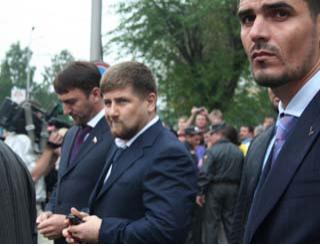
Ramzan Kadyrov said that the counter -terrorist operation in Chechnya recently would be declared the end, and in a day Dmitry Medvedev instructed the leader to consider the issue of removing the regime who is in Chechnya.
To understand what, according to the Kremlin and Kadyrov, it is now over, it would be nice to figure out what the Russian troops and special services in Chechnya had dealt with since October 1999, when a counter -sorrorist operation, presented as a response of militants in Dagestan and explosions of houses in Volgodonsk, Buinaksk and Moscow, began.
The counter-terrorist operation was definitely not another front against al-Qaeda: Chechnya was away from the global jihad. There were foreign mercenaries in Chechnya and there were foreign funds that transferred funds to war, but Chechnya never became the basis of international terrorism.
This was due to the reasons within the jihadist movement: instead of going after Afghanistan (where the Mujahideen, having occupied Kabul in 1992, hinted that the “brothers” no longer need Chechnya, the Arabs, rallying around the Egyptians from Islamic Jihad and Al-Gamaa Al Islamia, which will be compiled in the future and compose The backbone of Al-Qaeda, went to Bosnia.
The first Arab Mujahideen appeared in Bosnia already in 1992-almost immediately after the Bosnian Serbs, with the support of Belgrade, raised an uprising against the self-proclaimed government of the Bosnian Muslims.
According to the expert of Evan Kolmann, the leader of the Mujahideen in Bosnia was the Saudovets Sheikh Abel Abdel Aziz nicknamed Barbaros (due to the fiery red beard); Afghanistan veteran, he received the status of Emir, that is, the commander. The “commissar” became the Egyptian Sheikh Anvar Shaban, the Imam of the Islamic Cultural Institute in Milan (there he found a political asylum after he called for overthrowing the secular government of Hosni Mubarak in Egypt). Three others from the five leaders also turned out to be the Egyptians, followers of the blind sheikh Omar Abdel Rahman-the head of Al-Gamaa Al-Islamia, whose members also repeatedly tried to kill the Egyptian president of Mubarak.
Mujahideen fought in Bosnia until 1995, fighting either with the Serbs or with the Croats. At the same time, they did not always find a common language with Bosnian Muslims who were forced to endure them because of suicidal courage in battle, and even more because of the financial assistance of Saudi Arabia, which could be interrupted if the Arabs were asked to leave.
It was from the territory of Bosnia that the first undermining of the World Commercial Center in New York was planned in 1993, organized by Omar Abdel Rahman, and a series of terrorist attacks in France (including an attempt to capture the aircraft in Marseille to send it to the Eiffel Tower). Bosnia, but not Chechnya, became a bridgehead from whose territory the international terrorist groups planned and carried out terrorist attacks in Europe and the United States.
In Chechnya, unlike Bosnia, there were almost no immigrants from North Africa. Team positions were occupied by people from Saudi Arabia and Jordan. Huttab, poisoned by the FSB in 2002, was born in Jordan, who replaced him Abu al-Paulide was Saudite, as well as Abu Omar al-Seif, who played the role of the spiritual leader of the Mujahideen. Abu Dzeit, who fought in Ingushetia and financed the school’s capture in Beslan-Kuwaitz (killed in February in 2005), Abu Hafs Al-Urdani, a personal messenger of Zarkaui in Chechnya, who was killed in November 2006-a native of Jordan. In fact, it turned out that the commanders became the fellow tribesmen of the financiers from Saudi Arabia - in the absence of ambitious Egyptians. And after the outbreak of war in Iraq, the Arabs who fought in Chechnya almost completely left its territory.
Organizationally, tactically and technologically, terrorism in Chechnya depended little on international jihadism: the most terrible terrorist attacks, including hostage captures, were planned by Basayev, behind the explosions of houses in Moscow in 1999 stood the Karachay-Cherkess Dzhamaat , which organized a detonation in the Moscow metro in 2004. The use of martyrs is generally know-how Basayev (if the first Palestinian Vafa Idris was blown up in Jerusalem in 2002, then Chechenka Hawa Baraeva in June 2000).
Not being a bridgehead of international terrorism, Chechnya at least since 2006, after the reforms of Basayev-Sadulaev, is not a zone for the implementation of terrorist attacks, that is, attacks on a civilian population.
In the spring of 2006, the structure of militants, according to their own statements, was rebuilt : from the quasi-Armay (brigades, sectors and fronts), militants moved to small groups of SOG (“special operational groups”) from three to five people who began to conduct targeted attacks on law enforcement officials.
The reasons were the same as in Ireland in the late 70s, when Ira left the army structure in 1977 (before that, Ira militants were distributed through the companies, which usually consisted of 30 people, companies were grouped into battalions, and in Belfast and Derry the battalions were grouped into brigades). Due to the growing pressure of the British army and constant leaks, it became difficult to keep a secret in which at least 30 people participate. Ira brought militants into cells. The shooter, who used to know not only the commanders, but also the demolitions, suppliers and members of other units, now maintained contact with only three or four members of his cell. The cells were named ASU (Active Service Units - Active Service units). The new tactics became known as the “Long War Concept”, which, in general, turned out to be quite fair: Belfast agreements were signed only in 1998.
Ira used the army structure for the same reasons as the Chechens - to confirm the status of combatants. Having abandoned her, both of them lost claims to the status, but at the same time they began to depend less on the support of the civilian population - they no longer needed so many recruits (which is why the notorious 500 militants, which the Ministry of Internal Affairs reported every year, were less dangerous than the current 70 militants according to Kadyrov’s version).
As a result, as in Ireland in the 80s, in Chechnya after 2006, militants and security forces almost closed each other. This Chechen version of the “Long War Concept” requires fewer resources for militants, which is very relevant, while the attention of the main financial donors is riveted to Iraq and Afghanistan.
At the same time, the movement of militants itself has not been ethnically controlled by Chechens: the main ideologist is the Kabardian Anzor Astemirov (Amir Saifulla), the commander of the Caucasian Front - Ingush Evloev (Magas), the most high -profile propaganda success of the last time was the “joining jihad” in 2008 of the famous preacher Said Buryat. At least since 2005, after the creation of the so -called The “Caucasian Front of the Armed Forces of the CRI”, there is no separate Chechen separatism. After the announcement in October 2007, this situation was only fixed on the creation of the Caucasian Emirate. The most high-profile terrorist attacks of recent years were carried out outside the borders of Chechnya, in North Ossetia (Ikarus’s undermining in the DPS post in November 2007 and the divorce of a suicide bomber in a minibus in Vladikavkaz in November 2008) and the Stavropol Territory (Blow of a bus in an innocent in December 2007). The most high-profile actions of the SOG groups are also not in Chechnya: the execution of the head of the North Ossetia UBOP in Vladikavkaz in March 2008 and the execution of Kabardino-Balkaria, the head of the Kabardino-Balkaria UBOP in January of the same year, plus attacks on high-ranking employees of the Ministry of Internal Affairs in Ingushetia.
The most important question that no one seems to have an answer is what is Chechnya today for jihadists who are ready for a “long war” are autonomous (that is, they do not depend on the influx of funds and recruits from the outside) and even got rid of nationalism, leaving more A wide field of Caucasian Islamism .
The militants themselves argue that the mountainous regions of the republic are turned into zones uncontrolled by Kadyrov, where militants can live not only in forests, but also in villages.
This can be important enough for the entire Islamist underground in the Caucasus, since according to the laws of Islam, Jihad can only be declared from the territory of the “gift-ul-Islam”, that is, the land living according to the laws of Sharia and the Gentiles free of power. Is the mining part of Chechnya in the absence of the Russian troops to turn into the Russian analogue of the Pakistani Fata (The Federally Administered Tribal Areas-the federal-controlled autonomous zone of tribes), the inconsistency of which for many years served as an excellent preposition for Musharraf to obtain support from the United States (why not an option for Kadyrov and the Kremlin?).
It can be said exactly that in the Kremlin, on a dawn and on the Lubyanka, you should not look for an answer to this question: even before the decision on the completion of which many operational divisions of the FSB and the Ministry of Internal Affairs were displayed from Chechnya, which were supposed to extract information.