
Translated material
Putin's distant sight
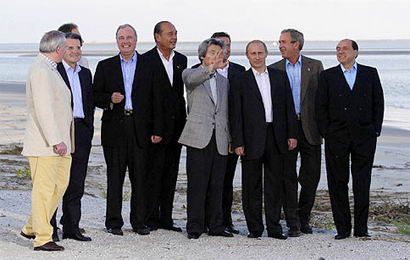
On March 30, in Moscow, the popular program “Question Time” took place in Moscow. To participate in this program, which is devoted to the analysis of international issues, people who represent various points of view existing in society are invited. Recently, “Exit sessions” began to enter into practice: for example, the previous program was recorded in Shanghai. Now the turn of Moscow has come: on the eve of the Summit of the "Great Eight", interest in our country in the world has significantly increased. Pretty status people participated in the transfer - the deputy Minister of Foreign Affairs of Great Britain, his counterpart from the Foreign Ministry of Russia. Different views on the situation in Russia were represented by the Deputy Chairman of the State Duma Committee on International Affairs Natalya Narochnitskaya, whose paternalistic and nationalist rhetoric has long been serving the interests of the Kremlin, and the Vice President of the RSPP Igor Yurgens, which is now distinguished by cautious businessmen. The opposition point of view was defended by the former Putin adviser Andrei Illarionov and I. The current show was in English, and in Russia, of course, it was not broadcast: they have been trying not to show either me or Illarionov for a long time.
The central issue was the topic of Russia's participation in the "Great Eight", the legitimacy of its entry into the club of developed democratic states. The English diplomat once again repeated the official position of his department, which generally coincides with the position of other countries of the Seven: in their opinion, only involving Russia in the negotiation process, one can achieve a change in the situation for the better. To this, Andrei Illarionov reasonably objected that the "seven" was not created in order to give master classes of democracy. This is a club of Western industrial democracies, to which Russia in its current state, no matter how regrettable to realize it, is still far away.
However, the current leadership of Western countries, apparently, is not very convinced. Their attitude towards Russia is in the field of pragmatism. There is democracy in Russia or not - this issue of the leaders of Western countries has not been worried for a long time. The logic is simple: if they give, you need to take it - whether it is a write -off of Iraqi duty or a rollback for a gas pipeline.
Another thing is that Western democracies are therefore called that there are different opinions equally in them. The leadership of these countries is under severe control by society, and the positions of official leaders can be subjected to sharp and significant criticism. So, last week, one of the applicants for a chair in the White House from the Republican Party, John McCain, disagreed with the position of Bush against Russia, which the American president defended at a meeting with human rights activists in Freedom House. According to the senator, the United States should not take part in the meeting of the Eight in St. Petersburg-due to the anti-democratic course that Russia was accepted. It must be understood that McCain's voice is quite authoritative. Recently, this influential Republican most often performed on the side of Bush (although in 2000 he was his main competitor to primaries). But after Bush’s statement about his visit to St. Petersburg, the question, apparently, became fundamental: who is Putin-Bush in pair of Putin Bush and who is the driven.
We must pay tribute - Putin skillfully uses the pragmatic attitudes of his Western colleagues. Another question is in whose interests he plays all his geopolitical combinations. Obviously not in the interests of their people. “Baikalfinance group” for Putin will always be more priority than a real Baikal. This skillful businessman with the questioning of the FSB lieutenant colonel is ready to sell everything and everything - up to national interests, for the sake of his own benefit and dividends that his clan can receive. In Russia, as usual, the end justifies the means: officials from the Kremlin do not care what will happen to our country after they resign. It is only important to have time to give out national wealth to the left and right for billionths, having concluded "mutually beneficial" transactions with Western (and oriental) pragmatic politicians. And even if separatist sentiments have already proved to be in Siberia and in the Far East, let the war go in the North Caucasus, and the population is dying out of poverty, unemployment and feelings of hopelessness, the Putin regime policy cannot be called short-sighted. The authorities took the far sight. Yes, only their goals are not the power and prosperity of Russia, but the azure shores of someone else's homeland.