
Translated material
The last bet
In the economy
 The last bet
July 15, 2013 Maxim Blan
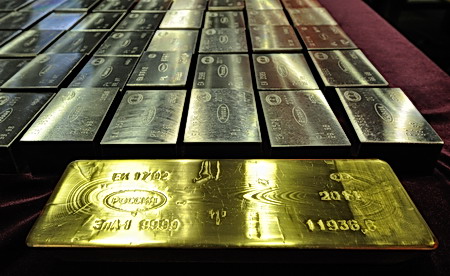
The team of "modernizers", which has been waging a "positional war" against the "liberal conservatives", led by ex-minister of finance Alexei Kudrin, celebrates the victory. It was decided to launch government reserves to plug budget holes and state investments in infrastructure, having printed the Reserve Fund and the National Welfare Fund (FNB). The use of the latter's money to finance infrastructure projects was announced by Putin at the St. Petersburg Economic Forum. The Ministry of Finance, having gone into a blank defense, tries to save at least something. The head of the department Anton Siluanov proposes to limit the seizures of 450 billion rubles from the FNB, and the number of projects that will be funded by the money of the fund, originally designed to guarantee the stability of the pension system, three “super-constructions”. We are talking about the construction of the Moscow-Kazan highway highway, the reconstruction of the Trans-Siberian Railway and laying the Central Ring Road (TsKAD), which theoretically will relieve the capital suffering in traffic jams. It was these three projects that were mentioned in Putin’s speech at the St. Petersburg forum. Apparently, decisions on these three projects have already been adopted, and trying to dispute the feasibility of their financing precisely from the FNB funds.
Siluanov has a little chance of being heard. At least, because in Putin’s speech these three projects appeared as “pilot”, which, obviously, should follow, up to the final solution to the problem of the National Welfare Fund by investing in projects, which, according to the president, “change the face of the country”.
It is supposed to allocate money from the FNB on a return basis, and they will be used in projects that can recoup. A guarantee of payback should be the participation of private investors in the framework of public-private partnerships. However, the way such a partnership in Russia works is very clearly demonstrated by preparations for the Winter Olympiad in Sochi and large -scale construction, which unfolded in the Far East in anticipation of the APEC summit. There is no doubt that the initial estimates will be exceeded many times, if not ten times, and the implementation time will be moved away all the time, there’s nowhere to hurry, since none of the hiding large-scale construction projects will be harshly attached to any specific event. So, based on the current Russian realities and concrete experience in recent years, it is very doubtful that the money of all the FNB is enough even for one investment project. Most likely, in five years, the country will receive three “unfinished” ones, which there will be nothing to bring to condition to the condition, after the contractors “master” a couple of trillions from the money of the FNB.
But even with this one could put up with this if the buildup of state investigations, even if ineffective and “corruption” would be able to spur economic growth in the country, creating a demand in the industries controlled by private business. The problem is that the effect will be more opposite. The state sector, already hypertrophied over the years of “fighting the crisis”, will only strengthen its position in the competition with private business for limited resources - raw materials, materials, and labor. Even the “modernizers” who advocate for the increase in state investment admit that it is high time to the state to reduce its presence in the economy and concentrate on strengthening (and sometimes recreating) market institutions, as well as improving the business climate. But it is precisely for this that the state machine in its current form is not capable of, since such tasks would have to replace the fundamental principles and driving forces that allow this machine to function. The only thing the steam locomotive falling on the go is to throw the last reserves into the furnace, not thinking about what will happen when they are exhausted.
Photo by ITAR-TASS/ Anton Butsenko