
Translated material
Without illusions
Book holidays go out of fashion
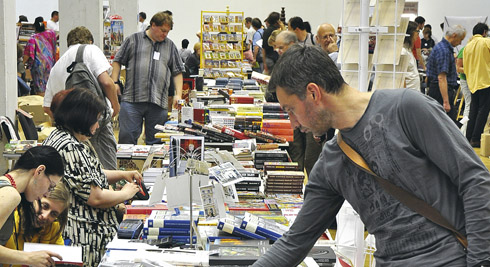
The collapse of children's books became the main decoration of the trading floor
Without illusions. The once fashionable event, this year the Moscow Summer Book Festival was deputied. Whether this is due to the topic of emigration discussed at the festival - the New Times understood
Once upon a time, summer festivals at the Central House of Arts were called "summer nonfiscation." The “dead season”, when a festival is held, a non -standard place (tents in the courtyard of the Central House of Artists), the home atmosphere - all attracted the audience, even in Moscow, not spoiled by informal communication. Thanks to reality: this year, there are a lot of relevant topics, as usual, from the “Blue Vederes” before the French are read by the French Varlam Shalamov (I wonder if they read it back in Russia?), From the phenomenon of the novel in the Twitter era to the problem of emigration, and more and more relevant for mental workers. And not only. The other day, a friend, buying housing in Moscow, watched five apartments. The owners of four sell them, leaving abroad. Is it surprising that the question is "to leave, return or just stay?" They discussed, in particular, as different characters as Oleg Kashin and Andrei Malgin?
The degree of optimism
The connection of round tables with books sometimes looked quite mediated, but the strategy is more important than formalities. The relevance has a different degree of optimism. At the same time, French songs - Helen Mela, the factory of the book of the Embassy of France, sang along with the radio journalist Nikolai Alexandrov and the public at the same time at the fair; Folk French drinks were affixed by "Feast of O.G.I.". We discussed the end of civilization: Vladimir Martynov presented the new book “Autoarcheology. 1952–1972 ”, published in the Classics XXI. The paradox is that the creatively successful drummer Vladimir Tarasov, architect Evgeny Ass and critic Vladimir Patsyukov listened to his skepticism; And Martynov himself successfully continues to write interesting music. We talked about practical issues of cooperation with the authorities. As one of the participants in the discussion remarked: “Take a closer look - and there are also living people!” 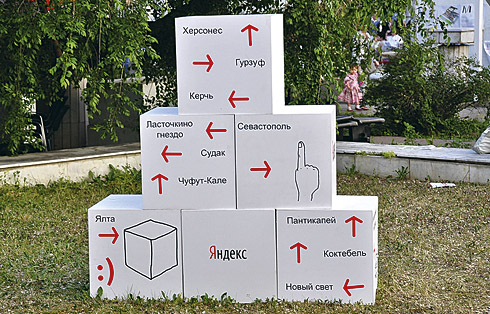
I wonder how the OpenSpace website initiated the discussion, who received a personal tent from the organizers of the fair and offered a good program, figured out his own position? The site was founded by the former deputy Minister of Finance of the Moscow Region, later arrested in the case of the theft from the budget of 1 billion dollars. To what extent is the money replacing the power today? Work on such a site - cooperation with power or not?
On some discussions, it was not possible to push through, on others - to the offensive empty. The miscalculations of the organizers affected the unsuccessful proximity of events (Martynov drowned out songs), and in a doubtfully compiled schedule. In general, the fair made the impression more deserted than before. Only the children were noticeably increased, even the Swallower Nest tent appeared for mothers and infants, where it was possible to feed and quail a baby.
What to read
Few people release books specifically for the summer festival: sales here are not comparable to autumn-winter fairs, there are few publishers, mostly book trade, antiques and philophonists. But the new items by the summer got both “smart” and useful and cognitive.
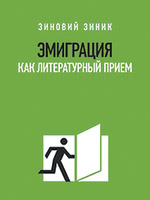
Emigration. The second of the eight volumes of the works of Khodasevich, with critical articles, appeared in the “Russian Way”. The Americans J. Malmstad and R. Hughes did not complete the previous meeting - Ardis did not close in time - but, I want to believe, this time they will finish the matter. “Annual of the House of Russian Abroad” appeared, with a mass of curious, from the article by N.V. Lyvquintseva about culture as a phenomenon of memory in the heritage of prot. Alexander Shmeman to the letters of George Adamovich published by O. Korostelev and the polemical texts of the emigration about the cinema, now collected by the deceased R. Yangirov. His book “Another Cinema” was published in the series “Films” (M., UFO). There are fascinating stories, from “specialists” in Soviet cinema to “farewell to the dead body” (Lenin and ordinary revolutionaries) and subtexts of the Russian screen officialdom. “UFOs” published a collection “Around the editorial archive of“ Modern Notes ”(Paris, 1920–1940)”: the most important journal of emigration was considered from all sides, many archival publications and signs.
 |  |  |
Story. The two next books of Napoleoniad was published by Zakharov, who loves the Corsican: 265 letters of the emperor to Josephine without bills and memoirs of maid of honor Ms. Remuza. Modernity explores the work of Nikolai Koposov “Memory of the Old Regimen” (M., UFO): it is about how the estimates of the Soviet past are changing/used in connection with the tasks of commentators, a special place is given to the Great Patriotic War. And Daniel Domshaite Berg in WikiLeaks from the inside (M.: Corpus; The original went out in Germany this year) talks about his work on the “most dangerous site in the world”. The author quit due to friction with Assange, creating his own Openleaks.
Art. Collection "Michelle Foucault. Painting Manet ”(St. Petersburg: Vladimir Dahl) consists of a Lecture of Foucault and eight, commenting on the philosophy of arts. The memoirs of the legendary singer Patti Smith “just children” (Corpus) are devoted not only to rock, but also by the atmosphere of the 60-70s. “French painting in Arkhangelsk” is distinguished from the Russian artistory (M.: Three squares): the compilers not only described the current collection in the estate, but also reconstructed its pre-revolutionary state. And the hummingbird was complemented by the new edition of Yuri Borisov’s entries “towards Richter” by the script of his documentary film about the great pianist. "
From the theme of the "Blue Vederoks" officials are simply shaking. But the buckets are more important than the bureaucrat, designed to allocate money for culture, and not engage in its censorship
“ Prose. The mass of translated novels has released Corpus. There are trillers detectives, like the“ second shot ”of the British Zoe Sharp or the“ bad blood ”of the Swede Arne Dalya, and the mystical“ American ”of Monica Fagerholm, also the Swedes, but from Finland-Scandinavians are now on the rise. “Die with me” by Elena (Foreigner) and the classic Detachment “Damn” by Jim Tompson, the beloved author of Stanley Kubrik, published by the “ABC” A collection of stories “whores-killers” of the Chilean Roberto Bolano, one of the main literary discoveries of the last time.
Views for the future
 |
The children's program is traditionally among the most powerful at the summer festival. So this year there were a lot of children's projects like collective discussion of what a feat is. The children honestly answered: what is difficult to do, what the hero does. Fortunately, no one remembered Nabokov, and even more so no one rhymes the issue of departure, although the decision to stay is also like a small feat. Symbiosis of children and youthful themes with socio-political debates does not look strange; In the West, universal fairs are often practiced. So with all the miscalculations, with all the between the type of thinking of the organizers, their craving for certain New Smakers Summer Festival is a holiday for everyone who reached the Central House of Artists, including publishers. This is a rare case when the rental of stands does not support the accompanying program (in the summer among tenants, mostly small publishers experiencing difficulties with the distribution: AD Marginem, the “New Publishing House”, “Cultural Revolution” that had just released the second volume of “Mimesis” Valery Plants). In other countries, such festivals are entirely funded by the authorities. In France, for example, large cities, from Bordeaux to Saint-Malo, hold “Book Salons”-not for the sake of increasing sales, but to support interest in reading. Salons can be thematic, devoted to science fiction or detective genre. We have, except for “white nights” in St. Petersburg and Kryakka in Krasnoyarsk, there is nothing to recall. True, in Perm on June 22, a book fair will open on the principle of the summer festival and Kryakka. The program is the same: meetings with writers and publishers and the sale of books. This year, publishers are invited at the expense of the organizers, in the future, as expected, they will pay the stands themselves.
Will the Perm fair become as civilian as Moscow? Will the summer festival remain open at the topics? Let's hope that yes: in 2012, the tent and the opportunity to form a program will most likely receive the publishing house of Alexander Ivanov Ad Marginem.
The authorities may not be considered loyal to some topics of discussions - from the theme of the “blue Vederes” officials are simply shaking, and talk about emigration does not improve the image of the country. But in the end, the buckets are more important than the bureaucrat, designed to serve voters, to allocate money for culture, and not to engage in its censorship from the position of a savage with a club. The OpenSpace initiative, which became the main character of the 2011 festival, is not accidental. The authorities have long lost the trust of intellectuals. Only having returned it, can she return hundreds of thousands of those who went abroad. Another question is how much it needs.