
Translated material
Putin allowed
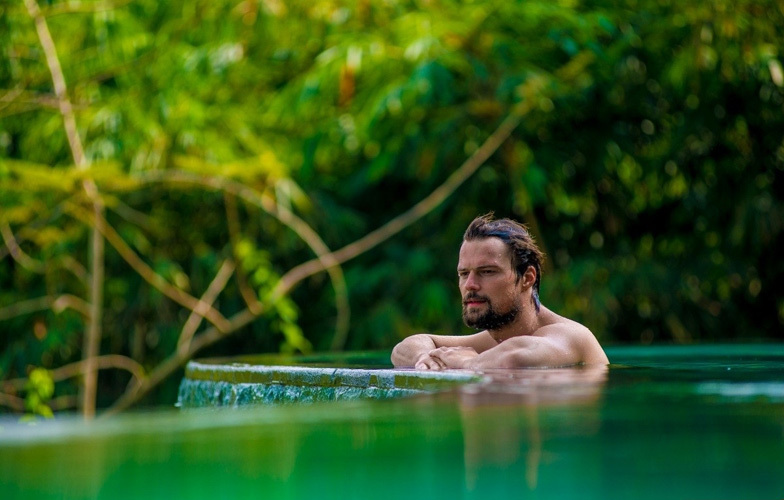
Max Andreev (Danila Kozlovsky), a former cardboard dummy of the hero from an awkward, but popular myth of the oil glamor of zero, now no less exemplary surfer from an equally ghostly downtshift narrative. The insurmountable conflict, however, is pursuing the hero in the tropical paradise: the declaration of the principle of Tabula Rasa (“I want to start from scratch,” Kozlovsky explains for us, two -part), but still bought for Moscow money for the Villa. Interchangeable assholes - but the inescapable longing for Russia and the girl Julia (Maria Andreeva).
Russia will make itself felt - our God is not a fraer, but the service servist and past sins do not forget. The thrown brick of heroin, unpleasant Asian persons, an even more nasty “embassy employee”: Sekfer will not have time to change shorts, but will already sit in the Vnukovo sump with a pair of high ranks from the Ministry of Internal Affairs. The choice of Maxim is this: either to be introduced into the state corporation, which saws the budgets at startups, or to saw it himself, but on the forestry - he did not have time to come to such stoicism at Bali.
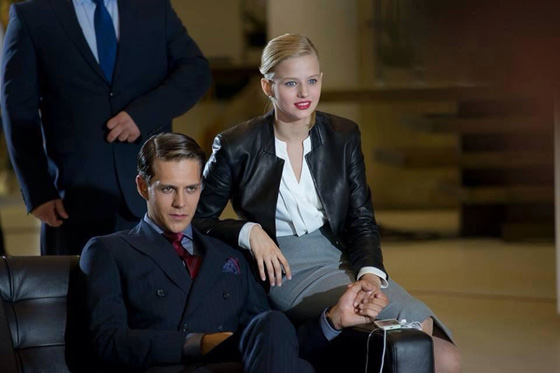
The brilliance and poverty of the Russian elite, in which the director of the jumpers plunges further (there is even a choping-identity deprived of irony in the Central Department Store), is somewhat different from the version shown in the first film. The place of oil top managers with their cut of tenders on a new round of history is occupied by top managers with iPads and cuts on startup pitching. The power structures became less flashing (found Max in Indonesia!), And their appetites grew up. The girl Julia from the activist of the Erzats-“War” turned into the wife of the Forbian oligarch with her own fund (whether she had served before-the authors do not affect that).
 © Universal Pictures
Two things are unchanged, however. Monolithic directorial style of Prygunov: a quick arrival of eights and large, even larger, plans; The gift to find a song revealing its meaning to each episode ( " I ' m Coming Back , ” the Autotyunovaya diva is torn while the hero is loaded on a flight to Moscow); Love for dark filters and panoramas from the skyscraper window. And the ability of Sergei Minaev in pursuit of the heroes of our time to stumble upon the timeless, disturbing a simple Russian person (the one whom the aggressive marketing of this sequel expects to attract ghosts from the world of privileges.
The skill is thoroughly supported by the staff of solid co-authors and scriptodters (Mikhail Idov, Fuad Ibrahimbekov, Andrey Vyvkin). Ghosts are already reminiscent of people, rush to the words “startup”, “trackers”, “investments”, even, sorry, Lord, Techcrunch , on the one hand, and the power-mental argo (here the scriptwriters tried-the fascination of the Russian intellectual with the language of the zone)-on the other. By privileges (and soullessness), according to the film, it turns out, it turns out that those who sit at the budget pipe, and those who, sitting on the pipe, controls them. Moreover, the former for some reason live as if under President Medvedev-they saw not on anything, but on innovation.
 © Universal Pictures
However, the topicality or, on the contrary, hit the places of timeless phantom pains - although the obvious, but the boring dignity of this strange film. The movie needs a plot - and the creative team is trying to get it by folding the character, the genre model, the spirit of time and its own wit. But they have only Erzats at their disposal: Erzatz-hero instead of the character, formal signs of time instead of his spirit, with the genre, everything is also not thank God-the story turns out to be a bastard brainchild of the novel of education (the subspecies “Yappy is in danger”) and the universal “Russian text”, written off from the reader in literature (there is only a little by the spell that overtakes the capital's dendi the city, to the toilet rendezvous with Karenina). “Duhless-2” is riding from the stage to the stage, from one pulling on the entire episode of the panchline (whether it is a ridiculous joke on the anger of Facebook tapes or the priest of the Bortic artist) to another. He is riding-but he doesn’t find what he should be, and, as if by inertia, turns his ordinary burner of conscience into a person with principles (he also read Saltykov-Shchedrin on the vacation!), Uncomplete, involuntary (“What do you want?-Corns”) of the exposure of corruption schemes, in which he himself participates.
 © Universal Pictures
The genuine essence of this mutant manifests itself in the finale - in which pathetic, with a screech (monitors fly from the table, accelerates the flour of the installation) The emerging return of Maxim to the world is only a prelude to the most daring scenario. After it, “Duhless” finally means itself as a comedy - but not the same with jokes, not the one that implies a genuine satire or reveals a household grotesque. Oh no. This is the comedy that, like a virus, kills all the author’s attempts on any other genres and plots and does not hesitate to leave the screen, so that polite, with fraternal laughter, capture the viewer, and not their miserable heroes. This is a platform comedy with a traverse relay race of roles - more precisely, one role, a scapegoat for universal Russian soullessness, in turn played out by managers and downshifters, corrupt officials and corruption fighters. It is this change in the role-from the corrupt official to the opposition-occurs in the final from the picture, indicatively removed approval of the single, the most important hero in this film. However, they do not dare to directly name or show it (the camera is hiding behind the broad shoulder of the Russian Demiurge), nor put on replicas. And certainly they will not expose (for such a “Duhless-2” authors, all the more would not have enough spirit)-instead, they, walking around and as if between business, once again transfer the arrows already on the most noisy enemy of this unaware master. In the AP, probably, the film will laugh louder than anyone else.