
Translated material
Digital Bruegelian
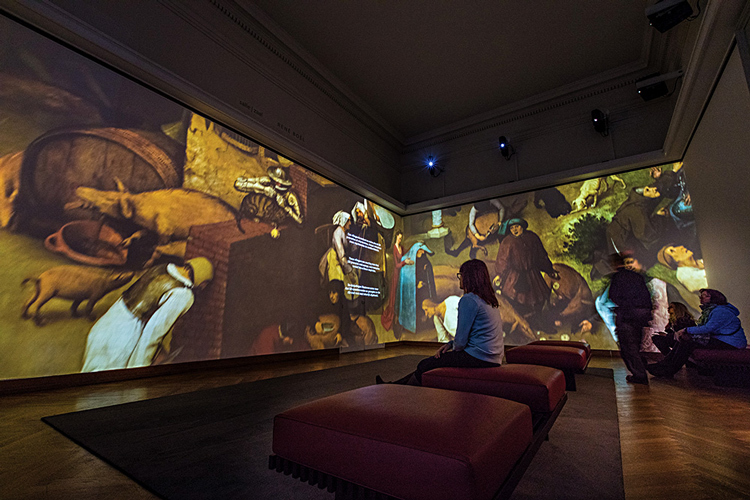
In a small dark room at the entrance to the royal museums of elegant arts in Brussels, the digital angels of Peter Bruegel the Elder fight with mystical creatures, the Flemish proverbs come to life in literalized images, and the viewer joins the crowd of listeners. The multimedia exhibition was developed in conjunction with the Google Cultural Institute. Victoria Butakova , the author of the “Museum and Around him” section, tells how the art of old masters receives a new life with the help of technologies, why the appeal to Bruegel will always be relevant and how international exhibitions become more accessible to the viewer at any end of the world.
In 2019, the artistic life of Belgium was fixed on the figure of Peter Bruegel the Elder. The exhibition “The World of Breigel in black and white”, dedicated to the 450th anniversary of the artist’s death, with the largest collection of the engravings of the master will show the royal library of Brussels, in the Museum of Mayer Van Den Berg in Antwerp, the “Return of the Crazy Greigel” will be held after the restoration of the picture, in the museum under the open air Bokreik in the air. Limburg will be held by the Exhibition “World of Bruegel”, and in the castle of Haasbek in the commune Lennik - the exposition “Fools Fools”, where, along with the paintings of the master, the works of artists of the twentieth century and modernity will be presented. But the main event in this series is the exhibition “unprecedented masterpieces” in the royal museums of elegant arts in Brussels, which owns the largest collection of work of Bruegel in Belgium. In addition, this exhibition is high -tech: along with the originals from the museum’s collection, spectators can look at the revived canvases in the projection room and plunge into the paintings using virtual reality glasses.
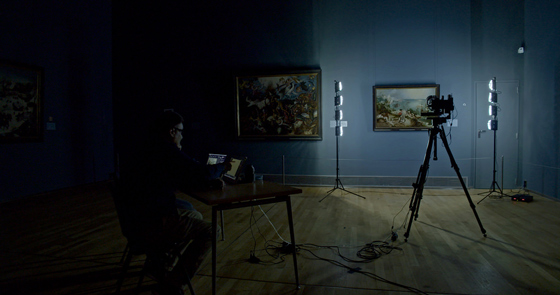 © Royal museums of elegant arts, Brussels digitizing paintings for the exhibition "Undervisible masterpieces"
The idea is not new: the first multimedia expositions were shown at the French exhibition site Carrières de Lumières back in 2012. On the stone walls of the grotto projected the fields of the field of Gauguin and Vincent Van Gogh. Two years later, the Australian company Grande Exhibition has developed the Sensory 4 Sensory 4 Sensory 4 and introduced a mobile multimedia exhibition “ Van Gogh Alive " . The organization united in order to in the same way to show the work of the impressionists, and then Leonardo da Vinci. The domestic exhibition halls of Artplay and Lumier-Hall picked up a trend and have already managed to demonstrate the moving canvases of Jerome Bosch, Michelangelo Buonarroti, Ivan Aivazovsky and Nikolai Roerich. Through virtual reality glasses, the audience first looked at the paintings in 2017, when the auction house Sotheby ' s organized the VR of the work of Salvador Dali and Rene Magritte before the bidding. Later, their success was repeated by BDH , which using Google glasses Cardboard placed the audience inside the picture of Jerome Bosch "Garden of earthly pleasures." The royal museums combined both of these technological approaches to the display of expositions with the traditional one.
Peter Brueghel senior art historians consider one of the most mysterious artists in history, and his work is the top of the Dutch Renaissance. His paintings, as well as his life, are full of rebuzes and unrelated allusions. Neither the date of his birth, nor the facts of the biography of the painter could reliably establish. According to one version, he received his nickname “peasant” for the desire to show rural life on canvases. But behind the simple image of the pastoral, much deeper content lies, hidden in the details with which his work abounds: on the example of the urban environment, he showed his idea of humanity as a magnificent set of negligible sizes. This is what attracts a modern viewer in Bruegel. And this was emphasized by the employees of the royal museums: each of the paintings can now be considered in a multiple increase - up to individual strokes. It is impossible to achieve this level of detail with the naked eye.
The roof of the rich is strewn with pies, wealthy citizens throw money into the water and cut the sheep, while those in need are trying to cut pigs.
Bruegel had his own concept of “inverted world”, or “peace inside out”. His worldview was sprout: the artist showed all the hidden vices of society like drunkenness, gluttony, poverty, laziness and pride. He always interpreted biblical plots in his own way, transferring them to the modern environment of the Netherlands, and built them into complex multi-figure compositions. But at the same time, he sought to convey in his works a sense of continuity of life: many figures scurrying on canvases embodied household scenes, in the daily routine of which the master saw the universal significance. And he did this in an inventive picturesque language: his brush glided along the primer seemingly spontaneously, creating silhouettes with light strokes, which, upon remote examination, composed a holistic picture.
As each of the works of Bruegel consists of several independent paintings, so the exhibition is made up of several expositions. “Underwestern masterpieces” combine all conceivable approaches to showing paintings - traditional and technological. In the case of Bruegel’s paintings, this is especially relevant, since they are written on fragile wooden panels, many of them have not been exported from their storage facilities for more than 100 years. To solve this problem, the employees of the Royal Museums of Belgium turned to Google to digitize the artist’s work from different meetings and show gigapixel images of the highest resolution in one place. Then these paintings were scattered into various parts of the interactive exhibition - the imaginary museum - and complemented expert explanations. As the head of the public relations of the Royal Museums, Isabelle Vanhunaker, says, so they can offer the audience much more information than on a small plate next to the picture. And to lead to the canvases of children of the digital age with the help of technologies familiar to them.
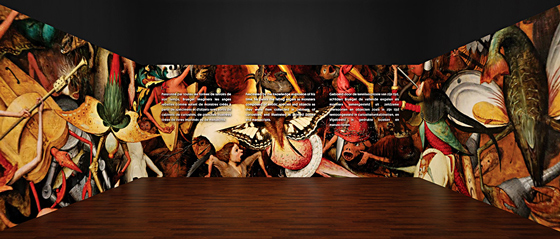 © Royal museums of elegant arts, Brussel Projection Hall of Bruegel in royal museums of elegant arts
The journey through the exposition begins with the projection hall - the so -called Brueghel box, where the painting characters come to life on three walls from floor to ceiling around the viewer. The difficult system of projectors used here - the brainchild of Google - allows visitors to the exhibition to go on a digital excursion on symbols encrypted in canvases. Getting inside the Flemish Proverbs, the viewer becomes the hero of the picture along with the countless figures of the peasants and begins to unravel the stable expressions that described the life of the Netherlands of the 16th century. The woman “ties the devil to the pillow” - that is, shows an irresistible stubbornness, the knight “hangs a bell” in the armor - performs an unreasonable act, an unknown citizen “falls into the basket” - shows indecision. The roof of the rich is strewn with pies, wealthy citizens throw money into the water and cut the sheep, while those in need are trying to cut pigs. Brueghel showed in the “Flemish proverbs” all the vices described in his modern vocabulary and the absurdity of human behavior and with the help of a lot of little men moving in the picture, who are engaged in meaningless deeds, conveyed his characteristic sense of absurdity of life. Modern researchers guessed about 120 proverbs hidden in the picture, but the actions of some characters remain a mystery - the sayings that they personify have already gone out of use. Although some are used everywhere and to this day: one person beats his head against the wall, the other rose (all the same as beads) in front of pigs, players in cards lead each other by the nose. To guess them means to pass the peculiar first level of the task of the master of the picturesque satire.
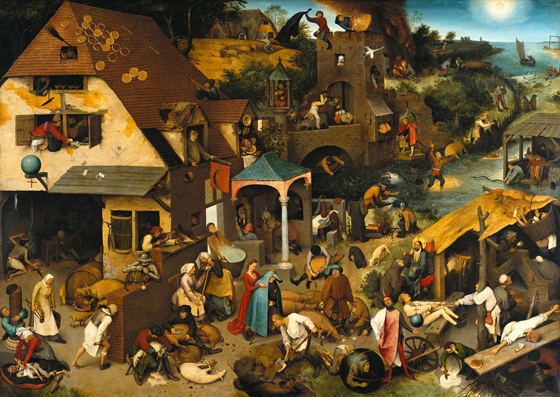 © Berlin Picture Gallery Peter Bruegel Senior. Flemish proverbs. 1559. Wood, oil
The artist conveyed the same attitude to the “sermons of John the Baptist”, where the gospel plot serves only with a disguise. He placed the biblical scene in the contemporary context and through peasants, nobles, monks and soldiers listening to reading, showed: everyone can only be accepted by true teaching within their own barriers. Two monks angrily criticize the preaching, the nobleman stands with his back to the preacher and holds out his hand to the gypsy in a striped blanket, which guesses his hand. This picture was chosen for the show in the Braigel box: it was in it that the artist with the greatest skill created the illusion of finding inside the picture. The predecessors of the painter chose high points of view, he placed the depicted crowd above the eyes of the viewer, as if he himself were in a clearing and listening to a sermon.
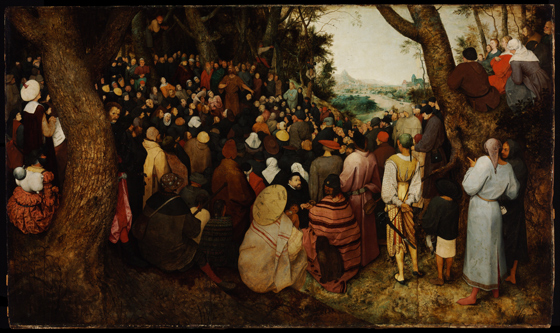 © Museum of Fine Arts, Budapest Peter Bruegel Senior. The sermon of St. John the Baptist. 1566. Wood, oil
In this hall, an animated picture “The fall of the rebellious angels”, which connects individual parts of the exhibition, can also be projected - it can be studied using all the methods presented on “unprecedented masterpieces”. The original canvas is stored in the meeting of the royal museums, shown in the "Bruegel box" on interactive monitors and google virtual reality glasses Cardboard . Although the revived picture can be considered without points in a video with a review of 360 degrees.
The plot of the picture is based on the first confrontation between the forces of good and evil, which preceded the fall of man. The Archangel Michael drives the fallen Lucifer, and after him other rebellious angels turning into the abyss, turning into demon hybrids, half-loves-in-laws. The main vice, which the audience draws the attention of the spectarist in this work, is a pride that distorts the once noble images to recognition. But Bruegel is not limited to the illustration of the biblical parables: he is reflected in the history of the 16th century. The artist was a witness to the origin of the Netherlands Bourgeois Revolution, whose leader was Wilhelm Orange. He advocated the independence of the provinces and the displacement of Cardinal Antoine Perrone de Granvel from the post of chief adviser to the Spanish king in the Netherlands. However, Bruegel's sympathies were on the side of Granvel: he patronized the artists and was a famous art collector. Therefore, the actions of the Orange painter considered the manifestation of pride, which served as the cause of public disagreements and riots. The absurd and turmoil, who reigned among the people, pushed Bruegel to the spelling of the Apocalypse, the climax of human madness, although he did not even find the true disasters of the war. And he was inspired by the studies of the American continent and the description of the outlandish fauna of the New World, from where the battleships and butterflies-mahaons were inspired by him, and with them the yellow-red feathers of the Indians.
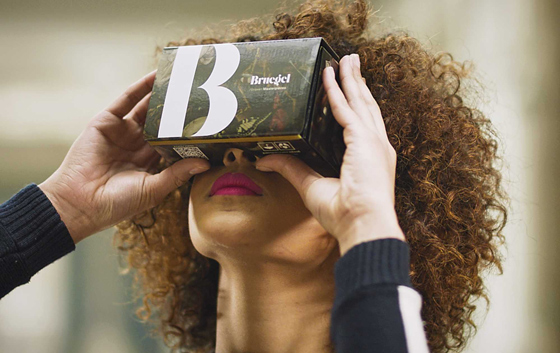 © Royal Museums of Elegant Arts, Brussels Google Cardboard virtual reality glasses
The composition of the “falling of the rebellious angels” is built in accordance with the rules of the “cabinet of rarities”, or Kunstkamers, which appeared and gained popularity during the master. At first, the so -called small cabinets filled with exhibits Naturalia (created by nature) and artificalia (created by man). Having divided the objects in the picture in the same way, Brueghel introduced a new meaning into it - the confrontation of nature and art, metaphorically reflected in the form of scientific and musical instruments.
The Bethlehem census is collected by taxes by officials, and against the backdrop of the collection of brushwood, the construction of the barn and children's games on the ice, the arrival of the Holy Family is unnoticed.
Braigel paintings are so filled with small details and details that it is difficult to consider even on the original canvas. Therefore, the organizers of the exhibition accompanied the work from the collection of royal museums with touch screens, on which the images of the paintings stored in Brussels can be closer as close as possible, and then return to the original and find the fragments just discovered there. This can be done not in the museum: on the special page Google Cultural Institute pictures are presented at a virtual exhibition.
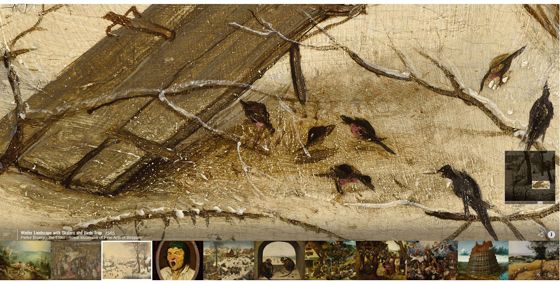 © Google Cultural Institute Peter Bruegel Elder. Winter landscape with skates and bird trap. Fragment. 1565. Wood, oil. Royal museums of elegant arts, Brussels
Two works belong to a series of winter landscapes, the ancestor of which was the artist. They depict a string of characters, who are engaged in their worldly affairs, with a typical Brueghele satirical subtext, characteristic of the master of the string of characters. The Bethlehem census is collected by taxes by officials, and against the backdrop of the collection of brushwood, the construction of the barn and children's games on the ice, the arrival of the Holy Family is unnoticed. The biblical story again is only a pretext to writing a picture with several interpretations. Another picture is devoid of a religious subtext in the plot, but carries a similar feeling of impending danger. In the “Winter Landscape with the skaters”, an idyllic picture with the townspeople who are amused by the townspeople is overshadowed by the image of a trap - a wooden board that hangs over the birds on the branch. The rope from it reaches for the window of the neighboring house. The trouble lies in wait not only for birds: at the very edge of the canvas, the artist placed the ice hole in the ice, which people skating do not notice. This is a kind of warning of the master about the awaiting danger and the Testament not to lose vigilance.
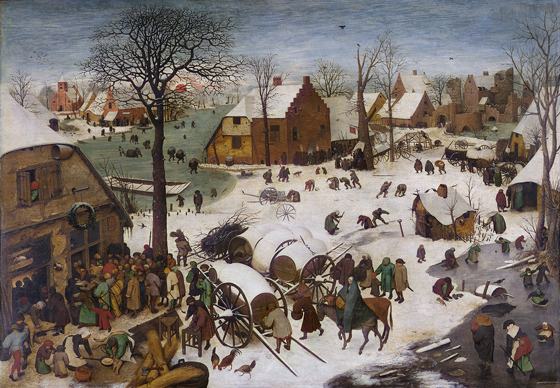 © Royal museums of elegant arts, Brussels Peter Bruegel Elder. Census in Bethlehem. 1566. Wood, oil
The meaning similar to the fact that in the “falling of the rebellious angels” is enclosed in a much more calm, at first glance, “Ikar fall” - the only canvas created by an artist based on the plot from Greek mythology. True, authorship has not been established for sure - there is no signature or date in the picture, and research gives out conflicting results. The official version states that the work is an early copy of the lost original. However, the composition with an emphasis on the diagonal is designed in a truly Brueghele style, and many art historians attribute the work of the master’s brush. In the “Ikar’s fall”, the feeling of detachment and indifference is acutely felt by which the Brueghel canvases are permeated: just as the characters of the “Winter landscape” do not notice the arrival of Maria and Joseph, the heroes of the “fall of Ikar” do not see how the Icarus that had become buried and sewn and sewn and the sun falls into the water. Despite the fact that he acts as a central figure of the picture, the viewer can only see his legs, partially hidden by waves. The first plan at the intersection of the diagonals is a plowman with a plow, a shepherd with sheep is a little further and a fisherman is even further. All of them retain equanimity and continue their daily affairs, not paying any attention to the death of the hero.
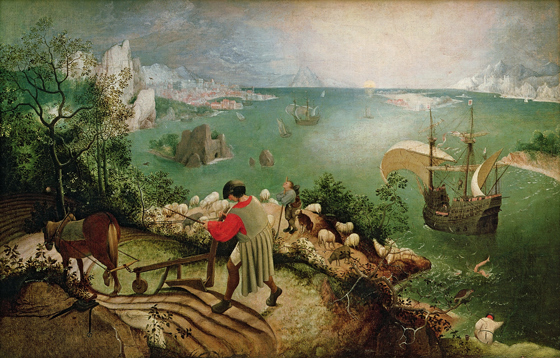 © Royal museums of elegant arts, Brussels of Ikar. An early copy of the lost original Peter Bruegel the Elder. 1560s. Canvas, oil
Those of the digitized paintings that are not represented by the originals or in the “Bruegel box” make up several virtual exhibitions on interactive monitors in royal museums and on the Google online platform Cultural Institute . The most famous of them is the “Babylonian Tower” , stored in the Boymans Museum - Van Boningen in Rotterdam. The picture is filled with small figures of people who build a huge structure that seeks to reach the sky and is already hiding behind the clouds. She fully meets the main motives of the master: her plot is taken from the biblical parable, denouncing the vice of pride, and allegorically transferred to the contemporary artist society. Bruegel, who lived in Antwerp for many years and observed the construction of a port city, embodied in the picture the instruments saw there. Cargoes from boats rise with a tap that works on the strength of people placed inside the wheel. The picture is replete with images of huts, stairs, construction forests and lifts. With the help of many such details, the artist rethinks the message of the biblical plot, according to which people who intend to build a tower that could reach God crashed because of their arrogance and lost their common language as punishment. The builders could no longer understand each other and finish the work, therefore, at first glance, the construction, upon closer examination, is fragile and brittle: the tiers are laid unevenly, some floors are either unfinished or begin to collapse. And despite the fact that with the help of the “Babylonian tower”, Brueghel warns the audience about a possible square for pride, he gives a picture of his characteristic sensation of his life: violent activity, although it turns out to be in vain labor, endows the existence of people depicted by meaning.
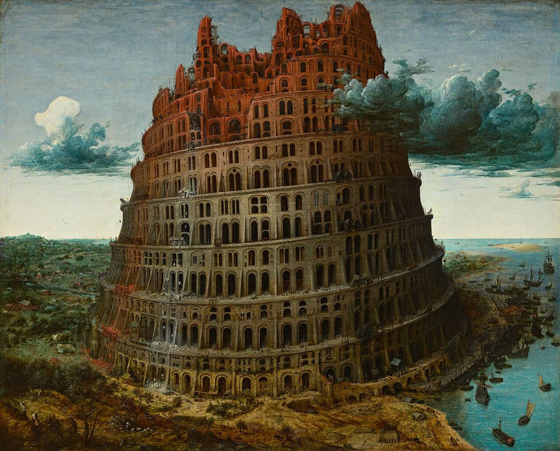 © Boymans Museum - Van Boningen, Rotterdam Peter Bruegel Senior. Babylonian tower. OK. 1565. Wood, oil
The biblical plot again serves Bruegel with a disguise when writing the picture “Beating of Babies” . This episode was borrowed from the Gospel of Matthew: learning about the birth of Jesus, King Herod commanded to kill all children in Bethlehem under the age of two years. Художник поместил действие в обстановку современной ему фламандской деревни, а посланцев нарядил в солдатские одежды испанской армии. Почти сразу после написания картина попала к императору Священной Римской империи Рудольфу II, и ее сильно переработали: мертвых младенцев закрасили и поверх них нарисовали свертки, животных или еду. Полотно из сцены резни превратилось в эпизод грабежа, хотя и наполненный столь же множественным повествованием и тем же ощущением неизбежности, обреченности и невозможности отступления. Всадники окружают площадь со всех сторон, врываются в дома, закалывают пиками стадо домашнего скота в центре картины, где под слоем краски прячется группа младенцев. Женщины убегают в ужасе, скорбят и утешают скорбящих. На заднем плане мужчина пытается унести ребенка — одного из незакрашенных — в безопасное место, хотя стоящие на мосту наездники говорят о том, что ему это вряд ли удастся.
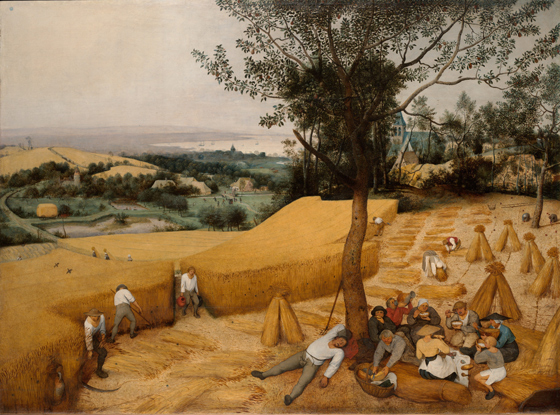 © Метрополитен-музей, Нью-Йорк Питер Брейгель Старший. Harvest. 1565. Дерево, масло
Подобным чувством проникнута картина «Две обезьяны» . Хотя она существенно отличается от других работ мастера по композиции: на ней изображены всего два персонажа, расположенных в оконном проеме и закованных в цепи. Смирившись со своей судьбой, они смотрят на раскинувшийся вдали Антверпен и мечтают о свободной жизни. Куда более непринужденно выглядит «Жатва» , где по пшеничному полю художник раскидал фигурки трудящихся людей. Здесь работа кипит вовсю, как и в «Вавилонской башне», но она не обрекает крестьян на неудачу, а, наоборот, возвеличивает их: находясь ближе всего к природе, они проживают наиболее правдивую жизнь. Эта картина оказывается чуть ли не единственной из работ Брейгеля, где царят умиротворенность и спокойствие, а снующие по полотну человечки не предупреждают о близкой опасности, а завещают: останавливаться и оставаться слишком долго в одном месте нельзя ни в коем случае.
Музеи ищут все новые способы передать зрителю как можно больше информации и изменить его восприятие искусства. Они адаптируются к цифровой эпохе и пользуются ее достижениями, чтобы показать рядом полотна, которые из-за своей хрупкости никогда не окажутся в одном зале. Как говорит генеральный директор Королевских музеев изящных искусств Бельгии Мишель Драге, технологии открывают новый диалог между посетителями и картинами на выставке, и эта встреча ведет к раскрытию секретов живописи, которые пока неизвестны широкой публике.
Subscribe to the COLTA.RU channel in Yandex.Zen to miss nothing