
Translated material
Alexander Ostrovsky
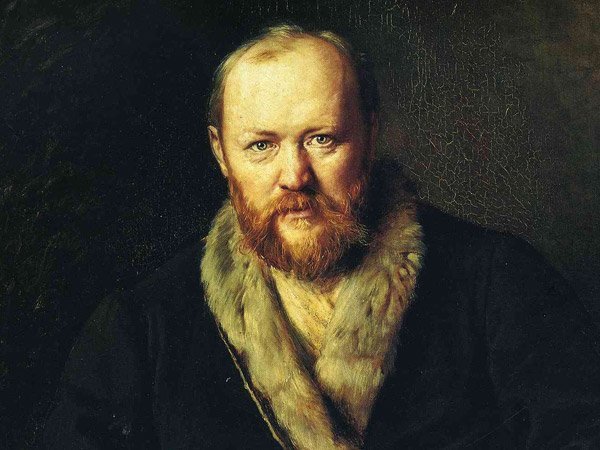
On April 12, 1823, the famous playwright Alexander Ostrovsky was born.
Personal business
Alexander Nikolaevich Ostrovsky (1823–1886) was born in Moscow, in Zamoskvorechye, which was then the merchant district. His grandfather and his mother belonged to the spiritual estate, his father, Nikolai Fedorovich, graduated from the Theological Academy, but became not a priest, but a judicial official. He made a successful career, received a hereditary nobility, then he became a jury, that is, we will go to private matters in commercial ships.
After graduating from the gymnasium, Alexander Ostrovsky entered the law faculty of Moscow University, however, study and further legal career did not attract him too much. He was interested in literature and theater, and he already tried to compose poetry and prose. As a result, Ostrovsky left the university in the second year, began to work as a clerical employee in Moscow courts.
On February 14, 1847, Ostrovsky read the dramatic scenes “Picture of Family Happiness” in the house of Moscow University of Moscow University of Moscow University. This work was soon published in the Moscow City Leaf. In the same year, the Essays on the Zamoskvorechye and one scene from the Bankut comedy appeared, and in 1850 this play (under the title of “Your People Count”) was printed in the magazine Moskvityan . The action of the comedy takes place in the house of the rich merchant Bolshov. Out of greed, he decides to fraud. Bolshov declares himself bankrupt, having previously transferred all the property to the clerk of the subchanus. He expects that as a bankrupt he will pay only a small part of his debts (“on a penny for the ruble”), but lenders agree to release the merchant from the debt prison only if he pays at least a quarter. When Bolshov is released from prison so that he gets the right amount, the son -in -law and daughter, who took possession of all his money, refuse to pay for him. Big has to return to the debt prison. It would seem that the fraudster is punished, but the daughter and son -in -law also do not cause any sympathy. Such a final in Russian drama has not yet been. The play, not yet seeing the scene, has already received enthusiastic responses. Shevyrev called Ostrovsky “a new dramatic luminary in Russian literature”, Alexei Khomyakov recognized the play “Excellent Creation”. The published play was read everywhere, in various salons Ostrovsky read it personally, but her path on the stage was long. The influential Moscow merchants, offended by the entire estate, complained to the "superiors"; The author was fired from the service and, as "unreliable", was given under the supervision of the police. The audience saw the play only eleven years later, and then with a changed ending.
But the inability to put the first play did not cool Ostrovsky’s craving for drama. He continued to publish new dramatic works. Following the small scenes “The Morning of the Young Man” in 1852, everything in the same magazine Moskvityanin appeared the comedy “Poor Bride”, and a year later the comedy “Do not sit in your sled”. She finally became the first of Ostrovsky’s works, set on stage. Since then, almost every theater season in the Maly Theater in Moscow and the Alexandrinsky Theater appeared a new play by Ostrovsky, and often not one. Also since 1856, Ostrovsky has been a regular employee of the magazine "Contemporary". In the same year, he drove a trip along the Volga: from the sources to Nizhny Novgorod.
Ostrovsky owns a number of historical plays: “Kozma Zakharyich Minin-Sukhoruk”, “Voivode”, “Dmitry Impostan and Vasily Shuisky” and others. He also wrote a dramatic poem in the verses of “Snow Maiden”; The Rimsky-Korsakov opera created on its basis has gained immense popularity.
At the end of his life, Ostrovsky created several plays dedicated to the Russian theater. In 1872, he wrote the poetic comedy “Comedian of the 17th Century” about the birth of the first Russian theater at the court of Tsar Alexei Mikhailovich. Two plays of Ostrovsky about the modern theater - “Talents and Fans” and “Without Guilt” are better known. The problems of the theater occupied Ostrovsky not only on stage, for many years he tried to change the system of drama theaters, wrote numerous projects, hoping to convince power of urgent actions. He was a permanent chairman of the Society of Russian Drama Writers and Opera Composers. He worked in the commission “to revise laws on all parts of theatrical administration”, established in 1881 at the Directorate of Imperial Theaters, where he achieved many transformations that significantly improved the position of artists. In the end, in 1886, the seriously ill Ostrovsky was appointed head of the repertoire of Moscow theaters. Alexander Ostrovsky died on June 14, 1886 in the estate of Shchelykovo, Kostroma province.
What is famous
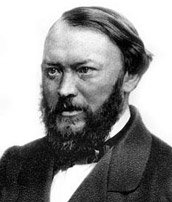 Alexander Ostrovsky
The outstanding playwright Alexander Ostrovsky became one of the creators of the Russian realistic theater. In 1854, the play “Poverty is not a vice” was staged in the Maly Theater. The production caused hot disputes. Apollo Grigoryev published a poetic review in Moskvityanin, in which he declared the appearance of the play by the beginning of a new era in the Russian theater. This opinion was shared by many. At the same time, both among readers and among the audience and even among the actors were people who shocked and repelled the excessive vitality of the playwright's work. The great actor Mikhail Shchepkin, although he highly appreciated Ostrovsky’s talent, but objected to the production of the play in the Maly Theater, considering, in particular, the role of the drunkard and Zabuldygya was loved by Pertsov too “dirty”. Many joined this opinion, believing that the world of merchants and clerks, hooks and drunkards is not worthy of stage incarnation. Critical reviews of the very opposite kind received. Chernyshevsky and Dobrolyubov considered “poverty not a vice” by a weak play, but its happy ending - not a sinking of popular kindness, but with embellishment of real, much more gloomy reality. However, Ostrovsky insisted that they should not instill a sense of hopelessness in the viewer, but to show the heroes of positive ones that can withstand the cruelty and immorality of the world. He wrote to M.P. Pogodin: “Let the Russian person rejoice, seeing himself on stage, what he yearns. There are correctors without us. In order to have the right to correct the people without offending them, he must show him that you know the good after him; I am now doing this, connecting high with the comic. ”
One of Ostrovsky’s work was the play “Thunderstorm” (1859). Its action takes place in the provincial town of Kalinov. The merchant wife Katerina, raised in strict rules, fell in love with the young man who came from Moscow, changed her husband and, not wanting to hide this, publicly admitted and rushed to the Volga from the cliff. The article by Dobrolyubov “Ray of Light in the Dark Kingdom” sang Katerina, whose suicide, according to critic, was not a manifestation of weakness, but the only possible protest for her. For Dobrolyubov, the play has become a symbol of approaching changes, whose offensive can no longer be stopped.
In the play “Forest” (1870), the action takes place on the estate of the hemp of the landowner Gurmyzhskaya, who, by its own will, runs fate of people dependent on it. She sells the forest belonging to her because she needs money for the poor, in her own words. However, it quickly becomes clear that the money for the Gurmyzhskaya is, first of all, the opportunity to buy a young lover. The landowner is going to marry the son of his impoverished girlfriend, and noting that the groom drew attention to Aksyusha, who was living in her distant relative in the house, expels the girl out of the house, denying her dowry. The only truly strong and noble person in the play is the wandering actor of the unlucky, the nephew of the Gurmyzhskaya, who, without hesitation, gives the money he received from the Gurmyzh to Aksyusha and, abandoning wealth, again embarks on endless journeys in Russia. He managed to make the happiness of a young couple, but nothing else can change. “Brother Arkady, why did we go, how did we get into this forest, into this cheese-sprinkle boron? - He turns to his companion, - Why did we, brother, frightened owls and owls? What to interfere with them? Let them live as they want! Everything is in order, brother, how to be in the forest. The old women marry the gymnasium students, young girls are heaving from bitter life among their relatives: forest, brother. "
In the last decade of life, Ostrovsky’s work is becoming more and more tragic. The fate of Larisa, the heroine of the play “The Dodannate” (1878), who, like many other heroines of Ostrovsky, dreams of a better life, about the opportunity to break out of his provincial little world. The action takes place in a large fictional city on the Volga - Bryakhimov. The beauty of the unlucky Larisa Ogudalova is going to marry a poor official Karandyshev. Earlier, Larisa survived the strongest hobby for the “brilliant master” Paratov, who turned her head, beat off all the grooms and suddenly left. After the scandal, when the next groom for embezzlement was arrested right in the house of the Ogudalovs, Larisa announced that she would marry the first, who would get stuck, and Karandyshev was a long -standing and unsuccessful fan - "and what's the right there." Suddenly, Paratov returns to the city. It turns out that he is going to marry a rich bride and become the owner of the gold mines. Larisa is confused - she still loves Partova. She asks Karandyshev as soon as possible to get married and leave for the village. But he does not want to rush to satisfy his pride, insists at a magnificent wedding. Larisa reproaches him for this, not at all hiding that he does not love him, but only hopes to love him. At the dinner at Karandyshev, merchants plow it and, without hiding contempts, send it for wine. The company is going to a picnic on the Volga. Men say to each other that it would be good to take Larisa, Paratov takes her to persuade her. Karandyshev, about to say a long -prepared toast, leaves for champagne, the rest leave Paratov alone with Larisa. He says that a few more such moments, and he will abandon everything to become her slave. Larisa agrees to go to the picnic in the hope of returning Paratov. The person who appeared pronounces a toast for Larisa, in which he is most expensive for him that she “knows how to disassemble people” and therefore chose it. Karandyshev is sent for wine. Having returned, he learns about Larisa’s departure to the picnic, finally understands that they laughed at him, and threatens to take revenge. Grabbing the gun, he runs away. Returning to the city, Larisa finds out that Paratov does not intend to marry her. The rich merchants of Knurs and Vozhevaty throw a coin to find out which of them will get Larisa. The winner Knurov invites her to become his maintenance. In desperation, Larisa approaches a cliff, dreaming of dying, but does not dare to commit suicide and exclaims: “As if someone had killed me now ...”. Larisa decides: "To be a thing, so expensive, very expensive." She repels Karandyshev that appeared and asks him to send Knurov to her. The furious and humiliated Karandyshev shoots at her. The dying Larisa gratitude accepts this shot, puts the revolver near him and tells the firing that no one is to blame: "This is me."
What you need to know about
In the 20th century, filmmakers made a number of successful adaptations of Alexander Ostrovsky’s plays. The first films appeared in the era of silent cinema. In 1911, the film was shot on the historical play "Vasilisa Melentievna." The films “The Unpridant” (1912), “The Guilty” (1916), also appeared, and the play “In a Boyfound Place” was filmed before the revolution three times. The first appearance of Ostrovsky’s work in Soviet cinema was the “thunderstorm” of Vladimir Petrov, the film was awarded the award of the 1934 Venice Film Festival. In 1936, Yakov Protazanov shot the "Associated", in 1945 - Vladimir Petrov was making the film "Without guilt to the guilty." In 1964, the film comedy "Marriage Balzaminov" with George Vitsin in the title role appeared in the main role. She was shot on the three plays of Ostrovsky: “A festive dream before lunch”, “Your dogs bite, Alien do not bother!”, “What will you go for, then you will find it.” In 1984, Eldar Ryazanov shot the film “Cruel Romance” based on the play “The Dodante”, well accepted by the audience and caused fierce controversy among film critics. Twice films were shot based on the play “Snow Maiden” (1968 and 1971, under the name “Spring Tale”). Also, the Snow Maiden became the basis for two cartoons: in a classic directed film, the directed film of the director Ivanov-Vano (1952) and the puppet film of Maria Muat (2006), which received the Nick Award.
Direct speech
“The most harmful, most fatal consequence of real dramatic censorship for the repertoire I consider the fear of prohibiting the play. The author, especially the beginner who has one or two plays forbidden to explain the reasons, involuntarily should be afraid of all, so as not to lose his work. A broad thought came to him - he shortens her; A strong character was successful - it weakens it; The brisk and good phrases occurred to his mind - he smooths them, because in all this he sees the reasons for the prohibition, in ignorance of the actual reason. Such constant shortening, suturing itself is harmful to productive abilities, for a long time then responds in all activities; I say this from my own experience. In order to only have the hope of seeing your works on the stage, willy-nilly chasing serious, life ideas from your head, you choose a universal task, smaller plots, and more pale characters. We can say with the full confidence that the fear of prohibition should be considered the main reason for the colorlessness of our repertoire, ” - A. N. Ostrovsky from the section on theatrical censorship of the article“ circumstances that impede the development of the dramatic art of Russia ”.
“This man is huge talent. I think in Rus' three tragedies: “Undergrowth”, “Woe from Wit”, “Examiner”; On Bankrot I put the fourth -fourth numer, ” - V.F. Odoevsky
10 facts about Alexander Ostrovsky
- In the Moscow Commercial Court, where he served for a long time, and in the house of his father, whose clients were Zamoskvoretsky merchants, Ostrovsky received a large amount of material for future plays: stories from real life, human types.
- The younger brother of Alexander Ostrovsky , Mikhail Nikolaevich , was the Minister of State Property and a member of the State Council.
- Ostrovsky translated a number of foreign plays into Russian, including the works of Goldoni, Cervantes, Machiavelli, Shakespeare.
- During a trip to the Volga in 1856, Ostrovsky began to collect dialect words. He later continued this lesson when he lived in Shchelykov. As a result, the “Experience of the Volga Dictionary” arose, which is a “collection of words used on the Volga and its tributaries, regarding the bottom, shores, bays, etc., regarding shipping, shipbuilding, fishing and other river and coastal crafts.” Together with other dialectic materials collected by Ostrovsky, it is published as part of the collected works.
- Peter Vail and Alexander Genis noted that Katerina in the “thunderstorm” is unexpectedly similar to Emma Bova described by Flaubert. Both heroines are exalted religious; Both dream of flying like birds; Both with joy recall childhood and youth; both are engaged in embroidery; The family situation is similar - the hostility of the mother -in -law and the softness of husbands; Both are unlucky with lovers - both of them refuse to take them to the request.
- Ostrovsky became the only playwright, during his lifetime depicted on the Preterfon of the Mariinsky Theater in St. Petersburg.
- The dramatic fairy tale "Snow Maiden" appeared thanks to the repair in the Maly Theater. Because of this circumstances in 1873, the troupe moved to the Bolshoi Theater building. The leadership of the imperial theaters decided to put a performance-Feria, where all three troupes would participate: dramatic, opera and ballet, and ordered such a play by Ostrovsky.
- The success of the play “The Diva” led to the fact that the name of Larisa for the first time became popular in Russia.
- Six operas were written on the plot of the play “Thunderstorm”: Boris Asafiev, Leos Yanachek (under the name “Katya Kabanova”), Vladimir Kashperov, Viktor Trambitsky, Ivan Dzerzhinsky (not finished) and Lodovico Rockka.
- In the playful "literary tablets about the ranks" compiled by Chekhov, Ostrovsky got the rank of state adviser.
Materials about Alexander Ostrovsky
Ostrovsky, Alexander Nikolaevich. Russian biographical dictionary.
Works by A. N. Ostrovsky in the knitting attister of Moshkov
N. Dobrolyubov "Ray of Light in the Dark Kingdom"
A. N. Ostrovsky in the memoirs of contemporaries
Article about Alexander Ostrovsky on Russian Wikipedia