
Translated material
Close-snow retro

At the Berlin Film Festival, the main competition was shown the new film by Fatikha Akin, one of the most titled modern German directors, a “golden glove”. According to the general opinion of critics, he can apply for one of the main awards of the review, which indirectly testifies to the fact that the tape in the schedule turned out to be unexpectedly a lot of sessions.
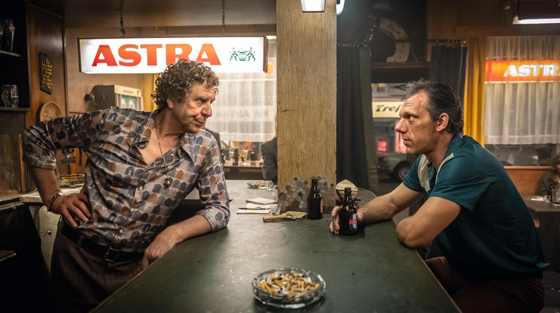
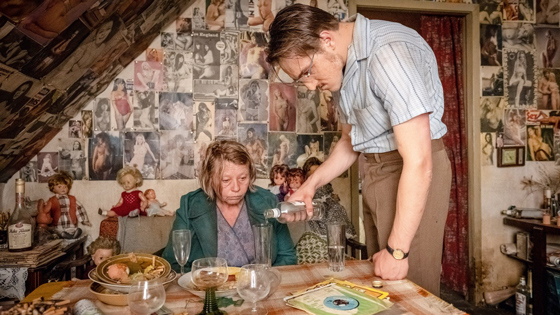
In the 70s in Hamburg in the dirty tavern “At the Golden Glove”, drunkards and elderly prostitutes gather; At the sticky tables, drinking schnapps and beer, they tell the sad stories of their life. Fritz Honka regularly comes here - a stooped worker with rare sebaceous hair combed back and with a broken nose. Like everyone around - for women. He brings them home - to a dirty attic, glued with clippings from erotic magazines, and in despair from the sight of terrible bodies, the old women kills them. The bodies are divided and hides in a wall cabinet.
 © Bombero International
One can only guess what happened to Fatich Akin after his previous film “On the Limit” - a boring, ideologically true drama about the complexity of relations with migrants in modern Europe. His appeal to Khinets Strunk, who was not so long ago published about the actual Hamburg Ripper Honka, is not only a tribute to the fashion for Troops, but also in a sense, a story personal for Akin: the director grew exactly in the quarter in which Honka lived and killed. Here, analogies beg with the “House that Jack built”, but, unlike, rather, the sarcastic film Trier, “Golden Glove” is a natural tragicomedy.
 © Bombero International
Despite the naturalistically shown killings and other shock-content, the “golden glove”-the moments of the homerically ridiculous movie. On the screen there is a retired SS, covered with ulcers and herpetic rashes of prostitutes, Fassbinder actor Hark Bom in the role of an elderly sailor - a gallery of characters of too grotesque and caricature to seriously regret or hate them. Honka himself, perfectly played by Jonas Dassler, who, with all the disgust, is so absurd, is so that it even causes pity. What is happening on the screen looks like a shapito or a show of freaks - it is no coincidence that Akin calls one of his cultural references Toda Browning's “freaks”. There are numbers with cutting off the head with a saw, and table bikes, and drunken songs about love, sentimental to tears.
The visual part of the film is incredibly textured - retroesthetics of dens and social bottom; Brown in all shades of brown (dirt, blood, feces and so beloved in the 70s, the color of the beige) The picture in itself gravits the eye.
 © Bombero International
The only question that arises when you have already enjoyed all this panopticon - why is it all? Akin denies the social and political subtext of the film, saying that this is just the story of the mentally ill.
It is difficult to believe in the sincerity of the words of Akin, who was always interested in the social background of the events. The residents of the bottom in the film are observed from the side two teenagers, one of whom is a high school student left in the second year. Showing them the opposite side of the German economic miracle of the 60s-70s, Akin allows the viewer to consider the wrong side of the Society of well-being, which was described in such detail by Fassbinder, from which the audience German directors of the 2000s resolutely renounced. Well - it’s never too late to admit your mistakes.
Subscribe to the COLTA.RU channel in Yandex.Zen to miss nothing