
Translated material
Who came for "Bashneft"
The story of the Bashkir TEK from the Rakhimov to Yevtushenkov. Essay on Ilya Zhegulev
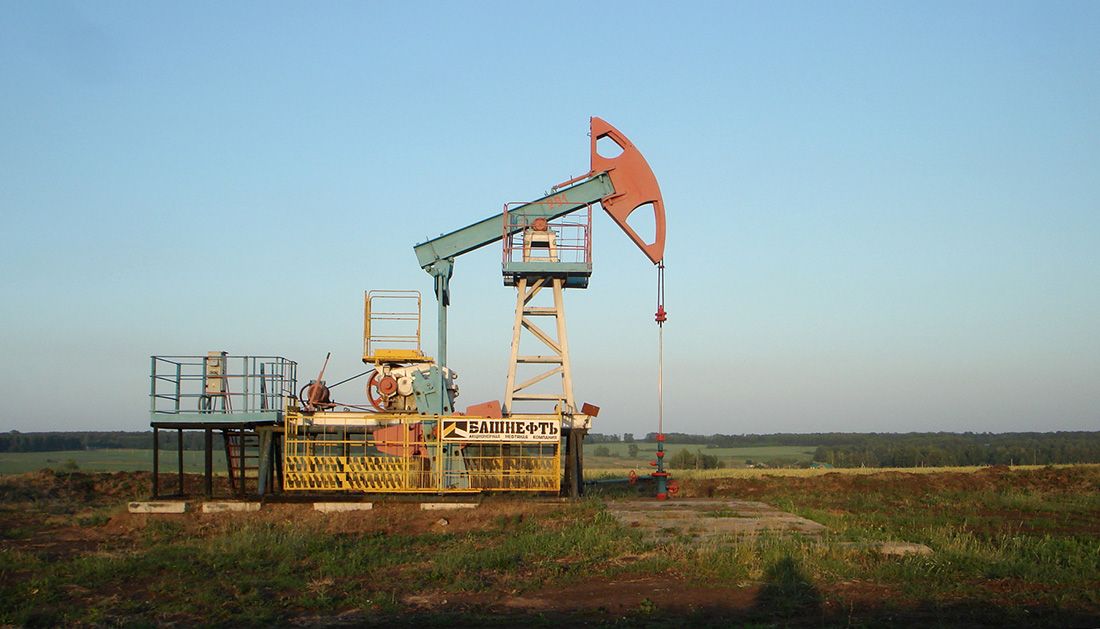
The purchase of Bashneft cost the founder of AFK Sistema Vladimir Yevtushenkov Freedom - he has been under house arrest for a month, he has been accused of embezzlement of shares. There is a version that the head of Rosneft Igor Sechin claimed for Bashneft. Journalist Ilya Zhegulev (Rain TV channel) specifically for Medusa tells how valuable “Bashneft” is valuable, who owned it and what Evtushenkov is pursuing for it.
* * *
The quiet August night of 2003 in Zlatoust caught fire of the printing house. The attackers arrived on the Red Niva, threw five -liter canists into the windows of the printing house, and then fired incendiary missiles. On the same Red Niva, the participants of the Kingisepp gang left Zlatoust.
So the owners of the Bashneft fought off the first attack of Igor Sechin: in the printing house located on the border with Bashkiria, they printed leaflets against the President of the Republic of Murtazi Rakhimov. Sechin, then - Deputy Head of the Presidential Administration, tried himself in a new, unusual role: the hardware fighter first joined the political confrontation. The businessman, managing director of Interprombank Sergey Veremeenko, supported by Sechin, fought for the post of President of Bashkiria desperately - the country, perhaps, did not know a more dirty election campaign. However, Murtaza Rakhimov found influential intercessors and, nevertheless, was able to convince Vladimir Putin to leave him for one more period.
A few months before the fire in Zlatoust, the privatization of a large state oil company ended: with the help of simple schemes, the Bashkir fuel and energy complex quietly crossed the family of the head of the region Murtazi Rakhimov. It was then, in 2003, the latest history of Bashneft began, which a decade later led to the arrest of the founder and owner of the AFC Sistema, Vladimir Yevtushenkov. That tough election campaign was only the first attempt to take possession of Bashneft. This attempt failed. But Sechin did not give up.
Bai-neft
It is now difficult to imagine that once the Bashneft was the main supplier of oil in the Union. In 1954, the young enterprise came out in the first place among the mining companies in the USSR, in the 1960s it mined up to 48 million tons per year. However, over time, reserves were exhausted, and serious competitors appeared in the Tyumen region. In 2003, the Yukos NK extracted 80 million tons, and Bashneft-“total” 12 million, that is, seven times less. Over the past ten years, the production of Bashneft has not increased much. In 2013, the company got 16 million tons, while Rosneft, which grew up due to the assets of Yukos and TNK-BP, is already 205 million.
Bashneft is now the seventh of Russian companies in terms of oil production. And there are too many sulfur in Bashkir oil, it is reluctant to take it into the pipe-it is precisely because of it (and because of the same Tatar) Russian oil Urals is cheaper than the Brent brand.
But in Bashkiria, oil refining capacities are preserved, designed for huge production resources. So the main asset of Bashneft is not a deposit, but four oil refineries: Ufa and Novoufim refinery, Ufaneftekhim and Ufaorgsintez. Together they process much more than the Bashneft mines. In the structure of revenue, income from sales of petroleum products is approximately 70%.
This structure of the enterprise that was not too typical for oil companies also influenced the company's business features.
In Bashkiria, the oil industry is determining for economics and politics. The oil industry, director of the Ufa refinery, Murtaza Rakhimov, in the first free elections, fell into the Supreme Council of Bashkiria and became its chairman. Rakhimov was never a democrat, but he knew how to maneuver, albeit on the verge of a foul: on August 19, 1991 he supported the GKChP, but as soon as it became clear that the case was lost, publicly left the CPSU and spoke for Boris Yeltsin. And in 1993, Murtaza Rakhimov was elected president of the republic.
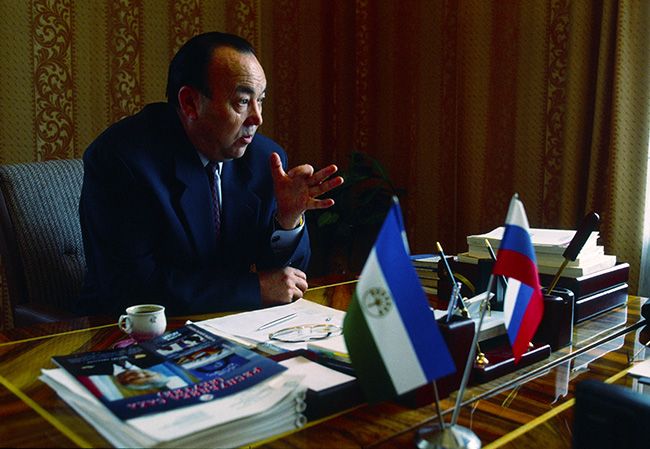
Rakhimov firmly held the oil industry in his hands and was consistent. Back in 1992, the local parliament (with its chairperson) suspended the effect of federal legislation on privatization in terms of the fuel and energy complex-and introduced the local. The petrochemical giants underwent cornation, the republican authorities received control over them. Loyal leaders were rejused, just in case, appointing them the deputies - “looking” from among the personal acquaintances of Murtazi Rakhimov.
Finally, the rules of the game in the Bashkir TEK were formed in the second half of the 1990s. Local processing plants were not enough for their oil, and large companies were cautious of Bashneft and were ready to supply her with their oil only for prepayment. But the refinery had no money for this, so the “Bashneft” acquired traders - the so -called “Davalians”. "Davalale" appeared at the factory with its oil; No one knew where he got from, but no one was interested in anyone, because the trader did the main thing - he took the capacities of the refinery for rent. For the agreed fee, the Davalts processed its oil and took it away, but already in the form of oil products - gasoline and fuel oil.
Those who managed to become a “Davalts” instantly received superprofits. With each redesigned ton, you can get $ 25, and the refineries allowed hundreds of thousands of tons per month to be processed. Whom to let in the "Bashneft" with a "tall" scheme was personally decided by the Ural Rakhimov, the son of the president of the republic. Officially, he headed the advice of directors at once several companies, and met with “clients” and “partners” in the Bashkirenergo House of Receptions. Both the director of factories and the Davalts went there. The intermediaries appeared suddenly, it was possible to make money quickly and a lot. But also the abyss could also be quickly-the competition was wild due to the opacity of decisions made by the Urals.
So, for example, literally from nowhere, the Davaliy Khitarishvili, which arose at the beginning of the zero, became a millionaire, having earned $ 90 million only in 2002. Hitarishvili and perished with the same swiftness: in December 2002, the entrepreneur shot him. According to the verdict of the court, it was “ordered” by another “Davalts”, Igor Izmestiev, who wanted to get rid of the competitor.
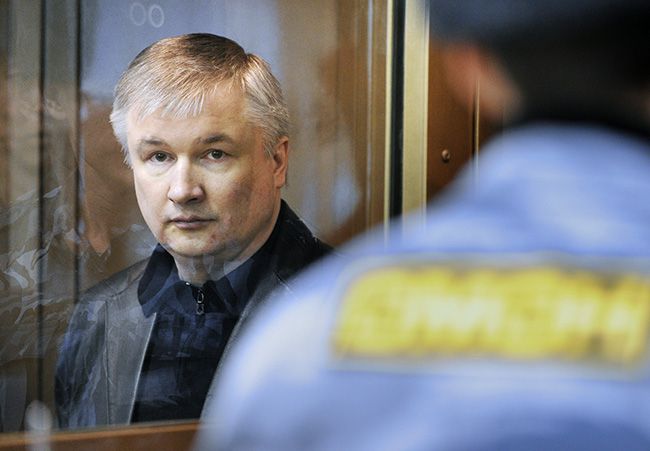
Entrepreneur Igor Izmestiev supplied to local refineries up to 400 thousand tons per month - a fifth of the volume that the Republican FE could be processed. As Forbes wrote, by 2000, oil refining at the Bashkir refinery could bring $ 700-800 million to Izmestiev. Competitors from Izmestiev interfered-he was too expensive for the status of the proxy of the Urals Rakhimov: the Davalts fulfilled the most difficult instructions of the presidency of the presidential son, relying on his connection in Moscow. Back in the early 1990s, Izmestyev made friends with the former boxer Sergei Finagin, the leader of the Kingisopian gang. Finagin's people were ready for anything: from the murder of the first deputy director of the Novoufim refinery of Salavat Gainanov in 1994-to a fragment of the ill-fated printing house in 2003.
These ties of the "Davalts" Izmestiev in the end were summed up. In 2010, the Moscow City Court sentenced him to a life imprisonment.
And to the disclosure of the details of the activities of Igor Izmestiev, an event was completely unrelated to “Bashneft” - a tragedy in Beslan. In connection with the attack in the fall of 2004, security measures intensified throughout the country, attentive patrols walked along the streets of cities in search of suspicious persons. On September 18, in the Presnensky district of Moscow, police officers noticed a man who nervously looked at his car. Everything was in order with the documents, but at the request of the police to open the car, the man immediately offered a bribe of $ 30 thousand. Times, however, were not the same: the car was opened, finding TNT checkers and a couple of mines there.
The man was taken to the station and interrogated so carefully that by the morning he died. The submariner Alexander Pumane was in no way connected with the terrorists who captured the school in Beslan. But he turned out to be one of the killers of the “Kingisopian gang”. The leader of the gang Sergey Finagin, arrested in 2006, gave generous testimony: it turned out that the gang received a significant part of the “orders” from the “Davalts” Izmestiev.
Empire of the Urals
New President of Russia Vladimir Putin headed for centralization. The local princes decided to subordinate to the system, and in the event of resistance - to dismiss. The Kremlin did not have a consensus on what to do with the “woman”, as Rakhimov was called for the eyes: on the one hand, the Bashkiria economy was in a frozen state, feudalism reigned more than somewhere in the country; On the other hand, Rakhimov provided good elections and was a guarantor of political stability.
The clouds above the head of Murtaza Rakhimov began to thicken. But the flair of old politician never failed. And if you leave politics, it is clearly not empty -handed.
In 2002, Murtaza Rakhimov concentrated all the assets of the Bashkir fuel and energy complex in two state-owned companies and allowed them to sell the enterprises recorded on them. Among the potential buyers there was even billionaire Oleg Deripaska: having joined forces with other minorities, he tried to introduce his representative into the Bashneft board of directors. However, the representative of Deripaska in 2003 was not actually allowed for the annual meeting - he was kept on registration exactly until it ended.
But Rakhimov, obviously, was not going to sell assets to an external investor. To protect the industry, he decided to bring it out of state control. As a result, both state -owned companies transferred control bags of enterprises of seven little -known firms, most of which were registered in the republic. In the summer of 2003, all these service companies have become co -founders of a new, now completely private company. Her board of directors was headed by the Ural Rakhimov himself. Participation in the company of the company "paid" with shares in the energy enterprises that they got earlier; Later, these securities were handed over to four charitable funds associated with the Urals Rakhimov.
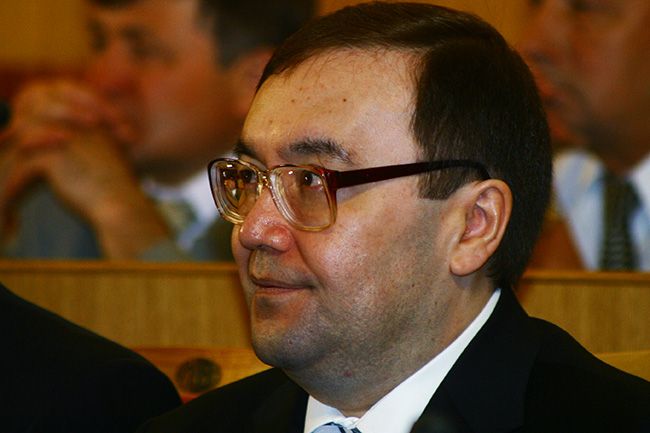
The story with re -registration of oil assets did not go unnoticed in Moscow. In Bashkiria, the auditors of the Accounts Chamber of Russia were sent to Bashkiria. Their conclusions were obvious. “This is the most unprecedented case of embezzlement of assets from federal property in the history of oil refineries in Russia,” concluded auditor Sergei Ignatov.
In Bashkiria, the County Chamber’s audit itself was connected with politics: at that time, the campaign for the president’s chair was gaining momentum in the republic, Sergey Veremeenko fought with Murtaza Rakhimov - and not notious. However, a causal relationship was rather different.
In the same 2003, the case of Yukos began. The initiator of the persecution of the founders of the oil company was already called Igor Sechin; It was also believed that he acted in the interests of the State “Rosneft” (in February 2004, Sechin entered her board of directors, in 2004 he headed him, and in 2012 he became the president of the state-owned company; the main document of the era on this topic was an analytical note that is close to the Kremlin of the political scientist Gleb Pavlovsky). Rosneft just bought North Oil, planning to expand further. Obviously, her appetites were not limited to Yukos.
Having won the election, Sergey Veremeenko was supposed to restore the previous status quo at the local TEK, returning oil companies back to the state property, tells Medusa a source that then worked in the Bashkir government. And he explains: in the event of a change of power, the history with privatization could be replayed, recognizing it illegal - as a result of the audit of the Accounts Chamber opened a criminal case.
Apparently, Igor Sechin decided to develop activity in all directions. This could not but alarm his opponents, including in the Kremlin. Sechin’s resistance was provided by the head of the presidential administration, Alexander Voloshin, acting through the Yeltsins family, his assistant Vladislav Surkov and even his friend Putin Dmitry Medvedev (who, as the Medusa’s interlocutors from the presidential administration claim, was never entered the same camp with Sichin and fought with him for influence). “Sechin went too aggressively [to Bashkiria],” says the official, who oversaw the Bashkir direction at that time. “The nomination of Veremeenko was an absolutely Sichin game.” “The whole family [Yeltsins], Voloshin, Surkov helped Babay sit so that Sechin did not strengthen his influence so,” a source that worked in the Bashkir government tells Medusa.
On October 25, 2003, the head of the oil company Yukos Mikhail Khodorkovsky was arrested. It was a convincing victory of the Kremlin’s power wing and, above all, Igor Sechin. His antagonist, Alexander Voloshin, resigned.
And after a month and a half, December 7, 2003, Veremeenko achieved serious results in Bashkiria. As the source from the Bashkir government explains, "from the stuffing of Rakhimov, they skillfully defended themselves with the help of the security forces uncontrolled to him." Representatives from the prosecutor’s office, who were called by call from Moscow, came to almost every site - to monitor compliance with the rule of law; With them, the Bashkir police did not dare to expel observers. As a result, Rakhimov could not win the first round. The president took 43.04%, Veremeenko got 25.15%. The third was Senator Ralif Safin with 22.89%. The influence of Rakhimov swayed: in the case of the removal of Safin, Veremeenko could win with Rakhimov with ease. For Babay, the result of the first round was already a crushing defeat.
In general, it seemed that the path to Bashkiria for Igor Sechin was open.
However, Vladimir Putin suddenly met with Rakhimov. Two days after the election, Lame, the president sat in the office of the head of state. The Kremlin official, who was preparing this meeting, tells that she stretched for several hours; Putin even interrupted her to attend a protocol event. What they were talking about then is unknown. Be that as it may, the meeting has not yet ended, and the team has already arrived from Putin: “Not to prevent Rakhimov from winning in the second round,” the source says.
Veremeenko actually withdrew the candidacy from the elections, Rakhimov won with the usual Turkmen result. Sichin had to retreat.
Magistration from Moscow
It can be assumed that Rakhimov assured Putin: the stability of the region is more important than the struggle against mythical feudalism. And, apparently, even then I agreed that it would gradually say goodbye to Bashkir assets. Whether this has become a real condition for maintaining power is unknown. However, already in 2005, 25% of Bashneft (and from 18 to 28% of other Bashkir TEK enterprises) departed AFK Sistema. The deal was approved at the very top, the source of Medusa testifies.
At the same time, tax authorities were again pressed on the president of the republic-in May 2005, the Bashkiria arbitration court demanded that the company controlled by the Urals Rakhimov return part of the assets of the local fuel and energy complex to the state. In June, the parties entered into an extrajudicial agreement. And in August, the “system” began to draw up a transaction on the acquisition of Bashneft.
Completely buy the assets of the Bashkir fuel and energy system and consolidate them under the same name - “Bashneft” - the founder and head of the AFC Sistema, Vladimir Yevtushenkov, managed only in 2009. Then again there were many rumors that the state "Rosneft" has views of "Bashneft". But the post of president of Russia was occupied by Dmitry Medvedev, and Sechin's positions were much weaker.
At the same time, the Kremlin said that Yevtushenkov is just a temporary holder of the Bashneft, and that he was redeeming the enterprise, then to transfer Rosneft later. This version is also confirmed by the fact that in 2005, Yevtushenkov bought a blocking package of the company for his $ 600 million, but the remaining packages of companies in 2009 were already purchased for $ 2 billion, employed for seven years from the State VTB.
What in the end went to Yevtushenkov?
OJSC ANK "Bashneft". Key link of assets; Actually, a mining enterprise. Bashneft has been led since 1932, now its deposits have been extremely exhausted and demand investments. An indicator of daily selection of oil from one well near Bashneft is the worst in the industry. Only less than 10% of all its oil "Bashneft" was extracted from better deposits located in Western Siberia.
Three old refineries-“Ufa”, Novo-Ufa and “Ufaneftekhim”. 14% of total gasoline in Russia and 13% of all diesel fuel were produced.
OJSC "Ufaargsintez". Another refinery, but not like everyone else. Here, oil is processed significantly less, but the value added is greater. The plant is the largest producer of phenol in the country and in third place in Russia for the production of polypropylene. The plant was the pride of the Urals of Rakhimov, he was in a large time in it.
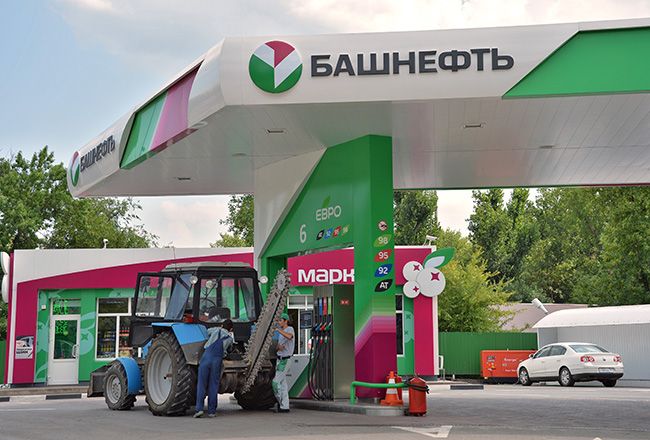
OJSC "Bashkirnefteprodukt". The main seller of Bashkir gasoline is about 280 of his own gas stations and another 40 - in management.
OJSC "Bashkirenergo". Local energy asset. The company controls 100% of the Bashkir electricity market and 80% of the heating market.
During the time, while Yevtushenkov owned Bashneft, AFK System earned $ 3.8 billion (according to Forbes) to $ 6 billion (according to the version of the Investigative Committee) on these assets. Так что люди, пришедшие к Евтушенкову за «Башнефтью», не рассчитывали встретить отпор, рассказывает источник «Медузы». Но предприниматель не хотел уступать компанию за ту цену, которую ему предлагали. По словам собеседников «Медузы», он всерьез рассчитывал на помощь премьер-министра Дмитрия Медведева, который его не раз уже выручал.
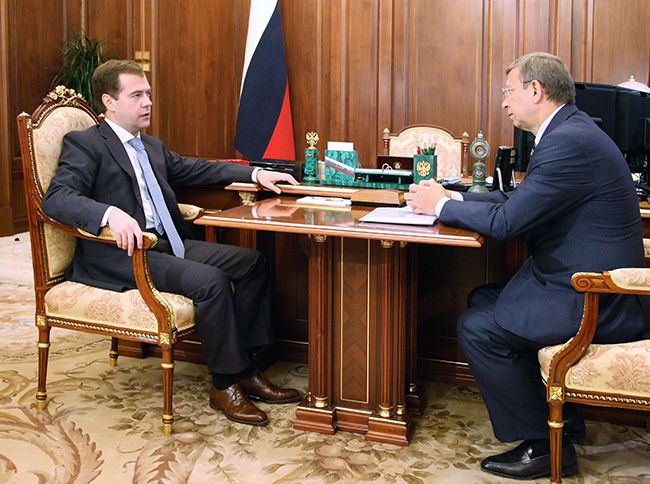
И это, судя по всему, правда. Например, Медведев, по-видимому, поддержал Евтушенкова, когда налоговики пытались оспорить приватизацию башкирских нефтяных компаний с помощью 169-й статьи Гражданского кодекса о сделках, «противоречащих нормам морали». Тогда национализация башкирского ТЭКа застопорилась после специального определения Высшего арбитражного суда. Возглавляемый однокашником Дмитрия Медведева Антоном Ивановым суд всего за полтора месяца выпустил разъяснение, в котором ограничил применение 169-й статьи в налоговых делах.
Медведев настолько часто вступался за «Систему», что среди людей, вращающихся в кругах, ответственных за ТЭК, намекали: треть консолидированной в руках Евтушенкова «Башнефти» может принадлежать премьеру. «Сейчас в разговорах о „Башнефти“ среди чиновников фамилия Евтушенкова практически не упоминается. Все уверены, что это удар именно по Медведеву», — заключает источник, близкий к правительству Башкирии.
Не по понятиям
«Башнефть», купленная «Системой» продолжала испытывать нехватку ресурса — как добывающая компания. Это продолжалось вплоть до того момента, когда компания смогла выиграть лицензию на месторождение Требса и Титова в Ненецком автономном округе. «„Башнефть“ могла бы стать совершенно другой компанией, — рассказывает партнер и аналитик консалтингового агентства RusEnergy Михаил Крутихин. — Тут уже получалась совсем иная перспектива. Это нефть хорошего качества, и ее много».
«Система» договорилась разрабатывать это месторождение в сотрудничестве с «Лукойлом», у которого рядом был свой НПЗ и небольшой экспортный терминал. Но партнерству неожиданно попытались помешать пожилые миноритарии «Башнефти». Пожилые — буквально: несколько пенсионеров выступили против сделки. Юристы, представляющие их интересы, пытались оспорить создание совместного предприятия с «Лукойлом» и передачу лицензии. «Они обращались в суд, добивались замораживания проекта. Все понимали, что не старушки [эти] — настоящие истцы, которые плели интриги, — рассказывает Крутихин. — А кроме Сечина эта компания никому другому была не нужна».
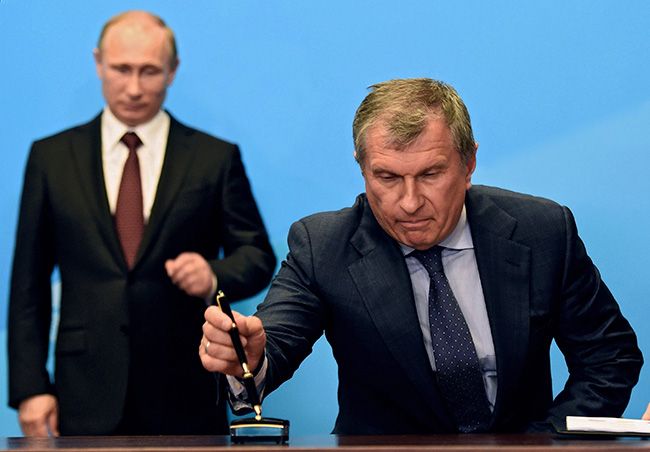
В мае 2012 года Роснедра возглавил Александр Попов — бывший помощник Сечина. После этого дела миноритариев «Башнефти» резко пошли в гору. По иску Светланы Проскуряковой, которая сочла, что потеряла в дивидендах, когда «Башнефть» решила организовать совместное предприятие с «Лукойлом», лицензия вернулась «Башнефти». В итоге «Система» потеряла инфраструктуру и инвестиции для разработки недр, а «Лукойл» — доступ к ним.
Чтобы вернуть лицензию совместному предприятию, потребовалось два года. Но летом 2014-го появился новый иск: 75-летняя Райля Иноземцева возмутилась малыми дивидендами. Иск этот не был бы таким абсурдным, если бы не невероятные дивиденды, выплаченные акционерам «Башнефти» по результатам 2013 года: дивиденды были в 1,8 раз больше прибыли — почти 83 млрд руб. По сложившийся практике, акционеры выплачивают дивиденды, превышающие годовую прибыль, в ситуации, когда они готовы этот актив потерять. Видимо, Евтушенков знал, что предприимчивые бабушки — далеко не главная проблема «Башнефти».
* * *
Весной 2014 года про «давальца» Изместьева, осужденного пожизненно, снова вспомнило следствие.
Его перевезли из соликамской тюрьмы для «смертников» «Белый лебедь» в столичное СИЗО, где он начал активно давать новые показания. 29 апреля возбуждено уголовное дело против Урала Рахимова. 17 июля на основании показаний Изместьева арестован его покровитель, один из богатейших представителей армянской диаспоры Левон Арапетян. Именно Арапетян в свое время свел Изместьева с семьей Рахимовых. Он и сам был у Рахимовых одним из «давальцев». В свою очередь, Арапетян дал показания на Евтушенкова. После второй встречи со следователем председатель совета директоров АФК «Системы» из свидетеля превратился в обвиняемого.
Что привлекло Следственный комитет РФ к фигуре добросовестного покупателя — Евтушенкова? Во-первых, «Система» назначила своих людей руководителями предприятий башкирского ТЭК еще в ноябре 2008 года, то есть до покупки «Башнефти». Во-вторых, по мнению следствия, цена активов, приобретенных «Системой», была необоснованно занижена. За контрольные пакеты акций башкирского ТЭКа «Система» заплатила $2 млрд. «Система» недоплатила за активы минимум около $500 млн, как обещала, к тому же даже $2,5 млрд — цена ниже рыночной, считает следствие.
Однако $500 млн были отложенным платежом, а у «Башнефти» обнаружились долги, о которых «Система» до покупки не знала. О том, что цена была выше справедливой, говорилось в нескольких независимых исследованиях того времени. Например, Forbes, со ссылкой на отчет аналитической компании «Атон» (2009), писал, что цена «Башнефти» превышает на 60-90% рыночную стоимость всех приобретенных активов.
Следствие также указывает, что покупка «Системой» акций «Башнефти» произошла в тот же день, когда с акций предприятий «Башнефти» сняли арест из-за подозрения в неуплате налогов (это произошло 30 марта 2009 года). Таким образом, следствие считает, что Евтушенков задействовал административный ресурс — чтобы надавить на налоговиков.
Почему же Евтушенков в свое время отказался продавать «Башнефть»? Участники рынка не знают ответа на вопрос. «По понятиям, Евтушенкову явно намекнули — тебе дали заработать, теперь можно актив отдавать», — рассказывает источник, близкий к администрации президента. Однако Евтушенков чего-то ждал. «Возможно, он хотел личной аудиенции у Путина, а Путин считал, что вопрос не требует его участия. Плюс, Медведев вполне мог пообещать все решить, ведь уже не однажды выручал Евтушенкова», — рассуждает источник.
На сентябрьском международном инвестиционном форуме в Сочи тема ареста Евтушенкова буквально витала в воздухе, каждый норовил задать вопрос об этом Дмитрию Медведеву. Тот ситуацию не комментировал. Какой-то ответ последовал лишь во время эксклюзивного интервью ИТАР-ТАСС. Премьер сказал что-то в духе «во всем должно разобраться следствие», рассказывают источники в правительстве. Впрочем, в финальную версию интервью ни вопрос, ни ответ про Евтушенкова не вошли.
Ilya Zhegulev
телеканал «Дождь»