
Translated material
Head and Duma
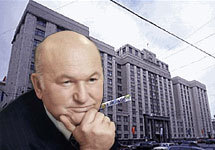
Pragmatic Muscovites never, except at the very beginning of the 90s, have been demonstrated in the election of the mayor of the radical-democratic model of electoral behavior, inherent, for example, to Peter. And now, the mayor’s elections in Moscow are following the usual referendum scheme on trust in the city’s leading city since 1992 to Yuri Luzhkov. Four names will most likely be presented in the balloon: Luzhkov himself, the chairman of the board of the National Reserve Bank Alexander Lebedev, close to the capital's authorities of the head of the construction company Nikolai Lifanov and the once -well -known entrepreneur German Sterligov.
As for Mr. Lifanov, he is an obvious "understudy" of the current mayor, involved in the case, so that the elections take place in any weather. Mr. Sterligov is a type of lonely political adventurer. Recently, he had already participated in the elections of the Governor of the Krasnoyarsk Territory, where he received only 0.1%, but was remembered by the catchy rhyming slogans, by the way, quite applicable to Moscow: "prostitution - to Turkey, or to its coffin - prostitution" or "for fingering corruption - the coffin of the Rubopa structure." Now the skate of the Sterligov campaign is the struggle against the "flooding Moscow" by Azerbaijanis, Chechens, Chinese, etc. Foreigners, together with the mayor greeting them. Experts notice that such a criticism in the lips of the shocking "Moscow Zhirinovsky" is more likely into Luzhkov’s hand, since its hooligan form neutralizes the relevant moods that exist among the Muscovites.
An interesting effect of the "political desert" in the heart of the country, where, in the battered expression, "within the garden ring", almost the entire party-political life of the country is concentrated. If they put forward serious candidates like Lebedev, then "someone needs it." Someone who could challenge the omnipotent owner of the capital is the Kremlin, which seems to be behind the patriotic banker, in the last colonel of the SVR. Recall: in the past elections against the mayor’s opposition to the Kremlin, Sergey Kiriyenko and Pavel Borodin were exhibited, whose tasks included in every possible way annoying the Moscow mayor, not to allow him to be distracted by the federal elections and take as many votes as possible. Now Lebedev, leading the campaign under the slogan "The Best-Friend of the Good" and demonstrating respect for Luzhkov, rather creates an image of a serious and respectable policy-business policy for the future. They say that Lebedev, like Sergey Veremeenko in Bashkiria, is an oligarch of the second echelon from non -resource magnates prepared by the "Chekists" as a personnel reserve for a replacement by the current regional barons and business captains.
It is also curious that the Moscow Electoral Machine works against all, albeit weak, rivals of power. At least in visual agitation alternative to the mayor, candidates are almost invisible. Both real opponents complain of administrative pressure on themselves, and all connected with them, as well as the impossibility of placing their advertising in the city.
Analysts often lose sight of the Muscovites-collectors often behind the complex upheavals of relations between the Moscow authorities and the Kremlin in the person of its various clans. Meanwhile, the accumulated fatigue of the townspeople from the mayor with its construction, destructive and economic projects and the lack of protest against the tight pressure of the Kremlin can seem to lead to a decrease in participation and to a significant increase in the share of voting against all (in past elections it has been almost six percent, three times since 1996).
If we talk about the Duma elections in the capital, then the previous forty percent of the OVR is unlikely to convert into the same high support for the one in the arms of the current United Russia. Another thing is that from the "team of Luzhkov-" United Russia "in single-mandate districts, apparently almost everything will be held. However, this is a much greater extent the team of Luzhkov than ER. Only three or four districts out of fifteen are doubtful, including the central one, where the current deputy Nikolai Gonchar, the former head of the Moscow City Council, is most likely, as the mayor as the mayor as the mayor. Personal enemy.