
Translated material
True triumphs
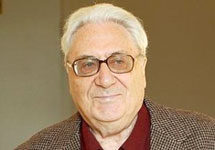
For our famous playwright, Alexander Volodin was born shortly before his death - it was better to say that it turned out - a small book, which he called the "Notes of a Suffle Man". So he designated this genre - a collection of different thoughts that came to his mind. And he has such a record there:
True, then for some reason it must be triumphed. For some reason, it is mandatory. But for some reason, then then.
This sadness rhymes with a popular proverb: "God sees the truth, let him not soon say."
About the same and the famous replica of Korney Ivanovich Chukovsky, which he did not tire of repeating:
- In Russia, you have to live to-olgo!
When, at the height of perestroika, the editor -in -chief of the October magazine Anatoly Andreevich Ananyev announced that he was going to publish Roman Vasily Grossman “Life and Fate” in his magazine, everyone who knew about the fate of this arrested novel was waiting for him to carry out this fantastically brave project at that time, or so all this will remain good intentions, as they know, as they know, as they know, as they know. The road to hell is paved.
And immediately the first difficulty arose.
- They ask me for a manuscript, ”said the daughter of Grossman, Ekaterina Vasilievna, confusedly. “Where will I get it?”
The commission on the literary heritage of the tortured writer gathered. They began to think and guess: what to do? What to find a way out of this difficult situation?
The most influential member of that commission - it seems that at that time even her chairman, Lazar Ilyich Lazarev, said that we (commission) should contact the KGB with an official request: to demand that they return the arrested manuscript of a seditious novel.
- You are crazy! - I told him then. - If we go this way, the publication of the novel will be postponed for another quarter century.
And he proposed another, the easiest and, as it seemed to me then, the most correct way: to take the Western edition of the novel, give to the driver and submitted a copy to the magazine on a typewriter, saying: here it is, the manuscript!
I don’t know, then Ekaterina Vasilievna followed this to my advice or in the October editorial office without me thought of such a simple decision, but there could be no other option: the Western publication was based on the journal publication.
But they could not admit this, but to the question of where they came from the text, according to which they print the novel, answered evasively: "According to an accidentally surviving trace."
I remember that I then told my friend Lazarus that if we went, as he proposed, in an official way, that is, we turned to the KGB demanding to return the manuscript, neither he nor I would live to return.
He did not live.
And now I survived (“In Russia we have to live to -olgo!”) And, recalling our then conversations and disputes, I think: how rejoiced he would now, when it finally happened!
It turns out that I, who had lived before this joyful event, should now rejoice for both of us.
I am happy.
But this is bitter my joy.
*** So, the ominous department unclenched its steel jaws and released a manuscript seized from the author half a century ago.
The arrested novel (finally!) Returned.
But who was returned? Reader?
The fact of the matter is not.
The romance "Life and Fate" reached the reader, completely different people took care of at one time. And the first of them was his author himself.
When Solzhenitsyn entered into an open struggle with the authorities, I (not the only one, of course), admiring his courage, with bitterness and annoyance recalled Vasily Semenovich, who, as it seemed to me then, without anticipating a possible turn of events, was completely at a loss and immediately surrendered:, with his own hands, he gave the Kagabashniks the whole instances of the manuscript of his novel. Here Solzhenitsyn - he knew everything, foresaw everything. And he met the blow fully armed. And won. And Vasily Semenovich in the same situation as many at that time in the intellectual speech of the gained jargon chatted then, turned out to be a sucker, a fraer.
But after time it turned out that Vasily Semenovich was by no means “sucker” and “fraer”. He also foresaw everything and to that seemingly completely unpredictable turnover, which was accepted by events, prepared well.
*** One fine day on the threshold of Vladimir Voinovich’s apartment - without a warning about the upcoming visit of the phone call (it was impossible to Voinovich, because his phone was disconnected at that time) - Inna Lisnyanskaya appeared, wife Semyon Lipkin. In her hands was a heavy string bag. And in Avoska - the manuscript of the arrested Grossman novel.
The purpose of this visit was clear: Semen Israilevich, to whom the late Vasily Semenovich entrusted the manuscript, bequeathing him to preserve and print it as soon as possible, finally decided that time had come. And Voinovich was the only one of his friends and acquaintances to whom he could treat it.
Voinovich accepted this as a guide to action. But before finding a way to transport the manuscript abroad (he already had such opportunities at that time), it was necessary to re -take the text of the novel to film.
At first, he hoped that he would solve this technical problem on his own. (There were not so many people around him to whom he could entrust this secret to take them to his assistants.) At first, I remember, he attracted to this matter the dissident familiar to us - Igor Khokhlushkin. But Khokhlushkin soon declared himself a Russian nationalist and somehow quickly disappeared from our horizon. And Voinovich, meanwhile, was finally convinced that he could not cope with this alone. And then he connected to this case Andrei Dmitrievich Sakharova and Elena Georgievna Bonner, and another person helped to photograph the pages of typewritten - a friend of Andrei Dmitrievich, physicist and human rights activist Andrei Tverdokhlebov.
The captured material of Voinovich and Sakharov abroad was transported in 1975. And almost immediately we learned that the text of the novel sent in the form of a film to those to whom it was addressed.
Saying "we", I mean a narrow circle (narrow - in Russia) of readers of the "continent". Already in 1976, two chapters appeared on the pages of this magazine from some miraculously suddenly the arrested Grossman novel in the west. These chapters, unfortunately, spoke little about the scale and outstanding artistic merits of this work of this carriage of the reader.
The fact that the editor of the “continent” (he was Vladimir Maksimov) chose precisely these, perhaps the most pale and inexpressive chapters of the missing novel, suggested that, publishing them (he couldn’t publish it), he wanted to somehow make up, muffle the significance of this event.
Nevertheless, two chapters from the novel were still printed. And for the first time on the pages of the press, a new copyright title appeared: "Life and Fate."
On that, however, everything ended at once.
A year has passed ... another ... Third ... But the book did not appear. And there was a clear feeling that not only in the homeland of the writer, but there, in the free West, Grossman was also "strangled in the gateway."
And it was so.
Limiting the publication of the two, to put it mildly, not the most powerful chapters of the Grossman novel, the full text of Maximov sent his head to the head of the American publishing house "Ardis" by Karl Profer, accompanying him, not to think too hot, we can even assume that rather an acidic recommendation.
There he drowned.
On one of Karl's visits to Moscow, I asked him why he did not print Roman Grossman. He replied: "I myself did not read it, and my employees who read, said that it was not interesting."
I would not reproach Maksimov by the fact that he did not give the text of the novel to some other Russian publisher. Who else, besides Profer, could he convey it? After all, all (well, almost all) other Russian publishers abroad at that time were already controlled by Solzhenitsyn. And Solzhenitsyn proceeded from the fact that in the second half of the century only one great Russian romance could appear. And this only great Russian novel, of course, should be its "red wheel".
I will not say that Solzhenitsyn himself intervened in this matter, by some personal order, blocked the Grossman novel to the reader. But he had no need to personally intervene in it. All this, without any words and special orders, understood and from this came the entire ideological service service. Grossman was “not their own”, and this alone was already quite enough.
So, years went on, and Roman Grossman still remained unpublished.
Voinovich, perhaps, not without some reasons, believed that one of the reasons for the fact that the novel in the West was stuck, was the poor quality of the film he sent there. And he decided to make another attempt.
Either in 1978, or in the next, 1979, someone brought him to a man who could perform this work at the highest level. It was the Leningrad writer Vladimir Sandler. Also not a professional, but an amateur. But a lover of one with which not every professional could be compared. In any case, his equipment was first -class.
Sandler all this work was done again, and the new film shot by him was also sent to the west.
A friend of Voinovich took part in this action, from time to time the Slavist, a graduate student of the University of Vienna, Rosemary Tsigler, from time to time. Putting this assignment on her, Voinovich said:
- This is a great Russian novel. He must be printed by all means.
Rosemary answered briefly:
- I understood.
She handed the film with the text of the novel to the Austrian attache in culture Johan Marty. And when this film safely crossed the state border, her mission was as if it was finished. But remembering what Voinovich told her and that she answered him, she did not limit herself and did more, much more than one could expect. She found the publisher.
The owner of the small Russian book publishing of L'Age d'Homme in Lausanne (Switzerland) Vladimir Dimitrievich, to whom Rosemary handed precious films, understood and appreciated the meaning of the novel by the Russian writer unknown to him. And immediately, without hesitation, he decided that he would publish it. And in 1980, five years after it was in the West, this long -suffering manuscript finally became a book.
*** Thinking about this terrible fate, I can not help but recall a hundred -point fate of our other classic.
On the day when the investigation in the case of Isaac Babel was completed and the case was transferred to the highest instance - the investigative part of the Main Directorate of State Security, - Isaac Emanuilovich wrote a statement addressed to the "People's Commissar of Internal Affairs of the USSR", which at that time was Beria at that time.
In this statement, in addition to his confessions knocked out under his torture, such a heartbreaking request was contained:
I ask you, a citizen of the People’s Commissioner, to allow me to put the manuscripts selected from me. They contain drafts of essays on collectivization and collective farms of Ukraine, materials for a book about Gorky, drafts of several dozen stories, half a finished play, a finished script option. These manuscripts are the result of eight -year work, some of them I expected this year to prepare for printing. I also ask you to allow me to sketch at least a plan of the book in a fiction form about my path, in many respects of a typical one, about the path leading to a fall, to crimes against a socialist country. With a painful and merciless brightness, he stands in front of me; With pain, I feel how the inspiration and the forces of youth return to me, I can eat a thirst for work, a thirst for redeem and branded incorrectly, a criminally wasted life.
The horror blows from this wild mixture of a forced lies and the fractions that he is ready to take himself, with a sincere cry of the soul. This is a feeling of some terrible nightmare, before which the most painful dreams of Dostoevsky fade not only because of the unnaturalness of such a mixture, but also because these two different, incompatible “composition” of this Babelus ”are merged into one so tightly that even the thinnest scalpel of textual analysis is difficult, and sometimes it is impossible to separate.
It was a scream! The last, dying cry: “Do what you want with me, beat, try, humiliate, only -“ Do not touch my drawings! ”, Leave me my drafts, my manuscripts!”
Of course, he understood - he could not help but understand - all the meaninglessness, the hopelessness of this appeal - he knew, after all, with whom he was dealing with! But the pain from the consciousness that manuscripts can be abyss, a passionate desire to preserve their power over them, not to give them, as Yesenin said, “in other people's hands” was stronger than logic, stronger than common sense, stronger than the instinct of life, stronger than pride and self -esteem.
It is unlikely that those he turned to. But they could feel it: after all, the executioner is better than anyone else, knows where to hit the tortured, so that he experiences the most acute, most intolerable pain.
Whether the power of the inertia of a thoughtless and soulless bureaucratic mechanism worked here, or was it a manifestation of increased revenge and evilness, especially sophisticated, purposeful parallest sadism - but this last, the most terrible blow to the woman struck him.
From the memoirs of the widow of Babel Antonina Pirozhkova*I tried to find manuscripts. But I was summoned to my statement to the MGB to some basement, and the organ employee in the rank of major said:
- Yes, there are five folders with manuscripts in the inventory of the things seized from the woman, but I personally did not find them and did not find them.
Immediately, the major gave me some paper in the financial department of the State Bank to receive money for confiscated things.
Neither things nor money for them had any significance for me, but the manuscripts ... And then for the first time after the rehabilitation of Babel, I turned to the Union of Writers, to A. Surkov. I asked him to bother on behalf of the Union about the search for the manuscripts of Babel.
The chairman of the State Security Committee, Army General Serov, was sent a letter:
"In 1939, the security authorities were arrested, and then convicted the famous Soviet writer Comrade Babel Isaac Emanuilovich.
In 1954 I.E. Babel is posthumously rehabilitated by the Supreme Court of the USSR.
During the arrest, the writer took manuscripts, personal archive, correspondence, photographs, etc., representing significant literary value.
Among the seized manuscripts, in particular, were in five folders: the collection "New Stories", the story "Kolya Topuz", translations of stories Sholom Aleicham, diaries, etc.
The attempt of the widow of the writer - Pirozhkova A.N. To receive the mentioned manuscripts from the archives was unsuccessful.
I ask you to give an indication of the production of thorough search for the discovery of materials of the writer I.E. Babel.
Secretary of the Board of the Union of Writers of the USSR
(A. Surkov) "
The answer came to this letter very quickly that the manuscripts were not found. The answer is the same content that was given to me, and the speed with which it was received says that no careful search was carried out.
I began to suspect that the manuscripts of Babel were burned, and the security organs are well known. However, there are cases when the answer about the seized papers reads: "The manuscripts are burned. The act of burning No. such and such." So, for example, they answered Boris Efimov to a request about the manuscripts of his brother Mikhail Koltsov.
Once, for a year in 1970, a young employee of the TsGALI came to me, where I decided to give some of the manuscripts of Babel. She told me that the manuscripts of the arrested writers are still located, sometimes they come from individuals, and sometimes from the KGB archives. Perhaps someday there are also the manuscripts of Babel.
I said:
If I were allowed to look for them in the KGB archives, then I would spend the rest of my life on this.
And me too! she exclaimed with fervor.
And it was so touching to hear this from a very young girl from TsGALI.
But the hopes that the manuscripts survived is now not.
In 1987, hoping for the changing situation in the country, I again filed a request for the search for the manuscripts of Babel in the KGB cellars.
In response to my request, two employees of this institution came to my house and said that the manuscripts were burned.
(Antonina Pirozhkova. Seven years with Isaac Babel. New York, 2001. P. 129–131)*
Literary critic Sergei Vovartsov, who put a lot of work on the study of the life and work of Babel, in one of his last works spoke about later attempts to find the manuscripts of the executed writer:
*This question has repeatedly (and at different times) was raised before the leadership of the KGB, but to no avail. Vitaliy Shentalinsky, who did a great job on the attachment of manuscripts and documents of Soviet writers in the FSK-FSB funds, was forced to admit: Babel's manuscripts were not there. With the exception of material evidence - passports, trade union and medical records - everything seized during searches in the country and city apartment was transferred to the younger lieutenant of the 3rd branch of the 2nd department of the GUTB G. Kutyrev. Investigator Akopov, accepting the Babel case from investigator N. Kuleshov for further "production", on September 10, 1939, notified his head of the captain GB B. Rhodes: "There is no material evidence in the case, there is personal correspondence and manuscript of work in the search materials."
So, in the fall of 1939, manuscripts, notebooks, letters, photographs, business papers were still intact and stored, apparently, in the 12th Special Department. Then everything disappeared. Six decades later, Shentalinsky joined the search, he took real measures to establish the true causes of the disappearance of the Babel archive. Hope remained: in the writer’s case there is no certificate of destruction (burning) of manuscripts ...*
Знаменитый роман Булгакова внушил нам, что "рукописи не горят". И так хочется верить, что вдруг случится чудо и пять изъятых при аресте Бабеля папок (на самом деле их было не пять, а ДВАДЦАТЬ ДВЕ!) с его рукописями когда-нибудь еще отыщутся.
"Ко мне домой, - рассказывает Антонина Пирожкова, - пришли два сотрудника этого учреждения и сказали, что рукописи сожжены".
Но можно ли верить сотрудникам "этого учреждения"? На протяжении многих лет они морочили вдове голову, лгали, то подсылая к ней людей, уверявших ее, что Бабель жив, то официально сообщая ей взаимоисключающие, а значит, заведомо лживые сведения о причине и дате его смерти.
Почему же их версию о судьбе бабелевских рукописей мы должны принимать на веру? Уж не потому ли, что время от времени мы слышим от них, что теперь они другие - не те, какими были в те жуткие времена?
Но мы-то знаем, что не другие, а те же самые. Даже от той, старой клички своей не хотят отказаться: как и встарь, с гордостью именуют себя чекистами .
***Да, в России надо жить долго. Но и это не всегда помогает.
Не так давно умершая Антонина Николаевна Пирожкова прожила на свете СТО ОДИН ГОД. Но и при таком нечасто встречающемся долголетии вытащить из тайников "этого учреждения" рукописи покойного мужа ей не удалось.
Сейчас в Россию приехал (из США, где он живет) внук Бабеля Андрей. Он собирается предпринять еще одну отчаянную попытку добраться до рукописей деда.
Может быть, у него это и получится.
Дай-то Бог!