
Translated material
Surkov left
Vladislav Surkov-a person with a thousand persons-appointed Deputy Prime Minister of the Russian Federation
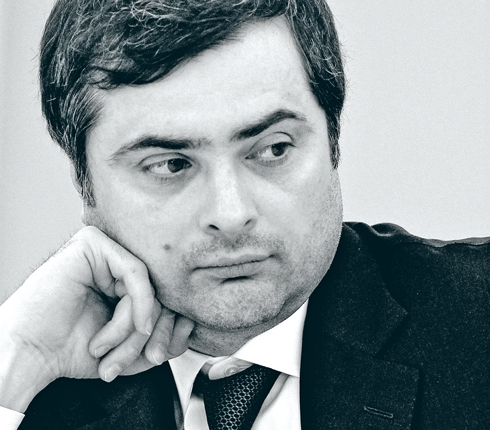
Kremlin virtuoso. It is generally accepted that Russian policy is created by gray cardinals. Richelieu at one time was called both Boris Berezovsky and Alexander Voloshin. But the true master of his craft, a great and terrible courtier, about the power of which is composed of legends and whose name other actors of the Kremlin political scene are afraid to pronounce aloud, in recent years, became Vladislav Yuryevich Surkov, 46-year-old first deputy head of the Kremlin administration. Some call it a cynical intriguer, a manipulator capable of the dirtiest provocations. Others consider it a talented creative who can not only generate brilliant ideas, but also successfully organize the process of their implementation. Who is mr. Surkov? - asked The New Times
Surkov is a closed person, with a bunch of demons. He is very difficult to build relationships with people, always tried to be either “over”, or in the worst case “under”. Or the owner, or slave ”(Leonid Nevzlin, ex-head of the Yukos oil company).
“Glory was one of the best. The strongest student. He behaved modestly, did not pay attention to himself ”(Lidia Znamenskaya, a teacher of mathematics at school No. 62 of the city of Skopin).
“This is a person who has a political concept and philosophy, he is a real performer, whoever is his boss” (Gleb Pavlovsky, political scientist).
“I was surprised when he said about the decision to enter the Moscow Institute of Steel and Always. He has a creative soul - what alloys are there! But Glory said that a specific specialty was needed to help mom and family ”(Vera Rozhko, a literature teacher at school No. 1 of Skopina).
“Surkov is a born manipulator. He does about the same thing that the Chekists did in the 20-30s. Everyone has a weak place for which you can hook. Fear, greed, personal vices. This approach destroys not only the recruitment object, but also the recruiting person ”(Dmitry Oreshkin, political scientist).
“His tentacles, a web, to which he has braided the today's cultural and political world of Russia, concerns everyone in one way or another. Few people are so active, powerful and strange in today's context ”(Alexander Prokhanov, writer).
“Surkov has many masks” (Vladimir Lukin, the Commissioner for Human Rights under the President of Russia).
The New Times was looking for these masks: in the city of Skopin, where Surkov grew up, among the owners of the companies where he worked, for his friends and enemies.
Capital achievements
The track record of Vladislav Surkov looks simple: Bank Menatep-Alfa-Bank-Kremlin. The last decade is the top of the Surkov career. In the 2000s, it was he, the permanent deputy head of the presidential administration (both under Putin and Medvedev), who formed and controls the country's domestic policy. He was a guide for the most important initiatives of Vladimir Putin aimed at building a vertical of power, such as the elimination of real multi -party systems, the abolition of elections of the heads of regions, total control over the press and television. He turned the Unity of Berezovsky Boris Berezovsky into the main party of United Russia, which enjoys the support of 45% of Russians * * Data of the January survey of Levada Center. . He invented “sovereign democracy”, he is the main customer and censor of the main information and analytical programs on the country's main television channels. Until recently, the leaders and chief editors of the leading media every Thursday gathered at the Surkov at the instructions in the Kremlin. And now they no longer need “introductory”: they themselves already know what can be written, whom to show on the air and how many seconds, and whom - never. And it is this person in the coming year that will make a new (old?) President.
What drives Surkov? The idea, but whose, if everyone who worked for, they say about him as an absolutely loyal performer (“a dictator in relation to subordinates, the loyalist to the bosses,” said one of those who paid him a salary), and what kind of idea is this? The thirst for the power of the boy, from God and the people of the forgotten town, from the incomplete family and even with the dad - the “face of the Caucasian nationality” of the people repressed by the Soviet power, who made his way through life, climbed as he knew how? Passion for money, like the memory of a young man who was stubborn by the generals who earned everywhere and how does it have to be expelled from two institutions? “Glory respects himself: he can’t take and bring a million to him,” one of the New Times, which Surkov worked in the 90s, is sure. “Surkov is a very rich man: he earned even at Khodorkovsky and Friedman, and he controls the“ black box office ”of the Kremlin,” says politician Boris Nemtsov. “But for him the power is in the first place.”
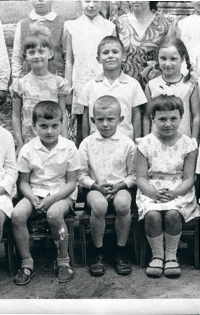 |
| In childhood, Glory was the same as everyone |
Childhood
The town of Skopin in the Ryazan region, where Vladislav Surkov studied and raised, is a place of 284 km from Moscow. It is cut off from the north from the outer world with a six -meter railway embankment resembling a fortress wall. Through it a narrow tunnel is laid, which the locals are simply called - “pipe”. On the other sides, the border of the city is protected by an ancient trash strip. Inside this fortification, the city map is drawn by a standard socialist set of streets: Lenin, Karl Marx, Ordzhonikidze, Lermontov, Komsomolskaya. The historical center is entirely one- and two-story houses, frozen streets and many abandoned buildings. Sberbank, a half -abandoned cinema with a registry office on the second floor, a lot of car repair shops, a cafe and a grocery store Kolos, a jewelry Tsar Midas. Only a little more than 30 thousand people live here.
As the fellow Times of the mother of Surkov, the future theorist of sovereign democracy, was born in 1964 in the city of Chaplygin of the Lipetsk region (70 km from Skopin) told correspondents. His mother, Zoya Antonovna Surkova, graduating from the Chaplygin Pedagogical Institute, worked on the distribution in the Chechen-Ingush Autonomous Soviet Socialist Republic at the rural school of Duba-Yurt. The pregnant woman returned to her homeland, gave birth to her son and again left to teach. Glory was brought up by a grandparents, who had a pen in the village of Solntsevo, Chaplyginsky district. “I remember him well,” recalls the fellow countryman of his mother Sergei Kaverin. - He was understandable, smart. Our tractor driver, when I brought Vladislav to him, said: “What a guy! This one will be some special competent. ”
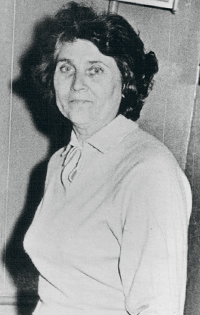 |
| Zoya Antonovna Surkova in Skopina is remembered with kind words - she was always a good colleague and teacher |
In Skopin, mother and son lived modestly, helped the brother of mother Ivan, the head of the local state farm. He arranged for his sister with his nephew a room in a hostel (teacher’s house), and later they received an apartment-in short, the usual problems of a single mother.
However, immigrants from the village of Duba-Yurt claim that Surkov was born in Chechnya, in the Shalinsky district hospital. And up to five years, he lived in Duba-Yurt with his mother and father, Andarbek Danilbekovich Dudaev, who belonged to the rare mountain Tap Zandarko. Father and mother were taught in one school. But, as the Dubayurts say, the Andarbek threw his family, went to Leningrad and did not return to Chechnya. So my mother and son had to return to the Lipetsk region. “The fact that the Chechen Surkov I learned from himself when he and I met at one of the tricks in Alfa Bank many years ago,” recalls the member of the Federation Council, former adviser to President Putin Aslambek Aslakhanov. “He introduced himself and said that his father was a Chechen, whom he practically did not remember.” They say that in the 90s, working in Alfa Bank, Surkov sometimes flaunted what was, they say, a relative of Johar Dudaev and attracted the Chechen diaspora to solve some money disputes. In short, wherever he was born, in 1971, little glory entered the first grade of a school-dwelling No. 62 in the city of Skopin, where his mother had already worked as a teacher and geography as a teacher.
School
The freshly painted green facade of school No. 5 (former 62nd) stands out sharply against the background of a dull Skopin. In an oblong one -story building, the features of the former station are guessed. Inside, well -repaired corridors, the walls are hung with children's pictures and information posters. At one of the stands - “The pride of the school” - photography and biography of the first deputy head of the presidential administration Vladislav Surkov. And no wonder: as they say here, it was thanks to him that the school received 9 million rubles for full restoration and repair. 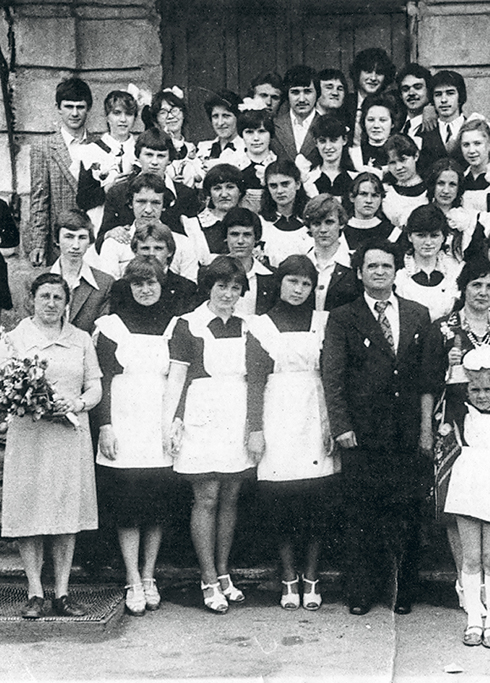
Teachers willingly recall Surkov’s mother: she wrote poetry and scripts, put dancing, replaced history teachers, knitted, awl, raised two children. “A hardworking and decent Russian woman,” emphasized chemistry teacher Valentina Androsova. “She handed it to her children.” Zoya Surkova/Vesvetova (surname of the second husband) worked here for 25 years and still regularly send letters to school, calls, sends his paintings. Now dozens of these paintings, which depict baskets with flowers and night sky, are hung in the assembly hall. The director’s office stores the 230-page collection of poems by Zoe Antonovna “Dreams and Hopes” independently published by Surkov with a gift inscription. Under the verses are the places of their spelling: Moscow, Skopin, Duba-Yurt, Uspenskoye, Voskresensk, Moscow “Airport”.
They talk about the schoolchild of Glory as the “first student”: diligent, talented, attentive, played the button accordion, built railway models, was an authority in the classroom, did not be rude, had a unique performance, the girls liked it, knew how to be friends, says Lidia Znamenskaya, who taught Surkov mathematics. The school director Mikhail Sivtsov notes that in his youth, Surkov showed signs of leadership: he gathered an amateur team in hockey and said once to his mother, "they say, the guys will go to the fire for him."
In order to talk with teachers, The New Times correspondents had to get permission in the city administration, a certain Nikolai Anashkin, who used to be managed, and now there is no name of his position: he said, he simply “resolves issues”. The official gave “good”, wished all kinds of successes and asked not to write that Surkov was a Chechen.
After the end of eight grades with honors, the future Kremlin ideologist moved to school No. 1, which is located in the very center of Skopin. The school, by the way, is now also repaired.
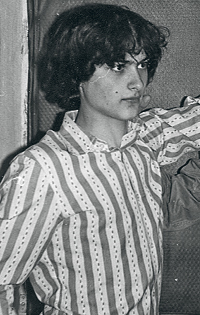 |
| The Surkov school was handsome and poet |
As Surkov’s classmates recall, “Slavka was considered a handsome man, fans were constantly chasing him.” He was fond of music, listened to Pink Floyd and Deep Purple, tried to look good and fashionable, wore velvet jeans, wrote a lot of poems and stories. According to the memoirs of the literature teacher, Vera Petrovna Rozhko, held restrained, and looked older than others. However, his company of three guys is now remembered as “funny hooligan shalopays”. He was ironic, loved to joke. The man who created the movement “ours” in his youth with humor treated the Komsomol meetings and once for this, according to the complaint of the Komsomol, was called to the director. He wrote excellent works: they were read out in the teacher's. I read almost all of Dostoevsky: “Probably, he was attracted by the fact that Dostoevsky had all the heroes with a tear, completely opposite to him,” says Vera Petrovna. She still holds at her house in a blue daddy a dilapidated branch with the works of Surkov, which she treats almost with religious trepidation, is reluctant to show, without letting go of her hands, and does not allow photography: “only with its permission”. A tall, dense handwriting, a neat letter, in some places the irony skip: “Mayakovsky wrote:“ And life is good and live well, ”though he, despite this, shot himself.” Or here in the essay about Yesenin: “Yesenin writes that he is not sorry in the past, but it is clear that something in life does not satisfy him. Maybe it was necessary to be more conceived in life, more precisely to decide? " - With youthful ease, the future author of the "perone" judges: the course and the presence of thoughts, as they say, is evident. “Quasiroman, doll, scarecrow. Fiction ” - is written in the preceding text to the second edition of the“ PDONOL ”.
 |
| Natalia Eganova - school friend Vladislav Surkova |
First love
At school No. 1, Surkov, as they said then, “walked” with the girl Natalya Eganova, who studied for a class younger than him. Skopin is a small city, everyone knew about these relations. “It was beautiful love,” recalls Ekaterina Tikhonova, who was pioneer inhibited in those years. Now Natalya is of the surname of Roman, works as an editor on local television, and her father - the mayor of the city in the second time. It is reluctant to speak about the former boyfriend, but clearly makes it clear: there is something to tell. “His life was completely difficult, I am glad that he was knocked out, although I do not really share the situation in the country.”
Music was connected by music: Natalya played on a frustrated piano and sang “There is a black pond in the count of Count Park // Lilia bloom there”, the future Kremlin ideologist sang along, wrote poetry and beautiful letters. “We went to cinemas and evenings. The whole city admired us, ”recalls Roman.
As soon as Surkov graduated from high school (on five, only three fours: for labor, physical education and drawing) - they parted. He went to conquer Moscow, to enter the Institute of Steel and Always. In Skopin, Surkov remained only the sister of her mother Nadezhda and her husband Mikhail Yashkin, a former military man. They live in a modest wooden hut and noticeably nervous, talking with correspondents. They are worried about how not to damage the career of the nephew. Relatives are proud of them: "We see him on TV - he matured very much, looks solid, he achieved everything himself." On the table of the Yashkins lies the book “Vladislav Surkov. Texts 97–07. " This book in Skopin is appreciated. The city has a political club "Landmark", a book of Surkov - and there is one of the cult objects. The club’s meeting takes place once a month, various socio-political issues are discussed at these meetings. The cherished dream of the club is to call Vladislav Surkov to one of these meetings.
Universities
In 1981, Vladislav Surkov entered MISIS at the Faculty of Black Metals and Alage. His fellow students recall that during the summer vacation he went to relatives in Chechnya. He studied the metallurgist in the metallurgist. According to one of the fellow students, Surkov flew out, because not a techie, quite often skipped classes and in general there was a hippie. On June 2, 1983, he submitted an application for expulsion of his own free will "in connection with difficult family circumstances." In the statement he indicated that mother and sister are dependent, since the father does not live with them. The order on the expulsion was signed, and Surkov went to serve in the Soviet army. After 20 years, he will write in the song for the Agatha Christie group: "I will be how you // you will be how he // We will be like everyone else." According to the official biography of the first deputy head of the presidential administration, he gave the duty to his homeland in the artillery part of the southern group of troops based in Hungary. True, in 2006, the then Minister of Defense Sergei Ivanov told the Vesti program that Surkov actually served as urgent in the GRU special forces. Vladislav Yuryevich himself did not confirm this and did not refute. Although he could: The New Times sent an official request for an interview, but still did not receive an answer.
Having demobilized, our hero in 1986 entered the Moscow Institute of Culture (“Kulek”) at the directing and acting faculty. But after the first year he was expelled. Both his fellow students and his teachers refuse to talk about this page in the life of Surkov. The official version: left the institute for "family circumstances." Unofficial - expelled for a fight in a hostel. “Glory returned from the army, and, apparently, this laid out an imprint on him,” one of the graduates of the Moscow Institute of Culture told The New Times. - The guy he beaten was an enemy of the army service, and they brutally argued. It ended in a fight, called the police. One of the teachers went to the dean’s office: such a case was extraordinary for the faculty, and they expelled fame. ”
As one of his classmates recalls, Surkov was a very contradictory person: he was fond of counter -culture, loved abstraction, Kandinsky, but claimed that everyone should have the same sausage and live with a common fate. At the same time, the acting role was more likely heroic. The desire to provide fellow citizens with the same sausage from Vladislav Surkov over the years only strengthened, however, and he occasionally induced with counterator. “Time is gloomy, the holidays, peace and peace ended. // these black horsemen are breaking through the door. This is behind me, ”the Agatha Christie sings a song on the words of the former student“ Kulka ”. Surkov did not enter the institutes anymore. And in the late 90s, unexpectedly became the owner of the diploma of the International University in Moscow: “Bought for solidity,” one of the former Yukos employees told The New Times.
Dashing 90s
It is not known how the fate of Surkov would have developed, if in the late 80s he, together with the former classmate, Alexander Kosyanenko, did not engage in hand-to-hand combat at the coach Tadeusz Kasyanov, who was also engaged in Mikhail Khodorkovsky. “Glory appeared with us in 1989. At that moment, we felt that the guards were needed, and Tadeusz recommended these two guys Khodorkovsky, ”recalls Leonid Nevzlin, in the early 90s-one of the directors of Bank Menatep. — Ребята оказались толковые, а охрана оказалась не так нужна, и Ходорковский взялся за выращивание талантов».
Невзлин вспоминает, что в ту пору Сурков был «стеснительным интеллигентным парнем, который смущался и краснел». «Быстро раскрылись его способности в области рекламы и вообще креатива, — продолжает Невзлин. — Он не только придумывал идеи, но и умел их проталкивать. Пробил рекламу логотипа банка на программе «Время» на Первом канале. До нас там красовался логотип итальянской фирмы «Оливетти». Он умел убеждать в своей правоте. Плакаты на дорогах, разрисованные троллейбусы с логотипами, статьи в газетах, интервью топ-менеджеров — это все его деятельность».
Меньше чем за десять лет Сурков дорос до должности вице-президента, начальника департамента по связям с государственными организациями компании ЗАО «Роспром» * * Одна из структур МЕНАТЕПа. и стал членом совета директоров банка МЕНАТЕП.
Менатеповцы вспоминают и о слабостях Суркова: мог уйти в загул до потери чувств, не знал меры, приходилось вытаскивать его из милиции, из больницы, дрался с сослуживцами, бывал вспыльчив до жестокости.
В 1996 году Сурков ушел из МЕНАТЕПА: его больше не устраивало положение просто наемного менеджера, его цель была — стать партнером и получить долю акций. Но менатеповцы не захотели его принять. «Мы обсуждали это в своем узком кругу и не хотели этого, — объясняет Невзлин. — Мы ему доверяли, он многое знал, участвовал в самых чувствительных проектах. Но партнерство — это следующий уровень доверия, это как близкая дружба. А другом он не был». Впрочем, Невзлин уверен: Сурков не в обиде. «В бизнесе он мог стать вторым или третьим партнером, но то, чего добился сегодня, — гораздо выше. Политический менеджер всея Руси — это звание».
На пути в Кремль
Из одного банка Сурков перешел в другой — в Альфа-Банк: с его главой и основателем Михаилом Фридманом они учились вместе в Институте стали и сплавов, хотя и на разных факультетах. В конце 90-х Сурков считался одним из самых эффективных российских лоббистов. Эта репутация обеспечила ему не только должность первого заместителя председателя совета Альфа-Банка, но и в скором времени — место первого заместителя гендиректора и директора по связям с общественностью ОРТ (ныне Первый канал). «Там Сурков познакомился со всеми важными игроками политического поля, — вспоминает один из людей, знавший его с 1992 года. — Поначалу Сурков в этой «труппе», где были Березовский, Волошин, Абрамович, Юмашева, был никто, но постепенно его способности стали ценить». Борис Березовский, владелец крупнейшего пакета акций ОРТ в конце 90-х, рассказал The New Times, что Сурков был «хорошим, даже отличным исполнителем, работал на нас с Бадри * * Бадри Патаркацишвили, деловой партнер Березовского. в ОРТ и на меня в СНГ» * * В 1998–1999 гг. Борис Березовский был исполнительным секретарем СНГ. .
И уже в 1999 году Владислав Сурков оказался в администрации президента. На должность своего помощника его позвал глава администрации Александр Волошин. «Он тогда отличался от всех остальных крайне небюрократическим видом, был похож скорее на дизайнера, чем на чиновника, — говорит политолог Глеб Павловский. — У него много ярких качеств. Он всегда сам определял идею и концепцию самой работы, сам придумывал элегантные решения». Один из пиарщиков, хорошо знавший Суркова в конце 90-х годов, говорит, что тот «не понимал, что такое договариваться, и привнес в политику методы, которыми успешно пользовался в бизнесе. Этих методов было два, и оба простые и эффективные: либо человека надо сломать, либо купить. Сразу деньги в конверте — и все».
Dreams come true
В августе 1999 года Владислав Сурков стал заместителем главы администрации президента. В это же время на политический Олимп взлетел и Владимир Путин. Как так, столь удачно для обоих и чуть менее удачно для страны, совпало? Борис Березовский утверждает, что «не играл никакой роли в продвижении Суркова в Кремль: насколько мне известно, его лоббировала «Альфа»». 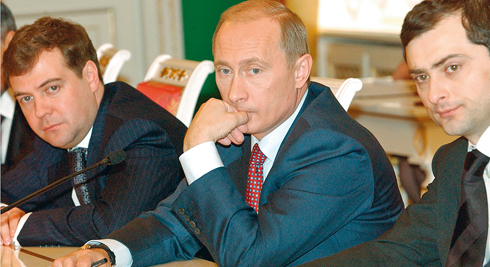
Владислав Сурков всегда лоялен к своим начальникам, хотя, как говорят, считает себя умнее и лучше их.
Фото 2005 года
В любом случае с этого момента началось превращение Суркова в того, кто он есть сейчас, — главного кремлевского идеологического манипулятора. «Слава, что называется, принимает форму сосуда, — говорит Борис Немцов. — С Ельциным он был демократом, а с Путиным он стал автократом. У него есть своя система, которая отражает точку зрения начальства».
О новом Суркове говорить в открытую боятся почти все, кто с ним соприкасался в бизнесе и политике и до сих пор от него зависят. Ссориться не хотят: отмечают, что он злопамятный и жесткий, не дай Бог стать его врагом. Если кто-то когда-то его в чем-то обидел, он может крепко насолить человеку.
С разными людьми разговаривает по-разному. На кого-то может кричать и материться, меняет интонации. С кем-то будет говорить мягко, обволакивать, спокойно и с улыбкой, как будто с ленцой. Рассказывают, что может заказать журналисту статью о каком-то оппозиционере, но если имярек откажется написать слишком «грязно», согласится на более цивильный вариант, лишь бы публикация появилась. Другие утверждают, что в методах он не стесняется. Борис Немцов, например, уверен, что его арест на 10 суток 31 декабря 2010 года и все последующие провокации в отношении него были санкционированы Сурковым. «Митинги 31-го числа, провокации — по этим вопросам московские милицейские генералы подчиняются Суркову. Я не думаю, что он давал команду подсаживать ко мне в камеру туберкулезного больного, но вот то, что моим сокамерникам предлагали $3 тыс. за то, что расскажут, как меня якобы насиловали, — он на это давал «добро», — сказал Борис Немцов The New Times.
И противники, и сторонники Суркова, знавшие его в 90-х или столкнувшиеся с ним в 2000-х, сходятся в одном: он очень изобретателен в интригах, по-настоящему в этом креативен.
Богатство или власть?
Согласно официальной налоговой декларации Владислав Сурков за 2009 год заработал 6 млн 325 тыс. 286 рублей. Жилой недвижимостью он не владеет. Землей тоже. За ним числится одна квартира — 59,4 кв. м. Кремлевский фэн-шуй. The office of Vladislav Surkov through the eyes of political scientists and specialists in Feng Shui
Люди, хорошо знавшие Суркова в 90-х, рассказали The New Times, что уже тогда он щеголял золотыми кредитками, что по тем временам было редкостью. Впрочем, данных о банковских счетах Суркова в официальной декларации нет.
Зато есть сведения о доходах его нынешней жены Натальи Дубовицкой. За 2010 год она заработала 56,4 млн рублей * * Наталья Дубовицкая — заместитель гендиректора по связям с общественностью ОАО «Группа промышленных предприятий РКП». Группа занимается крахмальным бизнесом. . Известно, что в 2006 году Дубовицкой принадлежало 18,47% ОАО «Ибредькрахмалпатока», которое занимается выпуском патоки и крахмала, а также 16,1% ОАО «Партнер-Гарант». В свободное от бизнеса время она родила Владиславу Юрьевичу троих детей. Сурков также воспитывает сына своей первой жены Юлии Вишневской, создательницы музея уникальных кукол, которая с 2004 года живет в Лондоне.
«Сурков отличается от коррупционеров: не пытается набивать карманы», — говорит Борис Немцов. «Для Суркова важны деньги, — возражает политолог Станислав Белковский, — и ему тоже «заносят». Он работает с теми людьми, для которых деньги являются главной ценностью. Остальные люди его смущают или раздражают. Главная его человеческая трагедия в том, что по меркам системы он небогат. Абрамович и Тимченко гораздо богаче его».
Референтная группа
Близко знающие Суркова люди отмечают, что у него есть свой кодекс чести. Условно говоря: семья, дети, друзья, которым ты, поднявшись наверх, должен помогать. Рассказывают, что в сентябре 2009 года близнецов Михаила Ходорковского Илью и Глеба отказались принять в одну из школ Москвы. Позвонили Суркову и тот пристроил мальчиков в хорошую школу. Как сочетается этот вполне понятный поступок с письмом против Ходорковского членов «Единой России» (которую курирует и наставляет на семинарах именно Владислав Сурков) или арестом Немцова на десять суток в новогоднюю ночь?
«Сурков сам для себя хочет казаться порядочным человеком, — говорит один крупный бизнесмен на условиях анонимности. — У него есть референтная группа, и ему хочется, чтобы она не считала его плохим». Правда, добавил: «Но с Немцовым он переступил черту».
Глава «Евросети» Евгений Чичваркин считает Суркова гениальным человеком. В московских бизнес-кругах упорно ходит слух, что именно Сурков остановил «охоту» на Чичваркина. Присяжные оправдали сотрудников «Евросети», и Верховный суд утвердил этот приговор. Дело против Чичваркина было закрыто. «По интеллекту он превосходит всех, кого я когда-либо видел из тех, кто состоит на госслужбе, — сказал бывший владелец «Евросети» The New Times. — Когда мне кто-то сказал, что одна из ветвей власти им недовольна и может так получиться, что он уйдет, я расстроился. Сурков — это штурман, выравнивающий самолет, который летит сквозь грозу на гору. Он делает все, чтобы этот самолет не упал».
Сурков, впрочем, не всегда «выравнивает тонко и аккуратно». Искусствовед Андрей Ерофеев * * Осужден к штрафу 150 тыс. рублей за организацию выставки «Запретное искусство» в Сахаровском центре. рассказал: его брат писатель Виктор Ерофеев и галерист Марат Гельман с разницей в один час, не сговариваясь, ходили к Суркову просить, чтобы уголовное дело о выставке, как абсолютно абсурдное и наносящее урон имиджу страны, было закрыто. «Сурков их внимательно выслушивал, говорил, что ничего не знает об этой истории, разглядывал картинки и обещал помочь. Дело не закрыли, и вместо одного прокурора у меня на суде их оказалось целых два».
Stranger
В последнее время первый замглавы администрации стал больше появляться на публике. Он ходит на выставки в модную галерею «Гараж», в клуб «Цвет ночи», где собирается модная и богатая тусовка. Он опубликовал в журнале «Русский Пионер» две искусствоведческие колонки. Первая — об испанском художнике-сюрреалисте Хоане Миро, книжка о котором случайно попалась Суркову-школьнику в Скопинской библиотеке. Вторая — о модном российском художнике Николае Полисском. «Быть непонятым — трагедия для художника, — пишет первый замглавы президентской администрации. — Быть понятым — простое человеческое счастье. Быть понятым неверно — привилегия гения».
Драма Суркова, считают знающие люди, в том, что он амбициозен и честолюбив, мнит себя умнее, лучше многих, в том числе и своих начальников, но всегда — на вторых ролях. «Путин понимает, что Сурков способен на очень многое, и поэтому всегда ставит над ним человека менее креативного, но зато более лояльного. Чтобы не было соблазна начать самостоятельную игру. Тем более Сурков — «чужой». Не из кооператива «Озеро», — считает политолог Дмитрий Орешкин * * Дачный кооператив в Приозерском районе Ленинградской области, где в 1996 году располагалась дача Путина и там жили его ближайшие друзья, сделавшие потом карьеру: Владимир Якунин, Юрий Ковальчук, Андрей Фурсенко и др. .
«Я заметил, что ему очень трудно любить тех людей, которым он подчиняется, — говорит Невзлин. — Но он каким-то образом научился с собой справляться». «Сурков — исполнитель, — убежден источник The New Times, хорошо знавший Суркова по бизнесу. — Он всегда будет работать на хозяина». «Закомплексованное чмо. Когда не исполняет, а пытается рулить, — предельно резок и презрителен Березовский. — Поэтому неинтересен».
Свой роман, а теперь спектакль, который играют на первой сцене страны, Владислав Сурков назвал «Околоноля»: как читать — «около ноля», в смысле около «нолей» — это о стране? о людях, которыми вертит, которых ломает и покупает? о начальниках? или о себе: «Я не ноль»?
В подготовке материала принимал участие Егор Мостовщиков
Читайте также: Кремлевский фэн-шуй. The office of Vladislav Surkov through the eyes of political scientists and specialists in Feng Shui