
Translated material
The end of liberalism
The nineties taught us that values cannot be sacrificed by ideology and momentary political benefit. Neither liberals, nor patriots, nor the Communists wanted to get today's Russia. We must restore the state based on common sense and justice, not ideology. The head of the analytical department of Taiga.info Alexei Mazur formulates the principles of “new thinking” for supporters of liberalism.
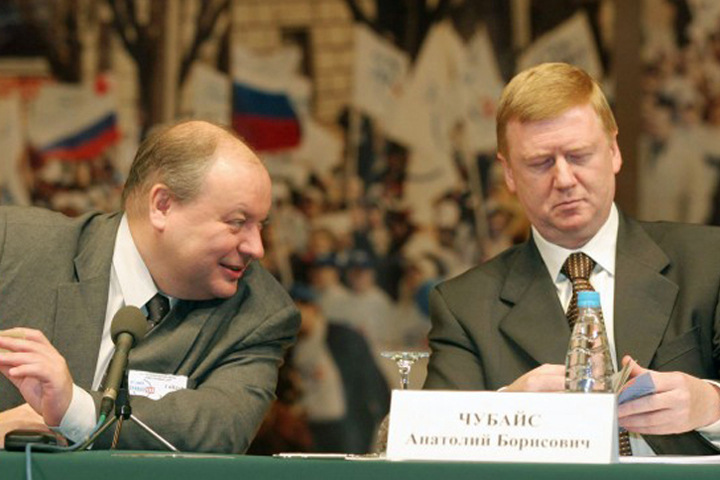
The phenomenon of modern Russian liberalism is not fully understood and conscious. His supporters, and they are disproportionately among socially and politically active citizens, for the most part cannot and do not try to realize the causes of the impasse in which the democratic movement turned out to be. But opponents of liberalism do not understand why so many people choose this particular ideological direction, attribute to them hatred of Russia, work on an “external enemy” and alien to the people.
As a person who has passed from extreme liberal views in the late 80s to the current ones, which I am not ready to evaluate as part of the usual ideologies, I will try to describe my vision.
State lie
The Russian liberalism of the 90s sample had two “midwives”-a lie of Soviet propaganda and the world triumph of neoliberalism, which came just at the time of the collapse of the USSR.
Any Soviet man lived in two dimensions at once. The first is in the media. There we built communism, were the most advanced society in the world, and the surrounding imperialists only waited for the case to attack us and crush. At the same time, capitalism, according to Soviet propaganda, was in a constant economic crisis and was devoured by social ulcers (it seems that nothing has changed).
The second dimension is real life. Empty shelves in stores and constant queues. In the early 80s (even under Brezhnev), the first coupons since the time of “developed socialism” appeared. At first they made products more affordable. But then the food was not enough for food. The late Soviet state could not resist the seal of extra money, or from the seal of extra coupons.
The “rotting West” at that time was a source of household miracles - from jeans to tape recorders. Party functionaries made the impression of soulless robots reading ritual spells on pieces of paper.
The Soviet Union needed scientific and technological progress, and therefore the scientific intelligentsia was in demand. In technical universities in classes not related to Marxism-Leninism, they taught critical thinking and scientific approach. If you have critical thinking, it is difficult to turn it on at work and turn it off at the time of viewing the Time program. The state lies protruded from the TV. Soviet propaganda contradicted itself, as always happens with liars.
This from those times of the phrase “hesitated along with the line of the party” and “the line line is straight, each point is an excess point” (mathematics will understand). The layman did not care, for him information propaganda was a kind of “noise background”, and numerous mass events (demonstrations, meetings) were an obligation and a ritual. Unpleasant, but tolerant.
The intelligentsia broke up into two conditional fractions - “conformists” and “non -conformists”, between which, of course, there were many intermediate states. The position of the “conformists” was: yes, there are falsehoods and contradictions, but life is arranged so, and we are lying, because “it is necessary” (and the “conformists” joined the CPSU for the career and later performed from the rostrum), and we are actually right, simply not everyone understands this.
This is the position of those "conformists" who had an idea of conscience and decency. There were other, notorious liars, scoundrels and villains. At all times, they were used in the state system. And they did not need and do not need to be “moral justification” of their actions.
Being opponents of Bolshevism, many political leaders of Russian liberalism turned out to be quite the Bolsheviks in terms of political culture
The “non -conformists” discovered a glory, discussed it in the kitchens, entered into disputes with the “convinced communists” (in which the latter lost, since these disputes were based on logic and scientific analysis). The most consistent of the "non -conformists" went to dissidents, but the position of "non -participation" was much wider. In this environment, joining the CPSU was considered indecent.
Interestingly, the culture of the "rejection" of the state existed in the thick of the people. The widespread distribution of the “thieves” subculture (the policemen were not the intellectuals of the “garbage”), the hatred of the “informers”. The folk tradition of firing oneself from the state and from the authorities, opposing himself to them, probably ascends to the pre -revolutionary era.
As a result, state propaganda has achieved a direct opposite effect in the intellectual environment. All that she said was a priori was considered a lie. Including about the horrors and injustice of capitalism.
Russian liberalism, originating in the intelligent environment, has become a kind of “reflection” of “real socialism”. The inefficiency of the Soviet economy was interpreted as the inefficiency of state regulation in general. The need for social guarantees was called into question, since in Soviet practice they led to infantilism and dependency. The rejection of the CPSU led to the rejection of the state machine as a whole, in all its manifestations. This was facilitated not only by the “folk tradition”, but also by the Bolshevik political culture, which is characterized by maximalism, uncompromising and desire to destroy the political opponent, and not to agree with him.
Being the ideological opponents of Bolshevism, many political leaders of Russian liberalism turned out to be quite the Bolsheviks in terms of political culture.
I myself was like that.
Triumph of neoliberalism
The second “midwife” of Russian liberalism was the triumph of neoliberalism in the West. The “rulers of the thoughts” of the late 80s were Margaret Thatcher and Ronald Reagan, they reduced taxes and reduced social expenses. In 1987, the Soviet intelligentsia (its “non -conformist” part) applauded that when she removed large chips from professional Soviet propagandists in an interview with Soviet television.
Today, looking back, we understand that the triumph of neoliberalism was not the “end of history”, but a certain fluctuation, a short -term deviation. Neoliberalism attracted with its logical completeness, clarity of principles. He seemed to give answers to all questions. And Raygan and Thatcher demonstrated economic and political efficiency. It seemed to Russian liberals that the recipe was simple - it was only necessary to make "like their."
With an iron hand fortunately
But besides Ronald Reagan and Margaret Thatcher in the liberal pantheon of the late 80s-early 90s, another character appeared, who actually had nothing to do with democracy. Augusto Pinochet carried out liberal reforms in the Chile economy. The idea that Russia can be driven by happiness with a firm hand was far from new, but for the people who worked in the editorial office of the magazine "Communist", happiness now had a liberal coloring.
Then there was a strange stratification of Russian liberals into “democrats” and supporters of the “hard hand”. The ideologists of “Russian liberalism” represented by the “Gaidar team” in the late 80s-early 90s were opposed to “leftists”. But they understood that most of the USSR population of the USSR would not accept ideas of complete market freedom and rejection of most social guarantees. The desire to have a “free economy” with a minimum of regulation and social expenses was directly contradictory with the desire to make decisions according to the will of the majority. We know how these contradictions were “resolved” during the reforms of the 90s and the confrontations of President Yeltsin with the Supreme Council.
Most people who called themselves at that time by democrats and liberals supported Yeltsin (who declared democratic slogans) and the “liberal reforms” of Gaidar and Chubais supported themselves. The community of declared values and burning dislike of the Communists forced to turn a blind eye to the inconsistency of the methods with the very values.
Actually, therefore, the words “democracy” and “liberalism” today are discredited in Russia (although democratic and liberal ideas are in many ways perceived). Those liberals that are preserved in the system of power (they are called systemic), mainly from among the anti -democrats.
A little personal
In 2004, I had a personal crisis. I realized that in the existing political reality it is impossible to be a political strategist (which I had turned into) and maintain self -esteem. It was necessary either to change our ideas about what is good and what is bad, or to change the profession. Most people follow the first way. I can’t say that I did not try at all, but the gag reflex worked. Answering the question “How to live on, if you do not know anything else”, involuntarily I had to answer to another - “How we have reached such a life.”
Then I wrote a book (essay) “Russia: lost honor”, in which I revised my views on liberalism and the idea of democracy (you can read here ). In my defense, I can say that at that time I had not the slightest optimism about the effectiveness of democratic institutions in Russia. And as subsequent events showed, this pessimism was justified.
Subsequent events again made me a democrat, but already for quite pragmatic reasons-being at the very bottom of the political pyramid, only with democracy I (like most citizens) can hope that my opinion will take into account someone.
But then, in 2004, entering into discussions with my colleagues and recently-like-minded people, I found a striking thing. Despite the obvious collapse of the ideas of liberalism and democracy in Russia, the majority of liberals and democrats refused to somehow reflect on this matter. Everything was right, but the only problems are that we were not allowed into the TV. And so we would have explained everything, the people would understand everything and would again follow us. And even so far - the causes of the Putin system in the personal qualities of Putin . Yeltsin was a democrat, with him there was democracy, Putin was an autocrat, with him an autocracy. Everything is very simple.
The smartest people with several higher education, intellectuals in many generations have (and behave) themselves as members of a sect, refusing to accept reality. For some reason, the liberal theory has not worked in Russia, the market has not been able to place everything in place for 25 years, and the voter votes contrary to his interests. But Russian liberals go to the voter exactly with the same slogans as a quarter of a century ago. They are sure that the causes of failure are only in access to the TV and dishonesty of vote count.
A little theory
I will not claim the role of a connoisseur of the theory of liberalism - in the end, in Russia we are dealing with his very simplified option. I only note that liberalism as an ideology appeared in the 19th century. Like other ideologies (socialism and nationalism in various forms), he was a reaction to a very specific political situation in Europe - the costs of feudalism with a rapidly developing capitalist economy.
Neoliberalism of the 80s of the XX century was a reaction to the costs of a socialist approach in terms of Western countries. As the Tetcher wrote about Margaret, she adopted the good old liberalism, and he worked. I don’t remember the source, I quote from memory.
Somewhere he worked (USA and Great Britain). But somewhere he led to catastrophic consequences (Russia and Argentina). And even in England, Tatcher’s attempt to use a dogmatic liberal approach to city transport in London led to a collapse. And English society remained deeply split in matters of attitude to the reforms of the Prime Minister and the assessment of her personality.
The ideologists of the economic reforms in Russia of the early 90s proceeded from the postulates “the main thing to create a free market, and it will put everything in places”, “it is better to gang capitalism than communism”, “it is necessary to offer nomenclature property in exchange for power”, “it is necessary to make reforms irreversible”.
They did not take into account the very little - the liberal theory does not at all ask the question of "why laws are respected in the country" and "why private property has immunity." After all, it arose in countries where compliance with the law and the inviolability of private property seemed an axiom. The liberal theory does not consider how the market and democracy function in the absence of the law.
The experiment showed that it was bad. The market in a corrupt system is in no hurry to place everything in place. And the egregious deviation from justice at the time of the reform still hangs over them by a Damoklov sword.
And democracy in Russia did not work fully. The victory of the Democrat Yeltsin in 1996 with the help of bought media, artists and, possibly, falsifications, laid the foundations of the “controlled democracy” of the future. Only the "democrats" among the winners have become smaller and less.
In any social theory, there is no axiom. Principles, slogans and ideological stamps always have a limited area of application. In the new conditions - and modern Russia, of course, is not in a classical situation - any theory should be approached with healthy skepticism.
Values are more important than ideology
The experience of the 90s is that it is impossible to sacrifice value of ideology. The democrats of the 90s supported the anti-democratic undertakings of Yeltsin. "Democrat" retained power, corrected democratic values.
Among the liberal values is the personal freedom of man until it violates the freedom of another person. But does gang capitalism violate the freedom of another person? And the other liberal value is the release of private property, can it be preserved in gang capitalism?
There is another, key to Russian consciousness, value is justice. For some reason, Russian liberalism contrasted freedom and justice. Like, we are for freedom, but not for justice, because justice is equalization and inefficiency. After that, 5%, in fact, became an electoral ceiling for Russian liberal parties.
But today, many liberals in their real social and political life, just defend the ideals of justice, not thinking too much about it. The struggle for holding the traffic cop who has shot down a young girl, the right of young families to kindergartens, volunteering in hospitals and orphanages, even a struggle against corruption in the mainstream - there are a lot among activists of these movements, if not most, representatives of liberal views. Although we are talking about compassion, justice and solidarity, and not at all about freedom and right of private property.
The opposition of freedom and justice is false. And the lesson of the 90s lies in the fact that it is impossible to sacrifice the sacrifice of ideology and momentary political benefit.
One of the candidates of French presidential Emmanuel Macron refused to identify himself in the previous political system of the Left-right coordinates, saying that this scale became a rudiment.
Perhaps I agree with him. Life in the XXI century became too complicated to fit into the simple ideological schemes of the XIX century.
What in return?
Let's open your eyes and look at reality. None of the many Izms who fought in Russia in the early 90s was realized. Neither liberals, nor patriots, nor the Communists wanted to get such Russia as we see it today.
We saw that crooks, crooks and adaptops got along well and agreed with each other in the same 90s, and decent people were divided by their ideologies.
We see that many problems facing Russia do not belong to the field of ideology. Is there an ideology that advocates corruption? Or those who want pure sidewalks in the city can be attributed to liberals, communists or nationalists?
Pension reform, school education and family support are social problems and one could announce the participation of the state in their solution to “socialism”. But if we say differently-the old people should live with dignity, and the children are full, dressed and receive a good education, at least one liberal or a patriot will speak out against?
The leading force is either solidarity and thirst for justice (left -wing values), or love for the homeland, its people and culture (patriotism). And almost any liberal will find particles of both
Today we are facing the task of restoring the state in Russia. Or, if you want, increase its effectiveness. Laws must be observed, decisions made - implemented, the life and human rights must be protected, and young people should see the prospect. The current system copes with these tasks with a minus. We can save it as an “umbrella”, under which to build something strong and durable. But it is clear that the current system has no development prospects. She cannot develop and grow anything, because it is imprisoned to retain and divided the existing one. Such is the nature of neo -feudalism and the economy of rent.
Задача построения эффективного государства не относится к области «измов». Они все исходят из того, что такое государство уже есть, и нужно лишь ему определить приоритеты. В истории попытка реализации того или иного «изма» на руинах предыдущего государства приводила либо к диктатуре, либо к установлению олигархии.
Людям, относящим себя к либералам (надеюсь, они в основном будут читателями этой статьи) нужно ответить на вопрос — какая сила должна следить за чиновниками, чтобы они служили обществу, а не своим корыстным интересам? Российский либерализм не дает ответа, отделываясь общими словами о гражданском обществе. Но если стремление к выгоде похвально и ведет к общему благу, то что должно удерживать чиновника от взятки, а гражданского активиста — заставлять тратить свое время на общественную деятельность, если можно взять и уехать в другую страну, где все хорошо?
И тут мы выясняем, что такой силой является либо солидарность и жажда справедливости (по сути, левые ценности), либо любовь к Родине, ее народу и культуре (патриотизм). И практически любой либерал найдет в себе частички и того, и другого.
Некоторые выводы из провала 90-х
Ценности важнее идеологии.
Мы выступаем за свободу, права человека и демократию, потому что хотим, чтобы государство учитывало уважало наши права и учитывало наше мнение. А не потому что мы либералы или демократы. Человеческое достоинство должно уважаться с детства.
Свобода не противоречит справедливости. Честное вознаграждение за честный труд — это справедливо. Наказание за преступление невзирая на ранг, чин и богатство — это справедливо.
Солидарность и сочувствие присущи нам не потому, что мы «левые» или «правые», а потому что мы — люди. Никто не должен быть брошен в беде. Дети не должны отвечать за грехи родителей, или за их неумение устроить свою жизнь и найти детям хорошего врача или учителя.
Обрушение государства недопустимо. Прежде чем отказываться от неэффективной, но худо-бедно работающей системы, сначала нужно вырастить что-то более эффективное.
Проблемы должны решаться с помощью здравого смысла и научного анализа, а не по идеологическим клише. Прежде, чем ставить эксперимент по всей стране, нужно попробовать в отдельном городе или регионе.
Личные качества важнее идеологических убеждений. Честные люди должны сотрудничать, несмотря на идеологические разногласия. Подлец-единомышленник хуже идеологического врага.
Излишняя требовательность к другим — вредит делу. Предъявляйте моральные требования в первую очередь к себе. Будь вы тысячу раз правы, вы не получите сторонников упреками.
Alexey Mazur