
Translated material
Spies and traitors
In southern Europe, another scandal with Russian spies is unfolding. It has just become known about the Russian illegal Madrid, which disappeared by Russian illegal immigrant Sergei Cherepanov, who, according to legend, was a business consultant named Henry Frit, who collected, in particular, information about energy projects in Europe. The second story is rattling in Italy, where the special services detained in Rome a Russian intelligence officer, whose name is still unknown, and Portuguese Frederico Carvalia lived, who had a secret documents for a good fee for a good fee. The New Times found out the details
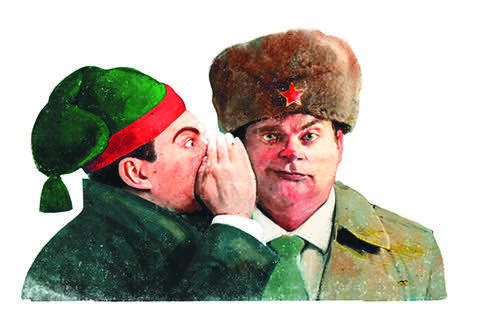
With such a drawing, the Portuguese newspaper Diario de Noticias accompanied the article about the "exploits" Frederico Carvalia lived
“Spy methods from the pre -technological era” - this is just one of the headlines in the Italian press, which spoke in detail about the arrest in Rome of the Portuguese Carvema lived. He had access to NATO's official documentation and was going to sell to a Russian whose name is kept secret, a super -secret document on the relations of NATO and the European Union. The Russian and Portuguese appointed another meeting in the Roman bar "Trevester": they took them there.
The victim of the "honey trap"
57-year-old Frederico Karvali lived-in the past an analyst and head of the department in the information system of the Republic of Portugal (SIRP) * . He served in intelligence half of his life. According to some reports, the Mason of the Great East of France (the oldest Masonic organization of France and the oldest in continental Europe, was founded in 1738 - NT ). Former colleagues in an interview with the Portuguese magazine Expresso called Frederico "a man of excellent intelligence, ruthless, pedantic and unable to joke." Carvalia speaks Russian, French and English. Judging by his Facebook page, which has already been blocked, he studied philosophy. He is also a connoisseur of religion, a passionate lover of Russian icons. However, according to Italian counterintelligence, this information from his personal account on Facebook was obviously addressed to his Russian “friends”.
With the service in Portuguese intelligence, Carvalia broke up several years ago, going to the so -called “honey trap” - colleagues began to suspect him of relations with a woman from Russia, a Georgian by nationality, whose background was not entirely intelligible. This caused a decrease in position, divorce and ultimately the beginning of the end of an almost perfect life. Frederico was fired from SIS (sirp), after which, as they believe in Italian counterintelligence, he found new friends on the Moscow side.
Under the cap
The special services of Portugal and Italy jointly conducted an operation to detain Carvall, who, as it turned out, maintained contact with the “Russian mediator” for two years. A year ago, the Portuguese was installed. During the search in the apartment, Carvalia in Lisbon found a large sum of money: each document he sold € 10 thousand. The exchange of secret securities for bills occurred in the old fashioned way - from hand to hand.
The court in Rome sentenced the suspects in espionage-Karvalia lived and the Russian (his name is not called nowhere, experts in Rome, while we say that we are talking about the “elite agent” of the Russian foreign intelligence service (SVR) for preliminary conclusion. At the end of May, both were extraordified in Lisbon. (or did not know?) That after that story with a woman from Russia was already under suspicion, ”the author tells the author of the ex-employee of the internal information and security agency (AISI) of Italian counterintelligence.
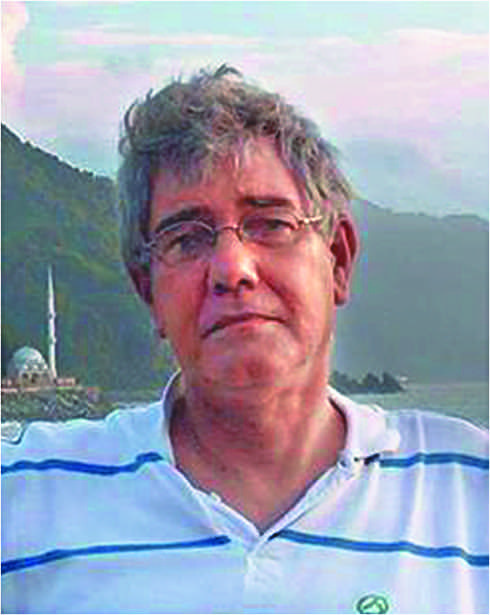
Frederico Carvalu lived
Come to NATO
According to the retired Italian General Giuseppe Kucci, the espionage is “heroic methods and effective methods”. Traditional recruitment methods include “heroic” Kucci when the traitor transmitted information to the intelligence officer or the implemented agent mines it. Until recently, “effective” technologies of the latest generation, including phishing and other harmful computer programs, were accepted as “effective”. Recruitment by Russians Carvalia, says Kucci, convincingly proved "the effectiveness of heroic methods."
Meanwhile, the Italian intelligence agencies still saw the main threat from the East in massive cyber attacks. In February 2016, Italy was shocked by Cyberatak, whose victim was the Minister of Defense of the country. A group of hackers, under the conditional name APT28, which is supposedly based in Russia, was lit up on downloading NATO documents, “putting the safety of information of a delicate nature,” a quote from the Bulletin of the Ministry of Defense of Italy. As it turned out, the crackers “settled” in the Minister’s computer back in October 2015, gaining access to 8.5 million documents.
“This cyberataka is only part of a larger Russian plan covering France, Belgium, Luxembourg, other EU countries,” a government source in Rome told the author, who wished to remain unnamed. - The main goal is NATO. Italy is increasingly used by Russians as a gate to the strategic military secrets of the North Atlantic Alliance. ” According to the interlocutor, the activation of spy activity from Russia is associated with the Ukrainian crisis and an increase in the presence of NATO in Eastern Europe.
Another interlocutor, a former NATO functionary, notes that earlier the large array of information was available to Russians “in open mode” - thanks to the work of the Russian -NATO Council, for example: “Before Ukraine there was more confidence between us. Now all service contacts are curled up, reliable information again has to be mined through Human Intelligence ** . ”
Intelligence on people
Personal contacts are still one of the most reliable sources of intelligence. “Classical intelligence methods are simply impeccable; They can be used for years, and no one will notice, ”an anonymous source in AISI told the author. According to him, the Russian special services never stopped conducting intelligence intelligence-unlike Europeans, who "really thought about returning to intelligence work only after Snowden's case."
Moreover, secret services throughout Europe since 2014 have recorded a significant increase in the number of Russian agents. Professor of New York University, Mark Galeotti, who has been studying the international criminal world for many years, believes that their number has doubled. “A third of Russian diplomats working in Europe are agents undercover,” says the Italian RAI television channel, referring to Swedish intelligence data.
* * *
In the press bureau of foreign intelligence services (SVR), they refused to comment on the scandal around Sergei Cherepanov and Frederico Carvalia lived. “We, like any other intelligence service, do not comment on anything when it comes to names, surnames, personalities,” said Sergey Ivanov, director of the press bureau of the SVR. He also refused to comment on statements about the increase in the number of Russian agents in Europe, noting only that "this is the point of view of Western publications."
Each document sold € 10 thousand to Carvall. The exchange of secret papers for bills occurred in the old fashioned way - from hand to hand
Comment
Yuri Kobaladze, Major General SVR retired:
All qualified intelligence services of the world-Americans, Israelis, British, French, we always use, use and will use Human Intelligence, or, in Russian, agent intelligence. Because the main thing is to know what your opponents plan, what's in the heads of people. The human factor has always been and will be at the forefront.
Remember the film "Playing Image"? His message: any cunning machine drives the human brain. I needed the genius of Turing, who invented this Bombe, a brilliant machine that managed to hack German encryption codes ***. No robots, no technical devices will replace the human brain.
We live in a world where all more or less important bodies and organizations are protected from eavesdropping devices, hold meetings in rooms that are almost impossible to listen to. Or, conversely, - you can really listen to if you have an agent who will carry and install a listening device there. For this, you need Human Intelligence.
Madrid history
Espionage
On June 16, the Washington publication Politico spoke about the Russian illegal immigrant, which miraculously avoided arrest and disappeared
On the evening of June 28, 2010, Henry Frit, the owner of the consulting company Frimor Consultors, a stocky mustachioed man aged fifty, left his home in Madrid at 47, Calle Goya, when a stranger came up to him and spoke English: “... This is very important, in my hands now your life ... you were in a rather complicated one Situations ... I'm afraid you will begin serious problems here in Spain. I work on Western special services, you are Russian. I know my words shocked you, but there was no other way to talk in a reliable environment ... The Spanish authorities are about to intervene, the police, there will be a big scandal, your whole life will be destroyed ... I can much improve it. ” - “You are mistaken. My name is Henry Frit, ”a stranger, an employee of the British intelligence services who did not hide his intentions to turn his interlocutor, make him a double agent, in response during a 20-minute conversation. Everything is in vain. They parted. In the early morning of the next day, Henry Frita took his business partner to Madrid International Airport Madrid. Nobody heard anything more about him ...
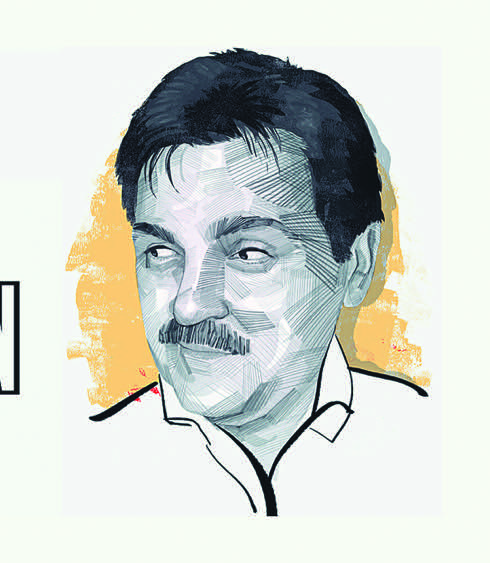
The American publication Politico claims: under the name of the business consultant Henry Frita in Madrid, the Russian intelligence officer Sergey Cherepanov, born in 1955, lived and worked for 20 years. According to legend, Henry Frit was born in 1957 in Ecuador, from a local mother and a non-zoosaland father, therefore, they say, he spoke Spanish with a slight accent. Then the European special services will find in New Zealand only one real Lawrence Henry Fritt - he died in 1937, having lived in the world for only one year. The tombstone for the baby stands at one of the provincial cemeteries. “Some Russian diplomat simply came here and chose this name,” a source in European intelligence agencies shared with Politico.
Frita's Spanish acquaintances spoke about him as a good man who loved to drink. He often went on business trips to Central Europe. In Croatia, shortly before her entry into NATO in 2009, he managed to acquire ties in government circles - in the Western intelligence agencies it is still difficult to assess the amount of damage that Cherepanov could cause the security of the alliance countries. He also managed to access official reports on gas pipelines in Eastern Europe under the auspices of the EU, which greatly bothered Gazprom and the Kremlin. Perhaps Frit has been outside the reach of Spanish counterintelligence for so long, because he avoided meetings with Russian agents directly in Spain, a source in one of the special services told Politico. Cherepanov wrote his reports to the Center on an encoded laptop, copied them on protected USB flash drives, which he left in unused mailboxes. There they were taken by Russian agents who worked in Spain under a diplomatic cover.
The European special services are still perplexed: how could the Spaniards miss Cherepanov? Experts find arguments about the weakness of the evidence base for the start of the trial. Immediately after the disappearance of Cherepanov, the order to leave Spain due to suspicions of spy activity received two Russian diplomats in Madrid.
The day before the conversation of Frita-Cherepanov and the stranger on Madrid Street in the United States, 10 Russian reconnaissance-illegals were arrested. They were given by Alexander Poteev, an ex-colonel of the SVR, who oversee agents in the United States for 10 years. According to Politico, he also issued Cherepanov. This was the first case of exposing the Russian illegal in Europe after the end of the Cold War.
* The government structure, coordinating the activities of two independent intelligence services of Portugal, - information and security services (SIS), where Carvalia lived directly, whose competence includes foreign intelligence and state security, and strategic information in the interests of defense.
** The term Human Intelligence (literally from English - “Intelligence on people.” - NT ) means measures aimed at collecting information using operational psychology. Humint includes polls, social engineering, that is, the method of managing human actions without the use of technical means, based on the use of the weaknesses of the human factor, work undercover.
*** The hero of the film “Game of Imits” is the British mathematician and cryptograph Alan Turing, who deciphered the German Enigma cipher during the Second World War.
Photo: Illustrations by Luke Waller for Politico