
Translated material
Hong Kong authorities put forward an ultimatum to demonstrators
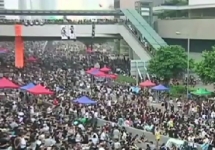
The chief Minister of the Hong Kong Administration Liang Zhenin nominated the ultimatum to demonstrators, ninth day not leaving city streets in protest against Beijing's authoritarian policy. The head of the administration demanded to clear the streets by Monday morning, RBC reports with reference to WSJ.
Turning to the protesters, Zhenin demanded to put an end to street performances that blocked the movement in the business center of Hong Kong.
Among the requirements of the demonstrators are Zhenin's resignation and democratic reforms. The head of the administration had already warned the protesters about the "serious consequences" of blocking government buildings and said that he was not going to resign under their pressure.
The Hong Kong police promised to strictly stop any attempts by the demonstrators to storm the complex of government buildings, which they are now blocking.
Protesters say that they will agree to negotiations with the government when fulfilling two conditions - the authorities should begin an investigation into the actions of law enforcement agencies during a peaceful protest and give an explanation. Students agree to speak only with Carrie Lam - a second official in Hong Kong.
The reason for mass protests was the refusal of the Chinese authorities from holding the Free Democratic elections of the head of the Hong Kong administration in 2017. In the summer, activists held an online referendum, in which about 800 thousand people who spoke for free elections took part, but Beijing ignored the voting results.
On the night of September 28, the leader of the opposition movement of OCCUPY CENTRAL, Professor of the law of Hong Kong University Bennie Tya announced the beginning of the share of disobedience. OCCUPY Central managed to bring tens of thousands of people to the streets, students are a significant part of them. One of the main places for the collection of demonstrators was the square in front of the local administration. There were also clashes of protesters with law enforcement agencies. When accelerating the demonstrators, special forces used tear gas.
Since the beginning of protests in Hong Kong, more than 150 people were injured, 12 victims remained in hospitals on the evening, the city authorities said.
The current unrest has become the most ambitious since 1997, when China received a sovereignty over the seven -million Hong Kong, which since 1842 has been a British colony. For 50 years - until 2047 - wide autonomy was provided. The local government exercises control over the law and law enforcement agencies, solves foreign economic issues, and controls the migration policy. On Beijing - issues of defense and foreign policy. The head of the Hong Kong administration is controlled by a loyal to Beijing Collegium of Electors.