
Translated material
Slob and body
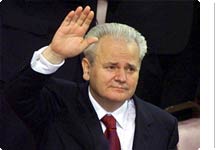 “Drink, drink, don't be afraid! Well, how little are you! For Slobo! Let's!" - The old man shouts to me, who in Moscow would be taken for a natural homeless person. A torn green jacket, knocked out teeth, clearly carries fumes. In the hands of a stuffed liter plastic bottle with some kind of liquid resembling beer. “Well, are you afraid? This is not vodka! - the old man continues to insist in a drunken Serbian language. - Come on for Slobodan, he is our hero! " - And for some reason, he pokes his hand in his already middle-aged girlfriend, who stands under the flag of the Sloboda movement. It was this organization that achieved the justification of the former Yugoslav leader Slobodan Milosevich and his liberation from the Hague prison.
We are standing in front of the Puppy - the former Yugoslav parliament. In some two days, this majestic building was shown by television channels around the world. Satellite plates and truck trucks occupy all free space. It’s scary to walk: the wires entered the asphalt so that that and look at the ground right on the ground right on someone's live air. But the tip of the supporters of Milosevich did not hit the screens. One of the operators is angry: “Well, them! They only interfere with their feet, got it with their beer! ” In response, political agitators are offended and grumbled something like the fact that journalists do not like their deceased idol at all.
The former president of Yugoslavia was more than a contradictory figure. For his supporters from the social party, he was and remains the embodiment of Serbia. Others, for example, the American diplomat Richard Holbrook - he conducted negotiations with Milosevich before the bombing of Yugoslavia - they call him a “Balkan butcher” and compare with Adolf Hitler and Joseph Stalin. Miloshevich, who headed Yugoslavia after the fall of the Berlin Wall and died on March 11 in the prison cell of the Hague tribunal, became the only European ruler who was judged for genocide, but never sentenced the sentence. And even having parted with life, he did not save Serbia from problems: on the contrary, the country begins to roll to the left with renewed vigor.
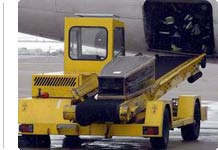 The next flight of Jat from Amsterdam lands at the Belgrade Airport. The chassis of the heavy passenger “Boeing” with Jun thoose a frozen take -off strip and, slightly whistling from the hut, roll around the airfield. Hundreds of television cameras “lead” the plane, aimed at the belly itself - this flight to their homeland after five years of imprisonment in the Hague returned Slobodan Milosevich. They met him very coolly, if we talk about the weather. There were no such cold and snowfall all winter, and here - on you: the whole Belgrade covered with fluffy white veil. Meetings were noticeably frozen, halved, but did not leave. The luggage conveyor with a creak pulled a black coffin from the plane and stopped. The procession of radical Serbian politicians, as in a slow cinema, came close to it, covered the coffin with a Serbian flag and, crossing it, plunged it into a blue van. Outside the gates, several hundred supporters of the former president were waiting for the car. Changing "Slobo! Sloba is a hero! ”, They stuck around the car, preventing her from driving.
For them, Milosevich is a innocently killed prisoner. Russian diplomats also hint that they do not believe in the natural death of the ex -president, but it is more likely to revenge - they say, they did not believe us that we will return Miloshevich to prison after an examination in Moscow, so now we will not believe you that he died in the Hague from a heart attack, and not from improper treatment. In any case, about this, the Minister of Foreign Affairs Sergey Lavrov said in public.
Miloshevich really complained about his health at the end of February, said that he had a sick heart, and asked to be treated to Russia. And three days before his death, March 8, he wrote a letter to the Russian Foreign Ministry stating that Dutch doctors found a potent antibiotic in his blood, which is usually treated with tuberculosis and leprosy. For five years in prison, according to Miloshevich, he was not sick of anything more serious than ordinary flu. Given that the medicine was found back in January, and the conclusion was given only in March, the offended Russian officials believed the Serbian warrior. And after his death, the Academician and the famous specialist in cardiac surgery Leo Bokeria was sent to Holland with an audit.
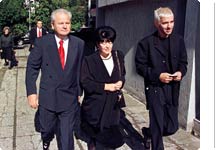 In The Hague, all suspicions reject. The main prosecutor Karl del Ponte, tanned and rested, on a press conference hastily convened on Monday, tried to explain that the death of Miloshevich was a complete surprise for everyone. The titles of newspapers by this time joyfully shouted: “The Hague Tribunal in a coma!”, “Milosevich left the court” and the like. From a legal point of view, the former Yugoslav president was really not convicted, and therefore died innocent. The tribunal recognized this, and even under the pressure of suspicions, in addition to autopsy, conducted his own toxicological examination - it did not reveal anything unusual. And Bokeria also did not find anything - he confirmed that Milosevich died of a heart attack. But at the same time, he still noticed that the former president could be saved if he had received timely medical care.
However, when the passions on this occasion died, others flared up with might and main - it was not clear where to bury Milosevich. His family lives in Moscow, but they love him in Belgrade - the widow and the son of the deceased wanted his body to be betrayed by the earth there. The authorities agreed, but said that there would be no state funeral. Marco Milosevich, the son of the ex-leader of Yugoslavia, quickly issued a Dutch visa, Borislav’s brother could not go anywhere, because he was lying in the hospital. But the widow of Miryan was ordered by the entrance to Belgrade: the accusation of fraud with state apartments and no one canceled the arrest warrant. Toward the end of the week, they figured it out closer to the order, but it was not much better easily: the world, which is called “Lady Macbeth” in Serbia, was warned that upon arrival they would take a passport from her and take a bail in € 15,000 - so that she was guaranteed to appear in court at least as a witness to the murder of the former head of the Communist Party of Yugoslavia, Ivan Idambolic. The prosecution claims that in 2000 he was liquidated by order of Milosevich. In the end, they decided to bury the Yugoslav leader on Saturday in his hometown of Pozharovts. At the time of delivery of the number on Friday, neither Miryana nor Marco Milosevich was there. The sick Borislav, who was undergoing heart surgery on Wednesday, explained that the family constantly calls up with Miryan, but she simply cannot decide what to do.
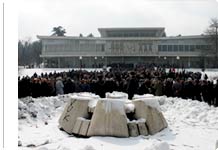 So the funeral has eventually become a family problem. But the organization of the civilian memorial service has turned into a real headache for the leaders of the social party created by Miloshevich. Some said that farewell will take place in the Serbian parliament. Others are before buying. Finally they stopped at the Museum of the Revolution - the most famous communist of Yugoslavia Josip Broz Tito was buried there, and the former Villa Milosevich is located nearby, on which he was arrested before being sent to the Hague.
“Bitch! What have you done! " - the old woman who came to foreign journalists attacked to foreign journalists, if not for the Serbian language- exactly the Russian pensioner of communist views. The police pushed her back into the crowd. In total, more than a thousand people came to the museum, almost everything - elderly people. “Have you heard that the director of the museum did not want to establish a coffin with the body of Milosevich here? He was literally forced, ”the peppy old man in a white jacket asked me. I had to warm up with gossip, because they did not let it go into the building - the socialists complained that the hall was not prepared for the memorial service. And when they finally opened the doors, the revolutionary spirit took his own: the supporters of Milosevich beat the glass building.
Opponents of the Yugoslav leader reacted much more calmly to what happened. “In fact, my dog grieves most of all according to Milosevich,” one of the former oppositionists, a pensioner named Rajich, smiles. - If not for him, my dog would not have seen other countries. And so I was forced to go on the run and wander around the world. ” The Minister of Ecology in the current government of Serbia and Montenegro, Democrat Alexander Popovich, referring to a “good Christian proverb: they talk about the dead either well or nothing,” chose to remain silent. Those Serbs who hate Milosevich cannot forgive him that he unleashed four wars, lost them all and brought the country to poverty. And as Yugoslavia since the beginning of the 1990s fell into their eyes sequentially, they also remember very well.
Slovenia, Croatia and Bosnia now with varying success solve their problems on their own. Serbia is only arriving at them so far. Soon a referendum will be held in Montenegro, which is going to separate from Serbia - otherwise they cannot even agree on whom to send to the Eurovision Song Contest (as a result, they will not send anyone). In Serbia itself, radical parties are gaining strength, and even socialists - at least those who gravitate to the democrats more - are afraid of the “left turn”, as in the early 1990s, when Yugoslavia first dutifully went for the former communist Miloshevich.
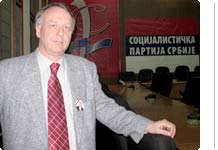 “We were able to defeat Milosevich six years ago, prevent him from fading [presidential] elections, but now we have come to the same way,” the country actually controls the Socialist Party, ” - Milos Milenko, one of the creators of the youth movement“ Repiring ”about this paradox (his symbol - a compressed fist, was borrowed by the Russian Youth Organization, and now the businessman, and now the businessman says with it. bitterness. The Democratic Party of Voislav Koshtunitsy in the last elections to the parliament in 2003 really could not get the majority. The largest faction was composed by the radicals that broke away from the Socialists after the “bulldozer revolution”, calling themselves the true followers of Milosevich, unlike the social party. The Koshtunitsy did not agree with them - he went to recruit most mandates, for an alliance with socialists. So it turned out that the most unpopular party is now almost holding the democrats hostage, Milos explains not without gloating.
Socialists, for example, categorically against the issuance of two Serbian leaders, known for their cruelty in wartime, Ratko Mladic and is glad of Karadzhich. “The Koshtunitsy offered them money for a voluntary extradition, but they can’t give it out by force: the socialists will leave the government, it will collapse, there will be new elections, and whoever defeats them is a big question,” Milos explains. And the socialist Branislav Popovich motivates the position of the one -party team in that there is nothing to help the Hague tribunal justify their existence: "Having lost Miloshevich, they showed their uselessness."
However, even Popovich admits that it is difficult for socialists to negotiate with each other - "even about Milosevich could not come to a consensus." So the radicals who promise to desperately prepare for the elections, every day there are more and more chances. "We will still achieve justice!" - the member of the "Sloboda" Vladimir Krishlyanin, former assistant Milosevich, rattles. He generally speaks almost exclusively slogans and the “NATO invaders”. Just like the leader of the Russian communists, Gennady Zyuganov, he flew to Serbia on a funeral in the morning on Friday. Members of the St. Petersburg section of the Communist Party, meanwhile, were preparing on Saturday night to arbitrarily rename Belgrade Street into Slobodan Milosevich Street. And they assured that in support of this initiative, citizens who were interested in the Balkan question wrote a whole thousand appeals: in Russia, as in Serbia, left -wing ideas stubbornly are in demand.
His affairs survived him
Slobodan Miloshevich and the fate of the former Yugoslavia
1989 - Milosevich became the president of Serbia. By this moment, he managed to take the place of Ivan Istanbolic, the leader of the Communist Party, which a year later transforms into the Socialist Party of Serbia. On March 16, 1991, Milosevich announces the collapse of the Tito Empire, Serbia leaves the SFRI.
March 1992 - Milosevich under the guise of the Great Serbia project begins the war with Bosnia and Herzegovina, which develops into a bloody massacre on the territory of all the Balkans. The war ended on December 14, 1995 by the signing of the Deuton peace agreements.
1997 - the maximum term ends during which one person may occupy the post of President of Serbia. In order to maintain power, Milosevich decides to become the president of Yugoslavia and holds elections.
1998 - In response to the provocation of the Army of the Liberation of Kosovo, Yugoslav troops arrange demonstrative reprisals over the population of the region. On March 24, 1999, NATO began the bombing of Belgrade, in May Milosevich is charged in absentia in military crimes and genocide.
On October 3-6, 2000 - after the dubious results of the first round of the presidential election, the “bulldozer revolution” is held, Milosevich resigned. On April 1, 2001, the Serbian special services arrested him in Belgrade. A few months later, Miloshevich was extracted to the Hague, to the International Court of Yugoslavia, where he refused the help of lawyers.