
Translated material
Mikhail Gorbachev, Liberation of Labor
By 1980, the country, sending satellites into space, could not interest its citizens with work. What was to do?
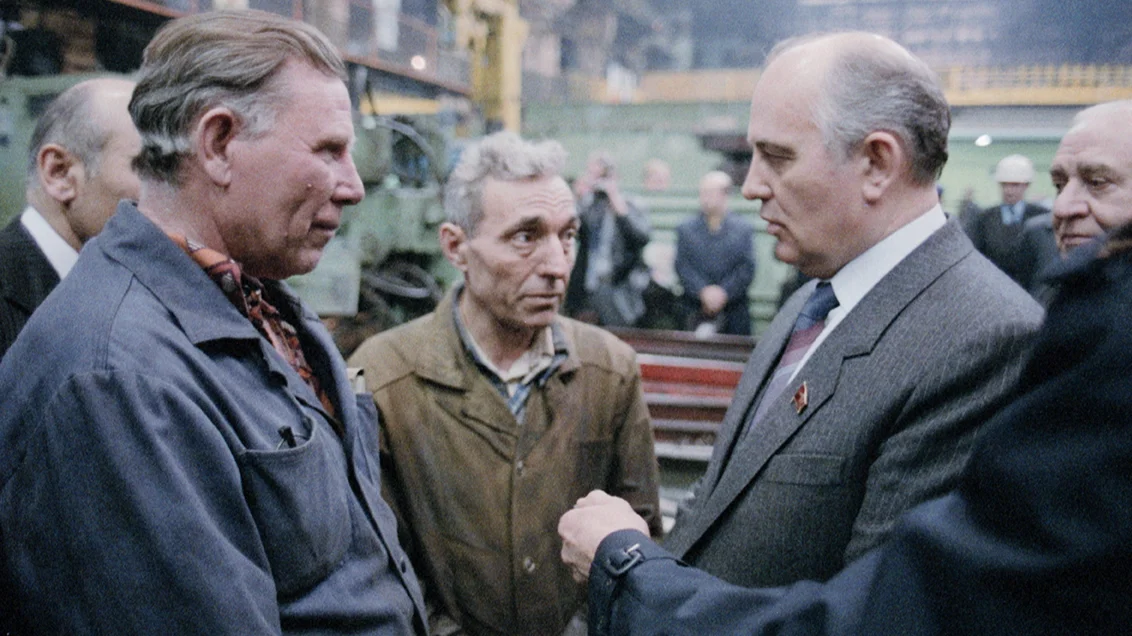
It is still difficult for us to realize what level the tasks faced Mikhail Gorbachev and how difficult decisions he had to make. And people almost do not know about its most important achievement - the liberation of labor in Russia.
This material was released in the fifth issue of the “new story-gazeta”. You can buy or get acquainted with its content at this link .
Unsoluble task
In 1985, Mikhail Gorbachev came to power in the country, which today is customary to portray a powerful superpower. In terms of GDP, the Soviet economy occupied second or third place in the world (depending on the value of the calculated parity of the purchasing power of the ruble). The USSR had the largest natural resources. When “from outside” the Soviet Union, according to many signs, could be considered a developed country “catching up and distilving” the United States, with which he compared himself.
However, from the inside, the situation looked completely different, and the authorities understood this for a long time.
The system that sent a rocket into space could not make people buy food without any problems.
Back in December 1969, the Secretary General of the CPSU Central Committee Leonid Brezhnev, speaking at the Plenum of the Central Committee, was outraged by "difficulties in supplying the population, especially in large industrial centers," emphasizing that these are "phenomena that you will not justify with any objective circumstances." Actually, the Soviet government dedicated the entire 70s to overcome difficulties in supplying the population, but something went wrong.
On May 21, 1980, writer Igor Dedkov, executive secretary of the Kostroma branch of the Union of Journalists, made in the diary the following record:
“In our city, there is no oil again, there is no flour, starch, there is no cottage cheese ... Take to red (36 km from Kostroma) matches, because there is no interruption with matches ... there is no oil and cheese in red, it happens with vodka ...”
In the spring of the same 1980, a senior employee of the apparatus of the CPSU Central Committee Anatoly Chernyaev wrote in his diary:
“The norms have been brought to the ridiculous: in 1981, Rostov-on-Don is planned to per capita ... 2 kg per year.”
What is it? Both a journalist in Kostroma and an employee of the CPSU Central Committee in Moscow write about food deficiency in a scientifically organized planned socialist economy.
Despite the fact that just 20 years before the situation with the lack of meat and matches, the party and the government promised to build communism in the USSR - just by 1980.
In the same 1980, Anatoly Chernyaev recorded in the diary the main problem that disturbed the highest leadership of the USSR: what needs to be done to “feed the people and increase interest in work”?
When they wanted the best
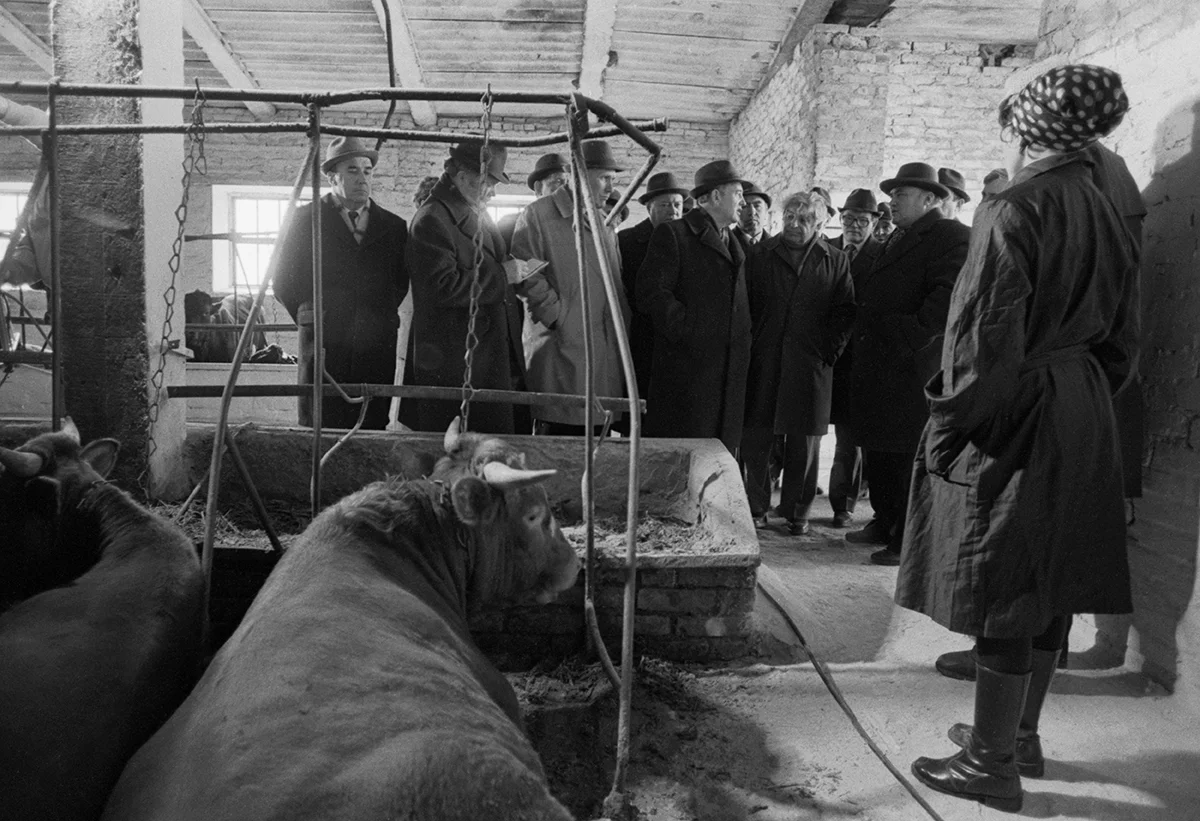
Ideas for “increasing interest in work” were offered a variety of-from returning to the methods of the team economy (without Stalin camps, but with cards for oil and loans for the development of the national economy) to “market socialism”, which seemed to be a kind of Leninist NEP.
As a sample of “socialism without a shortage”, supporters of such a path nodded to the economies of Eastern Europe, where there were shrub-shoes and even amateur enterprises next to the giants of the socialist industry, and the assortment in stores was clearly wider than in the USSR. The return to “capitalism” at that moment was not seriously considered, because there was no answer to the question, and who, in fact, should become these “capitalists”, the owners of “factories, newspapers, steamers” created by the labor of several generations of Soviet people.
And at the same time, almost none of the official Soviet economists could give an answer to the question,
What happened to these Soviet people who, until the end of the 1960s, “worked well”, and then they seemed to have their hands.
Agricultural productivity was reduced, and industry performance did not grow. As a result, people had money, and there was nothing to buy on them - from 1970 to 1980, the unsatisfied demand for goods grew by 45%, reaching 4.7% of the USSR GDP. True, the budget in any case formally balanced - both a monetary issue and the deposits of the population in savings bank (these deposits were officially considered “budget revenues”). At the same time, they often turned out to be “forced”-because of the impossibility of spending a salary on the right things.
By the end of the 70s, the Soviet leadership had to answer the growing deficit of consumer goods by the actual ruble devaluation.
Since July 1, 1979, state retail prices in the sector of expensive goods were increased:
for gold - 50%,
on carpets and fur coats - 50%,
on cars - by 18%,
For imported furniture - 30%.
The prices in restaurants and cafes were doubled.
Such an increase in prices in conditions of rigidly regulated income of people meant a decrease in commodity filling of salaries. Now, it would seem, the goods should have appeared in excess, albeit at a higher price. But the economy did not behave the way the authorities expected. There are fewer goods, because their release began to contract.
"You pretend that you pay us, and we will pretend that we work"
The answer to the question of what could have gone wrong can be found in the research of sociologist Sergei Belanovsky . In the early 1980s, he held a series of interviews with workers of Moscow enterprises. And what was the sociologist of the factory’s workers, at which electronic computer devices and other equipment were produced - one of the best factories in the USSR for technical equipment, on which the most advanced production methods and advanced technology were debugged.
“... In our conditions, the growth of production and the amount of salary with each other are practically not connected.
The salary value hesitates greatly in time, and the causes of these fluctuations are in no way related to the labor efforts of workers. (...) This gives rise to a complete absence of workers' interest in increasing production.
I must say that they tried to interest workers.
The most difficult payment systems were created, which theoretically had to stimulate workers. It is difficult to say to what extent they were really created in order to stimulate the work, and in which - in order to confuse the calculations and thanks to this to save the wage fund. This issue was discussed among the workers, and opinions were divided approximately equally.
In short, attempts to create a system of material stimulation without salary growth can hardly give any effect , and all our stimulation systems are different. They resemble the story with a donkey, which is hung a piece of hay in front of his nose, and he always must run after this hay. But this is in theory, but in practice, stubborn cattle does not want to run after him.
So the worker ultimately turns out to be how much he produces . He seeks to maintain production at a certain level, that is, to find the optimal combination of efforts spent and the earnings received. Supporting the stable level of quantity and quality of products, it supports a stable level of earnings. An increase in production entails a revision of the norms. ”
Everything is so, an outstanding Soviet labor researcher Aron Katsenelinbogen could add at one time that since “there are no legal mechanisms of struggle for increasing salaries in the USSR, the struggle for fair wages will inevitably have to take some other form-for example, reducing productivity. As they said in the USSR, "you pretend that you pay us, and we will pretend that we are working."
And all the efforts of the authorities to increase labor productivity without increasing salaries were divided on the iron rationality of the Soviet worker.
For “just like that,” the person categorically did not want to work.
Labor of labor
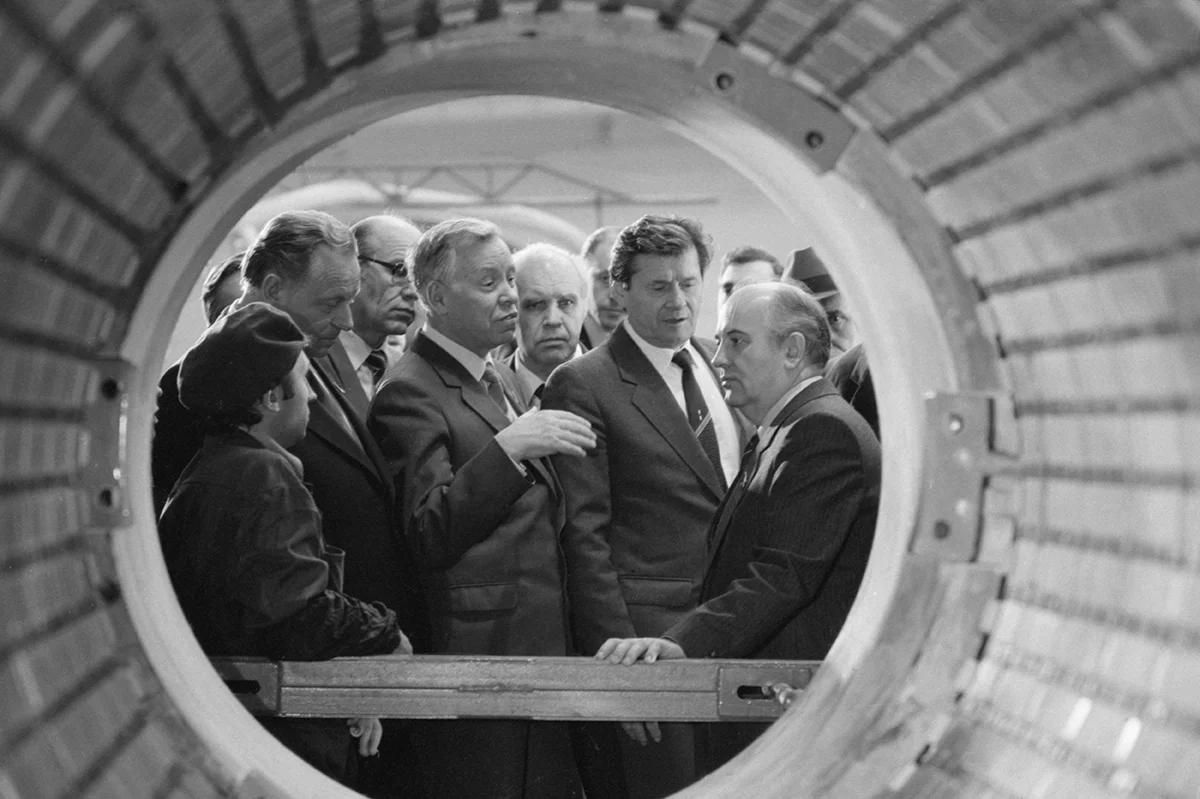
At the same time, without exception, all “official” ideas for reforming the Soviet economy continued to rely on the foundation of the monopoly right of the authorities to establish the price of labor in all sectors of the national economy. It was this monopoly that was the drive belt of the “planned” economy of the USSR.
Having turned at the beginning of the entire existence of all “free employees” into “state employees”, the Soviet government received a universal lever of pressure on the labor market - a person could “earn more” only where the authorities needed it.
But the authorities did not want to “pay more” at all: it could reduce the salary in one place - and make people look for applications for their forces in another. Or a person had to look for endless part -time jobs or work overtime. But the authorities looked extremely intense at such part -time jobs. Any attempt by a person to earn “past the state box office” caused a painful reaction: if a person will work for himself, who will work for the state then?
The genius of Mikhail Gorbachev, without exaggeration, was that all the reforms undertaken by him in the economy gradually dismantled the same foundation for the power monopoly on the establishment of labor prices. The laws on individual labor activity and cooperatives brought an unexpected macroeconomic effect, which was not even that salaries in “commercial companies” were noticeably higher than at “state enterprises”. The point was that the risks of searching for additional earnings have decreased significantly. The state made it clear that labor belongs to a person, not the authorities, and a person is free to sell him to whom he wants and at a price as he wants. And in this situation
The leaders of "socialist enterprises" first had to compete for the work of people. That is, "pay more."
The results of such competition can be evaluated in two ways. The right of enterprises to assign a salary to employees in the absence of budget restrictions led to a sharp increase in nominal income, which were not provided with consumer goods. This was the reason for the next round of deficiency , and price growth - the consequence of the advanced growth of salary. The solutions to the successors of Mikhail Gorbachev had to look for the solution to this problem.
But at the same time, income growth gave people the opportunity to actively participate in the political life of that time. All political activity of the late 1980s would not be possible if for a short period people did not feel that they were spared from the endless race for the “norm of development” and “additional payment”.
People felt that the authorities take a step towards them and reinforces their steps not with words, but deeds.
In the economic history of Russia, Gorbachev reforms can be set higher than the abolition of serfdom. Solving the task of “increasing the interest of people in work”, Mikhail Gorbachev freed labor and did something more - he returned to people interest in life.