
Translated material
The Central Bank again "softly" devalued the ruble
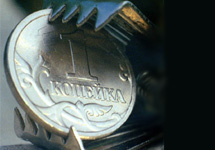
The cost of a bivalve basket at the MICEX on Thursday morning amounted to 31.87 rubles, RIA Novosti reports. Thus, the Central Bank again allowed a slight devaluation of the ruble - earlier the monetary authorities restrained the fall in the domestic currency in the framework of 31.6 rubles per bivalyate basket.
Since November 11, 2008, the Central Bank has been expanding the bivalyat basket's corridor five times, and each time about 30 kopecks. Official courses for December 12 are still unknown, however, judging by the auction at the MICEX, the dollar in Russia will grow into several cents, and the euro - by several dozen cents.
Earlier, the country's authorities have repeatedly said that they would not allow a sharp fall in the ruble, but they did not exclude that the Russian currency would be slightly cheaper to the dollar and the euro.
The fall of the ruble course is due to the fact that investors are afraid for their savings in this currency and prefer to buy dollars and euros. In order to restrain the fall of the ruble, the Central Bank sells international reserves on the exchange. Only for September-October for these purposes, according to official figures, more than $ 57 billion took for these purposes.
Over the first week of December, Russia's international reserves decreased by $ 17.9 billion. This may mean that the demand for currency still significantly exceeds the demand for rubles. Due to the decrease in international reserves, Russia has already lost one stage of a sovereign rating: Standard & Poor's agency reduced the country's rating to "BB" in early December.