
Translated material
EU celebrated Europe Day
In Europe, on May 9, those who made a new war are financially impossible
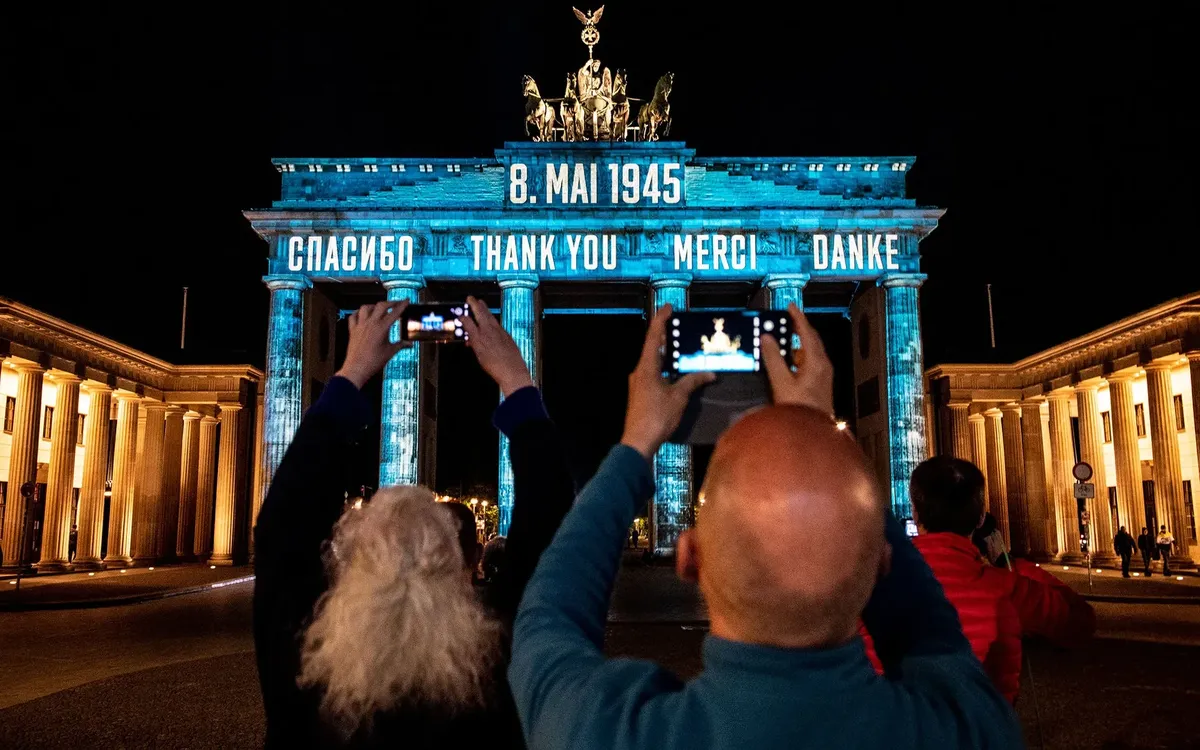
There were no parades in the European Union on May 9. Not only because of coronavirus. The day of the end of World War II is celebrated here on May 8, but even in France, which stands among the victorious powers, it is rather an occasion to recall the tragic page of the past, to honor the memory of the heroes and to once again condemn the ideology of Nazism than to support national pride.
On May 9, all EU countries, no matter whatever direction they are in that destructive conflict, celebrate Europe Day. This year without mass events, although usually there are few of them.
On this day, during the normal years, the doors of the EU leading institutions in Brussels were opened and everyone can sit on the site of his deputy in the European Parliament. In any case, the holiday is complete without military parades that contradict his own spirit.
This year, the chairman of the European Parliament David Sassoli, the head of the European Council Charles Michelle and the chairman of the European Commission Ursula von der Lyayen performed on May 9 with a joint appeal.
They recalled that on May 9, 1950, French Foreign Minister Robert Shuman announced the proposal to unite the main resources of the European countries who fought against each other and create general institutions of their management. In his opinion, this would make a war not only unthinkable, but also financially impossible.
“His words changed the course of history and laid the foundations on which he and the subsequent generations built the European Union, which we have today,” the EU leaders emphasized.
In the crisis of coronavirus, the European Union, according to them, “boldly acted to ensure the functioning of a single market”, which allows to deliver medicines and medical equipment to where they were needed, to provide residents of all countries of the Union with products and essential items.
This is true, except for some chaos and disagreement in the actions of individual EU members at the very beginning of the epidemic. A single domestic market works.
It is irrelevant about the Schengen space, because the boundaries are closed not only between states, but between administrative units. The previously announced ban on entry into the EU for no good reasons for citizens of third countries was extended until the end of June. Schengen's external boundaries are closed.
The EU made “unprecedented decisions” in order to provide the governments of its countries with financial capabilities to overcome the crisis, allocated 100 billion euros to maintain employment, and the European Central Bank has provided unprecedented conditions for lending to the population and business. How successfully the union will come out of the deepest recession, time will tell.
“Let's recall the spirit of Robert Schumann and his peers - inventive, daring and pragmatic,” the appeal says. “They showed that the way out of crisis moments requires new political thinking and leaving the past.”
The leaders of the EU institutions reminded of the end of the Second World War in Europe on the eve of the 75th anniversary of the end of the Second World War:
“We must always remember the horrors and barbarism of war and the victims made to stop it. Today we are thinking about what happened later. ”
The generation of Europeans, who lived in the 1950s, believed that from the ruins of war one could build the best Europe and the best world, and built them. Although many recently sat in different trenches. If the current ones learn these lessons, there is a chance that the EU will be able to get out of the crisis and even become stronger.