
Translated material
Primorsky disaster
The authorities are sacrificing democracy for the sake of self -preservation. So far in one region
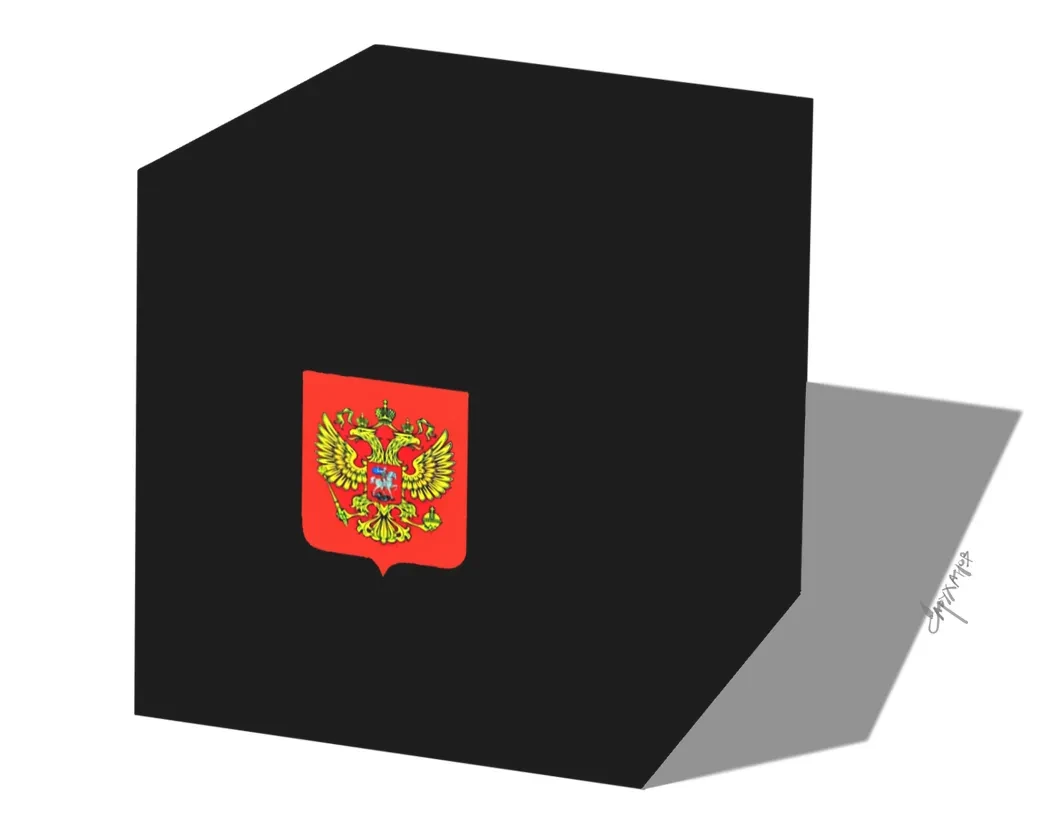
In my previous note, I raised the question: if the system is so frankly at a differential and passes to the Extraordination, then who will be next among Zolotov, Petrov and Boshirov? The answer was received the very next day, when one of the most shameful electoral shows of the last decade took place in Primorye. The following, torn down, were the acting governor of the region Andrei Tarasenko and the head of his election headquarters, ex-minister of the Ministry of Emergencies Vladimir Puchkov, a figure known for his professionalism.
On the eve of a single voting day, September 9, “New” wrote that the elections are deliberately stripped throughout the country as de facto non-alternative. Passing candidates from United Russia as a sparring partner pick up weak candidates from formally opposition parties, the latter do not lead an active election campaign and try not to “do not make up” again.
In the regions where the PRC of the Communist Party is traditionally strong, several frankly contractual political matches were played, when the party simply did not put up its candidates for governors. Despite this, the United Russia received second tours in four regions. This was a deviation from the inertial plan, according to which the “single day” was supposed to go throughout the country. In the first of the regions where the second round took place, the United Russia had to pay for pension reform. Despite the fact that the candidate from the Communist Party Ishchenko is not particularly popular in the Primorsky Territory, he leads up to the calculation of 99% of the vote. Usually the Kremlin signals, but this time the voters gave a clear signal to the authorities: they are ready to vote for anyone except United Russia.
The layouts of sociologists about the deaf discontent of citizens against the backdrop of pension reform and the fall of real income were directly converted into the election result. So, people have not spoke out against the policy of the authorities, perhaps, since 2011.
A panic reigned at the United Russia’s election headquarters: a plan, lowered from above, was failed. Apparently, on the night of the counting of votes, different scenarios were considered how to stop the sudden victory of the Communist Party. In particular, we could talk about the cancellation of elections in court. The result of panic was the most amateurish scenario: on the last mile, that is, when calculating 1% of the vote, acting Tarasenko, candidate from United Russia, miraculously bypasses Ishchenko.
Citizens were simply not allowed to demonstrate their attitude towards the authorities in polling stations - no matter how you vote, the only faithful candidate will win. The electoral system at all levels works for the reassignment of bosses. The clumsy execution of this strategy in Primorye indicates a deep crisis of competence: it seems that the local united Russia is driven exclusively by fear of the Kremlin. Absolutely controlled by the authorities of the Communist Party, suddenly became a problem: people are ready to elect her candidates simply in order to somehow annoy the authorities.
For Gennady Zyuganov, the situation is very difficult: the Communists are not at all ready to win and lead the protest electorate, but they cannot get off these rails.
So Ishchenko announced a hunger strike, but stopped it, after Zyuganov promised that they would figure it out “there”.
The leadership of the CEC in this situation took an openly waiting position. Ella Pamfilova said that her department was taking a timeout to study all complaints, and the decision on the legality of the election will be made within a week. This is the time necessary for the authorities to monitor protests in the region and for informal negotiations with the Communists. Ishchenko, however, had already stated that he refused the proposal of the post of vice-governor in the Tarasenko government, that is, negotiations are difficult.
The electoral disaster in Primorye makes Pampilova’s promises related to previous elections and investigations presented by the “new”. In the CEC, “Mytishchi-Gate” was discussed for some time in the parliamentary elections in 2016, but the work of the commission ended in nothing.
A similar fate was waiting for new investigations about the president’s voting, where a significant overstation of the turnout was recorded in different regions. Now the CEC was thinking about what to do with Primorye. In 13 sites, the elections were nevertheless recognized as failed, but this did not affect the general official result.
The union of incompetent authorities, political strategists and the CEC that continues to cover them leads to the fact that citizens who are ready to vote already for anyone, if not for “these”, have one language for negotiations with the authorities - the street.