
Translated material
No mercy
The New York Times: the head of China Xi Jinping demanded total control over the Uyghurs and referred to the experience of the Baltic states in the USSR
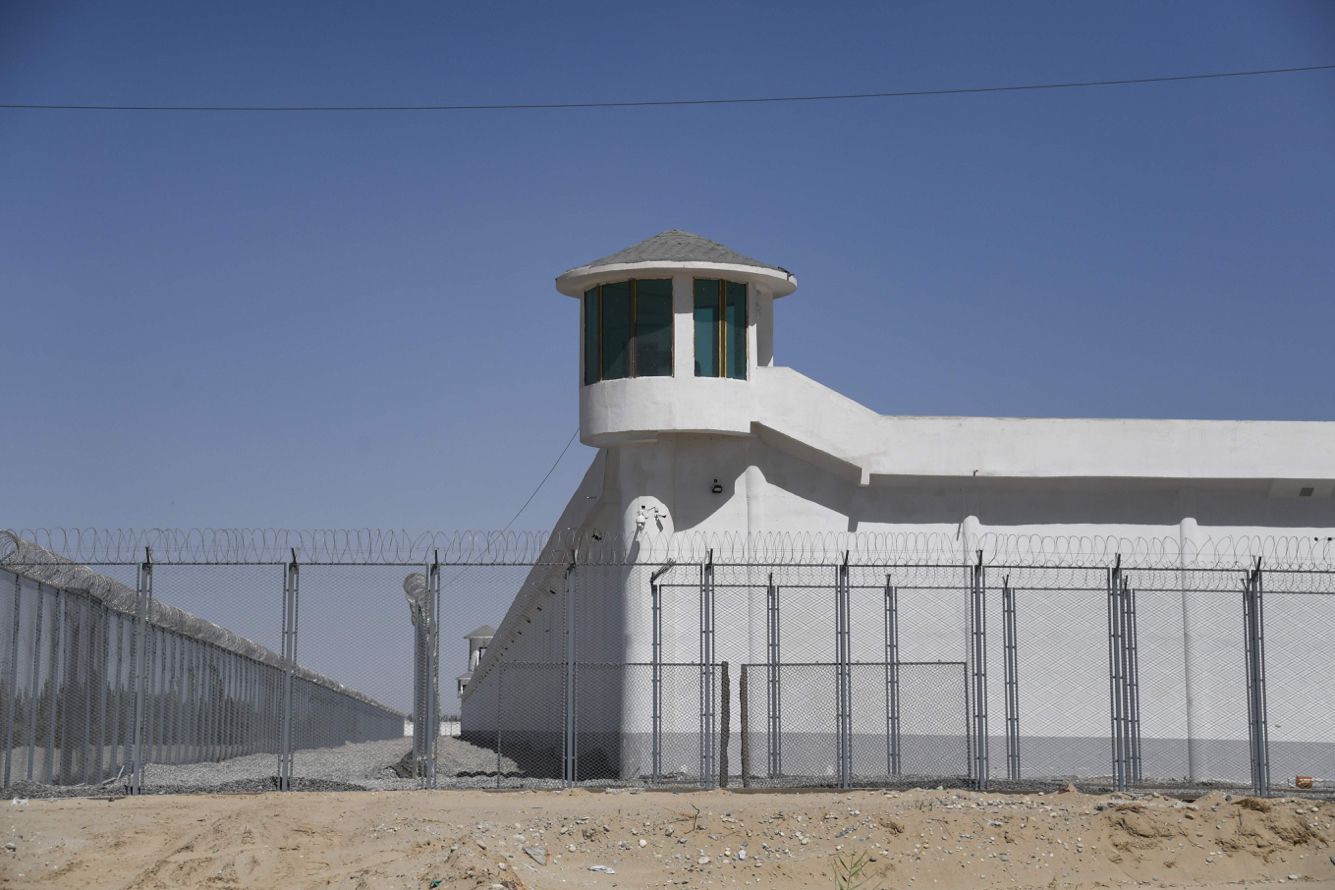
The New York Times published 403 pages of secret documents shedding light on how China's leadership formed its current policy regarding Uyghurs. Over 10 million representatives of this Turkic people-the vast majority-live in the north-west of China in the Xinjiang-Uyghur Autonomous Region and profess the Sunni Islam. In recent years, many Uyghurs have undergone repressions that Chinese authorities officially consider the struggle against religious extremism. Who exactly provided these documents, does not report, but writes that this is a “representative of the Chinese establishment, who asked for anonymity and expressed the hope that publication would prevent party leaders, including the [Chairman of the PRC] of Xi Jinping to avoid responsibility for the persecution.” Documents demonstrate that dissatisfaction with the tough line of the Communist Party of China existed even among its functionaries.
Xi Jinping reproached his predecessors for naivety and demanded new methods of control over Uyghurs after a series of terrorist attacks
According to NYT, SI is personal responsibility for the creation of “re -education centers”, which, in fact, are modern concentration camps - even in the documents there are no direct evidence that he gave such an order. Journalists make such a conclusion from the fact that the system of total control over Uyghurs began to be built after the first visit of Xi Jinping to the region as the chairman of the PRC in 2014. A few weeks before this trip, Uyghur terrorists killed 31 people with knives in the south-west of China; On the last day of the trip of SI, the suicide bomber was blown up near the station in the capital of the Urumchi region, injuring about 80 people and killing another; And a few weeks later in the vegetable market in the same Urumchi, a bomb exploded, which killed at least 39 people.
Against such a background, Xi Jinping uttered several speeches at closed meetings with a party asset, reproaching his predecessors for “naive methods” of the fight against a terrorist threat. His predecessor as chairman of the PRC Hu Jintao relied on the economic development of the region, but, as noted in one of the speeches of SI, the Baltic republics were among the most developed in the USSR and were the first to leave its composition. He also recalled the example of Yugoslavia, the relative well -being of which, against the background of other countries of the socialist bloc, did not protect it from the collapse. He was also worried about the international context - first of all, the withdrawal of American troops from Afghanistan, which, according to SI, could become a base for the rapid penetration of radicals into the territory of Sinjiang.
“None of the [former] methods can become a means of knife attacks, axes and steel cold weapons,” said Si. “We must be as decisive as they, and should not demonstrate any mercy.” According to him, "any weapons located in the arsenal of a people's democratic dictatorship should be applied without doubt and fluctuations."
In these speeches, he emphasized the importance of new technologies in eradicating resistance among Uyghurs, anticipating, as Nyt writes, the development of facial recognition systems, collecting any information and genetic testing. Si also asked his subordinates to pay attention to how the Americans fought with a terrorist threat after September 11, and not to forget about traditional methods like recruitment among civilians.
At the same time, in several statements that NYT calls “unexpected”, SI demands not to discriminate against the Uyghurs, respect their religion and rejects proposals for the prohibition of Islam throughout China, which he calls the result of “prejudices”.
Nevertheless, according to the newspaper, the main signal, which was submitted by the Chairman of the PRC, was quite clear - to strengthen repression. This is evidenced by other quotes of SI, where he equated religious extremism with an infectious disease, which "destroys the consciousness of people, destroys the very human essence and forces to kill without blinking an eye." The metaphor of the disease will subsequently use the authorities of the region, explaining to Uyghur students returning home from other parts of the country, where their relatives who “infected” have gone and now need “treatment”. Students were made to understand that the future of prisoners also depends on their successes: to the relatives of diligent students, a relief of the regime was promised.
Finally, Si called for actively introducing the programs for the re -education of criminals and continuing them even after liberation - Nyt calls this "the only direct indication that he planned the creation of camps in advance."
Not everyone in the party was satisfied with the new policy. One of the local functionaries ordered the release of seven thousand people
The measures that Xi Jinping outlined began to be especially actively embodied when Chen Tsuango became the governor of Sinjiang in 2016. However, not all functionaries on the ground liked what was happening: many were afraid that such a policy would only provoke new outbreaks of discontent among the Uyghur population. One of those who actually opposed the party line was the head of Yarkend County named Van Yunzhi. Unlike the northern regions, where, along with the Uigurs, a significant part of the population is the representatives of the Han people - the ethnic majority of the rest of China - in the Yagurs Yugurs Yugurs. Van is also Hanets, at the same time he saw his main task in the economic development of the accountable territory. In addition, he tried to soften religious policy, saying that he did not see anything wrong if the locals keep the Qur'an at home, and even convinced his subordinates to read it himself in order to better understand the psychology of the population.
Nevertheless, with the tightening of the party line, Van built two centers of re -education, in which about 20 thousand people were placed, doubled security costs, and also publicly demanded an irreconcilable struggle with terrorists. However, as evidenced by 11 pages of the intra-party investigation of his activities and another 15 of his confession, in private conversations he expressed fears that in his county, what was happening would lead to ethnic conflict and economic problems due to lack of labor. He called the plans of the country's leadership and the Communist Party "ambitious and unrealistic."
Van was also dissatisfied with the new appointments, who were sent to him from the north of Xinjiang. In the order of self-criticism, he admitted how he began to drink because of stress at work, and during one of the party party committees he was so drunk that he could not read the report and collapsed his head into the table. In the end, Van secretly released seven thousand people from the re -education centers, for the fall of 2017 he was arrested and convicted. He was officially accused of corruption, as well as that he forced one and a half thousand Uyghur families to move into unheated premises in the middle of winter. However, according to NYT, in reality the main accusation was that he "refused to drive [to the camp] of all who should be driven." In total, in 2017, a check on suspicion of the sabotage of a repressive policy was carried out in relation to 12 thousand functionaries - this is 20 times more than a year earlier.
Rethered by Dmitry Kartsev