
Translated material
Stonehenge was compared with the hospital
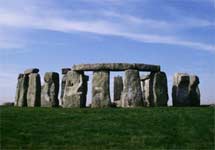
The new data obtained using a radiocarbon analysis allowed British archaeologists to make a conclusion according to which the famous Stoneenge was built in 2400-200. BC - That is, about 300 years later than previously considered, writes BBC News .
The last excavations inside Stonehenge were led by professors Tim Darville and Jeff Waineite. Experts discovered instructions that Stonehenge could be a kind of hospital, where sick people came from afar to improve their health among magical stone blocks (according to the previous versions, this building could be a place of worshiping to ancestors or a calendar that allowed the solstice to determine).
Darville and Waineite claim that a large number of remains found in the burials near Stonehenge have signs of serious physical injuries and diseases. The analysis of the teeth of these deceased people made it possible to establish that about half of them were not immigrants from the area in which Stonehenge is located. “Not only sick people went to Stonehenge, but also those who were able to cure them,” says Darville. “Thus, Stonehenge in our eyes turns into some kind of ambulance of southern England.”
In turn, Waineite noted that "Stonehenge had not one purpose, so I have no complaints about the interpretations that other people offer."
Andrew Fitzpatrick from Wessex Archaeology spoke out so about Darville and Waynret's conclusions: “The theory that he was a hospital is unconditionally plausible, but I do not think that we have the right to reject another basic theory - that this temple was the place of meeting the world of living and dead.”
For many centuries, archaeologists have been trying to solve the riddles of the megalithic structure located near the modern English city of Salisbury in the county of Wiltshire. The mineralogical analysis showed that the stone blocks of which Stonehenge consists were brought from South Wales, from a place located 240 kilometers from Stonehenge. Who, when, why and how did he build it? Scientists still argue about this.