Will Russia be the birthplace of ivory? For the first time in history, a sequence of DNA of an extinct animal - a woolly mammoth was determined. This project was implemented by a group of researchers from the University of Pennsylvania with the support of twenty scientists from the USA and Russia. At the same time, another group works to determine the sequence of the genome of the extinct species of people - Neanderthals. Although the DNA sequence itself is only a long chain of letters on paper (more than 3 billion letters), researchers carefully discuss how to use this result to cloning creatures that were considered irrevocably lost in the dead past. Does this mean that mammoths returned from non -existence will become agricultural animals for the tundra of Russia and Canada, and Neanderthals will compete with us? For comments, The New Times turned to the leaders of the project webbu Miller and Stefan Shuster and the mammoth genomic specialist Michel Hofraiter from Germany
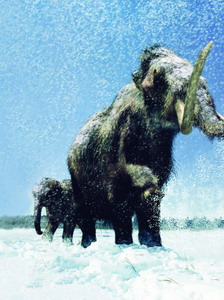
Woolly mammoths (Mammuthus Primigenius) are the same elephants, only covered with wool that inhabited the north of Eurasia and America hundreds of thousands of years ago. In addition to woolly, steppe and southern mammoths lived on the ground. All these animals, together with modern African and Indian elephants, came from a common African ancestor. The evolutionary paths of mammoths and African elephants diverged about 7 million years ago, and mammoths and Indian elephants - a million years later. Around the same time, the paths of man and chimpanzees were dispersed, although since then a person and chimpanzees have evolved in different directions much faster than elephants and mammoths.
Protected by the cold with long wool almost meter length and a thick layer of fat, mammoths were perfectly adapted for life in the north. Scientists suggest that mammoths used their huge curved tusks, which reached 5 meters in length, to grind snow to find plants buried under it. The main reason for the extinction of mammoths is considered global warming, which began about 10 thousand years ago and sharply reduced the area of the ecosystem familiar to mammoths. Mammoths had previously encountered global warmings (for example, 125 thousand years ago), but this time warming people “helped” primitive people who gradually conquered their living space on the planet, destroying all large and delicious animals in their path. The last famous mammoths (belonging to the dwarf subspecies of a woolly mammoth) lived on Fr. Wrangel is already in historical times, in the XVIII century BC, at a time when civilizations of ancient Egypt and Babylon bloomed in the south, and died out 3.5 thousand years ago.
Park of the Pleistocene era 1
Even 15 years ago, the restoration of extinct animals, including mammoths, was considered pure science fiction. In 1993 of the period, ”the plot of which was revolving around the resurrection of dinosaurs based on fossil DNA. In reality, at the time of the release of the film, scientists knew the sequence of DNA in only a few viruses. According to Webb Miller, one of the leaders of the Mamont Gene project, “The idea to resurrect mammoths was fantastic, but now I begin to believe that this can happen in a not very remote future. I would really like to see a woolly mammoth and I hope that my grandchildren will receive this opportunity. ”
The famous scientific journalist Henry Nicholls in his article in the journal Nature described how, in fact, this can be done in practice. The sequence of steps is as follows: you need to synthesize the clone DNA, “construct” the chromosome synthesized DNA, pack chromosomes into the artificial cellular core, and then plant this core into the fertilized egg of the Indian elephant, introduce the egg into the uterus of the elephant and wait for the mammoth elephant.
It sounds simple, but problems on this path are a breakthrough. One of them: animal DNA chains do not just “swim” in a cage, they are “wound” in a rather complicated way to special proteins (histones), which partially adjust the operation of DNA and form a substance of chromosomes - chromatin. An expert from Germany Michel Hofraiter is skeptical: “The synthesis of the DNA chain of this length in the tube is impossible, since they break. In addition, so far no one has even approached the length that is required for the mammals chromosomes. Also, we cannot yet make an artificial cell nucleus. Although it is dangerous to predict the future, I am quite sure that the artificial nucleus will not be synthesized in this century. Now we can only introduce short artificial chromosomes into a natural core. ”
Stefan Schuster offers to manipulate the elephant with the genome, gradually making changes to it. The Schuster group collaborates with the genetic engineer George Cherch from Harvard University, who claims that his not yet published method allows you to simultaneously introduce up to 50 thousand small DNA fragments to correct the main genome. If this technology is successful, then we can get elephants with mammoth features, possibly for several generations.
Michel Hofreiter agrees that the “workarily” is somewhat simpler, but says that “in any case, this is really a“ mamontov ”task.” (Play of words: Mammoth Task-In English means a huge, almost impossible work.)
Is it possible to resurrect dinosaurs in this way? Unfortunately, most scientists, including Schuster, believe that the modern limit of DNA preservation in permafrost is about one hundred thousand years, and even in ideal conditions a million years is definitely a limit. Thus, dinosaurs disappear - after all, they died out about 65 million years ago.
DNA for a housewife
But how did Miller and Schuster manage to restore the DNA of the mammoth?
According to the famous biologist Neil Shubin from the University of Chicago, any housewife can cope with the problem of DNA from the tissue of a living organism - for this it is enough to grind the meat in a mixer, add soap fluid and softener of meat (to destroy nuclear membranes and chromatin proteins), and then add a sticky white lump consisting of DNA.
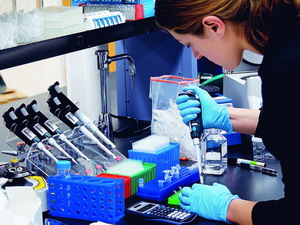
Unfortunately, this recipe is impractical for extracting DNA mammoths, since the remains of their frozen meat are highly contaminated with DNA of bacteria, viruses and fungi, which fed by the corpse of a mammoth during periodic thaws. Therefore, the group of Miller and Schuster extracted DNA not from meat or bones, but from the hair of a mammoth, which protect the DNA well from decomposition. Research does not need a lot of DNA. The fact is that even a microscopic amount of DNA can be propagated using the PCR technology (polymerase chain reaction), which was opened by Carey Mallis in 1983.
Human genome
The technologies of automated restoration of the sequence (sequencing) of the genome of any organism began to develop rapidly as a result of the fact that in 1990 the American government decided to finance these studies: they promised a breakthrough in a number of areas of medicine. First, six research centers in the United States received money. Then the project became international - the International Human Genome Sequence Consortium was created, within the framework of which the problem began to work about 3000 scientists from 18 countries.
After some time, private companies also joined the race. In 1998, Celera Genetics announced the plan to finish the sequencing of the human genome in just 3 years. The technology proposed by Celera Genetics was that they divided the entire genome into a large number of small random pieces, analyzed them separately and “sewed” all the pieces using “smart” computer programs.
As a result of international cooperation and competition, work to restore the sequence of human genome was completed in 13 years instead of the expected 15 years, and for less money than the planned budget of $ 3 billion. Moreover, as a result of these studies, a new generation of devices and methods that will allow each person to get their own genome in the CD, not for $ 3 billion, but less than a thousand and less than a thousand dollars, and not in 15 years, but in one day. According to Hugh Martin, the CEO of the Biotechnological company Pacific Biosciences, this will lead to a revolution in medicine: almost every patient will know about his predisposition to various diseases, and treatment methods will become extremely individualized.
Homo Neanderthalensis
One of the new companies involved in the production of machines to determine the sequence of the genome was 454 Life Sciences from the state of Connecticut. It was her device that was used for the mammoth genome project. “454” was founded by Jonathan Rothberg in 2000 and sold in 2007 by the Roche large pharmaceutical company for $ 155 million. It was Rotberg who began the project to sequenize the extent human type of Neanderthals (Homo Neanderthalensis).
According to genetic analysis, Neanderthals were not the ancestors of a modern person. Both human species simultaneously lived in Europe, without crossing and competing with each other. Our appearance won, although it is not entirely clear why this happened. Neanderthals had a larger brain volume and stronger muscles and, like our ancestors, already knew how to make tools. Nevertheless, they could not create a culture comparable to the level of Homo sapiens. Or - just did not have time.
If the work on restoring the Homo Neanderthalensis genome will be possible, then the question will be further: who will bear the little Neanderthal? There are two options: either it will be an ordinary woman, but the church is already protesting against this, or - as the biotechnologist George Cherch believes - this work will be entrusted to the female chimpanzee.
And here the surprises can be waiting for us: what if Homo Neanderthalensis is, if you like, alternative humanity will be smarter than us?
_______________
1 Pleistocene is an era of a quarter period, which began 1.8 million years ago and ended 10 thousand years ago.