
Translated material
"Who did not fall from the bridge?"
Under the Murmansk flood, the railway message with the rest of Russia was gone, officials post photos on Instagram
“We did not want to leave, but in the evening we realized: the next morning it would not be possible to leave the house, on the site the water level is 15 cm above the knee,” Natalya, like many of her neighbors, moved to the city yesterday. For those who have nowhere to move, in the village they organized a temporary accommodation point. Under Murmansk, unprecedented floods, people injured from him blame not nature, but officials.
“The Murmansk region is ready for the safe passage of the flood season,” the government release begins on March 19. It quotes the governor’s report to the presidential envoy to the National Security and Technology: “According to forecasts, in the area of possible flooding, one settlement - the village of Varzuga Teresky district.” Northerners are often offended by Muscovites for ignorance of geography. Say, they think that Murmansk and Vorkuta are next door, and all this is Siberia. The governor Chibis is only a year from Moscow, maybe he also did not understand the end in geography. Varzuga is the south of the region. But the very north flooded. The anti-flood commissions in the municipalities gathered and reported all the spring and reported on something, and then the snow finally began to melt-this is happening in May in May-and the flood began.
On May 27, the federal highway was flooded on the Murmansk -Severomorsk section and the industrial zone of the regional center.
Under the water were warehouses of transport companies, supermarket chains and meat processing plants.
Employees of the latter to save sausage went by boats, but the plant eventually stopped production. It soon became clear that a tiny river of growth came out of the shores, which was reduced to the pipe under the industrial zone at one time.

Officials, some of whom, apparently, did not suspect the presence of this very Rosta, made surprised faces and nodded to the element: the Murmansk head of the administration, Yevgeny Nikora, seemed to write with some pride in VKontakte: “Such floods arise about once every seventy years - 2020 has every chance to go down in history.” Nikora added that the situation is unique, and "collectors technically cannot cope with such a volume of water."
When the prosecutor’s check ended, it turned out that not collectors, but officials could not cope.
The head of the regional Ministry of Natural Resources Anna Bagrov received an idea from the prosecutor’s office: according to the conclusions of the audit, the flood occurred “due to a violation of the hydrodynamic connection between the sections of the water river of the growth river”. Nobody simply cleaned the channel.
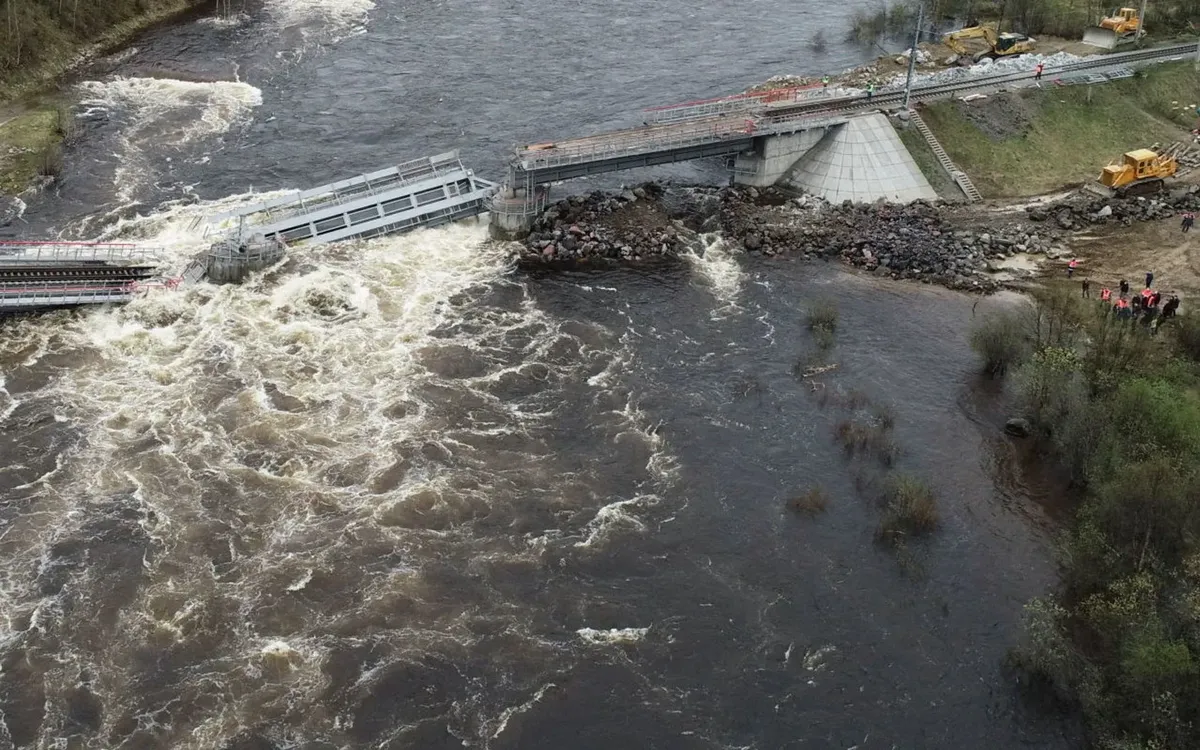
About readiness for the flood was no longer reported. The next day, a piece of federal was flooded - in the direction of the Finnish border. A day later, large water damaged the support of the railway bridge over the Kola River. The consequences of the flood were not as crushing as the consequences of the repair. To strengthen the support, they began to pour cobblestones into the river. The governor came to look at what was happening, after which he reported on Instagram:
“Work on the bridge has already started, we plan to completely complete the repair in two to three weeks.” The next day, the bridge collapsed completely.
The governor Chibis immediately became the hero of the memes about the cats, which were dropped, and evil bloggers began to post a fragment from the second “election day”: “Which of us did not fall?” Bloggers on the salary objected that the fall of the bridge is a terrible success of Chibis, to which Russian Railways will build a new bridge - better than the same.
Meanwhile, Russian Railways announced that they were stopping the receipt of goods to Murmansk. And the Murmansk Sea Trade Port, which did not interrupt the work during two world wars, said that he was facing a complete stop, cargo for sending the sea was brought by rail, mainly coal and mineral fertilizers. On the air of the Murmansk “Big Radio”, the director of the Oblgaz said that the reserves are left for a month with a small one, then he would have to carry with gas carriers, which will greatly affect the cost. Refueling owners announced a gasoline deficit. And in front - in September - the heating season, for which the fuel oil is taken by rail.
Soon the governor had a new post on Instagram - Chibis posted a photo with the head of Russian Railways Belozerov and
He wrote that the trains will go after 20 days. Where they go, unknown: to build a new Russian Railway hopes in the fall,
And the one by which the goods are planned to be sent to the Murmansk transport hub under construction on the western bank of the Kola Bay is still without spans.

As to the Murmashi station, which is considered as a temporary sorting and around which yesterday the cluster of railway workers was noticed, it actually has only three pairs of ways, a tiny station and a small platform, which will fit 20 wagons. It is extremely doubtful to establish a full -fledged unloading. And the trains will have to go through the city of Kola, the crossing there is located in the very center, the intensive traffic simply blocks the road.

Against the backdrop of a global accident (a criminal case has been instituted, the UK is looking for the guilty) the drama of the inhabitants of the village of Kildinstroy remained barely noticed. No photo on Instagram, no high -profile promises. Meanwhile, they consider themselves affected by the same repair work at the bridge.
“I sent an appeal about flooding to the government portal“ Our North ”on May 31, but it was“ rejected ” - such a status is there,” says local resident Elena Shishkin. Elena was partly lucky: her house has not yet been flooded, the water is only on the site, and the neighbors keep things saved from the water from the Shishkins. Great water came in mid -May, but by the end of the month she began to subside. A sudden level of level happened after work began under the damaged Kola bridge to strengthen the support. Stones were poured into the river, the channel narrowed. And then the laws of physics: the pressure became stronger, the level rose. It is very likely that this caused the destruction of the neighboring support - and the inhabitants of Kildinstroy with the same associate a second rise in water. This is downstream. On June 4, boats sailed along River Street.
“We are outraged that everyone began to write on the Internet, that we were no longer needed by summer residents,” says Elena. “No one notices that we don’t have a cottage, but housing construction, our houses are registered as residential, the administration has issued house books, people have a residence permit here.”
Indeed, the streets, which are now only on the gondolas, belong to the Kildinskoye DNT, and many colleagues immediately called the victims of the local Rublevka.
The game on the class feeling is knewed by solidarity. But in fact, this is part of Kildinstroy (which is recorded in the data on the registration). Now Kildinstroy is an unfortunate depressive village. In the DNT, businessmen, ministers, and ordinary Murmansk clerks lived there, there are sections that were once given to the local gardens. And most importantly, for many it was the only or main housing.
From the website of the Murmansk Department of the Ministry of Emergencies: “Partnership is not a settlement, used by citizens to build country houses with outbuildings. There are no permanent citizens. ”
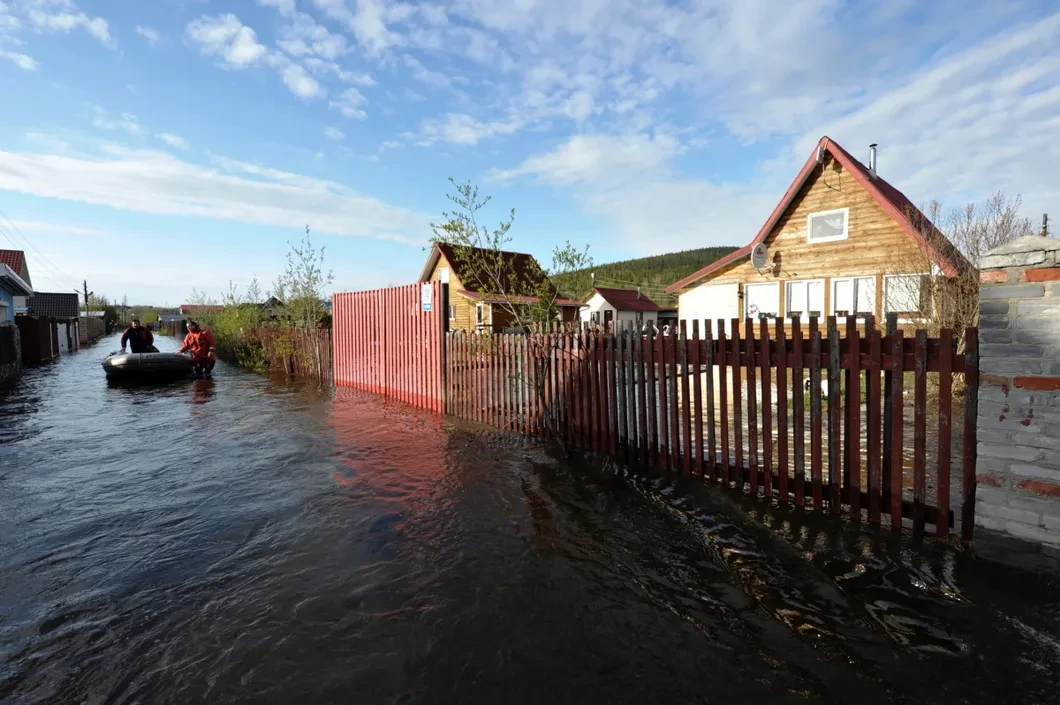
Elena is registered in Murmansk, but lives in Kildinstroy constantly. Natalia - from April to October. Natalya says: “Of course, people knew what they did when they settled on the river bank, the flood is waiting here every spring, they are preparing, they laid risks, and designing at home. Yes, the gardens were drowned, the water rose, but did not go into the houses to such a level. I think that we were flooded due to a combination of circumstances: the big and late melting of snow and because of the people who began such difficult work without waiting for the end of the flood, without calculating all the risks for the surrounding villages. It is sad that neither the Kildinstroy administration nor the administration of the Kola district, although the flood was expected. It is amazing that there was no warning from the Ministry of Emergencies. After all, there could be more tragic consequences. And most importantly, the snow did not melt all, and it is scary to imagine what will happen if another wave of the flood goes. ”
In addition to Kildinstroy, the water came to Schonguy, the Belseroschoz, Magnetites, in Loparskaya demolished the suspension bridge, two shores were cut off from each other. The bridge was also demolished in Kildinstroy, but when they started talking about this, the Minister of Inform Politics of the Kondaurov region, having demonstrated photos to the flood to reporters, said that "it is difficult to call it a full -fledged bridge." Difficult, of course. People lived with him for more than a dozen years. I do not remember that someone was held accountable for his emergency state.
In Kildinsky 130 houses, now half is flooded. The outbuildings went under the water almost entirely.
It is difficult to imagine that with the sewer.
In Kildinstroy itself, the basements and an outpatient clinic are already flooded. On the eve of the Ministry of Emergencies, messages sent messages with recommendations to go to the upper floors and be prepared, turn off the electricity and “designate your presence in the house by hanging the white cloth.”