
Translated material
Linguistic process
Expertise in the case of Yegor Zhukov is an example of what happens when science loses independence

In the court in the case of Yegor Zhukov, the words “linguistics” and “linguistic” became the most common. The whole thing is from the beginning to the end - about the language. The only thing that charges him is texts. And the analysis of these texts is the only thing that proves its innocence.
Linguists study texts. I would like to say - linguistics has become a science of paramount importance. But no, just the opposite: linguistics was not useful.
The videos of Yegor Zhukov was explored by the expert. Expert linguist? No, just - an expert. A.P. Korshikov - candidate of mathematical sciences, an employee of the Institute of Forensics of the Center for Special Technology of the FSB of Russia. We and our colleagues and our colleagues analyzed his examination in the case of two reviews in Novaya Gazeta.
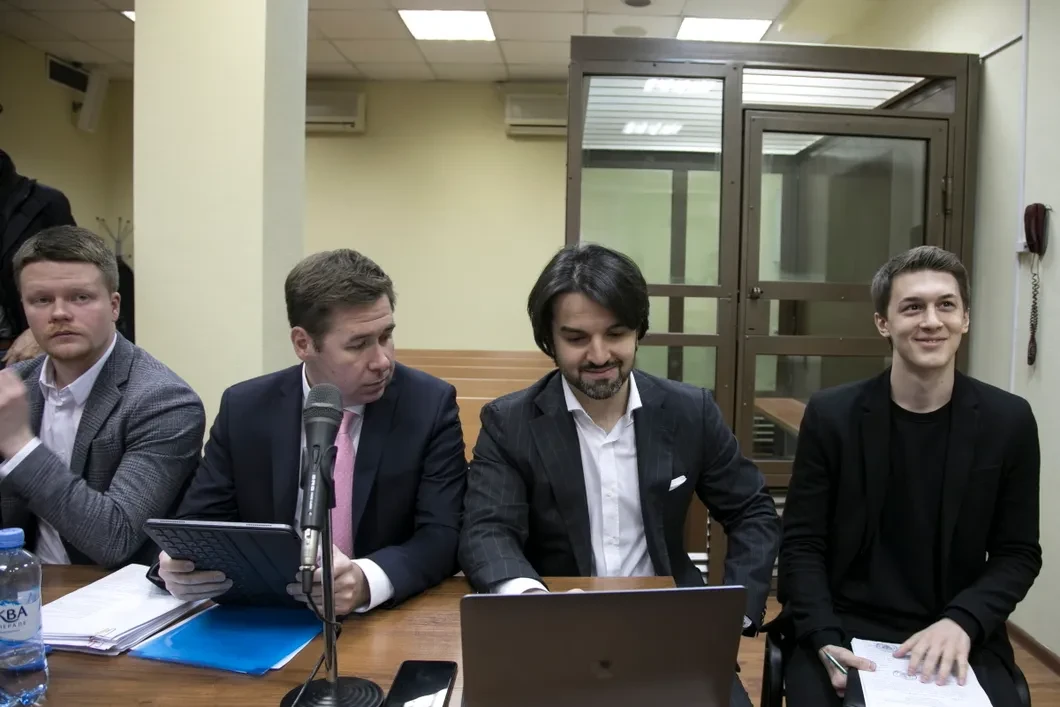
On December 3, expert A.P. Korshikov was summoned to the court, where N. R. Dobrushin and A. I. Levinzon, co -authors of one of the reviews, were also present in the hope of speaking on the side of protection and expressing their opinion on examination. In two days, the judge consistently issued a decision to refuse the participation of four expert-linguists. The main motivation for refusal is incompetent. Here is a list of people who turned out to be incompetent linguists in the order of their presentation to the court on December 3 and 4.
A. I. Levinzon, NIU HSE, School of Linguistics, Lecturer of Rhetoric, Corps Linguistics, Russian Language and Culture of Speech, Diploma with the Mistress of the Philological Festival of Moscow State University, specialty "Philologist-Teacher of the Russian Language and Literature".
N. R. Dobrushin, NIU HSE, School of Linguistics, Professor, Doctor of Philology, Chief Researcher, Diploma of the Philological Festival of Moscow State University, specialty "Philologist-teacher of the Russian language and literature".
Yu. A. Safonova-candidate of philological sciences, worked as an expert at the Ministry of Justice, in the center at the Department for Combating Corruption of Moscow, acted as an expert in the Constitutional Court, the author of the methodological manual for psychological linguistic examination of texts in cases related to opposition to extremism recommended by the Ministry of Justice.
I. B. Levontin - candidate of philological sciences, leading researcher at the Institute of the Russian Language named after V.V. Vinogradova, co -author of several dictionaries, is engaged in judicial linguistics and the development of methods for examinations for crimes of an extremist orientation, and acts in courts.
Since, as can be seen from this list, the defense has exhausted all the conceivable evidence of the competencies of linguists (education, professional experience, degree, position, experience of research, experience with the semantics of the Russian language, experience working with forensic examinations), it remains to admit that there is one competent specialist in the field of linguistic examination - A.P. Korshikov. Let's see how this expert works.
Candidate of Physical and Mathematical Sciences A.P. Korshikov approaches the analysis of the meaning of words from the standpoint of mathematics, as if words are variables that can take any meaning, without changing the essence of what has been said. This approach is essentially contrary to the basic principles of the semantics of the language. We, linguists, try to find out what meaning the word has in a particular context. The context, according to the basics of semantic analysis, is an indicator of the meaning: for example, in the context of the verb “express” the word “protest” indicates a speech action, and in the context of the word “submit” - to an official document.
The study of contexts is the beginning of any work on explaining the meaning of the word and its division into different meanings. There are special resources that, on the basis of automatic processing of a huge array of usage, extract the main contexts characteristic of the word (in the compatible “portrait” of the word “protest”, by the way, no stable phrase that indicates a violent nature is included). The author of the examination proposes to believe that in any context, the word has all the meanings that we are able to attribute to him. If nothing limits this circle, we can safely assume that the speaker, using the word, releases all the many meanings and specific understandings that he has (including those that the expert attributes to them). So, using the word “institution”, Yegor had in mind the “election commission” at the same time (add - “zoo”, “museum of honey” - why not); Speaking about “non -violent protest”, he paradoxically had in mind at the same time “violent protest” (as well as “protest against experiments on animals”, “protest against colleges unification in Nizhnevartovsk” - a list of understanding, begun by expert A.P. Korshikov, can be continued endlessly).
The noun "protest" was the most discussed on December 3 and 4. The answer to the question of whether the defendant called for violent protest was calling for a question to the question of accusing or justification.
By quoting a variety of vocabulary descriptions, the linguists in their reviews indicated that in the word “protest” in any of its meanings there is no semantic component “violence”. The main meaning of the word "protest", according to dictionaries and corps data, is "a decisive objection to something." And this is the meaning in which Yegor uses the word “protest” in its videos.
The expert A.P. Korshikov answers our arguments as follows: Linguists make a gross mistake based on dictionaries! Dictionaries often reflect the “ancient period of the past” (recorded from hearing at a court hearing). "Have you used the national corps of the Russian language?" - asks the defender. Indeed, if not dictionaries, it means that cases, electronic databases of language data. “The buildings are incomplete, unbalanced, they are not enough journalism,” said A.P. Korshikov.
So how does he confirm his opinion that the word “protest” should be understood as “a protest using violence”? No.
In the text of the examination, there is no evidence of the judgments of A.P. Korshikov. He does not refer to dictionaries, to the National Corps of the Russian Language (this, by the way, is a giant database in which more than three hundred million word forms and about one hundred million-only journalism) does not refer to the modern Internet corps of the Russian language, for example, to the Rutenten case (the database of modern online texts, in which more than 14 billion words) does not quote the work of scientists. Therefore, we can be firmly sure: the expert examination A.P. Korshikov does not meet scientific standards. The scientific text must be evidence. These evidence should be given with accurate links, examples, statistics. And what if the idea appeared (for example, this: “Retelling a book about 198 methods of peaceful protest means calling the listener to perform each of the 198 actions”), but it is not possible to find evidence? Alas, nothing. If there is no evidence, the idea cannot find a place in the examination. It can be expressed in the circle of friends, over tea, but not in the conclusion of the expert.
A.P. Korshikov collected significant, in his opinion, arguments to the court session. He repeatedly asked the judge to allow him to show the “cutting of videos”, which would confirm his case (which for the videos, the expert did not explain, but it was not about the videos of Yegor Zhukov, but about the materials of television programs).
“I can bring a dictionary to the meeting,” said A.P. Korshikov. - And I brought the videos. This is the same as the dictionary ”(recorded from hearing at a court hearing).
The judge did not give the consent to watch the videos, but in any case they cannot become argument for the expert. The linguist does not rely on a separate, random (or non -accident!) Seeing examples. To prove that the word has some meaning, he needs to take into account how often such a meaning is found in what contexts, in what style of speech, the linguist has to put experiments with native speakers, explore hundreds of sentences - in general, this is a complex procedure, the results of which, in fact, are presented in dictionaries.
Expert A.P. Korshikov does not possess such methods, moreover, he does not believe that they need to own. He is convinced that his preparation as a linguist-expert is enough to write an examination. He does not comment on the course of the study: “I am not obliged to state it. This is a fully competence of the expert ”(recorded from hearing at a court session).
No, I must! The researcher is obliged to report how he came to his conclusion. If he does not do this, his text is not a science, this is the reasoning of the amateur. They can be pretty to you, but on their basis you can not put a person in jail.
Only one method used in the preparation of the examination, Korshikov managed to formulate:
“I take the Criminal Code, read the name of articles, look: it looks like it is different. And from the point of view of linguistics, I compare the words. "
This method, apparently, is an expert invention. In all methodological instructions for conducting linguistic examinations, it is directly said about the inadmissibility of mixing legal qualifications (that is, the Criminal Code) and linguistic interpretations.
Expertise in the case of Yegor Zhukov is an example for a well -known fable: see what happens when the pies starts to be accumulated. What happens when science loses independence. When expert conclusions cease to be the result of painstaking research labor and become a set of catchy phrases, behind which there are no facts. It seems - where is science and where is our daily life. And now they converge - in the hall where fate is being decided.
Nina Dobrushina, Anna Levinzon, Valentina Apresyan, Anastasia Bonch-Osmolovskaya