
Translated material
Christmas trees, fouls, thick forest
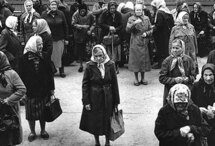
The Russian pension system in its current form is most reminiscent of the impassable wilds of the Siberian taiga. Attempts to figure it out thoroughly causing unprepared hallucinations to be cleaner than psilocibic mushrooms.
It all began with the Law of the RSFSR of November 20, 1990 "On State Pensions in the Russian Federation" . The law lists the various types of pensions (by old age, in connection with disability, due to the loss of the breadwinner, etc.), an ordinary pension (that is, old age) is appointed to men - upon reaching 60 years and with a total labor experience of at least 25 years; Women - after reaching 55 years and with a total work experience of at least 20 years. There are still beneficiaries, but not about them. The size of the pension is set to 55 % of the earnings. For each year, more than 1 %is added in excess of the minimum 20/25 to the pension, while the ceiling is 75 %.
The earnings to which the corresponding interest rate is applied is the average monthly salary of a person either for the last 2 years, or in five years (but not in a row). The minimum pension cannot be lower than the minimum wage, and the maximum pension is three minimum. Working pensioners, the pension is maintained in full.
You do not have to be seven spans in the forehead to notice that the system described above is, firstly, equalizing, and secondly, it is designed for an economy in which prices and salaries are absolutely stable. In the context of inflation and constantly penetrating the life of "new realities" the law had to continuously patch up. Nevertheless, the pension was less and less dependent on the nominal salary and more and more - from the moment in which it was originally charged. In addition, pensions of people with incomplete work experience were rapidly falling - and quarterly indexations for non -working, introduced in 1994, only aggravated the gap between the "poor" and "rich" pensioners. After several years of the pension nightmare on July 21, 1997, the second fundamental pension law was adopted: “On the procedure for calculating and increasing state pensions” (later its provisions were included in the law on state -owned explorations). Without canceling the old procedure for accruing pensions, he introduced a new one - using the individual pensioner coefficient (ICP).
ICP is a terrible thing. At first glance, everything is not so difficult. It depends on two things - the work experience and the average salary of the applicant for retirement. More precisely, from the ratio of the average monthly earnings of the applicant for the average salary in the country, which is additionally limited by the ceiling - "the maximum level of earnings." In theory, this ceiling should be 1.2, but at the time of the adoption of the law, due to economic difficulties, it was reduced to 0.7, and according to the last decree of the president, the maximum level of the ratio of earnings was 0.95 . Do you already have a head around? That's not all. To get the size of the pension, you need to multiply your ICP by the average monthly salary in the country, which the government sets on a quarterly specifically for these purposes (other numbers are used for other purposes).
The introduction of the ICP, on the one hand, allows you to "pull up" the smallest pensions - though, provided that the pensioner himself or his relatives showed activity. On the other hand, establishing the maximum ratio of earnings (the law orders it to grow, but does not indicate at what speed), and in particular, the average salary in the country, the government can easily manipulate the amount of payments depending on the availability of money in the pension fund. There are examples. For example, in the second quarter of last year, the government considered that the average salary in the country did not increase compared to the first quarter, but decreased by the ruble (from 1257 to 1256). They did not reduce the pension in caring for people, but did not increase.
Now the system is like this. When leaving his old -age retirement, a person can choose how more profitable he is to calculate the pension: according to the 1990 law or with the help of an ICP. Compensation payments are entitled to a pension without an ICD, no. Working pensioners do not have the right to the IKP-Penissia, as well as to compensation payments for a "simple pension". The maximum pension that a working pensioner in a rich Moscow can count on is about 600 rubles. In other places (except for the Far North, but there are different prices) - even less. For those who do not work, the maximum (until the February increase) amounted to about 1100 rubles, at least 450 with a penny. The cost of living established by the government is just above 1200 rubles. Real cost of living - you know.
Consider your pension yourself - Novgorod Vedomosti # 52, 1997
Photo from the site www.photographer.ru