
Translated material
Casting vote
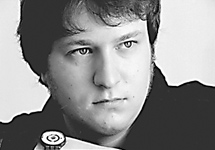
The main cinematographic news of the last ten days (with the exception of regular reports on the cash successes of the "daytime patrol") was the news that came from Cannes. Almost six months before the beginning of the most prestigious and famous of the world festivals, the name of the president of the jury of 2006 was declared. To judge the films of colleagues this time will be the Hong Kong director Wong Kar-Vai. In traditional statements on this occasion, the President of the Cannes Festival Jacob scattered in praise at Vong, and he quoted the old Chinese proverb in his mysterious manner inherent in him: “You can’t wait for the wind, but we need to hold the window open” ... We will hold the windows open!.
In Cannes, every year, the intrigue associated with the president of the jury, his alleged preferences (which several thousand people are unsuccessfully trying to guess for two weeks of the festival) and is always unexpected - a decision, becomes more and more tense. If for sixty years the festival jury has been headed by the directors, actors, and managers from the cinema, and writers (for example, Georges Simenon and Tennessee Williams), then in recent years this role has been entrusted exclusively to directors.
In 1999, David Kronenberg put Cannes on the ears with an exceptionally unexpected and scandalous distribution of prizes: they mainly went to the Rosette of the Dardenov brothers (then few people) and the provocative "humanity" of Bruno Dumon, while David Lynch, Takesi Kitano, Jim Jarinuay and other Coricidias remained with empty hands. In 2000, Luke Besson made a noise, handing the "Golden Palm Branch" to Lars von Trier with "dancing in the dark." In 2001, the festival leadership decided to take a break in the directors, calling for the jury to head the American actress Jodie Foster, but she refused at the last moment, and her place was taken by Liv Ulman. Also, of course, the actress, but today is not so much the former Muse of Ingmar Bergman as his successor in the methods of directing. The old man himself would still not agree to accept the president of the jury: he did not even come to the anniversary 50th festival to receive the unprecedented “palmam” awarded to him. Ulman pleased the public, handing the main prize to the film-fabor of public sympathy, the "Room of the Son" Nanny Moretti.
The next year, the directors returned - and the scandals resumed. Unpredictable David Lynch in 2002 handed the Palm to the “Palm” by the “pianist” of Roman Polansky. The impulsive Patrice Sherro in 2003 ignored the Dogville von Trier, showing the prizes of the Elephant Gas Van Santa and the dubious Turkish film "Alienation". In 2004, Quentin Tarantino almost overthrew George Bush, giving Michael Moore to Michael, and at the same time endowed the deliberate-trestle “Old Boy” Chkhan Uk-Pak. Finally, in 2005, Emir Kusturitsa gave the second “palm” (which happens extremely rarely) to the same Dardenes, preferring their modest and professional “child” to much brighter competitive films.
In the Cannes Organizing Committee, born directors are also sitting - let their names are better known in the intra -staff of a narrow circle. They learned that the jury should lead the character bright, including externally: both Tarantino and Kusturitsa-directors-actors, promoted media figures. Kar-Vai is no less than a fair, but he is different. He is silent, smiling, taciturn. Never, under no circumstances, removes dark glasses. I wonder how he will watch films in the Cannes Hall - also with glasses? Almost nothing is known about his cinematographic addictions, except that he pays Tarantino with gratitude for his love for his films. But we must not forget that Tarantino, being a long-standing propagandist Vong, left his “2046” in Cannes 2004, who arrived at the festival in the last second and shown with a huge crush.
Wong - the first Chinese at the head of the Cannes jury; Also in 1997, he became the first Chinese to receive a prize in Cannes for the best directing (for the homosexual romance "Happy Together"). As a true Asian, Wong is hidden: each of his next film deceives, one way or another, the expectations of the public. In general, to bet on the winner this time will be even more meaningless than always - and thus even more exciting.
Reading these lines can ask the question - why is it at all to be interested in Cannes presidents and winners, what does this have to do with our lives? But, as you know, everything is connected with everything: the cinema still remains the most massive art in the world, and even many decades after the successes of Leni Rifenstal and Sergey Eisenstein, it is still obvious-humanity has not invented a more effective tool for the minds of people. Cannes are a universal cinema barometer and does not cease to be so from the fact that Russian films are shown there less and less. But Argentine pornography, and Hungarian psychedelics, and the latest "star wars" are being taken there. At the same time, the movie remains almost the only field of culture in which there is a system of authoritative international awards. One of the main among them, along with Oscar, is a “gold palm branch”. And the decisive voice in the definition of her laureate belongs to the president of the Cannes jury. This year-Vonggua Kar-VAYA.
Russians are somehow historically indifferent. A label with a palm branch on a poster will never affect the rolling fate of the film in our country. I wonder why. Perhaps because our compatriots received Palma only once-in 1958, Mikhail Kalatozov was awarded this honor with the beautiful film "Cranes fly." Or because the Russians never in history headed the main Cannes jury. Or did they not lead him precisely because they wanted to spit on Cannes? The question is idle - no one will answer anyway.
At the end of the long New Year's weekend there was an amazing case: according to domestic TV, they showed - according to the most foul -down channel - the last film of the outstanding director Kira Muratova, Semeller. They showed, and then also started a detailed (albeit somewhat erratic) discussion. This happened in a late day and early evening, and not at all at three in the morning. At the same time, according to the second (also in its own way of the first), the channel was shown the documentary of Peter Shepotinnik about the second of the currently living great Russian directors, Alexei German. How not to rejoice here: it is infrequently German and Muratova is allowed to our TV, and even in the festive time, when Galkin, Serdyuchka and Petrosyan reign there. If you think about it, there is some kind of bad paradox in this: the real birthday of the spirit occurs when you see a couple of Russian geniuses once in an eternity, and all only because no one knows where to find them, these geniuses in other circumstances.
The place of art - underground, the director’s business - obediently answer the questions of the interviewer, and not to determine the fate of the world, as the jury presidents elected in Cannes do. Actually, that's why we are in the field of cinema and remain a province, no matter how much money we invest in another obviously profitable project. China was ahead of us in this. Thanks to Vong Kar-VAYA.