
Translated material
Live to death
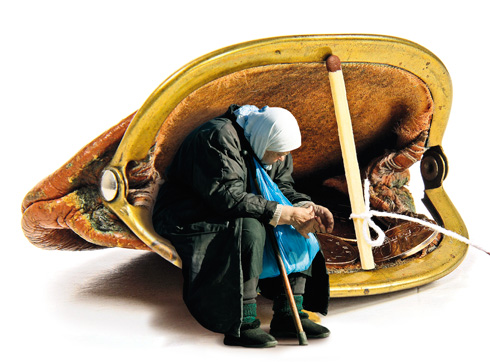
Life after death, or how the authorities will spend our pensions. On October 15, a discussion for the next reform of the pension system begins at the open government site. On November 1, a decision should be made that will directly affect both those for 50 and those who are still a whole life before retirement. What awaits us - The New Times asked the president of the Center for Strategic Development Mikhail Dmitriev
Letters of happiness ”from the Pension Fund no longer wait?
It is incomprehensible. Today, there are three concepts of pension reform that are calculated and have long -term economic justifications. The first, government, is an attempt to solve the problem, how, having a hole in the pension fund and the aging population, (b) not to increase the retirement age, (c) not to increase taxes - income tax or insurance premiums, because the business is already groaning, change the formula for calculating pensions. In the center of the government strategy, which has just been officially represented, to move away from the appointment of pensions on the basis of contributions, which were reflected in the accounts of citizens for 10 years, and they learned about this from those very “letters of happiness” and move on to the salary-senior system. Moreover, there is no clear formula for calculating pensions yet - in any case, it is not published, there is only an approximate designation of what the government is going to do. But from this it follows that the accumulated rights will be revised, the rights of contributions will be cut, and pensions will simply be reduced to everyone in a row.
Follow your hands
Explain what these “accumulated rights” are and how will pensions reduce, if now they seem to increase all the time?
See: the last ten years each person, if he worked and contributions to the Pension Fund were deducted for him, these contributions were registered on the insurance part of his account and formed the estimated pension capital. Plus, the basic, that is, not the accumulative part of the pension, was determined. Then this calculated capital was shared - in fact, this happens so far and now - for the number of years of survival. That is, the number of years that the name has a chance to live after retirement. Now this is 19 years: suppose you have this capital 500 thousand, divide by 19, for each year you have more than 26 thousand plus to the basic pension. However, already to the 2013 budget, they managed to make an increase in the divider: not 19 years old, but 21. Accordingly, with the same accumulated capital, you can rely not for 26 thousand, but for 23 thousand. Since the longer this hypothetical, the amount of your survival period, the less the size of your pension with a given calculated capital. Then there is a cutting of various kinds of rights. For example, working pensioners, if they work and receive a pension, do not need to be reflected in the personal account. Now the system stimulates people to earn more, with the fact that later the pension will be recalculated towards the increase. But the government says: no, no, if they work, then they also get a pension unlawfully, well, we will cut them a little. Further - this innovation with experience: it was under the Soviet regime, then they refused the length of service, now they offer to return again. The bottom line is as follows: in order to get a more or less acceptable pension of 40% of the so -called “lost salary” in 2020, a citizen should have 40 years of experience. True, how will the calculation be done is absolutely unclear: 40% of the salary of recent years or 40% of the average salary for a lifetime? If in its entire life, then in 2000 it was three times less on average than now.
40 years of experience - this means that the name began working in 1980. Since then, one country ceased to exist, another appeared on its wreckage, private property and private companies appeared, and state institutions changed. How will people collect a salary paper that they had, for example, in the 1990s, especially since the most country then worked in the shadow sector or in organizations that ordered to live long? And what will happen to those who left to study?
The main problem is that retroactively the rules of the game change for those who have focused on a completely different strategy for forming a pension. People were told: insurance premiums are the main forming factor in the current pension, the experience does not matter. What does that mean? If you had big breaks in experience, it is not scary - if you later got a good job, received a good white salary, your employer expelled contributions for you, and, therefore, you can count on a decent pension in the future. You can get a lot of contributions in a short period, and all these contributions will be taken into account and consider a good pension. In the new concept of the government, if the name, say, studied, for example, for a doctor (residency, internships, practice, internship), he only begins to truly work by the age of 30. So, he will have to work up to 70 years to earn this very 40-year experience. Well, besides, we perfectly understand that many people in the 1990s worked in the shadow sector, and they will not be able to present a real salary when calculating a pension. Imagine how many will be dissatisfied in 2020–2025, who will receive crumbs from the state and will be forced to work until the end of his days?
So, the government concept: 40 years of length of service - 40% of a certain average salary over the years, right?
This is not yet clear, since there are no formulas. I think when all these assigned pensions according to the new rules will be smoked, they will be somewhere around 30% of the wages. Now - 36.6%.
"
The main problem is that retroactively the rules of the game change for those who have focused on a completely different strategy for forming a pension
" Strategy - to the basket
And what alternatives?
The second concept of pension reform was prescribed in Strategy 2020, which was written by experts on behalf of Putin and for which the orders were issued in June, including the developers of the pension section.
And now she is thrown away, it turns out, to the garbage basket?
Well, yes. This concept assumed the development of the funded system, an increase in pensions - in any case, holding them at a level close to 40% of the average wage. Her main problem for the authorities - she in her forehead declares the need to bring the age of retirement to 63 years for men and women * * * Today is the retirement age for women - 55 years, for men - 60 years. . But politically increasing age is a very unpleasant thing, it is worse than the monetization of benefits, it is a deliberately strong decrease in the confidence rating for the president and the government, they are panic.
And why are people so against raising the retirement age, if many still have to work until their legs stretched?
Because they do not believe the state and the policy pursued by it. Yes, in recent years, life expectancy has increased slightly: from 59 years in men to 63–64. But people do not believe that they will live for a long time and think: they will have to work longer, do not live to retire, my money will go to the wind. Although the funded part of the pension is inherited. People prefer to retire exactly when it is supposed. This is a social norm, some social conquest. And arguing with this is rationally useless. Therefore, when we wrote our strategy ...
Swedish experience
And this is the third concept that will be discussed in the open government?
Yes. This concept was officially prepared by the Council for the investment of pension savings under the President, which I head. We had several introductory ones that we tried to observe: the first - not to go out for those resources that the government can actually allocate retirement, and the second is to observe the consensus of preferences of mass groups of the population, which we knew from sociology. We conducted polls and realized that it was not worth raising the retirement age-there are other solutions, in particular, tested in Sweden since the mid-90s.
The meaning of the Swedish model is that the retirement age does not matter by and large. The size of the pension is actually in the hands of the person himself and is determined primarily by the amount of contributions that are paid for you by the employer. If you could not work and pay contributions in some periods of life, you can always make up for it. If you retire a few years later, you have an almost ex-sensory increase in pension. The Swedish pension fund also sends “letters of happiness”, but it is not only written there, how many contributions you have in the account, it indicates what kind of pension you will have if you retire at 61, at 64, at 70 years old. And recommendations: how many years to you, the specific Eric Johanson or Maria Anderson, is better to retire so that it is more or less correlated with your wages. If you become a pensioner in 61 - you have 13 thousand kroons, in 64 - already 18 thousand kroons. And if the name becomes a pensioner only at the age of 70, then his pension really doubles. That is, they create incentives so that people work longer, which facilitates the burden of pension expenses. The average Swede retires at 64.5 years.
Today, too, today even the insurance part of the pension, not accurate, depends on the contributions, and it will be very easy to reconfigure to the Swedish system. The problem with our system is that our third pensions are the basic part determined by the law of the minimum that is laid as a pensioner - this is now about 5-6 thousand rubles monthly. So, if you retire later, then you lose this money, give the state.
Why?
So the calculation of pensions is arranged. Therefore, there are no fools, no one comes out later, and this is a completely understandable motivation for people.
And what is the size of the pension according to your concept?
40% at least. Moreover, even for people with salaries above average, because now the entire system is designed for a salary below the average and a substitution ratio (the ratio of a personal pension with a personal salary) 40, this is for people who receive not very high salaries: for those who receive above, they have a small substitution. The middle class with our current system is very losing. And it makes no sense to make money anymore. Our concept is built so that it makes sense to earn more and receive large pensions, including the middle class. And the main thing here is to allow accumulating rights, including on the social part of the pension that is now disappearing.
And the experience?
There is, in principle, there is no experience in our concept. We believe that the pension should depend on what real contribution you have made to the economy, to your own welfare with your salary. This is fair.
"
The horizon of the authorities narrowed - until the next presidential election, which must be won, and everything else is already secondary
" Priorities
 |
| Mikhail Dmitriev was born on February 24, 1961. Doctor of Economics. In 1991-1993 - People's Deputy of the Russian Federation. In 1994-1997 - in senior positions at the Institute of Economic Analysis, the Moscow Center of Carnegie. In 1997-1998 - The first deputy minister of labor and social development of the Russian Federation. 2000 - May 2004 - First Deputy Minister of Economic Development and Trade of the Russian Federation. Since June 2004 - Scientific adviser, since October 2005 - President of the Center for Strategic Development Foundation. |
It's clear. So, now all these three concepts will be discussed in the open government. And what is your forecast?
What all this will lead to is incomprehensible, because the term is allocated for the entire discussion until November 1. What can be done in two weeks, I do not know: these are unrealistic terms that drive the discussion to a dead end. But so far, at least so, it was decided to discuss all strategies on equal terms, without discriminating them and trying to objectively evaluate the pros and cons of each approach.
Your expert council was created in 2010, Medvedev was still the president. Now he has become the prime minister, and the concept of the government has changed dramatically. What made Prime Minister Medvedev so disloyal to do with views on President Medvedev’s pension reform?
You know, there is a joke in government circles: we have new strategies every year, and tactics are always about one. The point is that the strategies that write this office and the previous office are made for the public. And the approach to making decisions is of an internal administrative nature, independent of strategic decisions. Therefore, it is possible that you can accept the “Strategy 2020”, distribute the orders for it and then forget that it exists.
Moreover, it is not clear why the government suddenly began to develop a reform option in which the funded system is practically destroyed. The New Times wanted to ask the author of the government concept of Deputy Prime Minister Olga Golodets about this, they sent questions, but there are exhibited detachments-not to break through.
Yes, Olga Yuryevna, unfortunately, prefers to meet with friendly journalists, but does not come to discussion. Each time promises to come. But does not come. Now - why? Let's reproduce the logic of events of the last three months. It seems that no one was going to eliminate the funded system. The new stage in the work on pension reform began after the decree of Putin, signed by him on May 7, after the inauguration. The decree ordered the government to make a proposal to develop the pension system, which is aimed at improving the safety and profitability of pension savings. That is, there was no talk of any liquidation of the funded pension system.
But then the government began to prepare a budget three -year -old. Within the framework of this budget three -year -old, a new budget rule was formulated, which, pay attention, sets its strategic goal to increase the reserve fund of the federal budget by more than one and a half times by a particular date - 2017 - a year on the eve of the next presidential election. By this time, the reserve fund should reach 7% of GDP.
When the budget began to be closed, it turned out that a very large increase in military spending was laid. To this, the president’s instructions were added to increase the salary to some categories of state employees to the level of the average in the country or twice as high as the average in the region. Even before the presidential elections, the salarys were very sharply raised, 70% increased pensions to the military, including the cabinet military, who certainly did not experience any harmful effects on their body. And it turned out that somewhere it was necessary to look for additional funds. Therefore, in different blocks of the government, ordering were launched either to reduce expenses or to find additional income. As far as I understand, to the Pension Fund, up to about 380 billion rubles, which had to be obtained somewhere. And here it came to mind the simplest solution: and let's stop pension savings, and as a result, the contributions that are now going to accumulate will go to the payment of current pensions, and the federal budget for the same amount will reduce the transfer of the pension fund, and they will go to the reserve fund.
In other words, abandoning the funded system, the government gets the opportunity to form exactly a year before the new presidential elections the necessary pillow in the reserve fund, which will allow the current government to promise everything who needs it-how, in fact, this was done in the winter-spring 2012?
The authorities did not directly talk about this, but the question suggests itself: why is 2017 so sacred? The RSPP, understanding the situation, invited the government not to break firewood in the pension system and transfer the deadline for achieving the target size of the reserve fund for 2020. And I received an answer: No, this is sacred, 2017, in no case can we change. In my opinion, we are faced with a serious ethical aspect of pension reform. When the long -term goals of ensuring sustainability and high pensions for people, but there are problems in the current system, and they must be solved, they are sacrificed to current political interests.
In the late 1990s, a lot said that the funded system, different pension funds are necessary because they will give the economy the internal investments, long money necessary for it. Now there are no more problems of long money?
There is a problem, but the horizon of the authorities narrowed. He clearly narrowed to the next presidential election, in which it was necessary to win, and everything else is already secondary. On this horizon, we have infrastructure problems - this is the World Cup, the Olympiad in Sochi and the development of the Far East. For these purposes, the money, at the very least, was found, and the rest ...