Date
Author
Диана Хачатрян, Ольга Просвирова
Source

Preserved copy
Translated material
Divide and take away
The rebellious districts will simply cut ... to the loyal party in power. All for victory!
Due to the accession of new territories to Moscow, as well as amendments in 2011 of the Federal Law, the number of legislators, which would be supposedly elected in September 2014, will increase from 35 to 45 in the capital's parliament of the sixth convocation. Accordingly, the number of electoral districts will also change. It is obvious that fewer legislators are easier to control
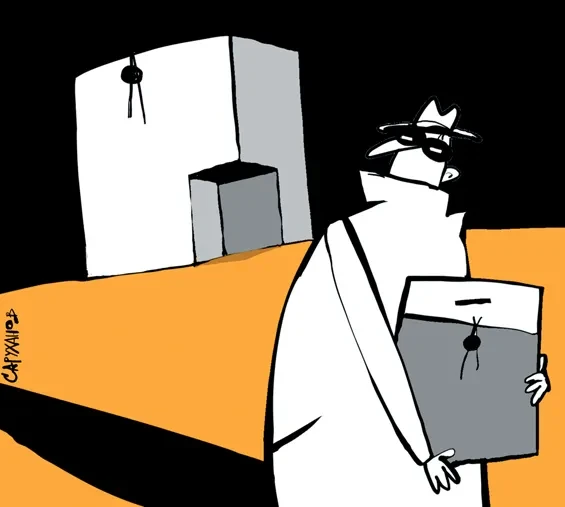
Due to the accession of new territories to Moscow, as well as the changes in the federal law (the minimum number of deputies from the proportion of the population was established in 2011), the number of legislators that would be allegedly elected in September 2014 to the capital's parliament of the sixth convocation (it is possible that its powers will be terminated early), will increase from 35 to 45. Accordingly, the number of electoral districts will also change. It is noteworthy that in Moscow, which includes 125 districts in Old Moscow and 21 districts in New Moscow, a minimum threshold was installed (a possible maximum of 110 deputies). Obviously, fewer legislators are easier to control.
The new scheme of single -mandate districts for elections to the Moscow City Duma was released last week. The author of the idea, Mosgorisbirk, fulfilling the instructions of the law, “cut” the city into 22 districts, so that in each of them one deputy is elected (they can be put forward by both the party and to be self -nominated).
The remaining 23 parliamentarians will be elected according to party lists. In this case, voters will vote not for a specific candidate, but for their list, consisting of a citywide part and regional groups. As a result, mandates will be distributed among parties that overcome the five percent barrier of votes who took part in the vote.
Recall that in this October, the State Duma voted to provide Moscow and St. Petersburg with the right to independently determine the ratio of single-mandate and party science in the elections in the city parliament (in other subjects of Russia, the share of the presence of legislators elected in single-member districts will be changed from 50% to 75%). Even earlier, in August, then the acting mayor of Moscow Sergei Sobyanin spoke in support of the idea of transition to an exclusively majority system. “I believe that in the city and municipalities deputies should be elected directly: here is the candidate, here is his appearance, here is his biography and here are voters. And then behind this steam locomotive in the person of the party comes people who do not know the townspeople and the city, who are not at all interested in what is happening in the district and the city, ”he said. However, judging by the scheme of single -mandate districts, the “steam locomotive” entered for consideration by the Moscow City Duma is not in a hurry to go off the rails. However, there is an opinion that by the summer the scheme of single -mandate districts can radically change.
Reflections on the prospects of “district cutting” were shared with us by New Experts.
The idea of cutting the districts before the adoption of the law by the Moscow City Duma to the political scientist Dmitry Oreshkin seems strange. “I don't understand why to run ahead of the dad in the bee. Carefully cut the districts so as to fit into the law on the number of deputies of the legislative body is quite difficult. Why are they doing this now, when the Moscow City Duma has not yet managed to take advantage of their new right - a change in the ratio of single -mandate and party schedule - it is not clear to me, and therefore it is interesting. Maybe MGIK already knows that it is this decision that the Moscow City Duma will make? Or does she not put the Moscow parliament in a penny? How did their bosses ordered it - so they did? " - he suggests.
It is known that the cutting of the districts can significantly affect the results of the elections. For example, as the chairman of the inter -regional association of voters Andrei Buzin explains, the separation of the territory in which a certain deputy gained authority during his deputy will be unprofitable for the new election campaign of this deputy. According to Oreshkin, the final cutting of the districts will be made in favor of the "party in power." That is, the areas where Alexei Navalny won the mayor’s elections, will be combined with the loyal “Party of power” (in the current scheme this shuffle is already listed). “In America,” says Oreshkin, “there is a technology of crooked cutting of districts called“ Jerrymendering ”, the purpose of which is to influence the result of the election. Murtase Rakhimov was engaged in this at one time. He had the Oktyabrsky district in the center of Ufa , in which the most advanced, independent and educated citizens lived. They traditionally voted for opposition deputies. To eliminate this “defect”, Rakhimov took and cut this district into four parts and attached them (parts) to other districts. ”
Theoretically, the section of the district, according to lawyer Dmitry Kranev, who register the "people's alliance", is possible, but fraught with a scandal. To complicate the life of opposition candidates, the authorities can go to this extreme decision.
The experts of the "new" are united in opinion - the delay in the process will play against the opposition. “If the final statement of the cutting lasts until the summer,” Buzin explains, “the opposition will not be able to foresee in advance who to send where.” According to the chairman of the Voice movement Grigory Melkonian , the authorities pursue a specific goal - to delay the deadline for the final approval of the district scheme. “Surely they have an approximate idea of how many districts will be and how they will be cut. And this means that candidates from the Party of Power are in a more privileged position today than from the opposition. As they say, who has information, he rules the world, ”he notes.
According to Krainev’s estimates, each district will have 167 thousand voters (that is, two or three districts will include it). “For opposition candidates who are municipal deputies or local civil activists, the fewer the district, the better. Go around three districts in three months, get acquainted with voters is a real prospect for them, but not to become popular in six areas, ”he notes.
Melkonian is sure that the share of deputies who will be elected in Moscow according to the majority list will increase. “Either it will be 75% (33 deputies), or 100% (45 deputies). I have a positive attitude to the increase in the number of single -mandate, this is a mutual decision for both the party in power and the opposition. The innovation will bring the role of personality to the fore. In Moscow, in my opinion, there are a lot of bright and active candidates, but their nomination through the parties often looks artificial. An example is Navalny, who was advanced to mayor from the RPR-Parnas, not being an active supporter of the party, ”he says.
Krainev, in turn, notes that the electoral company to a deputy who is elected in a single -mandate district is much more expensive. The price of the issue varies from 5 to 10 million rubles. By the way, by law, self-nominates from single-mandate districts, according to the law, must collect a certain number of signatures for their nomination. It is with the aim of overcoming this barrier, according to Kranev, the Navalny team has a preliminary agreement with the RPR-Parnas and the “Party on December 5” on the nomination for elections to the Legislation of the General List of candidates elected from single-mandate districts.
Andrei Buzin’s prospect of cutting in Andrei Buzin is in doubt. “After the unrest that took place at the end of 2011, the state’s attitude to the elections was reformatted. In particular, in the latest elections, obviously, the team was given not to make falsifications when voting and counting. This progress indicates that people who make decisions were divided into two camps. It is possible that, in the end, they will come to a compromise like: let's increase the number of single -mandate districts, but not to 100%. District cutting has been used as political technology since the 19th century. Before the current version was released, the task of optimization was solved in order to increase the likelihood of the victory of the administrative candidate. Now in the Moscow City Duma from the opposition only 3 communists. In 2009, in single -mandate districts, all elections in Moscow were won by the administration proteges. Therefore, the decision was lobbied by which St. Petersburg and Moscow got the opportunity to independently determine the number of single-mandate districts-the administrative vertical is strong here, ”the expert says.
According to Oreshkin, the transition to the majority system will mainly play in favor of the ruling power. “Political technologists upstairs decided that it would be easier for them to drag their people through single -mandate districts. Because, if the United Russia is advanced on the party list, then no more than 20% of voters will vote for them. But the “party of power”, unlike Navalny, is easier to nominate in single -mandate districts of famous businessmen, artists and athletes who will go to the elections by self -nominates. In general, the advantage of the upcoming elections will have the seasoned, fat, rich people popular in Moscow, who have good relations with Sobyanin and the federal government. After all, they do not need real politicians. They choose dolls that will vote as they are ordered at the city hall. In the opposition, with the exception of the Prochorov party, to find two dozen bright, popular personalities will not be easy. Consequently, for the current deputies from the party in power, the only chance to get to the Duma is to quickly repain in the independent deputy in the hope that people will not remember that they were from United Russia. For the opposition - to agree with parties. To do this in a proportional system is harder. It is difficult to imagine that Navalny, for example, will be able to agree with the “Yabloko” and “civilian platform”. But the chances of winning such a popular candidate as Yevgeny Chirikova will increase if it supports Yabloko, Navalny or Prokhorov, ”he summarizes.