
Translated material
Save the USSR
About the fate of the German defector, who on the night of June 22 informed the Soviet border guards when the war begins
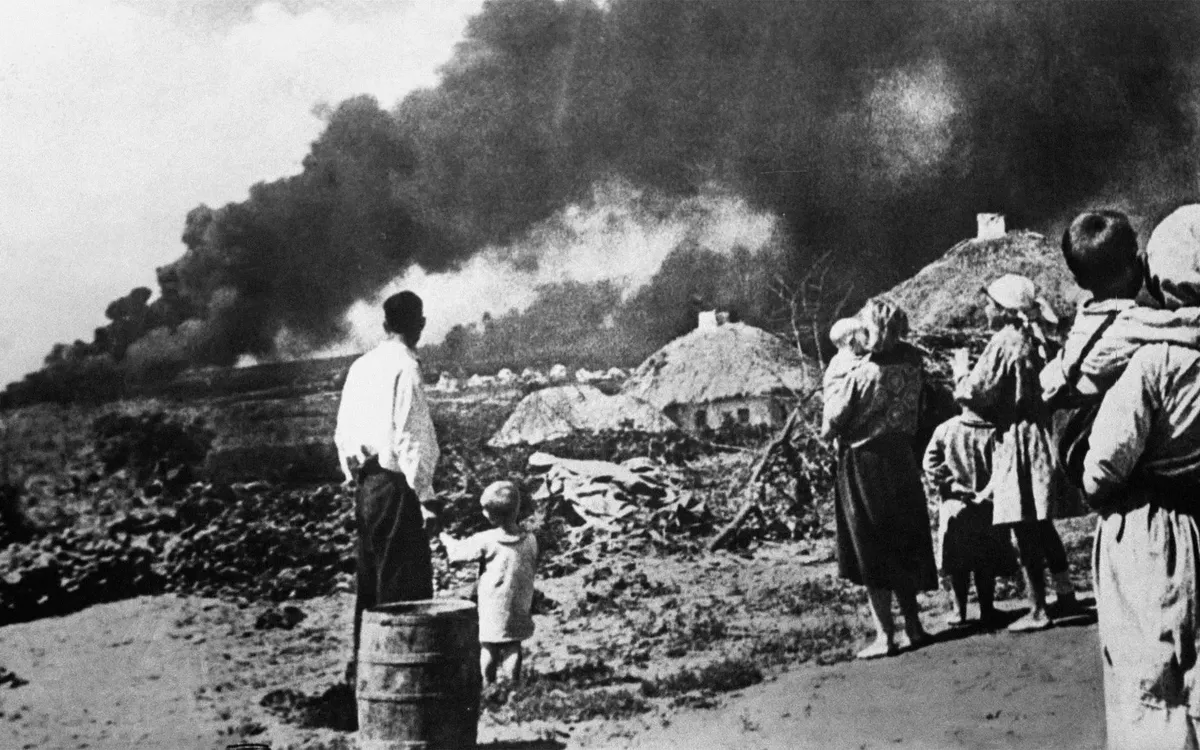
On June 21, 1941, at eight o’clock in the evening, corporal Alfred Liskov entered the Bug River and sailed east. At the back there was a dark shore with the company commander, Lieutenant Schulz, with motorcycles standing under the trees, with tanks that have already froze to the side of the River. There was also a dark shore ahead, its black strip was approaching with every rowing; Liskov was sure that they were not sleeping there.
The lonely swimmer slowly overcame the river and moved from one of his life to another. The carpenter at the Willy Tatsik furniture factory in a small town Kolverk, a convinced communist, a member of the Union of red front -line soldiers, who stood at rallies with a clenched fist of his right hand, he was ready to fight with the Nazis on the barricades, but instead he was dressed in a gray form with stripes, was numbered, taken into account and a microscopic detail was included in the huge mechanism of the missile Eight hours, at dawn on June 22, had to get out of the place and move forward.
But the part did not want; The corporal Liskov left the location of the unit, entered the water and sailed into the Soviet Union to warn him that the war was beginning.
When at nine in the evening the corporal of the Wehrmacht Liskov was introduced into the office of the head of the 90th border detachment of Major Bychkovsky, he shouted directly from the threshold: da ist ein krieg! The major nodded to a wet German at a chair and gloomily listened to his quick speech. There was no translator, so the major ordered the Germans to put the German in a truck and take him to Vladimir-Volynsky, where the German language teacher was raised from the bed at night, who accurately translated the German words. It was the hour of the morning of June 22.
Major Bychkovsky did everything that he should: he reported to the headquarters of the border guard, the commanders of the two divisions standing in Vladimir-Volynsky, and at half a day, General Potapov called the 5th Army commander. He did not believe: "You never know what a German can tell!" The commander of the Kyiv military district, General Kirponos, was also reported, and he also did not believe. Bychkovsky again began the interrogation of the corporal and again heard that that communist crossed the Bug to warn the Soviet comrades about the war. The German was worried. DA ist ein krieg! When he repeated this once again, Bychkovsky heard a sudden hum and the roar of artillery shells.
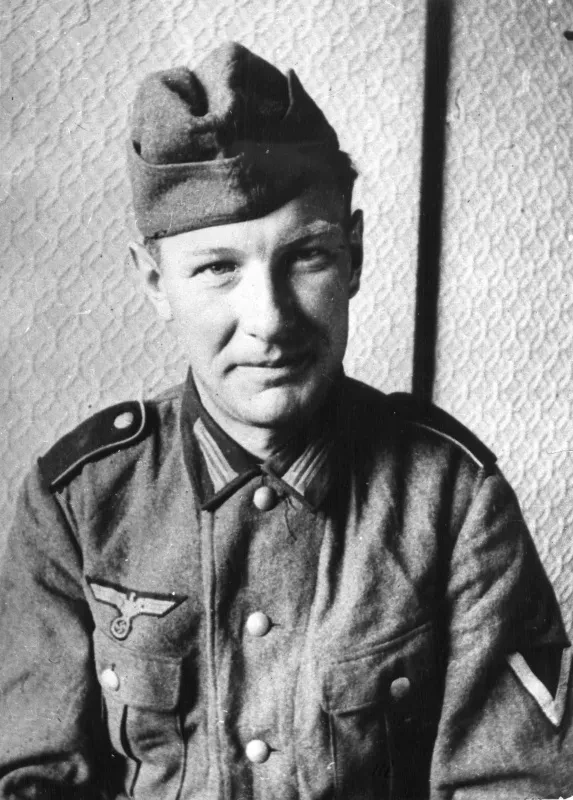
Liskov was nervous on the night of June 22, when he was interrogated and taken to the city, he was nervous when he saw that he was not understood and did not believe him, he was nervous when they had been waiting for a translator for a long time, because he knew that during these hours it was happening on his shore. It seemed to him that the Soviet ones were wasting time. Therefore, every time that night, entering a new office for himself, he shouted from the threshold: da ist ein krieg!, Wanting to say that the war is already here, very close, that now it will begin, that everyone needs to jump up, run, do something important and large. He did not understand that nothing could be changed.
Liskov saw the beginning of the war on the border, its first minutes, hours and days. I saw how the border guards fled towards the Bug, saw the dark carcasses of pontoons on the water, saw boats and helmets, the harsh faces of red officers and explosions that rose lumps of the earth. And to him, who was put in a passenger car, then to the cab of the truck and drove somewhere, but he did not know where, it became clear that he had not prevented anything with his desperate act.
The Germans entered Lviv on June 30. On the same day, the last plane from Lviv was taken by the Corporal of the Wehrmacht Alfred Liskov.
In Moscow, he was settled in the hostel of the Comintern on Gorky Street. The building swayed with fear. He felt it right away. People who lived here several people in the room had false passports that were withdrawn from them upon arrival. Entrance and output only by passes. They seemed invented names that were not in their fake passports. It was often impossible to understand who they are. It was noev the ark of communism, on which underground underground from Europe and the leaders of peasant uprisings from Asia were hidden. Among them there were many Germans from the prohibited in the Reich, persecuted by the Communist Party.
Walter Ulbricht, Wilhelm Peak, Wilhelm Florin, Friedrich Geckert, Ernst Fisher and his wife Ruth von Mayenburg, who wrote memoirs from which we know what was happening in the former Lux Hotel on Gorky Street on Gorky Street lived. There were communal cuisines and long corridors, along which differently language hordes of children ran.
They played the Communists and the Nazis for days and once hung a child who was appointed for the role of a fascist. They didn’t jokingly hang it, but for real.
Their parents participated in meetings all days, made ritual speeches and wrote leaflets and proclamations. It was a daytime life, and it was still night.
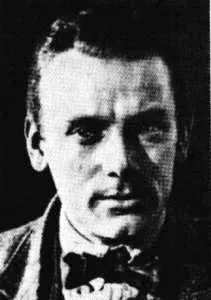
At night, the cuisines, corridors and rooms filled hordes of rats. They lived in an old house for a long time. In the corridors there were heavy steps and a knock on the door. People were taken away, and they disappeared. So one of the founders of the KKG Hugo Eberlain disappeared. By the time the corporal of Liskov, Eberlaine had been absorbed into the hostel for almost three years. He experienced an interrogation on Lubyanka, which lasted continuously ten days.
He stood ten days, and he was beaten for ten days. Then they beat him in Lefortovo, beat him so that he turned into a bare piece of meat.
On July 30, when the communist Liskov was walking along Gorky Street and drank tea in the restaurant of the Moscow Hotel, talking with his face about the Soviet regime and the Red Army, the founder of the KPG Eberlaine was sentenced to death. On October 16, when the Wehrmacht approached Moscow, and the communist Liskov was preparing for evacuation, the communist Eberlaine was shot.
We do not know exactly what Liskov knew about what was happening around him, but we know for sure that he very quickly realized that the Soviet Union is not a beautiful state of workers and peasants, which he wanted to warn and save, the last pre -war at night crossing the bug and risking a bullet in the back from one shore and a bullet in the forehead from the other.
The euphoria passed quickly. Pravda printed his portrait and his words about the horrors of fascist Germany. At this time, he already knew about the horrors of the Soviet Union.
The question arises, how do we know all this. We know this of the denunciations that the faces attached to him wrote on the corporal of Liskov. Of course, denunciations are not the best source of information about a person, but we have nothing else. This is a crooked mirror, but, having looked closely, we can distinguish a person in it.
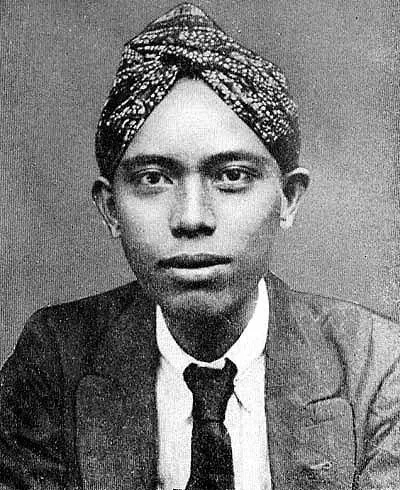
Democrates on Liskov was written by the chairman of the Communist Party of Indonesia Semain, the referent of the Comintern Kassim Hassan Ahmed Al Shek and other comrades under the pseudonyms. From them we learn that the corporal of Liskov was painfully trying to understand what was happening and where he was. He rightly assumed that all persons assigned to him were somehow connected with the NKVD and report to him. He openly told them about it.
Moreover, he correctly realized that all the employees in the hostel of the Comintern, the commandant of the hostel, on duty on the floors, everyone who monitors him, celebrate the time of his arrival and departure, conduct conversations with him about his moods and beliefs, they are all from the NKVD. By October, he felt himself already completely covered with informers and agents, dedicated, almost caught, although he did not understand why he was caught and what he was to blame. Constant tension and constant thoughts about whether he made a mistake, telling someone something, brought him to exhaustion, then to rabies.
When a group of people from the hostel of the Comintern was evacuated along the Volga, the Liskov corporal could not stand it and made a desperate and meaningless attempt to flee. In Cheboksary, he got off the barge and switched to a motor ship standing next to him. Where was he going to sail, he, who did not speak Russian, who did not have documents, who did not have a single friend in this huge, vast, heavy, rude country? He was detained and brought to the barge again.
So, there was a war, and this meant the movement of millions of people. People in a gray form advanced, people retreated in green uniform, civilians walked along the roads to the east, the authorities were in a hurry from Moscow during the October panic, they evacuated women and children from Leningrad, long -term compositions were transported by workers and numbered plants, children from Moscow schools on barges floated to the Republic of Germans of the Volga, where they were no longer advised by the Germans: 24 hours. The food in their furnaces was still warm. And among this huge resettlement of the people, among the hungry, frightened, hateful, fraught with people with suitcases and bales, the Liskov corporal of Liskov moved to the east for two months.
He could not differently explain the defeat of the Red Army, the atmosphere of fear and denunciations, chaos and absurdity, as having said to himself that numerous fascist agents that do all this entered the USSR.
He, who knew the atmosphere of fear well in the Reich and the Gestapo omnipotence, compared and understood that there was the same. So, he, running away from the Nazis, came to the Nazis again. With this conclusion, the conclusion that the Jews would be in a strange way in his thoughts were in his thoughts. The communist-internationalist Liskov was simultaneously an anti-Semite. Or maybe at that time he was already crazy, and in his gone, communism and fascism were stuck together in one strange cruel ideology.
Two months of the journey from Moscow to Ufa exhausted him and pushed him down, in almost an animal condition. This is again evidenced by denunciations in which its sins is punctually fixed. Perhaps for the future business against him. Twice he ate all the oil bought on the road. Once, tormented by cold, he tried to take a coat from a fellow traveler and argued that strong is always right. He proposed to catch the chicken and cook her, he wanted to take the boots from the woman, otherwise he took possession of four blankets at once. From all this it follows that he was starving and freezing. In the denunciation of December 18, 1941, his words were transmitted like this:
“One person deceives the world, in the councils of the queue and people go in bast shoes, Russian is a backward people, he was disappointed in the Soviet Union and wants to go home to Germany.”
In Germany, at that time, his parents and his wife were already summoned for interrogation to Gestapo, after which they publicly renounced him. If he, by some miracle, passed thousands of kilometers and the front line and would get to Germany, there he would be tortured and executed. And what happened to him in the USSR?
The idea that the Soviet hell, hell of universal surveillance, arrests, torture, executions, hell of war, poverty and hunger, a mess and chaos, endless party and an inexplicable number of informers are actually a matter of fascist agents, so captured him that he took out a book about the chairman of the Comintern Dimov and the hours of the clock and the clock carefully studied him carefully Photos before and after the Leipzig process and as a result came to the conclusion that the real Dimitrov was killed by the Nazis, and in the Soviet Union his brother, a fascist agent, acts. He compared the shape of the ears of that Dimitrov, who performed with a fiery speech in the Leipzig process, and the Dimitrov, who led the Comintern in Moscow, and came to the conclusion that these are two different people.
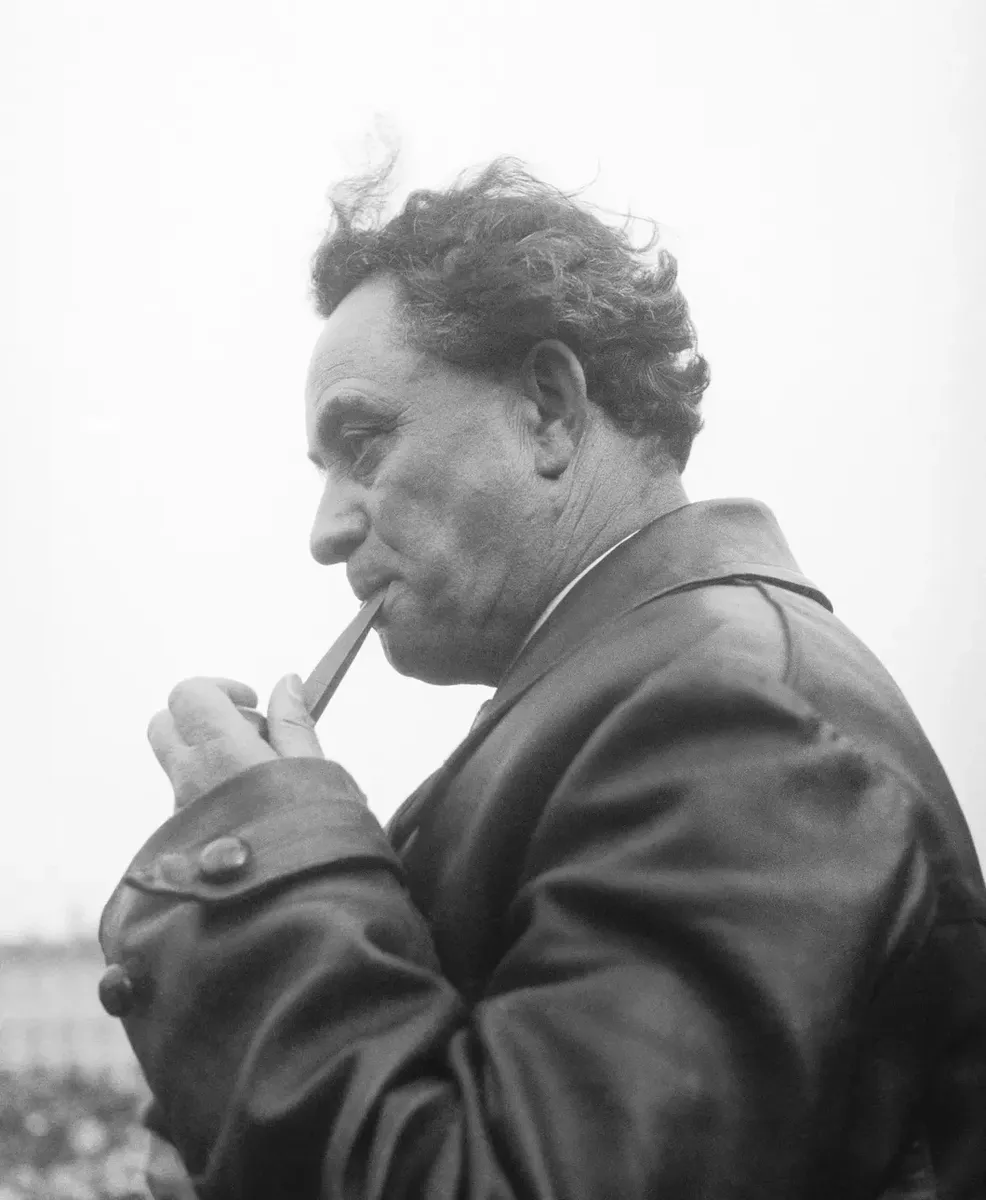
But the truly real communist Telman Hitler kept the real communist in concentration camp. Why did he release Dimitrov in the USSR? There could be only one reason: this is his brother, an agent of the Nazis! So he thought and, which was much worse for him, he said.
All proved this - the shape of the ears, and the shape of the nose, and the activity of the local, Soviet Dimitrov, which Liskov could not be called the subversive. He saw that the Comintern had turned into an empty place, that no work on the preparation of the world revolution was conducted, that all the work of a small diverse pile of people in fraught with coats and old boots that have been reduced from hunger, consist in writing empty papers, compiling reports and composing denunciations.
The corporal Liskov saw that in the era of the most decisive test, which was subjected to the Soviet Union, the Comintern, to which he was attributed as a political emigrant, turned into a burden and an empty place.
In a strange way, thoughts about the meaninglessness and unnecessiness of the Comintern in the new conditions came both to corporal Liskov, who was trembling from the cold in Ufa and the secretary of the Central Committee of the All -Union Communist Party of Bolsheviks, who was drinking hot tea in the Kremlin. In April 1941, when Liskov did not yet know that he would commit his feat, Stalin intended to dissolve the Comintern and thus make a gift to his ally to Hitler. He did not dissolve the Comintern then, but he issued the German communists from the hostel of the Comintern to Hitler. Also a good gift. In May 1943, Stalin dismissed the Comintern, but now it was a gift to the new allies - Churchill and Roosevelt.
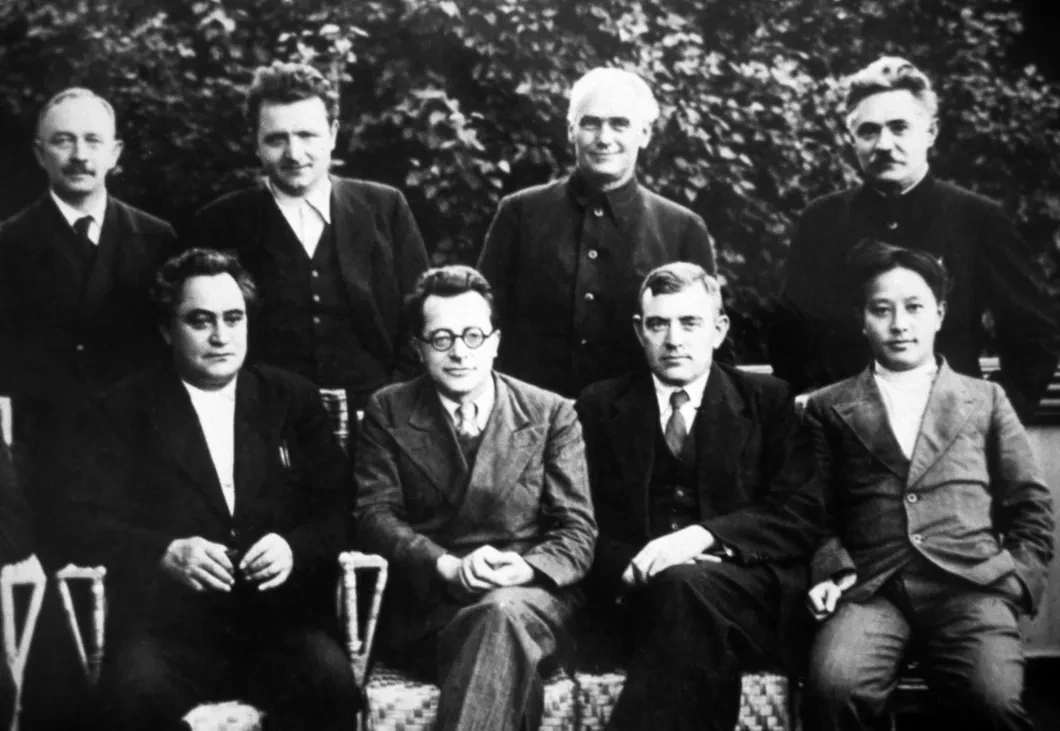
Georgy Dimitrov was too large a political figure to engage in some kind of cursory corporal, but had to. He read denunciations that Liskov carefully studies the shape of his ears. In Ufa at the end of December 1941, Dimitrov called the NKVD authorized and demanded “isolation of the German deserter Liskin, who crossed the night of June 22, and because he is extremely suspicious.” Dimitrov tactfully did not explain what Liskov’s suspicion was-well, he could not tell the authorized NKVD that the German communist suspects him that he was false dimiters and a fascist agent.
Note that Dimitrov calls Liskov a deserter. He was a deserter for the Wehrmacht, for the Nazis. For Soviet people, he was an honest man who committed a feat to warn them about the war.
In the June publications in Pravda, he was called a "German soldier." But by December 1941, everything had changed.
Corporal Liskov got to where he was so afraid to get: in the NKVD.
Liskov was arrested on January 15, 1942 in Ufa and rehabilitated on June 16, 1942. We do not know what happened between these two dates and that Liskov had to be taken out. We do not know whether it is rehabilitated posthumously or lifetimely, and what is the reason for this strange rehabilitation.
Was he shot? Why then rehabilitated it? Was it at the direction of Comrade Dimitrov and on the basis of the testimony of other comrades was recognized as an investigator of the NKVD fascist and therefore sent to the camp of German prisoners of war? There he could not survive, there other prisoners would have been displaced with him. For them, he was definitely a deserter.
Very little is known about Alfred Lisco, who, in June 1941, speaking in Kyiv in front of the workers of the furniture factory, raised his right hand clenched into his fist and shouted: “The front is front!” Nothing is known about his first life spent in Germany, where he had a wife and children; He left them and left the very thought that he would ever see them, entering the waters of Bug. What happened to them?
A lot of books have been written about the military and post -war history of Germany, including memoirs, but there is not a word about them. They disappeared. But he also disappeared.
A little more is known about other participants in this story. The commander of the 90th border detachment of Bychkovsky, who interrogated Liskov in the first hours of the day on June 22, 1941, went through the whole war. The commander of the 5th Army, General Potapov, who did not believe Liskov, was wounded in September 1941 and was captured in an unconscious state. He was captured until the end of the war. The commander of the Kyiv Military District Kirponos, who also did not believe Liskov, was surrounded in the same September and shot himself. Indonesian communist Semain returned to Indonesia and lived until 1971.
But it may also be that the exhausted with him, suppressed by fear, telling the same Liskov that Liskov was recognized as crazy and in the form of special mercy and proletarian humanism was not sent to the shot basement, but to the crazy house, where he was dressed in a gray chewed bathrobe and continued to assure the doctors and other patients that the Soviet Union was captured by fascist agents, and so, and so, and so In the way, some fascists who enslaved the German people are waging an endless cruel war with other fascists who enslaved the Soviet people. And Dimitrov’s ears are wrong. But this is unlikely, because such things could not speak even mentally ill in the USSR, and if he spoke, he would be transferred to the NKVD again and now certainly shot.
From the editorial office
Sources of publication:Vladimir Zinkevich compiled a documentary on the Wehrmacht defectors, including Alfred Lisco.
Ella Volodina at Deutsche Welle spoke about the hostel of the Comintern.
Hermann Weber on the website of the Conrad Foundation Adenauer published a detailed study “Hotel Lux. Die Deutsche Kommunistische Emigration in Moskau "about the life of German emigrants in Moscow.
Mr. Igor Petrov published four denunciations of Alfred Liskov from the archives of the Comintern.
The editors apologize for the fact that the sources were not mentioned immediately after the publication.