
Translated material
Swept atom
The correspondent of "New" follows the trail of the Ruthenium cloud and discovers a grandiose experiment in the South Urals
On November 9, the Institute of Nuclear and Radiation Safety of France announced the radioactive Ruthenium cloud of Europe on September 29. According to French scientists, the cloud came from Russia, from the Southern Urals. Later, the infected cloud was spoke in Germany: specialists of the Federal Office for Radiation Protection reported that it left its traces in Germany, Italy, Austria, Switzerland and France.
Now it is known for certain: Ruthenenia-106 emissions really took place at the end of September, in the area of the closed city of Ozersk in the Chelyabinsk region. Russia remained silent for two months, and only after Europe was indignant, Roshydromet published its report, recognizing this fact. The most significant concentrations of the isotope were found in settlements near the Ozersky plant "Mayak" (within a radius of 100 kilometers). In some villages of the Chelyabinsk region, the radiation background was exceeded almost a thousand times compared to the previous months.
Help "New"
In 1948, at the Mayak production association, an accident occurred on an atomic reactor engaged in the development of arms plutonium. In 1949, Mayak made a massive emission of liquid radioactive waste into the Techa River, then 124 thousand people were exposed to irradiation. In 1957, another accident occurred: a container with radioactive waste exploded on the Mayak. The radioactive cloud passed over the Chelyabinsk, Sverdlovsk, Tyumen regions, forming the East Ural radioactive trace.
Despite this, on December 8, the Interdepartmental Commission, created at the initiative of the Rosatom State Corporation, said that there were no violations on the Mayak. And the Ruthenenia-106 isotope in the air in the Ozersk area did not find the commission either.
Rosatom even prononized a press tour for journalists and bloggers to the Mayak plant-with a promise to give “smell and touch the ruthenes”. The “new” was not taken to this press tour, selecting only seventeen out of two hundred applications from journalists. Later, the Chelyabinsk Today agency reported that the trip was completely canceled.
In Ozersk, where the ruthenium was allegedly released, not to get without passing the Rosatom. But open cities and villages around him live the same problems. Therefore, I am going to an independent press tour around a closed city.
New Muslyumovo (84 kilometers from Ozersk)
The village of Muslyumovo is the slender ranks of one -story faceless houses upholstered in siding. The houses were built at the expense of Rosatom nine years ago, when the state corporation and the government of the Chelyabinsk region decided to transfer the village from infected radiation, a deadly river of Teki.
In it, the production association “Mayak”, which is now owed by Rosatom, in the 1950s merged radioactive waste. But people lived for another sixty years after that, bathed, washed in the flow.
Information about the infection of the river was declassified only in the late 80s-but even then there was no question of relocation. In 2006, it revealed that Mayak again dumped waste into the river - from 2001 to 2004. Soon after this, the project of the New Muslyumov arose.
The new Muslyumovo was built only two kilometers from the old - and again on infected lands. Residents of the village were offered a choice: you could take a million rubles and leave, or get a new house built by Rosatom for this amount. Of the six hundred families, more than four hundred decided to leave. And 135 families remained. For a dozen more - they took the money, left Muslyumov, but then they returned, built themselves at home in a new village.
According to Greenpeace, cancer in Muslyumov is almost three times higher than the average in Russia.
As residents of the infected territory, the Muslyum residents receive compensation for medicines, 400 rubles, but there are no pharmacies, as there are no clinics - only the point of general practice, one for five surrounding settlements. About a hundred people in the village have the status of “Raywall” - a patient with radiation disease. But it is very difficult to get a “Rayevika” certificate, in fact, it is issued only to those who have fourth degree cancer, many simply do not survive until the certificate is issued. Meanwhile, the status of “Raywall” involves additional payments, albeit small.
There are six cemeteries around Muslyumov, and constant revival reigns on them. Many graves are very young photos. Only in November, four local residents died in the village - men up to sixty.
Ramil Mukhamedyarov in Muslyumov was born and raised. He recalls how the kid was playing on a leak in hockey, there was too lazy to run home - everyone drank directly from the protaby.
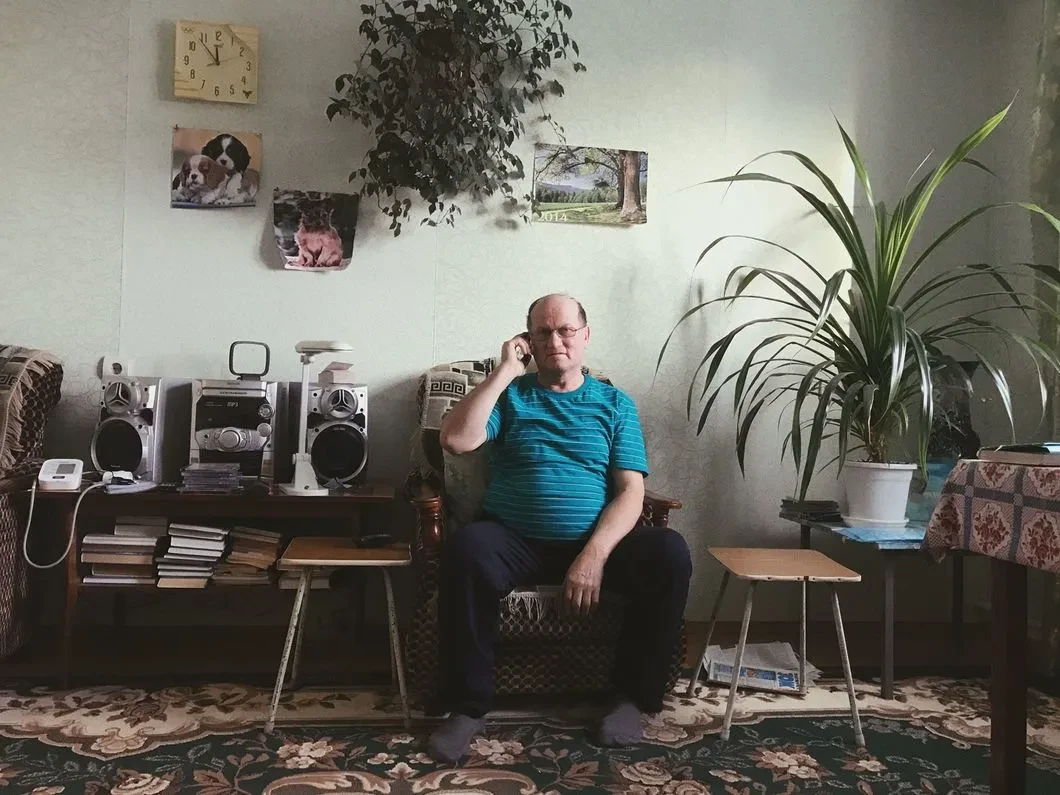
Ramil used to be a deputy of the district assembly, but after the heart attack he abandoned this position. Now he teaches at school history and social studies.
Tells:
- In Japan, after Hiroshima, they have taken off as medicine. In the nineties, the Japanese proposed to take control of our territory: study, treat. But the government did not go to this. For us, a branch of the Institute of Biophysics in Chelyabinsk was opened, but we were not treated there, but only investigated. At the regional hospital, a rehabilitation center was recently closed for us - they considered that the Chernobyls died, and we will soon die.
Ramil says he was disappointed in medicine - now he spends money on trips to the people's healers.
Ramil lives completely alone, it happened. On the walls of the living room he has cheap wallpaper and photos of puppies from the wall calendar, on the floor - plants in tubs. It is comfortable, although the house does not have this: after the transfer of the village, it turned out that radioactive gas of Radon accumulates in the cellars of new houses. Ramil says that in the basement of the school where he works, they planned to equip the workshops, but due to the excess of acceptable radiation standards, they left this idea. But still, both children and teachers fall in fainting in the lessons. Even the minobra commission came, but she came to the conclusion that fainting was from malnutrition.
There are no dosimeters in the village. The main dosimeter of local residents is well-being: when any emission happens, pressure jumps, headache begins. Residents of Muslyumov recall that at the end of September many really felt bad, an ambulance from a neighboring village had to ride more often than usual.
I ask Ramil why he did not want to leave here when they gave such an opportunity.
- Where will I go? How am I without a garden? I have raspberries and apples here, even an apricot is growing! - He says clearly with pride.
By the way, the garden is a serious help for most Muslyum families. They live here mainly on retirement. If they work, then at school or in stores. Recently, the poultry farm has just opened.
Ramil is not the only one that tightly grown to this dead land. Here his neighbor Larisa tried to live in Krasnoyarsk with his family - and returned:
-I will no longer be better-so why run somewhere? Where else do we need? I want one thing - calm.
Larisa’s mother was born, raised and died in Muslyumov at 57 years old - from cancer. Larisin's husband is forty with a tail, and he also has cancer. This year, two cousins of Larisa died from cancer. Her younger granddaughter in two years old is already registered with the oncologist.
Old Muslyumovo
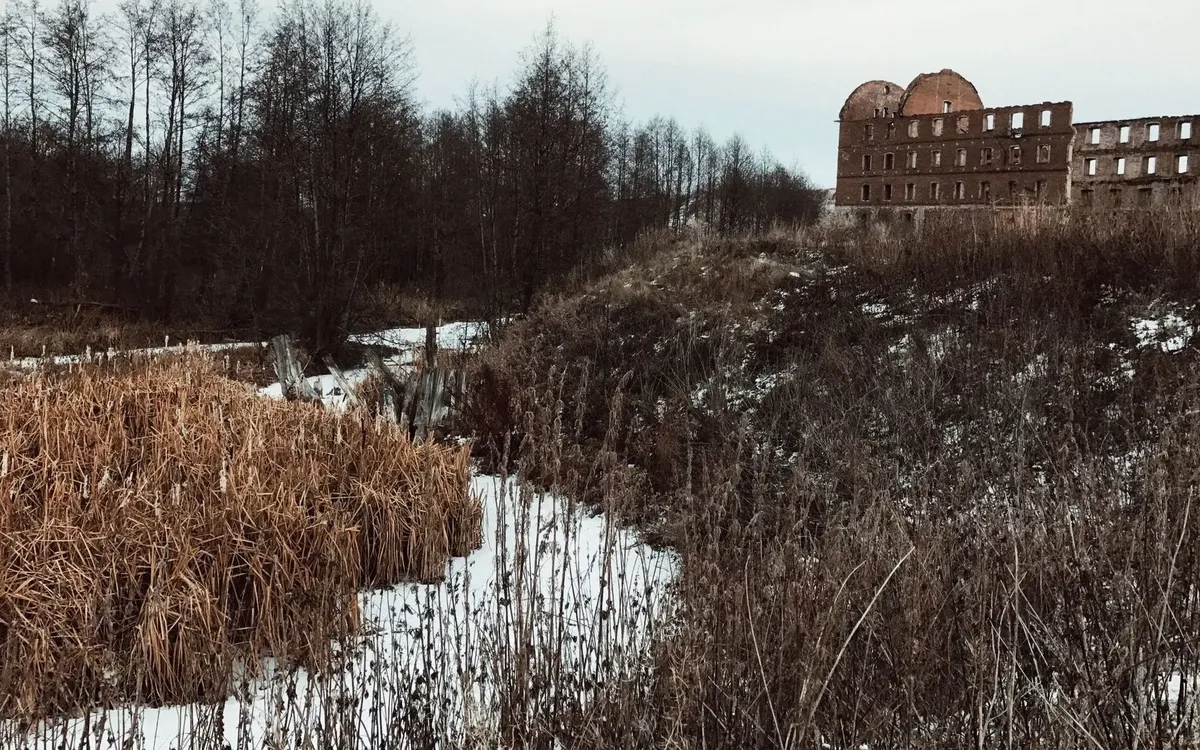
The old village of Muslyumovo nine years ago was baptized with the ground by tractors. On bare ground, with snow, there was the only residential house, brick, stands with fogged windows. This is Gilani Dambaev's house. Gilani refused to move to a new place. From the windows of his house, a brick frame of the old estate and the destroyed mill of the merchants of malocaz - former serfs, unfolding in the Urals after the abolition of serfdom are visible. Around - a naked field with high dry grass.
In Muslyumovo, Dambaev arrived with his brother in the 80s, behind a long ruble-they built cowsheds here. Already at that time it was known that the land here is mortally infected.
In 1999, Gilani transported the whole family here - his wife and five children: a tank shell fell into their house in the village near Terrible. In that situation, the slow death from an invisible eye of radiation seemed preferable to a quick bullet.
In this brick house until recently, the Gilani Dambaev family (wife and five children) lived with his brother's family (wife and two children). In 2000, Gilani, the refugee himself, “adopted” two old people: he accepted his grandparents from Kazakhstan in their common house, who were kicked out of the country. The old people were without documents, they did not receive pensions. Gilani took care of them, exhausted their pension. Grandfather just died recently.
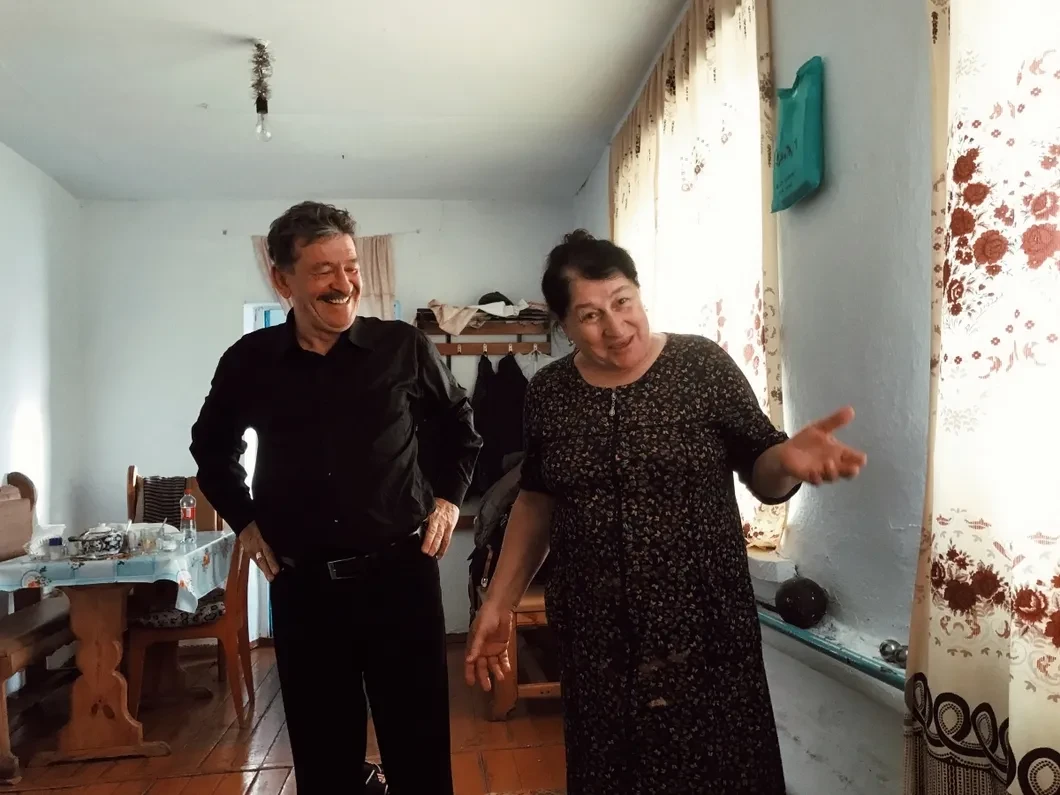
- The local administration tells me: "Yes, drive her." And my grandmother Vera Ivanovna is to me: "I will hand me to the elderly house - I will hang."
When the village of Dambaev was resettled, like all neighbors, a million was offered, but Gilani considered that it was unfair, that the money should give every family. The brother and his family left for the neighboring village of Kunashak (69 kilometers from Ozersk) - and Gilani remained to fight. His experience is great. He is an assistant to the Commissioner for Human Rights of the Chelyabinsk Region, earlier even inspected prisons and insulators.
The grown daughters of the Dambaevs were married-someone was lucky to leave for Chechnya, someone in Chelyabinsk. Sons also go to work in Chelyabinsk, but often come to Muslyumovo. Gilani himself and his wife Zura will not leave here.
“There is nowhere to go - there is no housing in the homeland,” Dambaev shrugs his hands. - There is no money to build money, and there is no money.
On the way to Muslyumovo there is a memorial plaque to victims of radiation installed by the Netherlands Foreign Ministry. Foreigners are generally frequent guests. Gilani with a laugh recalls the delegation in white spacesuits of radiation protection. He himself (though without a spacesuit) was shown on television in different countries. So the head of the district now, in response to all sorts of critical attacks, calls Dambaev an American agent. Although everything that he has American is a dosimeter that one of the visits to him, an ecologist from the States.
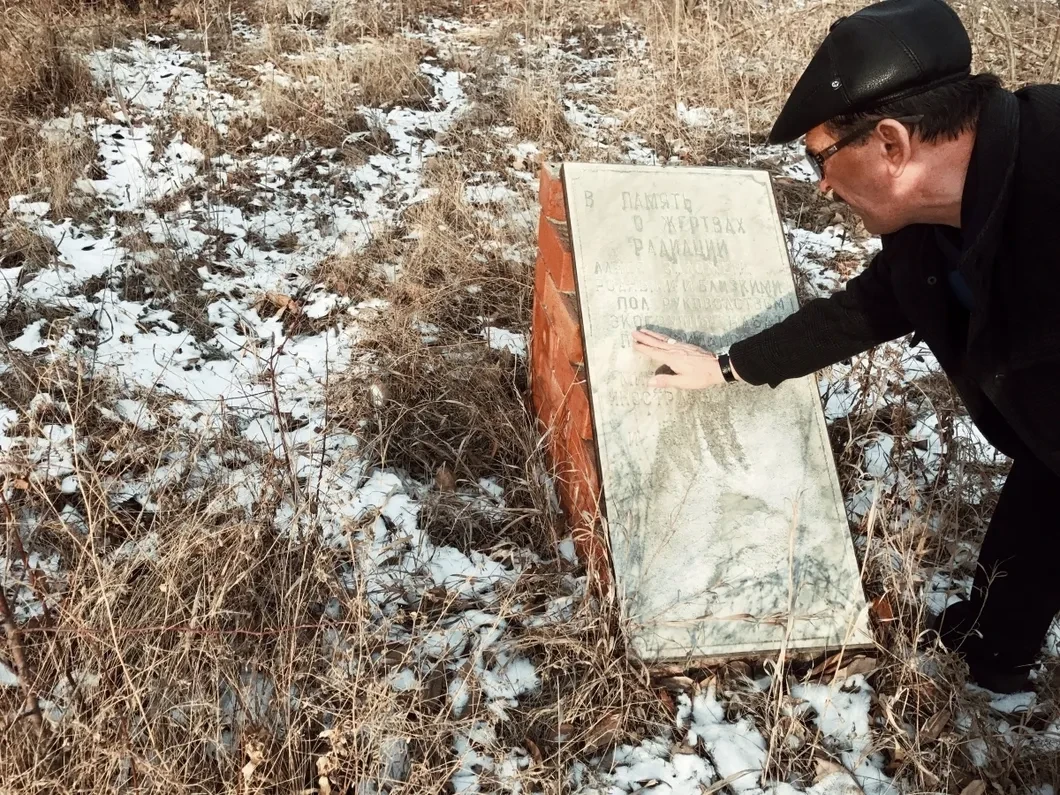
Having taken this dosimeter with us, Gilani and I go to the course - to explore the level of its radiation infection.
The river was already covered with ice, rotten wooden boards of an abandoned dam sticking out by the shore, dry reeds rustle. We go down to the leak, the dosimeter begins to fiercely crack. Gilani tells me that the locals still catch fish in this river. She is being taken for sale in Chelyabinsk.
- They are asked: "Why are you doing this?" And they say: "We are poisoned - and we will poison us!"
The dosimeter, if you put it on the very edge of the coast of leaks, shows up to 7 thousand micro Borentgen. The norm is thirty.
Argayash (32 kilometers from Ozersk)
In September-October, in the village of Argayash, where a little more than ten thousand people live, Roshydrot recorded extremely high pollution: the background exceeding is 986 times compared to the previous month. Traces of Rutheneniya-106 were also discovered. But there is no panic in the village: many have not even heard about dangerous emissions, others perceive this information skeptical.
I go to the Ritual Service Bureau - a small pavilion located right at the Argayashsky station. A variety of crosses are compiled along the wall in even rows. A woman of about fifty sits at the table, seems to Valentina Ivanovna. I ask if she heard something about the radiation cloud.
“They write, who knows.” They write not in vain. But no one tells us. Nothing is heard from the authorities.
- Not afraid?
-Why are they afraid? We live once! We are probably already accustomed. In Chernobyl, too, someone remained to live.
- They did not come to you more often?
- Yes, everything is stable. But this will not immediately manifest everything, over time, go in a dozen years.
In the administration of the Argayashsky district, I am advised to address the question about radiation pollution to the department on housing and communal services and urban planning of the district, to Elmir Khabibulina:
- As such, we do not have an ecologist in the administration. I myself called the regional Ministry of Ecology on this issue, they say to me - the Ministry of Public Security of the Chelyabinsk Region is responsible for this. I saw the transfer on regional television: Evgeny Savchenko, our Minister of Public Security, said: there are no reasons for panic. And all. To fix the release, we need devices, specialists, we have nothing of this in the administration. Personally, I was not in the city at all when information about rutheniya went, I was in Chelyabinsk at the Ecological Film Festival. I come, the relatives call: "What is happening there?" And we have everything calmly, there is no panic. We generally think: maybe it was a duck? But even if there was an emission in September, it’s too late to beat in the bells. What do you say in Moscow?
Kyshtym (15 kilometers from Ozersk)
Galina Vasilievna Ustinova was born in the village of Nadyrov Bridge, which stood on the Teche River. Now this village is not - he was sneaked with the ground after the accident at the Mayak in 1957. Galina Vasilievna was only three years old when her family was evacuated. And up to three years, her parents bathed her in the leak and the diapers washed. And they died of oncology.
Now Galina Vasilievna and her husband Sasha live in the city of Kyshtym, in a wooden one -story house. Their house is modest, but with a claim - with carpets on the walls and on the floor. All other surfaces are coveredly covered with oilcloths. Next to the soft chair is a wheelchair for a disabled person. Galina Vasilievna rolled leopard leggings, daily ritual: Julia's daughter, kneels in front of her and bandages the swollen, ulcers of her mother’s legs.
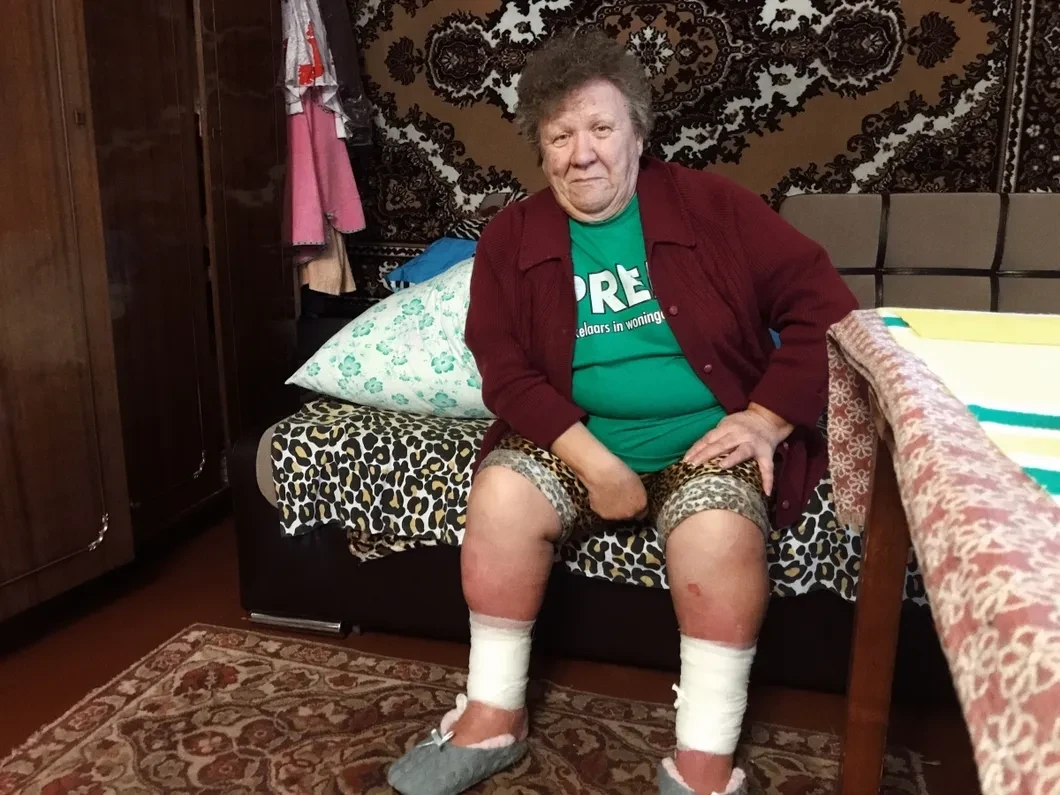
When things are done, they invite me to the table. Julia covers, her mother moves with difficulty. Sasha sits next to his wife and starts a conversation:
- I was taught in the army: sparrows are the most sensitive to the radiation of the bird. I feed them. Today they have not arrived - oh, it means that the release. In September, they were not at all! But they don’t want to scare people, probably: they say about the cloud only on TV - but we have silence here, they don’t advertise. It seems to me that there was nothing. It was some companion over France exploded, and all are lying on ours.
An invisible radiation hazard is a topic for an idle table conversation with a visiting journalist, and so - his worries on the throat. Sasha and Galina Vasilievna have a strong economy. Requires strength, but on the table - all of its own, homemade:
“A couple of years ago they collected cherries, there were berries - these are the giants,” Galina Vasilievna shows a convincing fist. - Yes, even such an unusual, oblong. And we eat it! But we are not afraid: I don’t have nitrates in the garden, we grow everything at manure.
For lunch, the Ustinovs prepared goulash. And sometimes they extinguish the meat in the jewel; Another time they make pilaf - and then the meat is chopped with cubes, "to be more cultured." They see my confusion and chuckle at me.
“We do not take from private traders,” says Galina Vasilievna. - Only store, proven!
“In meat and fish, radiation is not so scary if you know as it is,” Sasha reassures me. - The radiation is deposited in the bones, it passes through soft tissues through! You just don't suck the bones. And then normal.
Ekaterina Fomina , "New", Chelyabinsk region
PS
In the light of news about ruting, the chief oncologist of the Chelyabinsk region Andrei Vazhenin informed the Interfax agency that he does not have information about dangerous radiation concentrations. The doctor advised those who are very worried, "watch football and drink beer."