
Translated material
Holidays
How and why do nothing
1.
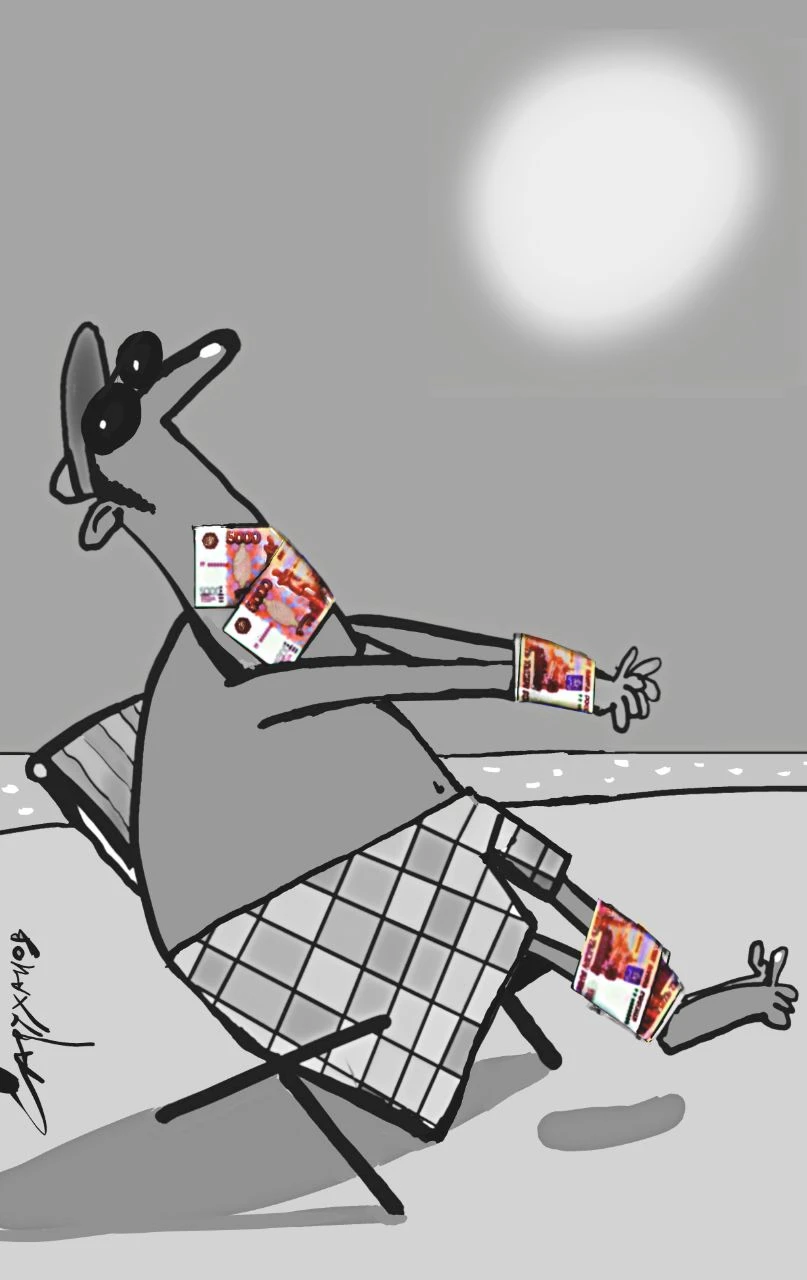
In America, something happened that no one was afraid: an inversion of unemployment. The manifest line decreased to the lowest mark over half a century. There are many vacant jobs in the country, but no one is in a hurry to occupy them. In only one autumn month, more than four million has quit. Nowhere do not have enough arms, legs, head. Not enough cashiers, and shops switch to self -service. My favorite pub, where real Irish ale and authentic fried fish are served in a bat from the same beer, switched to a shortened week due to the catastrophic absence of waiters. But these are, of course, the little things available to the naked statistics to the eye. Economists speak of other incomparably more difficult problems and argue politicians, hoping to understand where the labor force went, when it returns and if never, then what to replace it. Why, after two years of Covid, after heavy human and material losses, after painful quarantine, people do not want to return to work, easily throw it and not eager to find a new one?
No one can explain this bizarre phenomenon, although some pretend that they know the answer.
“Generous benefits and distribution of state money,” they say, “did the job optional.”
But the manuals ended, and the subsidies were exhausted, but the situation has not changed. The shortage of labor resources is becoming more fierce and widespread, but there was no explanation. This is especially surprising when taking into account the hysterical features of folk psychology, incurred on the history of the United States, where unemployment was a national nightmare, and labor was perceived by a religious category and served as a moral fetish.
2.
Perhaps the most plausible of all that in the USSR spoke of the West was the fear of unemployment. It was justified by a simple logic: they live well in America, because they work there, and they pretend to be. It followed that honest work - a pass to a bright capitalist tomorrow. We were preparing to leave for him, we were preparing especially stubbornly, that is, we transferred not only diplomas, but also a work book into English. In my lonely showed two years of experience in the fire department. It is all the more amazing that in America I quickly found a loader's place. The neighbors congratulated, friends - they envied, the owners were disappointed, and a month later I became unemployed, for the first, but not the last time.
The loss of work is strange, painful and, I will decide to say, a notive experience. I could not cope with the test, although it consisted only in the fact that I was ordered to shift jeans from one box to another, trying not to confuse the size. Even at 24 years old, in a foreign country, with broken English, I had a different kind of ambitions, but this did not change anything. I became a loser even before I found out what luck means, and fell from the very first step of not only the official, but also the social staircase. Having flew out of work, I spent a sleepless night and learned about America more than I could find in the centner of the books that we brought with us as primary capital.
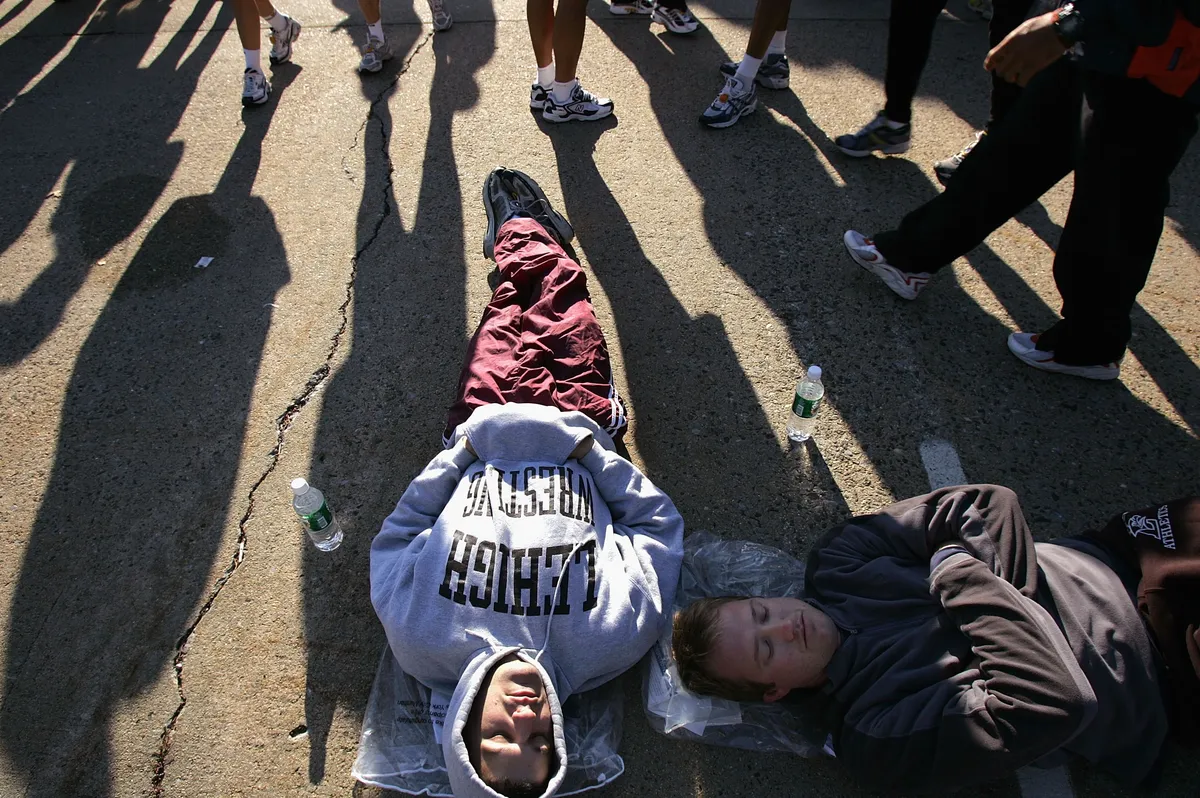
So I did not understand with my mind, did not take note, but felt in my skin that it was painfully painful to be unemployed, in any case, in America. In Europe, this is easier. For example, I knew the pretty Karl of London, who continued the unemployed dynasty founded by his grandfather Ahmed, who managed to move from Egypt to England and never soured about it. But America, ahead of others, lives in the past, stuck between the century of education and the era of the industrial revolution, it still believes in God, and therefore in Protestant ethics, respecting labor as a way to heaven.
At the beginning of American life, I received unemployment benefits three times and each time I did not find a place in line. She was divided into hopeless ones, to whom I had not yet ranked myself, and offended - in costumes, with briefcases and an embarrassed smile, saying that they were temporarily, accidentally, lost on the way to a business future. I didn't have it, and
I suffered from violent, like a sobriety at the drunk, idleness, until I realized what it could be used for.
Finding himself work to taste, no matter how rarely, he was tight and scarce, he was rewarded, I was no longer afraid to be left without him.
“If you are ready to do something for nothing,” I believed in a homemade maxim, “they will pay you.”
“Sooner or later,” the inner voice added grudgingly, but I did not listen to him and, as it turned out in the end, did the right thing.
But the experience remained. Unemployment is a social trauma with severe psychological consequences: shame is worse than poverty. Labor is a vacant yoke, under which we are in a hurry to return, because without it we lose justification and justification. We are those who work: the position describes us without a trace, it determines the life trajectory, gives it meaning and name.
To rebel against this scheme coming from Adam, one must have self -confidence and selflessness of bohemia. Lesha Khvostenko paid a crazy house for this. This did not stop him, and on both sides of the ocean he sang his anthem:
*Let the worker work
And not a worker, if he wants
Let it work, who wants to
I don't want to work.*
But all of them - dudes, beatniks, poets - were a rare exception and were not taken into account. Until the pandemic has come.
The disease imposed a pause for us, which dragged on so much that it became almost indistinguishable from lifestyle. The quarantine changed the guidelines and shake the priorities. To do this, I needed to lock millions of people, deprive their office and give time to change their minds. As soon as the country braked, she had doubts about the usual hierarchy of values.
Actually, the protest has long been in. Everyone likes to scold colleagues, hate the boss and curse their work. When one author was asked how he became a writer, he suddenly exploded.
“There is nothing interesting about this,” he said, “find out better how a person became a worker on a conveyor who packaged frozen chickens, he was unlikely to dream of such a career since childhood.”
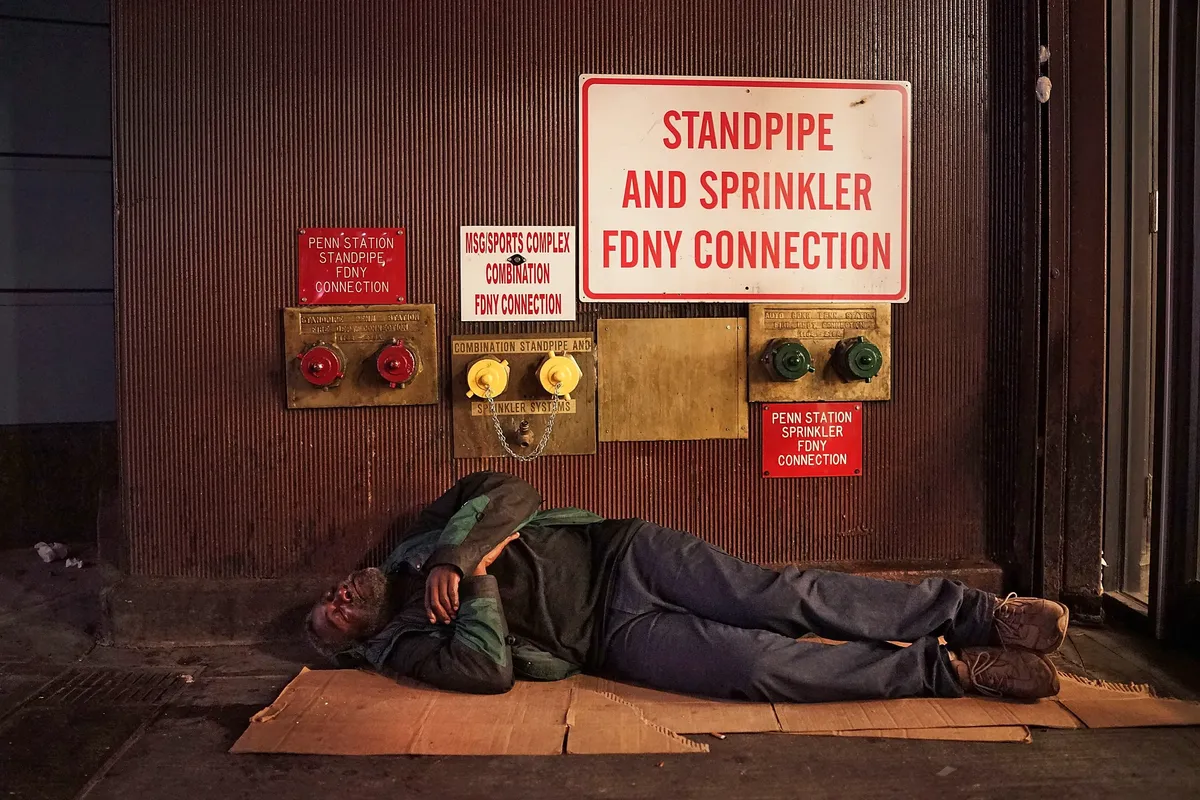
It is not surprising that at the first opportunity, many of those who pulled the strap of slave, harmful and poorly paid work left the first opportunity.
However, labor is not only forced need. Rich Americans work incomparably more poor. So, the billionaire Bloomberg, having served three deadlines by the mayor of New York, said that he would finally take a vacation and will play golf for three weeks. Others do not do this either - work is more interesting for them to leisure. I myself am like this, because I grew up on the motto “Monday begins on Saturday”, believed in the mystery of labor and considered a creative work a holiday, not imagining himself without it. And now he presented it-because of Covid.
3.
The virus, as a devil, works as a tempter. It is as if specially sent to us in order to question the fundamental foundations of a proud civilization. The split only was a glued globe, Covid imposed an isolation of the planet. Having disconnected society, the pandemic condemned everyone to loneliness. Even the vaccine did not return peace and the world, but broke it on vaccinated righteous and persistent sinners.
True, little has changed for many. I myself had lived at the desk before, leaving for a short time to the kitchen and dining. But there was another general prospect. Grinding everything familiar, quarantine asks questions that, according to Bakhtin, worry us at the coffin cover. Is it so important what we did, what we were injected into the age allotted to us, and that we are most afraid to lose?
Labor is a curtain covering us from yourself.
We are used to self -determination through our work. And without her, it seems like we are not.
Prestige and status, pathos and neurosis, praise and blasphemy, humiliating fear of failure and a greedy thirst for success, pride and humiliation, itching of everyday life, the burden of plans, a rare joy of creativity and its frequent torment - all this gives us labor, selecting only one thing: a person without a position.
Polish Americans, getting to know someone at a party, consider it indecent to ask a person about his kind of occupation. Etiquette requires everyone to meet an unprotected and not burdened post, to accept it as it is - in itself, as in a bathhouse, a pool, in a resort. In other words, on the holidays. They, stretched out for two years, blur the border between everyday life and holidays, and in order to return the latter to the latter, a New Year's shake is needed.
Most of all others I love these winter days, exchanging the necessary chores for magical ones. Gradually, day after day and hour after an hour, the daily routine changes, including abundant signs of the upcoming one. Having reached the climax on an infinite night, dividing two years, the holiday smoothly passes into the Oblomovsky stage of late morning, delicious scraps, old comedies, sweet idleness and thoughtless burning of vacation days. Thus, they are beautiful that, crossed out of the course of life, do not belong to the future or the past and tolerant of an irresponsible whim. Of course, the main thing on the holidays is the transientness of the anthraquet. But, only having learned to at least sometimes live without difficulty, we will be able to return home from work - to ourselves, in order to find a justification for life without it.
New York, December 2021