
Translated material
The choice of freedom
June 12, 1991 Russia has a president
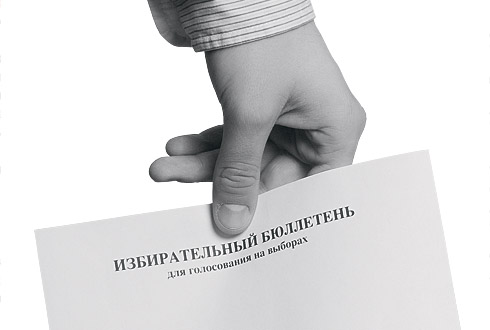
Twenty years ago we had elections. On June 12, 1991, the Russian Federation - then as part of the USSR - chose its first president. The Russian citizens faced a real alternative: six candidates, each of whom was known to the country, was behind everyone the interests and hopes of millions of voters, everyone really wanted to win and fought in earnest. But the main thing in these elections was that voters knew the price of their voice and believed that it was their will that would determine the result. But gradually, a year after year, the country got rid of illusions, the tests of democracy could not stand either power or society. The current twenty-year-olds do not really believe that their opinion means something for the authorities. As in Soviet times, voting again became one of the state rituals - as false as meaningless
For those who forgot: the elections of the President of Russia were the first in the history of the Russian state by the free and universal election of the head of the country, in which the vast majority of citizens took part. 79 million 498 thousand 240 people, 74.66% of 106 million 484 thousand 518 registered voters, used their right then.
The paradox of the situation was that one president by that time had been led by the country for more than a year. On March 15, 1990, deputies of the Congress of People's Deputies of the USSR elected the head of state Mikhail Gorbachev. However, those elections were not popular, that is, they looked not quite legitimate in the eyes of society. In addition, the popularity of the Congress of People's Department itself, a significant part of which were representatives of the party nomenclature, fell rapidly.
In February 1991, the VTsIOM survey demonstrated that the company was extremely disappointed in the Soviet management system and the Soviet leadership and demands new institutions of government and leaders. 62% of respondents said about their distrust of the first part of the Union. A month earlier, 44% of respondents expressed their approval to the political views of Boris Yeltsin, while the positions of Mikhail Gorbachev were shared by 22%. It is not surprising that in the All -Russian referendum on March 17, 1991 (he took place with the common -union - on the preservation of the USSR) The vast majority of Russians spoke out for the introduction of the post of president of the RSFSR. Moreover, according to the VTsIOM survey, 58% of citizens shared the idea that "the election of the President of Russia would contribute to the exit of the republic from the crisis."
Request for change
Six pairs of candidates were admitted to the elections (the president was elected in conjunction with the vice president), representing almost the entire spectrum of political forces of that time. At the same time, four of the six applicants for the presidential post (Nikolai Ryzhkov, Aman Tuleyev, Albert Makashov and Vadim Bakatin), as well as all candidates for the post of vice president at that time in the CPSU. Such a number of applicants for power from one, in fact (with all fractional discrepancies), political power ultimately played an unkind service, spraying the votes of voters. Moreover, the vertical control of the Soviet regime controlled by the Communist Party demonstrated full incompetence both in terms of agitation for “its” candidates and in terms of the application of an administrative resource. It was simply not applied - to any attempts to indicate who it is necessary to vote for, people usually were not fully responding. The aversion to the rotten and inadequate system, which brought the country to the state in which it was in 1991, was so great. The standard of living was rapidly falling, food deficiency became comprehensive, some of the Union republics strove for independence, and many foreign ambassadors openly feared the outbreak of the civil war.
Democrats in falsifications, PR technologies and other ways to force voters to “correct” choice simply did not need: a request for changes, for a new course that was personified by the figure of Yeltsin, who had broken from the CPSU, was dominant in Russian society. In addition, sociological surveys predicted the confident victory of the only candidate from the Democrats already in the first round with a huge margin from the rest of the candidates.
Triple triumph
The Levada Center (its team was the then VTsIOM) recall that the residents of Moscow and Leningrad were going to vote for Yeltsin to the maximum extent, for Ryzhkov-regional centers, for Bakatin and Zhirinovsky-residents of small cities. But a month before the election, May 6, a survey of the urban population of Russia showed that Yeltsin and Rutsky can receive 52%of the vote, Ryzhkov with Gromov - 9%, the remaining couples of candidates - no more than 2%. By June 6, Yeltsin’s gap increased to 57% in cities, 67% in the country as a whole), while only 14% gained their closest competitors.
Official results confirmed the accuracy of sociological forecasts. The triumph of the Democrats (then without quotes) was triple. Not only Yeltsin won, to power in both capitals, Moscow and St. Petersburg, chosen mayors also came in a democratic way: Gabriel Popov and Anatoly Sobchak. The victory seemed absolute, the future was cloudless. Then no one in a terrible dream could imagine that in just two and a few years the hero of the Afghan war, Vice President of Rutskoy, elected along with Yeltsin, would become one of the leaders of the October rebellion, after which the development of democracy in Russia will be almost suspended, and the word “democrat” will turn into a curse for many years.
Nevertheless, those elections left a feeling of freedom to which the country broke through the dictatorship of political monopolists who came to power in 1917. Freedom, the space of which all subsequent after the 1991 revolution 20 years was consistently and inexorably declining.