
Translated material
Cucumbers of discord
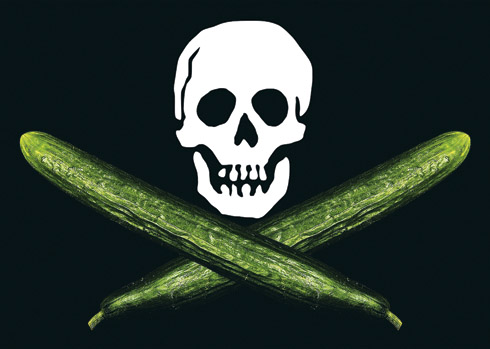
Cucumbers of discord. In Europe, a scandal does not subside around infected bio -horsemen, which consumed half of the Continent, primarily Germany. Here, 18 people have already died from a deadly bacterium-mutant, more than two thousand are infected. Cases of a disease transmitted not only through products, but also from humans to a person, are already recorded throughout Europe and even in the USA. Experts talk about the most severe epidemic. The strongest blow was inflicted on the European agricultural product market: Austria and the Czech Republic sharply limited the fruit -import, but Russia went beyond all, which introduced a temporary ban on all vegetables from the EU countries. Whether life will return to the normal channel soon - the New Times found out
At the main wholesale warehouse of Berlin, with an interval of 10-15 minutes, trucks drive up, where cucumbers, tomatoes, salad heads are in a hurry ... per day, they send up to 40 tons to a landfill. One of the tenants of the warehouse of the warehouse, Thomas Franz, whose grandfather founded vegetables and fruits in West Berlin in 1949, sadly pronounces a sacramental phrase, which was then picked up by all newspapers: “Vegetables, Northern Germany, death ...” It was from the north of Hamburg and the Earth Schleswig-Holstein, a deadly infection was launched, which was lurking in Bio -coo -coolasses produced in Spain. The Germans practically abandoned the consumption of cucumbers, tomatoes, spinach ...
Wash your hands
The European Commissioner in Health John Dally called the rapid spread of the deadly bacterium in Europe "a serious crisis." But at the same time he called for calm. Firstly, he recalled, the focus of the epidemic is far in northern Germany, and therefore the inhabitants of the rest of the countries have no reason to fear for their lives and health. And secondly, Dally advised, "it is better to wash vegetables, as well as hands before meals-and everything will be in the way." However, this does not soothe.
The epidemic is caused by the pathogenic wand “Enterogemorragic esherchia of Kolya” (abbreviated EHEC) ** according to WHO, a strain of bacteria Echerichia coli is a fundamentally new microorganism that medicine has not previously encountered .. The disease proceeds difficult: bloody diarrhea, vomiting, loss of fluid, renal failure, renal failure, honorary insufficiency, renal failure, renal failure, renal failure. Flights on the heart. “It's all about the new aggressive qualities of bacteria, against which ordinary antibiotics are powerless,” explained The New Times, the chief infectious disease specialist of the Berlin clinic “Sharit” Dr. Yorg Apple. - In principle, Ehec lives calmly in the human body, but this mutant kills. Most often children and elderly people. ” “This is the largest and most severe epidemic of this kind of intestinal wand in the history of observations,” added Reinhard Burger, president of the Robert Koch Institute, a colleague. According to the latest data, the number of cases grows at a frightening speed - 100 people per day. Frightened Germans do not want to buy any cucumbers at all - neither their own nor from other countries. The constantly growing number of cases only enhances their fears. Panic with a ricochet hit German manufacturers. As the representative of the German peasant association, Hans-Diter Stalknecht, said The New Times, German farmers are forced to destroy vegetable goods daily up to € 3 million. Klaus-Diter Wilke Vilke from the North German agricultural producers supplemented the colleague: the sale of vegetables was reduced, and farmers on the verge of ruin.
The Berlin Senator in Health and Ecology, Katrin Lumpsher, banned the supply of salads from fresh vegetables in school and student canteens in enterprises. The Robert Koch Institute proposed in the near future to abandon suspicious vegetables, especially cucumbers, tomatoes, spinach, unless, of course, they were undergoing heat treatment at 70 degrees at least three minutes.
Representatives of the German Union of Agricultural Products (Deutsche Bauernverband) without habitats said that the immediate source of infection is abroad. At the same time, it was emphasized that in Northern Germany, vegetables have not even ripened, and in addition, during their cultivation they do not use dung fertilizers, due to which the intestinal stick could get to the vegetables.
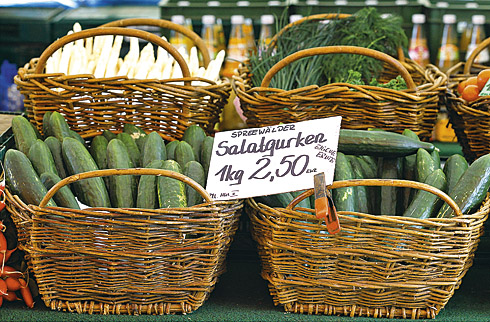 Cucumbers became dangerous not only for consumers: in response to the embargo on the import of EU vegetables, Russia threatens Russia with problems with accession to the WTO
But these assurances did not work. Passing in the morning past the Turkish store, your author saw a colorful poster: "Come in, fresh Polish cucumbers were brought." Cucumbers are really not bad, with pimples. However, the Germans are more accustomed to large salad cucumbers. Nevertheless, in the evening there was no longer in the same store of the Polish goods. And where to get Poland so many cucumbers?
Walking in the dark
Scandals like cucumber have already been in European practice. Everyone remembers not such a long story with the English beef prohibited for importing to the continent due to the so -called "cow's rabies". The losses of the British then approached £ 1 billion. Something similar happened about the “bird” flu, which also fell into Europe through the north of Germany. But then the source of infection was clear. Today - no. Everyone roams in the dark. True, in the very last days of May, the scandal accepted a new revolution. “Cucumbers from Spain are not forks of dangerous intestinal infection in Germany,” said the Senator for Healthcare Hamburg Cornelia Prule-Shtorks. “Bacteria-excituators were found on cucumbers, but they do not correspond to the type of bacteria in the body of sick patients.” After this recognition, the Minister of Agriculture of Spain, Rosa Agylar, accused Germany of "inappropriate behavior in relation to her country and unproven claims." And in general, they say, the Germans themselves are to blame for everything. To which her German colleague Ilze Aigner objected: the fact that infected cucumbers came to Germany with the Pyrenees was documented in the laboratory in Hamburg. But why then does the “documentary confirmation” not publish the German press? And who, in fact, to believe-Ms. Aigner or Ms. Prufer-Shtorks? There is no clarification. The situation is even more encouraged.
Nobody wanted to buy *
Spain is going to contact the European Commission with a request to compensate for the damage caused: according to preliminary estimates of the Spanish agricultural producers, they lost € 6–8 million daily, that is, almost € 40 million per week of the scandal. True, the agricultural agricultural minister Rosa Agilar suddenly started talking about mythical € 200 million: Madrid, they say, intend to demand separate compensation from Berlin - hence the general amount of damage arose and arose. In the meantime, the Spanish, and with them, salad cucumbers from other countries in Germany are still almost not sold. That is, in some places they are laid out on the counter, but in the customer baskets your author, who specially walked around two dozen Berlin stores of different price levels, did not see them.
To restore customer trust in Spanish, as well as to the rest of the Western European, agricultural products will not be easy. After all, even the Austrians practically stopped buying cucumbers of domestic manufacturers, almost destroying the industry. The same situation in Belgium, where the price collapse of prices occurred not only for cucumbers and tomatoes, but also for other products of their own agricultural sector. The things are just as bad in Greece, where the economy is on the verge of collapse. Politicians suggest not dramatizing the situation. But even if such a situation is not dramatic, then what is there a drama at all?
The previous grocery scandal erupted in Europe under the new 2011. Then the German authorities found that the Harles und Jentzsch plant put a total of 3 thousand tons of fat infected with dioxin to 25 feed manufacturers. This toxic substance increases the risk of cancer and is especially dangerous for pregnant women. After that, in Germany, 4700 pig farms and poultry farms were closed as a precaution, mainly in the land of lower Saxony.
Consumers in the EU learn about infection of products or their poor quality, thanks to the European agency, quick warning about the safety of products and feed. As soon as a signal enters the department, it is transmitted through special communication channels to all members of the European Union, as well as countries included in the Unified European Market. From Brussels they are instructed to remove a suspicious product from trade, conduct local checks and explanatory work with consumers. Approximately 2/3 of complaints relate to intra -European products, 1/3 - imported. The most frequent complaints are non -compliance with production technology and increased content of harmful substances.