
Translated material
From Munich to Munich
Excerpts from the book of ex-chef Pentagon Robert Gates
The annual international security conference, which, according to tradition, held in the capital of Bavaria, again designated the watershed in relations between Russia and the West. Seven years ago, in Munich, Vladimir Putin actually proclaimed a new, much more tough in relation to the United States and NATO, the Russian foreign policy, in his newly published book, former US Minister of Defense Robert Gates. But this year, on the contrary, the bets sharply raised the West
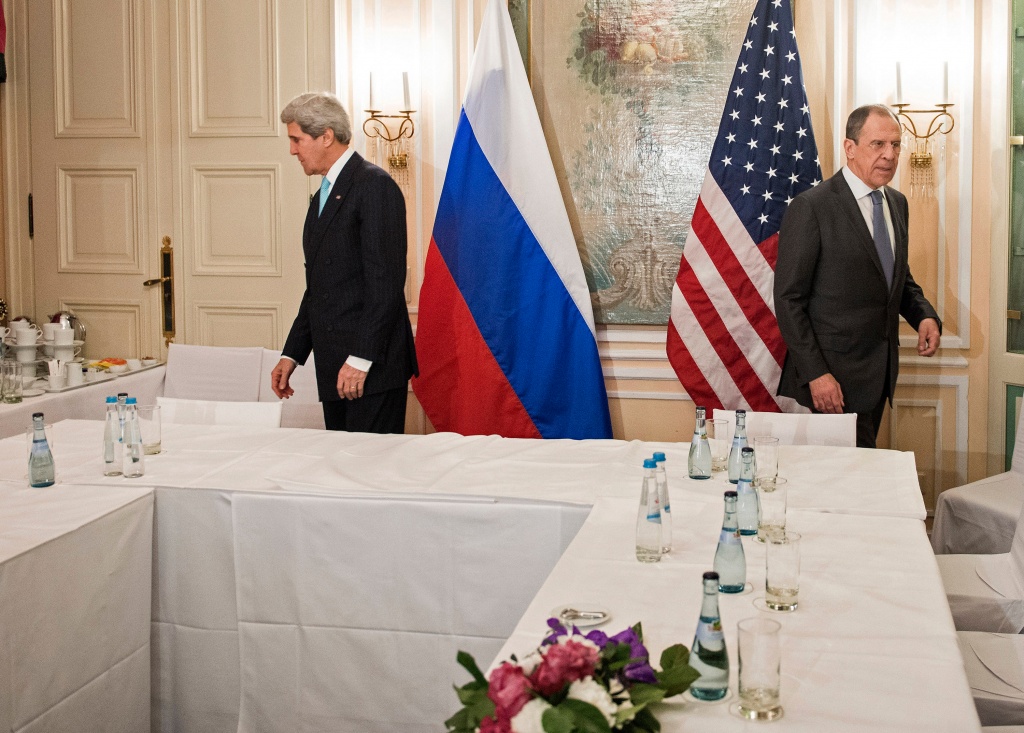
Secretary of State John Kerry and Minister of Foreign Affairs of the Russian Federation Sergey Lavrov before the conference. Munich, January 31, 2014
 |
| Robert Gates memoirs book cover |
“Ukraine must choose with whom it is with the whole world or with one country,” said US Secretary of State John Kerry during Munich 2014. The head of the “one country” Foreign Ministry, which was present here, was dumbfounded by: such a decisive mood (“agitation” - this was how Lavrov responded to Kerry’s replica) from his “reasonable” American colleague, he did not expect. According to rumors, at some point the atmosphere at the conference was so heated that Lavrov gave the command to his reporter pool: “Gather, fly away.” But to quarrel with the USA and the EU on the eve of the Olympics was clearly not part of Moscow plans: they did without a scandal. But Ukrainian President Yanukovych immediately after Munich announced his consent to early presidential elections, and the main diplomat of the EU Katherine Ashton - the formation of a large package of financial assistance to Ukraine, without the direct participation of the IMF together with Washington. Moscow’s response to the Munich demarche of the United States and the EU will most likely follow after Sochi. Which, of course, does not detract from the factor of Munich himself as one of the most representative foreign policy sites.
Munich is also devoted to one of the most interesting chapters in the book that had just seen the light of the ex-chanth Pentagon (in 2006–2011) Robert Gates “Debt: Memoirs of the Minister in War”. The New Times publishes excerpts in which the author shares his views on relations with Russia and the experience of communicating with the Russian first persons.
"Munich speech" by Vladimir Putin and American arrogance
02/10/2007
In the spacious hall of the old hotel, high -ranking government officials sat at long narrow tables standing rows on the sides of the passage. Behind the tables, 20–25 rows of chairs were placed for the rest of the visitors, from where the stands and backs of those sitting at the tables were clearly visible. I sat in the front row at the aisle. At the distance of an outstretched hand, Russian President Vladimir Putin, German Chancellor Angela Merkel and Viktor Yushchenko, and the president of Ukraine sat (in order). Yushchenko, passionately wanting to move Ukraine from Russia and even wanted to join NATO, did not look like that his whole face was in scarves; In this, as Yushchenko himself believed, the Russian intelligence services poisoning him were to blame. When Merkel went to the podium to open a conference occupied by her chair, sharing Yushchenko and Putin, turned out to be empty. From my place, from a distance of just a few feet, I saw with what undisguised hatred Yushchenko looks at Putin. I am convinced: these feelings were mutual. The next was Putin, who unexpectedly began to brand the United States-for the use of military force in attempts to create a “unipolar” world, because because of the US desire to dominate the destabilized world, “there are more regional conflicts and wars”. /.../ Putin asked why the United States is building bases on the border with Russia with contingents of five thousand people; Why is NATO aggressively growing towards Russia; Why in Poland they launched a pro system. In conclusion, he said that Russia is unlikely to need advisers about its foreign policy. Answering questions, Putin back up a little, presenting President Bush with a worthy person with whom you can deal. But in general, Putin’s statements, especially on European participants, had the effect of an ice shower. /.../
When I talked with the president (J. Bush Jr.-The New Times), I explained to him that since 1993 the Western countries, including the United States, seriously underestimated the consequences of the humiliation that Russia had lost the Cold War-this was followed by the collapse of the USSR and the final destruction of the many-century Russian Empire. The arrogance of American officials, academicians, businessmen and politicians who indicated the Russians how to conduct their internal and external affairs (not to mention the internal psychological effect of a sharp crash of superpower ambitions) led to deep and long -term rejection and hardening.
I did not tell the president that, in my opinion, relations with Russia were built extremely unsuccessfully from the moment the Bush Sr. in 1993 left his post. The fact that Gorbachev silently recognized the united Germany as a member of NATO was a huge achievement. But such a quick entry into NATO all the former Soviet satellites was a mistake. Accelerated joining the alliance of the Baltic countries, Poland, Czechoslovakia and Hungary was appropriate, but then the process should be slowed down. US agreements with Romania and Bulgaria on the stationers of troops at bases in these states were an unnecessary provocation. /.../ Russia had a long relationship with Serbia, which we completely ignored. An attempt to drag Georgia into NATO and Ukraine was too bold. The Russian Empire goes to Kievan Rus of the 9th century by roots, so such a provocation was especially painful. Would Europeans become, and even more so Americans to send their children to protect Georgia and Ukraine? It is unlikely. Therefore, NATO expansion was a purely political action, and not a carefully planned military operation, in this way the idea of the alliance was blown up, because the interests of Russia were completely ignored. /.../
Many problems between post -Soviet Russia and the United States arose from the desire of Russian politicians to extract political glasses, exposing the United States, NATO and generally the West by a threat to Russia; Surrounding their neighbors, especially those who used to be part of the USSR; Using gas and oil as levers of political pressure and extortion of money from neighboring states and Europe; Roughly violating human rights and political freedoms within the country and continuing to maintain some undemocratic regimes. During the Cold War, in order to avoid bloodshed, we had to reckon with the interests of the USSR, be careful where these interests could be affected. When Russia weakened in the early 90s, we ceased to reckon with its interests. We did not make any efforts to look at the world through the eyes of the Russians, and did not think in advance.
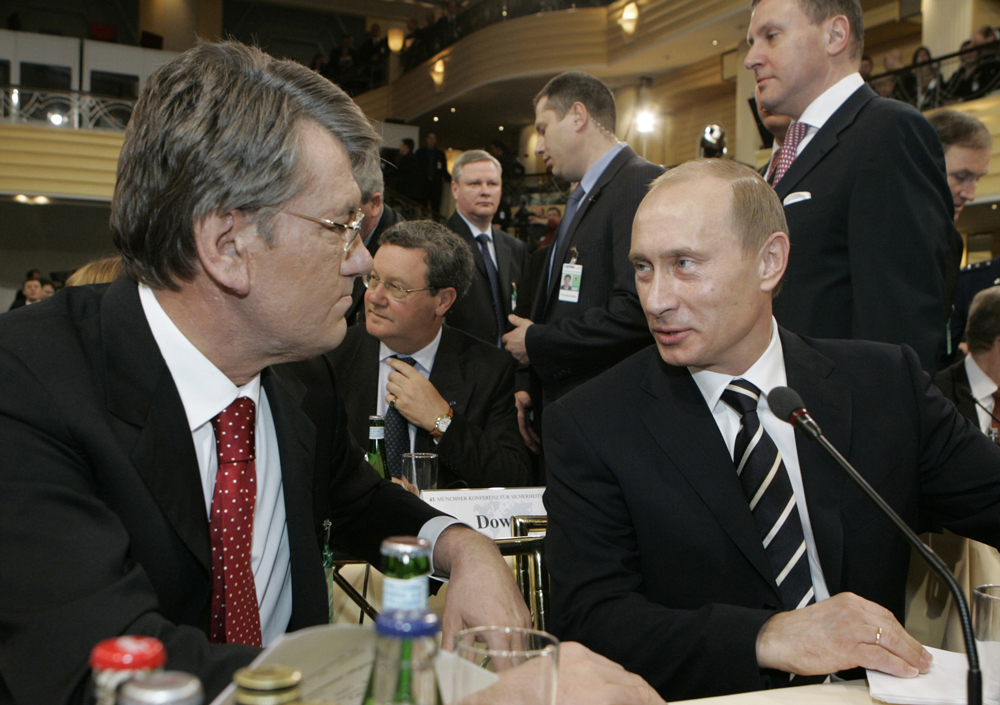
On negotiations on the placement of elements of American Pro in Eastern Europe
Interrupted conversation
04/23/2007
I landed at Sheremetyevo Airport April morning on Monday. The first I had to meet was the newly appointed Minister of Defense Anatoly Serdyukov - a former owner of the furniture business and the head of the tax service, a person with personal and political connections. The meeting was supposed to take place in the Ministry of Defense, a massive building without any remarkable features. The conference room was also quite faceless. Serdyukov understood little in matters of defense, but was designed to carry out the reform of the Russian army. It was a dubious and even dangerous undertaking. At our meetings, he was always accompanied by Army General Yuri Baluevsky (at that time the head of the General Staff. - The New Times). In the center of our negotiations, like other meetings in Moscow, there were almost always issues of pro.
Serdyukov read on a piece of paper that the system we proposed will reduce the nuclear potential of Russia and will negatively affect world safety. We began to explain that the system was directed against the DPRK and Iran, but he insisted that not a single rocket from there could reach Europe or the United States and is unlikely to be in the foreseeable future. Russia, according to him, is very concerned that the system can intercept Russian missiles. /.../ My deputy Eric Edelman assured the Russians that the radar in the Czech Republic is located too close (to the borders of the Russian Federation. - The New Times) to intercept missiles from Russia, that the system is powerless against Russian ICBMs (intercontinental ballistic missiles), and the remnants of our anti -throat (in case of launch) will be burned in the atmosphere. Russian military experts seemed to be interested.
I invited the Russians to visit our radar in Alaska and in California and proposed, with the permission of the Polish and Czech authorities, so that the Russians would freely allow objects (in Poland and the Czech Republic) for inspection. My proposals were something completely new. The fears of the Russians did not concern the current system that we talked about, but the potential additional attitudes, which in the future can threaten them. And although Serdyukov and Baluevsky remained with their own, they agreed to further negotiations with the participation of technical specialists.
Then I went to the Kremlin to meet with Putin. The last time I was in the Kremlin in 1992 as the head of the CIA and then, driving into the goal on the embassy limousine with American flags, I felt like a winner. But in 2007, the world changed too. Putin accepted me in his richly decorated huge office with gilding and delightful candelabra - the inheritance of kings, preserved under the Communists.
As I later told President Bush, the meeting with Putin in tonality was very different from Munich. He cordially greeted me, supported the idea of consultations of experts on the issues and invited to Russia again. He quoted a long list of Russian problems, the guilt for which he attributed to the West. His speech was predictable: we have the same views on threats and challenges; Many in the USA do not consider Russia a partner; Why are you building bases on our borders; The DPRK and Iran have no missiles that would pose a threat in the near future. /.../ I tried to transfer the conversation to positive rails so that you could continue to work together.
15 minutes after the start of the conversation, the assistant came in and whispered something to Putin. He sharply, but not rude, interrupted the conversation, and I was escorted from the office. As it turned out, the former president of Russia Boris Yeltsin died ...
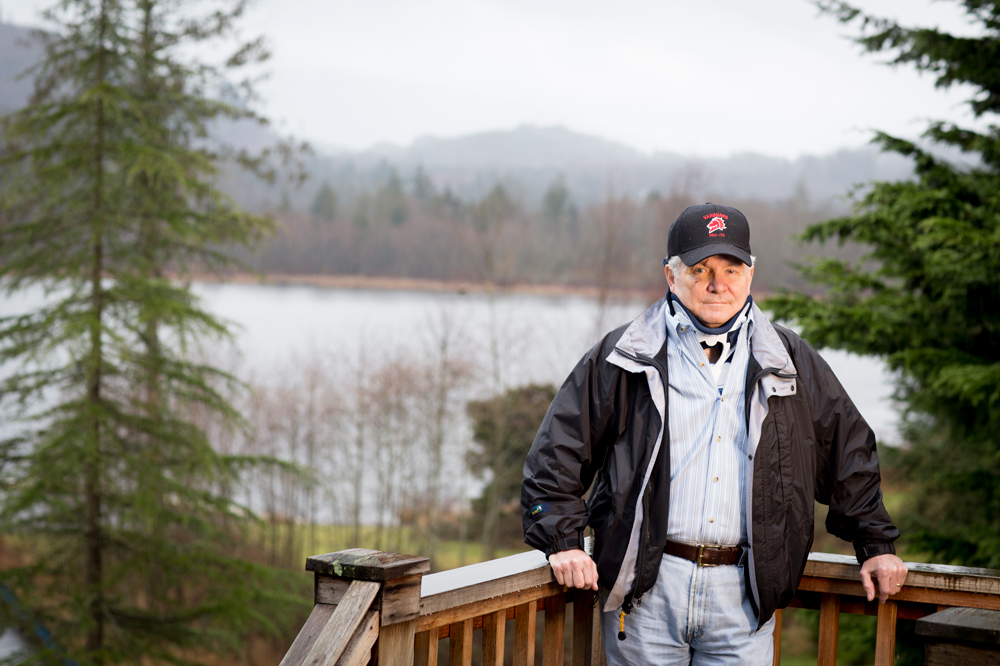
Robert Gates on the balcony of his house in Washington. January 2014
“Putin's cottage. Putin's show "
12.10.2007
Putin invited us (with US Secretary of State Condolisia Rice. - The New Times) to his cottage near Moscow. Along the way, we drove through luxurious areas built by shopping centers with shops that resembled expensive shopping centers in some American suburb or fashionable area of London, Paris or Rome. Life was clearly a success, at least for the part of the Russians who were the neighbors of Putin. His summer house was huge and very sweet, but it seemed to me too functional, more like a corporate house for receiving guests. We had to wait about twenty minutes - the American press immediately started talking about "neglect" to us. Entering, Putin apologized for being late, explaining that he was talking on the phone with Israeli Prime Minister Ehud Olmert about the Iranian nuclear problem.
Our meeting took place in a simple small conference room with an oval table in the middle. In front of each guest stood a bottle of mineral water, a cup of coffee and a small plate with cookies. Our Conde was accompanied by our very talented ambassador (the US ambassador to the Russian Federation at that moment was William Burns. - The New Times) and translator. Putin came with the Minister of Foreign Affairs Sergei Lavrov, Minister of Defense Serdyukov, Army General Baluevsky and translator. We sat only when the hall was filled with the press. When Putin's journalists sat in their places, he turned to us with a ten -minute speech, in which for the most part he spoke about the pro. Sarcasm shone in his speech: “You and I can decide that someday missile systems can be placed on the moon, but for now we will reach that, the possibilities of agreements can be lost due to the soldiers of our own plans.” He warned us against the "tough advancement of our previous agreements with the Eastern European countries." Kondi and I did not really like the role of the props in this performance, but we retained equanimity and managed to answer before the Russians drove the entire press from the hall, trying to return negotiations to a positive direction after that. When the press left the hall, the Secretary of State and I looked at each other significantly: Putin's cottage, Putin's show ...
"
When I answered questions, one of the colonels asked me why the United States wants to capture Siberia
"
And so we began to speak essentially. Putin continued to insist that our plans were directed against Russia, because Iran could not pose a threat to the security of the United States or Europe in the near future. He showed us a map on which circles were shown the radius of the action of Iranian missiles and several countries to which they could reach. He said that the circles, which seemed to be drawn by hand with the help of a school transporter and colored pencils, display the calculations of the best Russian intelligence specialists. I immediately blurted out that he needed new scouts. But he was not laughing. /.../
During a meeting with Putin, I wrote Condi a note that Baluevsky forces me to think about “good old times”, to which she replied: “Once he was considered a advanced person of moderate views. You see how much has changed. ”
After several hours of negotiations, I wrote Conde another note: “I am too impatient for a diplomat. I have already forgotten how much I do not like these guys. ” A little time after Condi, the ambassador Burns and my wife and I went for dinner with Sergey Ivanov (at that moment-the first deputy prime minister of the Russian government.-The New Times) and his wife. After dinner, I said Conday: "No, I still like some."
The next morning, I made a speech at the Academy of the General Staff, another monument of Stalinist architecture, in front of several hundred Russian officers. Entering the building, I immediately realized: it will be a difficult mission. The general’s responsible for the meeting was the Red Army of the old hardening, and the pale and gloomy faces of those present expressed skepticism and resentment. I talked about the reform of the army and the possibilities of cooperation in the future. But the officers did not care what I said: they treated the deepest suspicion of the United States, our troops and to me personally and probably hated the reform of their own army.
When I answered the questions, one of the colonels asked me why the United States wants to capture Siberia. I thought that several years that I spent when answering the most unexpected questions of congressmen taught me everything, but this question was confused. I just replied that this was nonsense. Later, Bill Burns (US Ambassador) explained to me that a few weeks before that, Madlen Olbright stated that Russia was not able to engage in the development of Siberia, whose population is rapidly reduced after the overall reduction in the population of Russia. From this, the colonel and the rest made conclusions that gave me a clear idea of the scale of Russian paranoia.
Photos: Dmitry Astakhov/AP/ITAR-TASS/Pressedental Press Service, Brendan Smialowski/Reuters/Pool, Scott Box Pictures for the Washington Post/Getty Images