
Translated material
Europe can sleep calmly
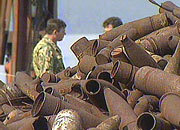
On both sides of the ocean, the publication in The Washington Times attracted attention. It is about the fact that Russia allegedly began the deployment of nuclear weapons in the Kaliningrad region. Those who live at a distance of a hundred and more kilometers from Russian borders are more or less calmly feel: The Washington Times, fortunately, is only talking about missiles with a flight range of up to 70 kilometers. But the Parisians are already thinking: what if the Russian troops will break through the border, make a march "in Prishta" and put a nuclear missile on Versailles?
In fact, the beloved city of Parisians (as well as the rest of the cities and weights of Europe) can sleep calmly. The last mine of the USSR strategic missile forces in the Kaliningrad region was blown up back in 1989. For a long time, the nuclear arsenals of the Baltic Fleet are also empty. Over the past two years, about 70 groups of NATO military observers and security and cooperation organizations in Europe along and down the Kaliningrad region in search of nuclear warheads or at least shells with nuclear filling. And the Baltic Fleet missile brigade in the city of Chernyakhovsk, which has means of delivering missiles in nuclear equipment (downtime-y and point-m operational-tactical missile systems with a firing range of 120 kilometers), generally became almost a home home for foreign military observers, and its commander, colonel Alexander Zrodikov, something like Kuma. The Tu-22 strategic missile carriers, which were once based at the airfield near Baltic, have also been firmly forgotten in the region.
At the headquarters of the Baltic Fleet, the information cited in the American newspaper is refuted, and the very very note is associated with American plans for the deployment of national missile defense (NPRI).
Russia Transfers Nuclear Arms to Baltics - Washington Times, 03/03/2001