
Translated material
Lyudmila Alekseeva died
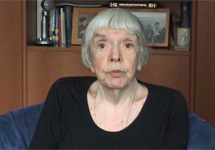
In Moscow, in the 92nd year of life, the co-founder of the Moscow Helsinki group, a member of the Presidential Council of Human Rights Lyudmila Alekseeva died. This was reported by RIA "Novosti" with reference to the press service of the HRC.
“Recently, it was already difficult for her to cope with the disease, but her spirit, as always, was much stronger than her body and much stronger than any diseases ... She remained a human rights activist until the last moments, she really put her life for her own,” said Mikhail Fedotov chairman.
Alekseeva was born on July 20, 1927 in Yevpatoria. In 1945, she entered the History of Moscow State University, which she graduated in 1950. In 1956 she graduated from graduate school of the Moscow Economic and Statistical Institute with a degree in the History of the CPSU.
In the 1960s, the apartment Alekseeva became a place of meetings of dissidents. She participated in the distribution of samizdat, helped political prisoners, visited them in exiles and went to the camps. In 1968, she was fired from work and excluded from the CPSU for protests against the courts of writers Andrei Sinyavsky and Julius Daniel, journalist Alexander Ginzburg and poet Yuri Galanskov.
In 1974, the KGB warned Alekseev about a possible arrest and demanded to stop anti -Soviet activities. In 1976, at the suggestion of dissident Yuri Orlov, she became one of the founders of the Moscow Helskinki group.
In 1977, under the threat of Alekseev’s arrest, together with her first husband Nikolai Williams and her younger son Mikhail left for the United States.
The human rights activist returned to her homeland in 1993. In 1996, it was elected chairman of the Moscow Helsinki group. In 2002, Alekseeva entered the Presidential Commission on Human Rights, in 2004 transformed into the Special Revolutionary.
In 2009-2010, Alekseeva participated in strategy-31 shares for freedom of assembly.
Lyudmila Alekseeva about Putin's power. 2008