
Translated material
Former dissident Viktor Krasin died
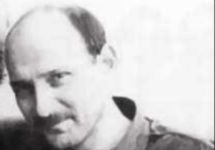
In Israel in the clinic of Nagaria, on Sunday, the former Soviet dissident Viktor Krasin died on Sunday. He was 88 years old. It is reported by Radio Liberty.
Krasin was born on August 4, 1929 in Kyiv. In 1947 he entered the psychological department of the Faculty of Philosophy of Moscow State University.
In January 1949, the young man was arrested on charges of "criticizing Marxism-Leninism from idealistic positions" in a circle of peers, created in 1946.
Until 1954, Krasin was in the camps. In October, he freed himself and was rehabilitated. At large, Krasin began to work as a driver on freight transport and in a Moscow taxi.
In 1956, the former political prisoner continued his studies at the Economic Department of Moscow State University, in 1966 he graduated from graduate school at the Department of Statistics.
Krasin worked as a researcher at the Central Economic and Mathematics Institute of the USSR Academy of Sciences, in 1968 he defended his dissertation dedicated to the analysis of the economic growth of Western countries in the 20th century.
Since the mid-1960s, he began to actively participate in the distribution of samizdat, to sign letters of protest. He took part in the publication of the Chronicles of current events, and in the work of the initiative group to protect human rights in the USSR in 1969-1972.
Then Krasin married another participant in the human rights movement, Nadezhda Emeelkina. In 1971, Emelkina was arrested for participating in a "Glasses Rage" on Pushkinskaya Square.
In 1969, Krasin was arrested on charges of parasitism, until 1971 he was in exile.
On September 12, 1971, Krasin was repeatedly arrested on charges of anti -Soviet propaganda. In one case, the historian and human rights activist Peter Yakir passed with him. At the investigation, Yakir and Krasin showed testimonies for more than 200 participants in the human rights movement. Emeelkin gave the same testimony. At the process, which took place in August 1973, both defendants pleaded guilty and repented. Each of them received three years of forced labor camps and three years of links after liberation.
Then Krasin arranged a meeting with the chairman of the KGB Yuri Andropov. In September 1973, Krasin wrote a repentant letter to Andropov. In the same month, Krasin and Yakir publicly repented to foreign journalists at a press conference, the fragments of which were shown on television.
Later, Krasin and Yakir explained that they were repented to avoid the execution under Article 64 of the Criminal Code of the RSFSR ("treason to the Motherland").
In October of the same year, Krasin was reduced to the already served and he was released from the imprisonment.
In 1973-1975 he served a link in Kalinin (now Tver). Emelkin was also transferred to him, in 1973 she was pardoned. He worked as an economic economist at a local printing plant, he was allocated a separate apartment. In September 1974, Krasin was pardoned. In February 1975, he emigrated to the United States with his wife, having received permission to leave the country. The KGB allocated Krasin $ 2,000 for arranging abroad.
In America, Krasin began to work as a financial specialist. In 1981, he and his wife received US citizenship.
In April 1976, Krasin publicly refused repentance and data on the investigation and returned to the USSR with interest received from the KGB.
In 1983, Krasin’s memoirs “Court” were published in New York, in which he repented for cooperation with the KGB.
In 1983-1991 he worked as a correspondent of Radio Liberty.
In 1991, Krasin and Emelkin returned to Russia, and in 2003 again left for the United States. In 2010, Krasin moved to Russia for a second time, from where after some time he repeatedly returned to America.
In 2012, a book of memoirs of Krasin "Struck. Notes of the Anti -Communist" was published in London.