
Translated material
War Vanit
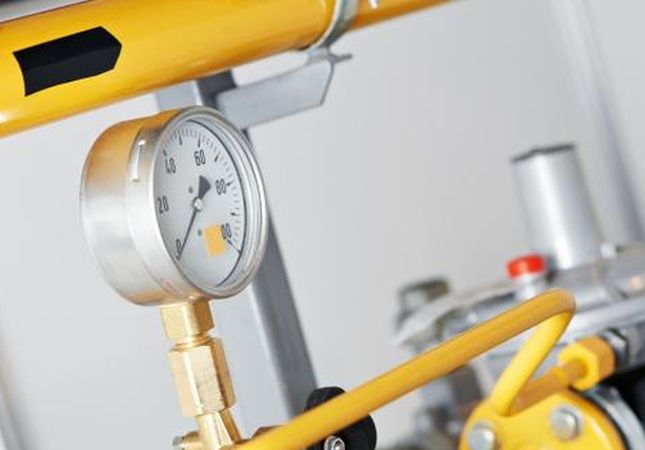
A gas pipeline. Photo: Teplogid18.ru
Gazprom suspended gas supply to the Bulgarian company Bulgargaz and the Polish PGNIG due to the fact that he did not receive payments for deliveries in April in rubles. Meanwhile, later, Reuters reported that gas supply to the Yamal -Europe gas pipeline was resumed, although they fell to zero.
"In the event of unauthorized selection of Russian gas from transit volumes to third countries, supplies for transit will be reduced to this volume," Gazprom previously warned.
As the representative of the Poland Government, on strategic energy infrastructure, Petr Namsky, his country no longer intends to buy gas from Russian companies. Poland was preparing for six years to refuse Russian gas, Namsky emphasized.
On the eve of the termination of gas supplies to Poland, it became known from the Polish media. The Ministry of Energy and Coal of Bulgaria said that it received a notification from Gazprom Exports on the suspension of supplies from April 27.
Polish Prime Minister Mateusz Moravetsky said that his country could do without gas from Russia: "Poland was preparing for gas diversification and gas production in different directions, and even before the launch of the Baltic gas pipeline, we will be able to protect our economy, protect the households, people and Poles from such a dramatic step in Russia."
“Poland has the necessary gas supplies and supplies that protect our safety - we were virtually independent of Russia for many years. Our storage facilities are 76 percent. There will be no gas defect in Polish houses,” wrote Anna Moscow, the Minister of Climate and the Environment of Poland on Twitter. At the same time, Poland by 47 percent depends on gas supplies from Russia, and Bulgaria by 90 percent, the country's main reservoir is filled only by 18 percent.
"Bulgaria has guaranteed supplies and natural gas in stock for at least a month," said the Minister of Energy of the country Alexander Nikolov. He counts on the supply of Azerbaijani gas from Greece by July. The department of Nikolov emphasizes that "the Bulgarian side fully fulfilled its obligations and made all the payments stipulated by this agreement in a timely manner, strictly and, according to its provisions," and the new two -stage gas payment procedure, proposed by Russia, does not comply with the contract acting before the end of the year, and creates significant risks for Bulgaria, including payments without gas.
The head of the Hungarian Foreign Ministry Peter Siyyarto said that Russian gas continues to enter Hungary in accordance with the schedule, despite the cessation of supplies to Bulgaria. According to Siyyarto, the Hungarian government "found a solution" with Gazprom for payment in rubles. On April 6, Prime Minister of Hungary, Viktor Orban, said that his country is ready to pay for gas in rubles if Russia asks.
The head of the European Commission Ursula von der Lyain said that Russia is trying to use gas supplies as a blackmail tool, European Pravda reports . “This is unjustifiably and unacceptable. And this once again testifies to the unreliability of Russia as a gas supplier. We are ready for such a scenario. We are closely in contact with all member states. We are working on ensuring alternative deliveries and the best possible storage levels throughout the EU,” said von der Lyayen. According to her, the EU is preparing a “coordinated answer” and intends to continue working with international partners to ensure alternative flows.
The Russian agency TASS reported with reference to Austrian Chancellor Karl Nekhammer that his country, in the person of the OMV gas company, adopted the conditions of Russia, like the German government. Nehammer himself called this message a fake. "Before the fake news of Russian propaganda will be distributed here. Of course, OMV will continue to pay for gas supply from Russia to the euro. Austria strictly complies with the jointly agreed sanctions of the EU," Nekhammer wrote on Twitter.
On March 30, a telephone conversation of the Chancellor of Germany Olaf Sholts with Vladimir Putin was held; The German government reported that Sholts did not agree to a new payment scheme, but requested Putin written explanations about the new procedure. On April 20, German Finance Minister Christian Lindner said that private companies buying Russian gas should not make ruble bills for payment. "Contracts are concluded in dollars of both the euros and the company's companies must pay in dollars or euros," Lindner said.
Last week, the European Commission sent the EU countries an explanatory letter that stated that under the fulfillment of a number of conditions, European companies will be able to pay for Russian gas in rubles without violation of sanctions. The letter states that one of the possible payment schemes provides for the opening by companies - recipients of gas of accounts in dollars or euros at the Russian bank, which such companies credit the currency, which is then converted into rubles and payment is made in rubles. The regime of European sanctions does not prohibit the EU operators to open accounts in Gazprombank or interact with the bank in an attempt to find a solution, it is emphasized in the text.
On March 31, Putin signed a decree according to which from March 1, gas calculations with counterparties in "unfriendly" countries should be made in rubles. The list of "unfriendly" includes the USA and Canada, the EU countries, the UK, the British overseas territories (Jersey, the Angilya, the British Virgin Islands, Gibraltar), Ukraine, Montenegro, Switzerland, Albania, Andorra, Iceland, Liechtenstein, Monaco, Norway, San Marino, Northern Macedonia, Japan, Yuzhnoye, South South Korea, Australia, Micronesia, New Zealand, Singapore and Taiwan.