
Translated material
Operation in Silicon Valley
The bustle around Skolkov allowed to pay attention to an amazing fact: an innovative economy in Russia already exists
The situation around Skolkov - the project is overgrown with criminal cases, lawsuits and does not leave the news tape of the Investigative Committee - is so heated that its government curator Vladislav Surkov, who has long been on the information periphery, allowed himself a series of tough, if not radical, statements. Yes, and in the "monastery of evil" - that is, in London.
The situation around Skolkov - the project is overgrown with criminal cases, lawsuits and does not leave the news tape of the Investigative Committee - is so heated that its government curator Vladislav Surkov, who has long been on the information periphery, allowed himself a series of tough, if not radical, statements. Yes, and in the "monastery of evil" - that is, in London.
Vladislav Yuryevich actually built a new dichotomy of the elite: security forces against innovators: “We must do everything to get out of the paradigm of the military-raw power and embark on the path of post-industrial society, go this way and take our place in the world division of intellectual labor. If we do not do this, then I’m sure that Russia will not remain like a country. ”
The creative class is accustomed to believe that innovation in Russia is a simulacrum, and Skolkovo is a funeral village and a source of inspiration for network folklore. Meanwhile, in reality, the high-tech industry, including an IT sector, ecosystem of startups in Russia, experiences a real boom. And Skolkovo is a project that, with all the shortcomings and even conceptual flaws, can become flagship.
Innovations exist!
According to coincidence, I just have a fresh background on this score-I just returned from a weekly tour organized by the German government and dedicated to the Internet economics of the main trading partner of Russia. Both countries were not among the pioneers of the development of an IT sector and venture capitalism and purposefully decided to catch up with leaders somewhere in the mid-2000s, with the direct and active participation of the state.
In strategies, of course, there were significant differences. In Germany, the state played a more coordinating role, and the main development environment has become, on the one hand, the university and academic community, and on the other hand, a large business, which, in principle, was prone to innovation much more than domestic. For example, in 2010, new technologies introduced almost 70% of German enterprises, while in Russia - less than one of ten. As a result, for that period in the global volume of high -tech civil exports, Germany occupied 7.6%, while Russia was a dull 0.25%.
A significant gap, of course, remains today. So, the volume of the IT market in Russia, according to the Ministry of Economic Development, is 18.3 billion euros, in Germany-73.5 billion euros (or 75 billion euros, according to the Bitcom Association). But according to some indicators reflecting precisely the avant -garde of development, we made a great breakthrough. For example, venture capital invested in the IT sector of Germany last year is estimated at Bitcom at 240 million euros. In Russia, the data vary greatly. The Russian Venture Corporation (RVC) speaks of $ 792 million (two-time growth), the National Association of Innovation and the Development of Information Technologies (NAIRIT) counted $ 290 million in all sectors, of which about a quarter accounted for an IT sector.
However, there is also an independent, very authoritative assessment: the Dow Jones Venture Source report, according to which venture investments in Russia last year amounted to 236.55 million euros, and this is no less than the fourth result in Europe. The closest pursuer, Sweden, we bypassed three -time superiority, and in front there was just Germany (431 million euros). Do you know how much we had in 2006? 5 million euros ...
Also from the positive: according to the naicit, the total number of startups in Russia increased by 55%last year, and the terms of their commercialization were reduced by one and a half times. This is already data characterizing the quality of the environment, and it is even more important for an innovative economy than gross investments.
In general, among all the large projects, to which the Russian state attached a hand, the development of the innovative business turned out to be the most successful, including by international standards. Against this background, even a recent statement by Prime Minister Dmitry Medvedev that in 2013, Russian companies will spend 550 billion rubles on innovative development, does not look utopian.
Skolkovo
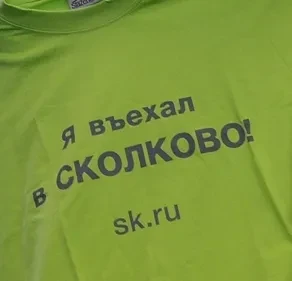
But against this background, Skolkovo already, in the middle of the project, looks like a supersproof player. Last year, $ 254 million of private investment was attracted to residents projects - and the same amount was allocated from the budget. The portfolio of announced contracts is another half a billion dollars.
At the same time, investigations in the development of projects are only 15% of the total budget allocations, while the expenses for the design and construction of buildings and communications will eat 70% of all funds (the remaining 15% is just a joint project with the Massachusetts University, according to which the investigation had questions for Ilya Ponomarev).
In Germany, special innograds, creating an ideal environment, favorably different from the "rest" country, are not built. On the contrary, the Germans strive to ensure that as many new IT companies as possible are created on the territory of Berlin. This should qualitatively change the economy of the capital, in which the level of gross regional income is lower than the national average. However, there is an American experience. Apple, still on the initiative of Jobs, builds Superophys in the form of a huge four -story flying saucer designed for 12 thousand people (Skolkovo - 30,000). Google and Facebook are created by their quasijigorod.
Another conceptual claim to Skolkov is that Innograd is formed not around the current university cluster, on the contrary, the Skolkovo Technical University is created along with the rest of the “filling” of the project. The question of whether it is possible to create a powerful university from zero and in a short time, and even focused not so much on fundamental research as on applied developments - of course, discussion.
But in Germany there is a corresponding experience. In particular, I visited Hasso Plattner Institute (HPI), created in 1998 by Hasso Platner, a co-founder of SAP (the only German company that became a leading player in a global IT market). This is also a private-state partnership: part of the financing is provided by the land of Brandenburg, part-SAP. At the same time, in the field of purely scientific training, the base for HPI is the University of Potsdam, and the institute itself prepares primarily engineers in the field of IT. Mandatory element of training: work in a team, development of your own project, focused on commercialization - with the ability to get a grant up to 100 thousand euros per startup. Plus, the Openhpi program is free distance learning using the Internet with the exam and obtaining a certificate.
Skoltech should be arranged according to the same sample, only with a large number of students and professors. A similar university with 27 thousand volunteers is already working in Skolkovo in Skolkovo - moreover, it is even more oriented towards the program of commercialization of projects and interaction with investors.
In general, with all the gigantomania and a skew towards PR Skolkovo, this is not only a business card, but also the center of attraction for a new economy, which exists and develops - imperceptibly for many, primarily thanks to the general depressing background. And certainly the Investigative Committee is the worst management company for the project possible.