
Translated material
Cryptocoline lessons
Why did Bitcoin grow to record values again, and what does this mean for the future financial system of the world?
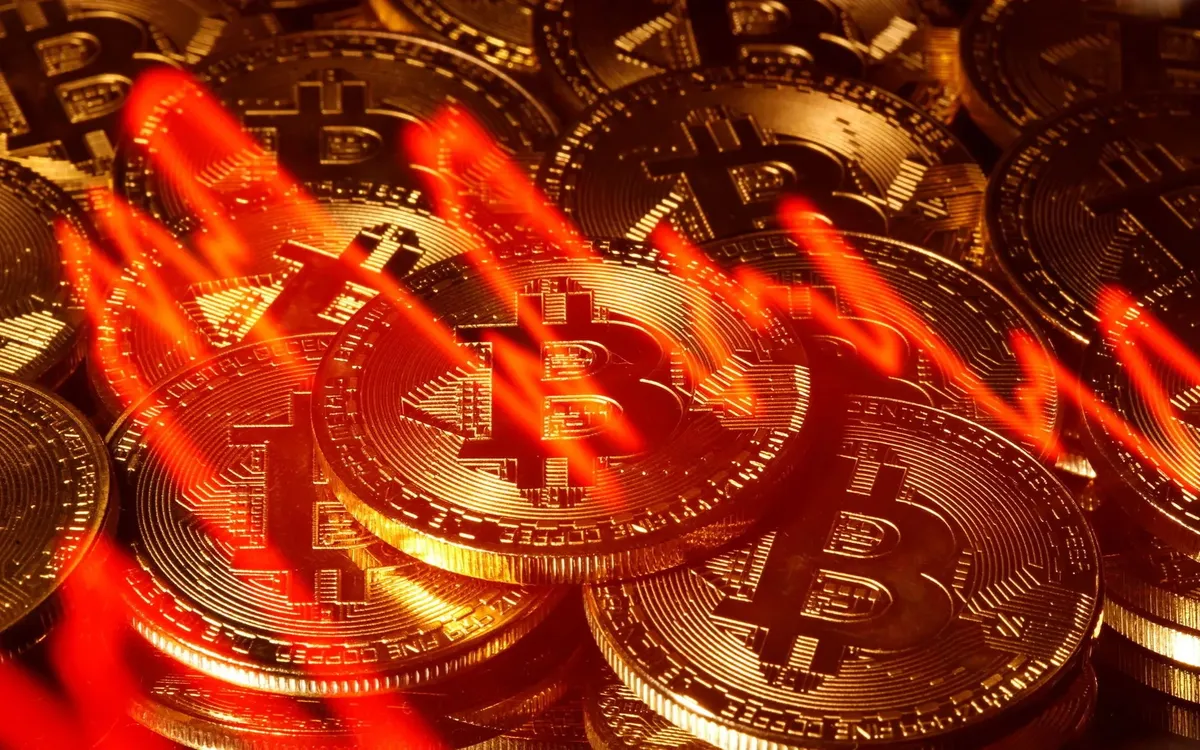
The reason for provocative meditation today is noble: on November 30, the most popular cryptocurrency in the people's masses Bitcoin set the All Time High, breaking its own record set by December 16, 2017. In the minutes when I write this text, the favorite toy of “stupid pins” (as one Russian -speaking anonymous in the comments on the popular forum wrote) calmly and thoroughly prepares for the assault mark of 20 thousand dollars.
This event, in my modest look, out of the ordinary and largely epoch -making, is reflected by the mainstream media with enviable indifference: from the hysteria of three years ago, when absolutely all world publications wrote about the “miracle of Bitcoin” at the peak of dizzying take -off, today there was no trace left.
It is not at all surprising: Google Trends statistics show that public interest in Bitcoin's updated record today in the world is 4.3 times lower than in December 2017, and in Russia - as much as 6.3 times.
A significant statistical discrepancy is explained by the fact that the Russian Pinocchio burned on the purchase of Bitcoin in 2017 incomparably more than not Russian. The reason for the more intense involvement in the crypto economics of our compatriots is a unique combination of low income with increased technical literacy, uncharacteristic either for the West ( a lot of money, little knowledge ), neither for the East ( little money, little knowledge ).
In any case, statistical discrepancies do not obscure the obvious: there is completely no hype-epathetic interest in cryptoeconomics in the world today.
For cryptoeconomics itself, the lack of hype is the most remarkable news, which is possible:
Finally, she had a chance to get rid of religious proselytism and focus on calm development without excesses and ideological wars.
The combination of these two circumstances is the irresistible growth of cryptocurrencies and the indifference of the popular masses - in my opinion, serves as a wonderful occasion for a serious conversation, and not the next, no one needs inter -confessional dispute.
To begin with, I will add two important circumstances for completeness.
In December 2017, Bitcoin stormed the peaks against the backdrop of perky tuning from the mainstream press, which literally pushed the layman into the arms of an exchange bladder, which did not have the slightest objective stimulus for growth in addition to the desire of the crowd to cut down a quick dough.
The textbook of the situation - the price growth of crypto assets + thoughtless euphoria - created the prerequisites for the rapid and reliable enrichment of exchange professionals. At an unprecedentedly accelerated pace and bypassing traditional bureaucratic procedures, a trade contract for Bitcoin was registered and launched, first on the Chicago Option Exchange (CBOE) on December 10, and then on the Chicago raw material exchange (CME) on December 18. The new derivative allowed professional traders to open “short” positions (that is, rely on the fall of the asset, and not on its growth) in a situation where lovers trading in the main market could only buy an asset.
In order for the reader to imagine the uniqueness of the Chicago gesheft, I will say that attempts to register at at least some investment fund for Bitcoin (Exchange-Tradeed Funds, ETF) have been ongoing for four years, and all of them are still unsuccessful. But the Purely speculative futures contract commission on securities and exchanges (SEC) registered in 2017 almost lightning speed.
Explanation of bureaucratic agility lies on the surface:
In the fall of 2017, the American government for the first time was really frightened by unbridled growth - no, of course, not a stock exchange rate, but the popularity of bitcoin, therefore, it allowed the “Chicago sharks” to cropped a dangerous misunderstanding.
Which did not fail to happen. Bitcoin and after him the rest of the cryptocurrencies in the second half of December 2017 - January 2018 collapsed with a crushing crack, after which they plunged into the "cryptosima" for long two and a half years.
The latter circumstance allowed the authorities to calm down and triumphantly declare the final collapse of the “cryptus” and the completion of “mass madness around the next financial pyramid”.
The state verdict was also supported by the ordinary inhabitants who bought bitcoin at the stock peak at a price of 19 thousand dollars, and then in shock and numbness observed how the price collapsed to 3 thousand.
Meanwhile, in the bowels of the cryptoeconomics for three years, painstaking and intensive work on the development of decentralized credit-money systems was continuously carried out, which led in June 2020 to the “Defi revolution”, with such enthusiasm described on the pages of the “new” Russian oligarch Lebedev and your modest servant.
Nobody on the side seemed to be aware of a qualitative change in the situation. The mainstream press, mindful of her punishment in 2017, hypnotized the readers of Mantra Bitcoin Dead and ridiculed the claims of cryptocurrencies to the role of “digital gold”. Professional futures traders were looking forward to the moment when the case of punishing the second circle of hamsters - cryptoburatin , turned up.
In mid-September, the prices of the so-called Governance Tokens tokens leading Defi projects were crushing at exchange trading. The mainstream media welcomed the collapse of the triumph in the spirit: "But we warned you!"
The superficial attitude is excusable to journalists of the “universal profile”, however, the inability of futures professionals to see in the fall of 2020 qualitatively different circumstances, I admit, discourage.
The fact is that against the backdrop of exchange collapse of courses of control of the DEFI projects, an unbridled influx continued in these projects of external raised funds (the so-called TVL, Total Value Locked). In June 2020, TVL did not exceed 1 billion dollars, in September (at the peak of an exchange collapse of management tokens) reached 12 billion, and at the end of November approached 18 billion.
In order not to see the management tokens of management tokens (the only value of which, according to their creators themselves, is to grant the rights to participate in the management of Defi platforms) an 18-fold increase in capitalization in five months, you need to penetrate the topic of truly religious hatred.
In other words, there was no mention of any crisis of the decentralized finance system in September.
I will say more: while the press twisted a barrel organ about Pyramids Pyramid for folk consumption and exchange bubbles smart money without unnecessary noise moved from trial investments, to mass investments in cryptocurrencies.
Under smart money in this case, I mean not just professional corporate investors, but an institutional elite. Since August 2020, Bitcoin invested:
Grayscale Investments ($ 10 billion in management),
Ark Invest (4.5 billion),
Kinetics Portfolios Trust (5.3 billion),
IFP Advisors (3.4 billion),
Boston Private Wealth (13 billion),
Rothschild Investment (1.4 billion),
Heritage Wealth Advisors (2.3 billion)
And near a dozen very expensive offices.
The only information leak that received wide public publicity last autumn is the unexpected statement by PayPal, the world's largest monetary payments system that the company, without prior notice, opens a full range of financial services for its customers with bitcoins-you can buy, sell, transfer.
The accession of PayPal to the Ponzi cryptopyramide was the impetus for the rapid growth of the Bitcoin exchange rate, which accelerated its course growth (already significant in 2020).
The incredible thing happened: the futures traders took the announcement of PayPal as a signal to easy enrichment
(Well, what about: crowds of unconscious hamsters poured into the market!)
And they rushed to “short” bitcoin in the same way as they did it in December 2017.
Then they would stop and think: after all, there were no mass hamsters in the market at all! Which is not at all surprising: the media pumped up the townsfolk with horror stories about the pyramids and memories of the 2017 disaster. Who then moved the market up? The same corporate capital that foresaw the inevitable inflationary overheating due to the unrestrained pumping of the federal reserve markets with an empty dollar mass (the fight against Covid!) And turned to the only non-inflationary asset remaining in the world!
All this passed by the futures traders who continued to build “short positions”. On November 25, it even seemed that a holiday had happened outside: the market was able to be closed and the bitcoin exchange rate fell in one trading session from 19,500 to 16,500 dollars. The mass liquidation of "long" positions began - here it is, the hour of the triumph!
However, the very next day-November 26-the incredible happened: any decrease in the Bitcoin course immediately bought someone. In any volume.
The frantic Long lasted five days and ended with the establishment of a new historical Bitcoin record. In parallel, the destruction of futures wrestlers with Ponzi cryptopyramid was underwent: the volume of liquidated “shorts” (those who put on the fall) two and a half times exceeded the volume of “long-positions” liquidated on November 25 (those who relied on the continuation of growth).
Why am I telling this story in such details? To the fact that cryptonenavians fiercely defend their hatred, and Bitcoin-producers with crazy fire in their eyes are trying to baptize into their own faith in the name of "Satoshi Nakamoto, Bitcoin and St. Blocher." Readers, however, are not amenable to hypnosis, are obliged to include common sense and look in the eye.
You can love cryptoeconomics and you can hate it. But one cannot fail to notice the obvious: on this site is assembled and documented
341 The case of public necrologues drawn up to Bitcoin with prominent public figures, financiers, role -playing heroes, politicians and scientists.
The first necrologist was recorded on December 15, 2010, when Bitcoin cost 23 cents. The latter - November 18, 2020 already at a price of 17 thousand 804 dollars.
Common sense suggests: all stubbornness should have a reasonable limit. Not a single financial pyramid in history was revived more than once.
At first there were tulips, then stamps, then matches, then real estate in Florida. But there was never to replace the tulips two years later tulips came again. And so, 341 times.
People, of course, do not learn anything, but not to such an extent.
What do I understand by "look at the truth"? The fact that the cryptoeconomics came into our lives and entrenched in it for a long time. My personal belief is forever. The conversations that the cryptocurrencies “have no internal value” are at least naive, mostly stupid, because not a single fiat currency (dollar, ruble, euro, yen, etc.) also has no internal cost. In the same way, there is no internal value for gold.
The real cost of fiat money is the coercion of the state. The real cost of gold is a public agreement that it is this metal that should be considered a standard. There are more than enough similar “costs” of cryptocurrencies.
Offhand:
- You are the only and exceptional owner of the crypto assets belonging to you, and not a single state, the bank or uncle Vasya has the technical opportunity to take these assets, squeeze or freeze in the account;
- You are free to transmit your crypto assets to anyone, at any time, anywhere, without asking for permission and with minimal costs;
- After the Defi revolution, crypto acts have found the quality of Yield Bearing Assets, an internal ability to generate income. And so on.
Even if someone personally does not attract these advantages of crypto actes, it is necessary to come to terms with the fact that there are many people in the world to whom these virtues seem infinitely attractive. These people have already invested $ 352 billion in Bitcoin and continue to invest every minute. I like (you, she, she) or do not like it.
Under the curtain, the most important thing is that I wanted to convey today to readers. Cryptoeconomics and decentralized finances are organic rivals of the credit-money banking system that has developed today in the world. This is an objective given. Therefore, there is no doubt that the political forces that control this credit-money system in the world will make maximum efforts in order to take cryptoeconomics under their total control. At first - acting with a gingerbread, and when it becomes obvious that decentralized registers and their tokens are purely technically impossible to control, they will go to the whip.
The key question is in this drama: what “political forces that control the world credit and money system” are we talking about? I believe that the answer is obvious: about the federal reserve and its partners. Because it is the dollar that is the foundation on which the entire world credit and money system is built. The monopolies of this system are a threat to cryptoeconomic in the first place.
And if so, then another question arises reasonably: what will burn out Russia from the confrontation with new decentralized financial technologies? Why are Russian lawmakers today compete in the invention of repressive laws that destroy everything that is only connected with cryptoeconomics, blockchains and cryptocurrencies? For whom or what are they trying? Whose interests are defending? Who is protected and, most importantly, from whom? Personally, I have great doubts that the legislative activity that we observe serves the interests of Russia as an independent state. To make sure of this, it is enough to see how the “partners” of Russia behave in the opposite pole - in the Celestial Empire.
Do you know what the only state on the planet officially expressed satisfaction with the new unbridled growth of bitcoin?
I think they had already guessed - China.
On November 18, CCTV, the chief television channel of the Chinese officiald, made a statement: “The price of bitcoin increased by 70%. For less than 50 days. And exceeded $ 17,500. Compared to the bull market in 2017, the Bitcoin network, its development and the investment ecosystem are now in much better condition. The observed growth of the course is caused by interest from investment funds. ”
What did Chinese comrades like in the Bitcoin rally? Well, how: the ability to create, strengthen and develop a credit-money financial system, an alternative non-alternative dollar.
It also seems to me that getting up from the knees is more efficient, without rolling out the export foods and imposing Russian mobile software to American manufacturers, but taking steps aimed at gaining financial independence. Moreover, the first step is extremely simple: it is necessary to stop the legislative oppression of the sprouts of free financial systems, which create real, and not imaginary, competition of the dollar monopoly.