
Translated material
Ambassador Min
The story of Panda, who comforted children during London's bombing
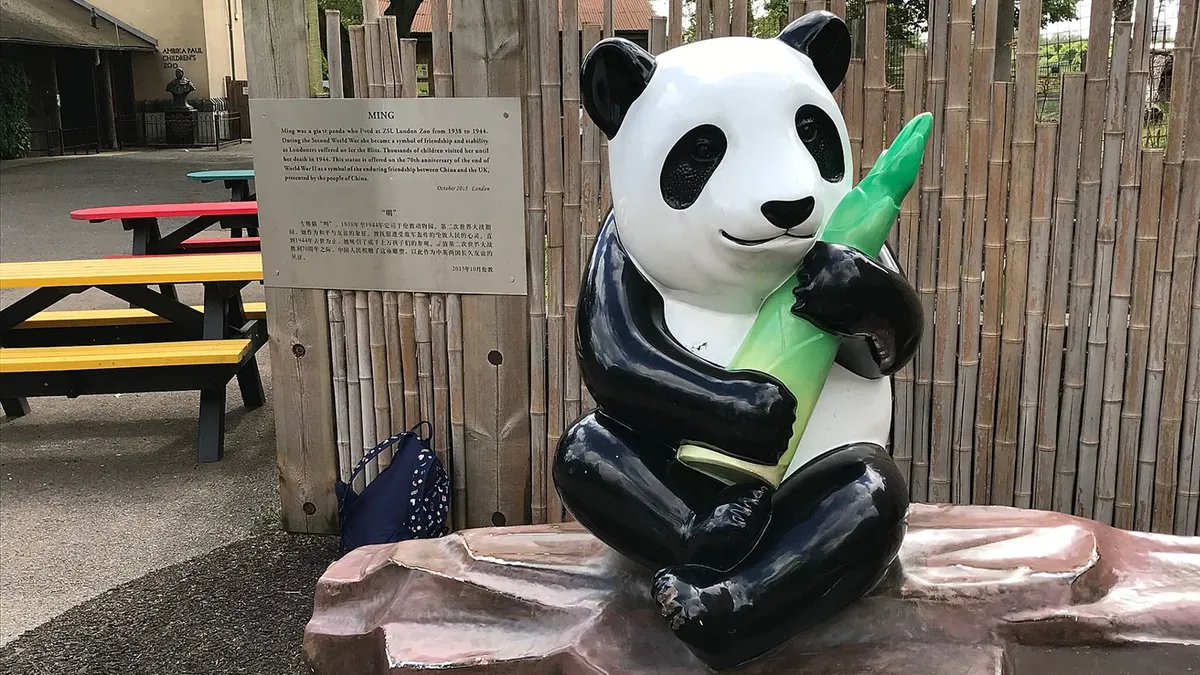
Statue in honor of Panda Min, London Zoo. Photo: Wikipedia
Min did not see the end of the war. If it were not for the need for the children who remained in London, whom her parents refused to send to evacuation (and including Princesses Elizabeth and Margaret), Min would have been evacuated and, possibly, would live a long life. But she was left in the city.
No, there is no heroic sacrifice here - if Min had to choose, she would surely ran away from London and from England in general. She would not even appear in this country where she was dragged on a chain in front of onlookers and forced to fight the dog (people are cruel and stupid in handling those who do not meet them with a growl and blow and they do not know anything about whom). Although Min was loved in his own way.
As you know, all pandas on Earth belong to China. If you were born panda, if it happened at least where, you automatically get a Chinese passport. And until 1941 (then Song Mailin, the wife of Chan Kaisha, gave the United States a couple of pands in gratitude for help in saving Chinese refugees) The empire did not share its black and white citizens like Yin-Yang with anyone. So Min was just stolen.
At first she was not even Min-the whole family of the smugglers Floyd Tangier-Smith gave idiotic and rude names that are not at all suitable for a delicate pandye soul: granny, grumbler, dumbass, lucky ... The youngest name did not get at all.
Former banking employee Floyd was a man of an adventurous and cruel temper. The animals caught for him by order in Sichuan were a potential source of enormous wealth, and the removal of them from China was an extreme and dangerous adventure (theft of Panda is now threatening 10 years in prison, then he would be executed).
For 35 days, six pands spent on the road to Hong Kong in tight cages.
On the mountain road, the van rolled over, the cells fell out, two animals fled, but they were caught again. At the arrival of Hong Kong, one of the six pands was dead. Cells with the remaining were loaded onto the ship. In December 1938, they were taken to Britain right on the open deck. Stormly, poured snow. The eldest of the bears two weeks after swimming died of pneumonia.
In London, Floyd first stuck the lucky owner of the German zoo, and this panda left for Germany. The remaining three, including a one -year -old nameless teddy bear, the smugglers managed to sell the London zoological society. They became Tan, Song and Min - in honor of the imperial dynasties of China. The Zoological Society controlled the London Zoo and the Wypsneid zoo in Bedfordshire. Min settled in London. She was the first cub of Big Panda to come to the UK - she was painted on postcards, photos were printed in magazines, shot in films.
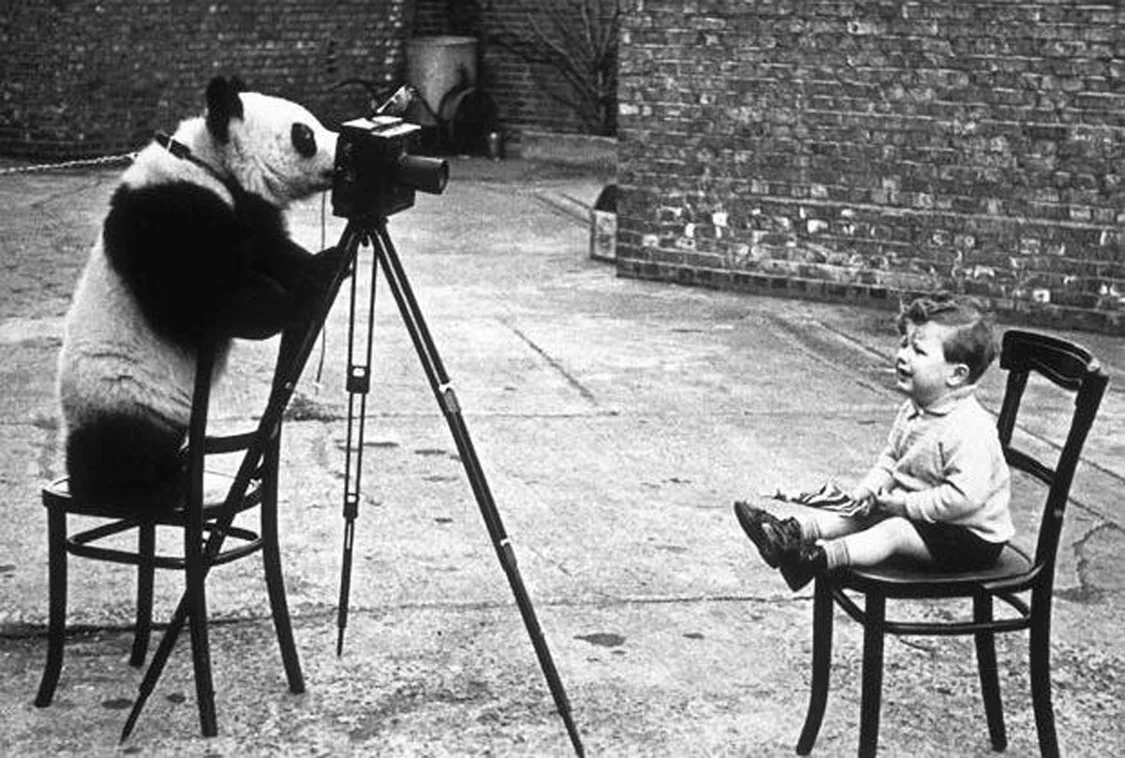
How to care for a marvelous beast, no one really knew. There is no bamboo in England, but the chicken soup, which the pandas contained in captivity now relieve stress from meeting with strangers, and people were not enough. What was the diet of the first "English" pandas, it is unclear. In 1939, Panda Song, who arrived in that party, died, a year later - Tan. Min was left alone.
In 1939, Britain entered the war. As Guardian will write many years later, in subsequent years, "visits to Min became a reminder of normality." In fact, no news reports will cope with the charm of delicate brown. The zoo became almost contact: the children were allowed to iron Min, and she was used to it and did not resist.
Newspapers described a visit to the Pavilion to Min two princesses.
From Princess, Margaret Panda took the colorful umbrella and turned on the ground, rumbling. Then she gave the future queen to Elizabeth to scratch the bear tummy.
On the night of September 7, 1940, hundreds of German bombers attacked London. For 24 hours, 1000 bombs were dropped per city. It was the answer to the Luftwaffe to the bombing of Berlin. Massive raids continued until spring. For six months, 43 thousand Londoners were killed, one and a half million lied to bed.
Min was evacuated for a short time to the Wypsneid zoo. But the London Zoo decided to continue to work in order to strengthen the spirit of the townspeople. Now the zoo accepted the wounded for free, and on weekends - all military personnel. And Min returned to London.
The Chinese writer Jiang Yi, who lived in London, wrote about the crowds flowing to look at the famous Panda, who returned to his fans.
“They crowded around her house, especially the children, wanting to shake her hand and caress her,” he said in the illustrated book “History of Min”.
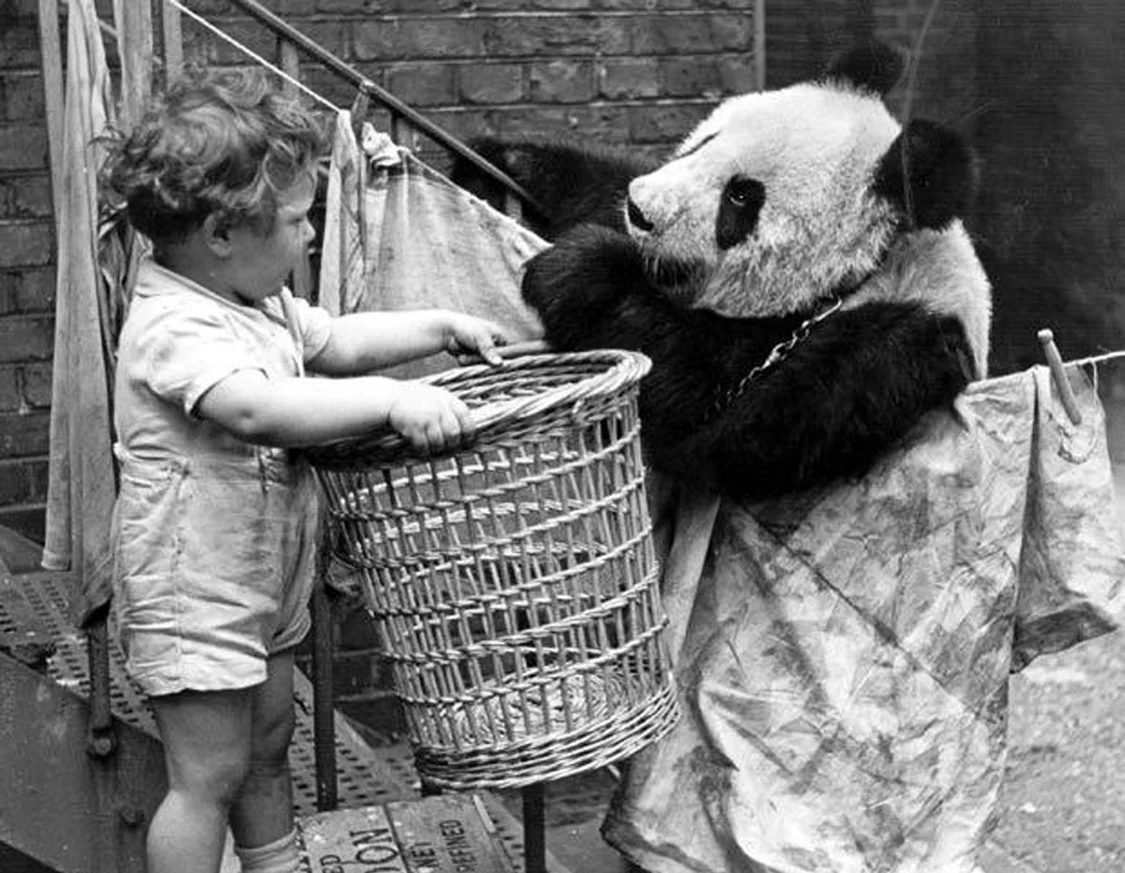
Panda introduced carelessness and fun in the atmosphere of the warring capital. Children were specially led to her to compensate for stress and anxiety. It was a kind of pandaterapy.
Many years later, British artist David Paskett will say at the opening of the exhibition about panda:
“Santa Claus can give children one happy Christmas night, and Chinese Panda Min was with us for six years in one of the most difficult periods of British history. It is important to remember the hope and happiness that the Min ambassador brought us, and remain calm and courage. ”
Pskett called Min the ambassador for nothing. It is believed that Pandadiplomatiya - the ability of China to establish relations with the countries in which pandas appear - began with it.
Min comforted others in grief and fear, but she herself was terrified during the bombing - she began to bald. The wool around the eyes fell especially quickly, the skin on the face became dry and peeling. In 1943, six -year -old Panda began to go backwards. She faded away. The day after the Nativity of 1944, a sudden seizure occurred, Min fought against the walls and railing of her aviary and cut the skin on the face greatly. And she no longer came to himself.
The cause of death did not establish the autopsy. Maybe she just took too many other things. Or maybe in the zoos of those years they still did not really know how to care for her.
Min became the first animal, the obituary of which was published by the Times:
“She had to die happy, knowing that she had delighted our single heart, and even in the conditions of war her death should not go unnoticed.”
Loss mourned the nation.
In 2015, Min returned: China gave London its sculptural portrait. The statue in her honor is installed in the London Zoo.