
Translated material
Soverevchina
As "statehood" overshadowed in Russia legal awareness

There is a common misconception - and in particular it is characteristic of the governments - as if the results become the result of the goals. But historically, they always turn out to be a function of used means.
Objectives are consecrated by ideology. Despite the failure of attempts to formulate a “national idea” for the Russian Federation,
Her ideology over 22 years of Putin's regimes has gone by itself as a cultural layer or moss, although it is not collected in a particular catechism and slurred.
On this - ideological - floor, intellectuals dominated by a strict selection, the criterion of which, however, as in all governments, is often not so much intelligence as such as loyalty.
But not everyone to be leaders, and the next floor of what is called a superstructure is occupied by the intelligentsia - it is she, who, receiving some freedom in the interpretation of goals, discusses and broadcasts to society the conditions and boundaries of legitimate violence - as a means of achieving them. With such coercion, we encounter more often than it might seem: this is not only criminal repression, but also, for example, the schedule of school lessons, and most importantly - their pre -given content. The attitude towards violence, including from the state, sets by the intelligentsia, and forms what is called legal consciousness in the broadest sense.
The intellectual is distinguished by the fact that he goes beyond the intellectual and a rational conclusion compares with his scale of values. The issued moral judgment can change or cross out the rational conclusion.
The statement that the intelligentsia is a purely Russian phenomenon seems to me incorrect, but this is caused by the fact that Russia is characterized by such a gap between rational conclusions and moral judgments that is unusual for the countries of “developed democracy”.
The concept of “legitimate violence” was formulated by the founder of sociology Max Weber, he needed it to explain the state as an institution with a monopoly on its application. But the sociological concept of legitimacy, different from the legal “legality”, was explained by much more, which could not be derived from the interpretation of positive laws, including the phenomenon of the “revolution”, which is fraught with the loss of legitimacy, acting legitimate power.
In this paragraph, legitimacy is associated with public opinion. Sociologists argue whether it can be measured, but its existence is not doubted, and the intelligentsia is the “organ” in which, like the liver in the body, public opinion appears in a concentrated form. At the end of Soviet power in the 70-80s of the twentieth century, the intelligentsia was a bearer of assessing the power of violence used by the authorities: which of them are acceptable and which are not. It was difficult to go against the “layer”, because in the second and third generation it cooped the children and wives of the Soviet nomenclature, and partly - how could one become “half intelligent”? - And the very communist elite. This predetermined, in particular, the moral victory and political defeat of Mikhail Gorbachev.
***
I first heard the word "statehood" in 1997 from one of my friends, who defended the candidate in philosophical views - Peter Kropotkin. I brought me to visit him in the village in the nearest Moscow region, where he and several comrades from the circle of a circle, who had well known to me during the years of my youth, managed to build two- and three-story houses- I felt like a slightly poor relative, and they lifted toasts “for statehood”.
The peaceful anarchism of Kropotkin and “statehood” were somehow poorly combined, which is why it was sunk.
I vaguely felt that she (statehood) was somehow connected with these convenient and well-furnished houses, but could not explain this connection.
And the words of such a law faculty that I finished was not there, there was a “state - an instrument of the ruling class,” but by that time this definition ceased to be undoubted. I began to inquire: why are we drinking, what is this “statehood”? No one could explain, but my comrade - not without reason the candidate of philosophical sciences - guessed:
"And this is the same crap that you are taking off all the time."
In fact, this concept, which soon became a password to get into the clip of a new nomenclature, can only be formulated negatively, like something that is lacking and that therefore every statesman should defend. Or, for example, we can say that “the Ukrainian people never had their own statehood,” and, regardless of compliance with historical facts, this message will have a certain meaning. But the statement that the Russian people, on the contrary, always had their own “statehood” will not add any new meaning to the already known facts of existence in the territory that does not always coincide with the current boundaries of the Russian Federation, of a particular state (they were very different) from some historical moment.
Who can be considered a model of the “statesman” remains unclear: either it was Peter, then suddenly Ivan the Terrible, but somehow with reservations. It makes you suspect
That “statehood” is not a goal, as the one who pronounces the corresponding spell wants to imagine, but only a means to give the appearance of legitimacy to the violence that clearly visible after this word.
Still, here we are talking about political culture, and in any culture there are traditions that prevent you from calling the black white, therefore, there are gray, slurred words that clearly indicate that some kind of shift occurs in the culture itself. To determine the moment when it happened, we will have to make a brief excursion into the latest history of the Russian Federation.
"Stateness" appeared in political discourse a few years before the presidency of Vladimir Putin. However, at first another new and first hearing was the word - “Russians”, Boris Yeltsin introduced it into public turnover in search of the equivalent of the former “multinational Soviet people”. If, after the “Soviet people”, after 70 years of the existence of the USSR, there was some real unity, then the “Russians” received the new government immediately in the form of a nation, split in two. The vocabulary line took place in relation to the “collapse of the USSR”, although each of the groups that accepted or did not accept this historical fact,
His complex of ideas was connected with it, only second -turn political, and in the first - economic: for some, political freedoms were associated with poverty, and for others, on the contrary, with unexpectedly dumped money.
The newly-minted “Russians” had to be somehow united: the threat of civil war then looked quite real. At first, this process was launched along the democratic path, well -beaten in European history, where a multi -party system, parliamentarism and the rule of law became the instruments of consolidation. But in those countries, this process with jerks and kickbacks took seven to eight centuries, counting from the emergence of parliament in England in 1265, and in Russia, soaked in the still Soviet spirit of anti-parliamentarism, they hoped to achieve the same in a couple of years.
At that time, the “Westerners” at that time began to represent the Yeltsin team, and the Supreme Council of the RSFSR, the same conditional “supporters of the return to the USSR”. In 1993, the contradictions between them, complicated by the division of Soviet property, reached the climax, and in October Yeltsin allowed the crisis with the help of decree No. 1400 on the dissolution of the parliament, and after disobedience - and through the shooting at its building from tanks. Blood was spilled, but already in December elections were held in the Duma, in which the Russians massively (22%) voted for the Zhirinovsky party. A significant number of mandates were received by the Communists; The “Choice of Russia”, on which the Kremlin relied on, could not create a majority in parliament. This Duma, contrary to the threats of the President, was the first to aminstered all the participants in the skirmishes of 1993, and at the same time the coup of 1991.
The following presidential elections in 1996, of course, were no longer free - not the most convincing victory on them Yeltsin and the loss of Gennady Zyuganov, not counting the discouraged media fear of the return of the Communists,
They became the result of a complex agreement between the Kremlin and managed to be ahead of the “oligarchs”, which is dubious from both the moral and a legal point of view.
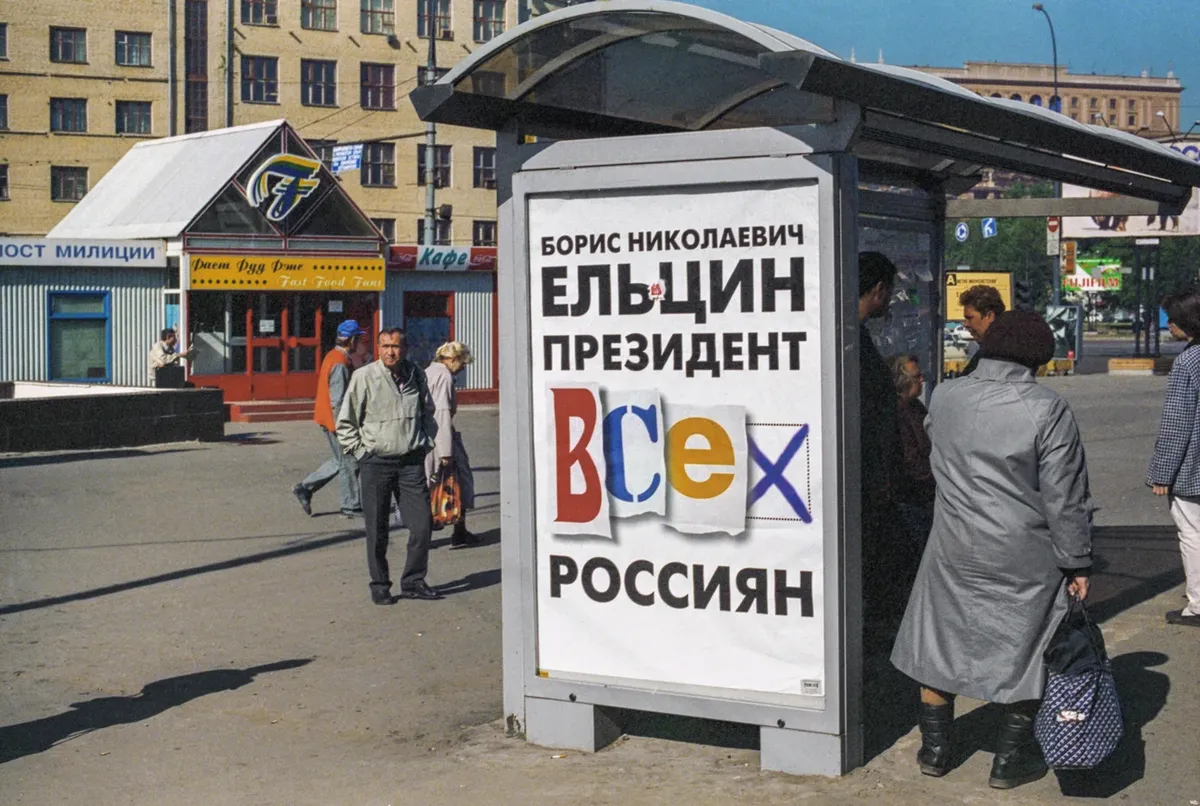
It was then that in parallel with the dreams of the “Russian Pinochet” (which supposedly successfully carried out economic reforms in the post -communist chile) spread “statehood”. But from the very beginning there was a focus with changing clothes: for the “masses” this flag meant restoring order with a “firm hand”, and for the elites this empty, in fact, the formula served as an justification for their retreat from the ideas of democracy and the legal state.
The split among the “Russians”, meanwhile, was not eliminated, and in Chechnya in 1999 the war flashed again.
A collective request for “Order” - along with the private request of the “Yeltsin family” for the inviolability of her interests - caused a figure of a statesman who came from nowhere to life.
***
One of the first slogans of Putin, which he proposed to voters in February 2000 in the status of acting President, there was a "dictatorship of the law." In legal science, such a concept had not yet been found, but it soon became clear that it was a Russified alternative to Rule of Law, that is, in the adopted translation, a legal state.
The abandonment of the doctrine of the state related to their own laws and the constitution not only meant the establishment of government officials, but also turned out to be a choice for citizens: it turns out - either the state, or law.
The majority convinced by the failure of the democratization of the 90s chose the state, and the right began to gradually fade away like light in the theater.
We can now trace this dynamics of the “relay” by legislation and judicial practice: the laws adopted are increasingly distant from the Constitution to the part that guarantees rights and freedoms, and judges and “security forces” (by the way, self -summarization, which was made in politically at the same time as “statehood”), were increasingly focused not even on the laws and “statesmen”, that is, their own.
In the Russian Monograph, the author Emilio Gentile, the term “totalitarianism” came up with Benito Mussolini, who has just been released in the monograph “fascism”. Of course, it is unlikely that it is possible to establish this, but even if he only picked him up, it still explains a lot. "Totalitarianism" promises the integrity and consistency of society (nation). Plato had been dreaming about this, expelling from his ideal state of poets, and for the split nation of the “Russians”, as we showed above, the threat created by this split was, repeating the recent words of the president’s press secretary, “existential”.
The guideline of totalitarianism was declared in the name of the United Russia party at its creation in 2001. The authorship of this brand is attributed to Vladislav Surkov, at that time the deputy head of the presidential administration; In any case, he later created the youth movements “ours” (yard version of “youth unity”) and “local” (village version). In unity as such, there is nothing wrong either,
But if the desire for it does not acquire paranoid forms of cleansing from “enemies”, when “ours” are read as a call “to wet not ours”.
In the minds of the president, as in the administration around him, apparently, the authoritarian beginning fought with the democratic, to which he first wanted to correspond at least externally. But authoritarianism, nourished by Soviet single -partyism, and in itself has a tremendous inertia: step by step, especially after the well -known “castling” and the protests of 2011-2012, which never hid its plans, began to turn to violence, the establishment of compulsory unanimity and acquire the features of totalitarianism, although under the cover of “statehood” the majority The frogs did not immediately realize that they were boiled.
There could be another head of the consistent steps to turn the regime from authoritarian into totalitarian, starting from the capture of NTV in 2001 and ending (so far) by the introduction of criminal liability for words in 2022. But the readers of the "New" know this story, and we need to return to the main topic of legitimate violence.
Russia for the lack of institutions of representative office has never been a country of consent, but if Westerners and Slavophiles at the court in the 19th century or “solid Leninians” and supporters of socialism with a human face in the Politburo in the XX still coexist,
then the adherents of “statehood” and adherents of the doctrine of human rights within the framework of the same state in the 21st century could not get along: or - or.
Having usurped violence, which gradually ceased to be only legitimate, the statesmen declared their opponents “foreign agents” and actually put them outlawed: dissenters have no chance of getting positions in public service; They risk strongly, accepting any foreign financing; Using electoral legislation and the CEC as instruments of coercion, they were deprived of almost any political representation; their public actions are prohibited; Media is closed under different prepositions; Concerts and performances of their favorites always break “unidentified” gopniks;
They are increasingly undergoing administrative and criminal repressions.
***
“A real man should always try, and the real girl is to resist,” the president of journalists taught in 2004. We are interested in the resistance of state violence by society and the intelligentsia that remains in its bosom, which is somehow preserved in its bosom, on which the burden lies to comprehend its permissibility and limits.
The problem of violence (coercion) in history and right is extremely complicated and far from new, it is undoubted only that it cannot be approached from naive positions, limiting himself to the assertion that violence is evil. Perhaps often it is the smallest of evils or even the necessary evil, although violence does not become good from this.
The question of violence is important not only for citizens (how, to what limits and what for the sake of coercion to endure), but also for the head of state, legislators, judges, and so on, up to the last riot police, an employee of the house management or kindergarten teacher. What is the legal and moral basis of them - including involuntarily or under the pretext of circumstances - coercion?
This is the question of the legitimacy of power . The answer to it every time and every day, depending on changing circumstances, has to be sought again. It arises with such constancy that before the answer acquires certainty at the level of legal awareness, it cannot but be worked out on a higher floor of theory and ideology. The problem, however, is
What if from the speech of the Secretary General of Brezhnev it was possible to draw practical conclusions that the next five -year plan would be allowed and what is not, then President Putin about humanization, as practice shows, does not correlate with it in any way.
And lower officials, if they reflect on this topic, the results, except for the waves of the purgia about the death penalty, from time to time rushing along the State Duma, prefer to keep with them.
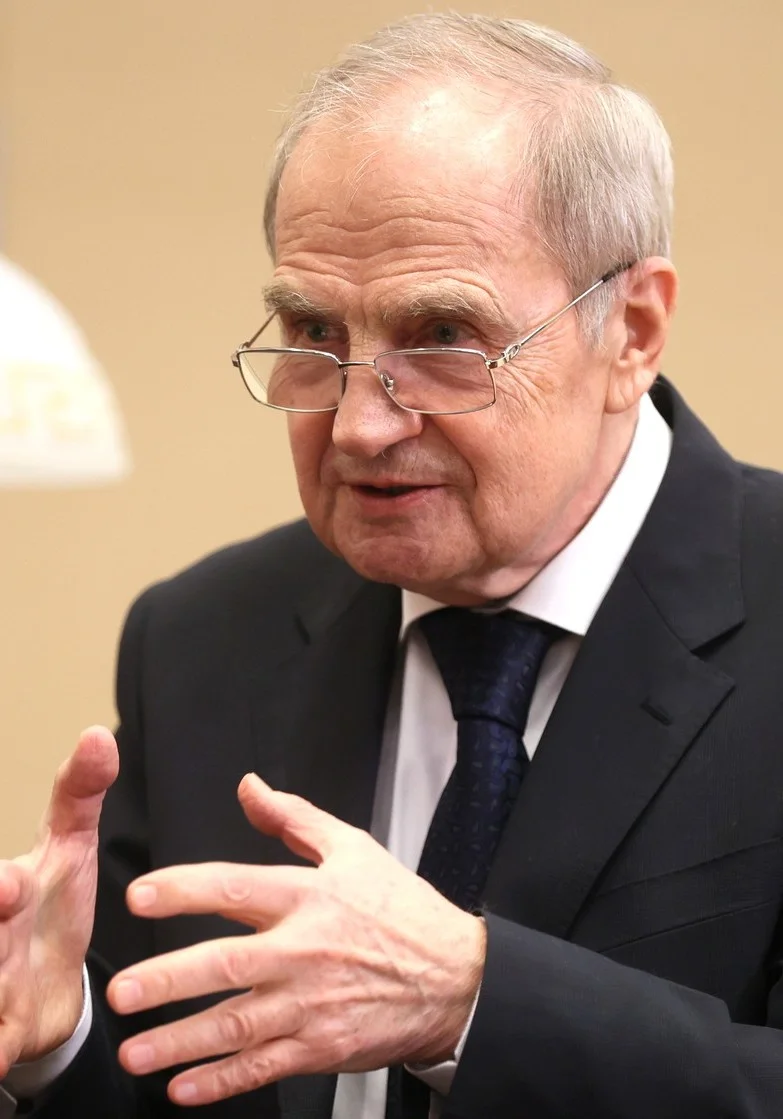
The only one who allows himself (or allowed him) to publicly theoretically theoretical is the chairman of the Constitutional Court, the professor and theorist of law Valery Zorkin, whose articles are regularly published by the “Russian newspaper”. This, apparently, is done without editing, and some guesses about his views, which are probably shared by other senior officials, can be done.
In the latest lecture as part of the St. Petersburg International Law Forum at the end of June
Zorkin, justifying the legitimacy of a special operation in Ukraine, contrasted a certain “law as equality in freedom” with a “Western legist approach”.
In the texts of the lawyers, this formula is rare, which allows you to easily find its author: this is the name of one of the books of Ronald Dvorkin, a recognized theoretician of law, Professor Oxford and Harvard, who died in 2013.
Directly to the US citizen, Dvorkina Zorkin, apparently, did not want to, but it was his doctrine - the right as the interpretation of judges of precedents (for the USA) or the norms of the law (for Russia) on the basis of traditions and morality - he develops. This is a very solid theory, but “what is good to the Russian, then the Germans are death” - it is important what the tradition consists of or how it is constructed. By traditional Russian morality, Zorkin understands the same “statehood” and community. He, as it were, leaves the question of violence below the waterline of the state ship, arguing that the right (and means coercion) is suitable only for lack of the best, this is not such a good “screening” as the tradition that prevailed in Russia “for thousands of years” and continued by the Bolsheviks. In an article in the “RG” of September 29, 2014, for example, he expresses the idea,
что крепостное право в 1861 году было отменено преждевременно, так как играло роль «скрепы» в Российской империи, — вот так добрый царь и создал предпосылки для революции.
Большевики, впрочем, в этой логике скоро восстановили «скрепу» путем коллективизации.
В отличие от президента, несколько раз ссылавшегося на Ивана Ильина, Зорькин его не называет, но влияние этого философа в текстах в «Российской газете» угадывается. Ильин точно таким же маневром уклонялся от прямого вопроса о насилии, развивал концепцию государства как «органа добра», обязывающую всякого русского человека, умеющего «чутьем к совершенству» различать зло, бороться с ним путем «заставления». Такое принуждение служит добру, хотя само им не является. Эту «понуждающую любовь» Ильин, юрист по образованию, считал сердцевиной правосознания русского человека, обреченного ею на «безрадостный и мучительный подвиг».
Постеснявшись сослаться на Дворкина и Ильина, Зорькин прямо называет другого «выдающегося философа и юриста, идеи которого становятся все более актуальными», — Карла Шмитта. Шмитт известен тем, что первым отчетливо сформулировал доктрину «политической теологии», согласно которой все политические понятия являются секуляризованными заимствованиями из религиозного набора. Он классически описал «политическое» как сферу, где «определяются друзья и враги», и основательно критиковал право как систему слишком общих норм, никогда полностью не соответствующих конкретным ситуациям. Не в восторге он был и от парламентаризма за его тягомотину, мешающую исполнительной власти сразу отвечать на возникающие вызовы. Исходя из этого, он
обосновал концепцию «суверена» как лидера, имеющего достаточно воли к власти, чтобы отменить глупое верховенство права и установить более достойное энергичной нации чрезвычайное положение.
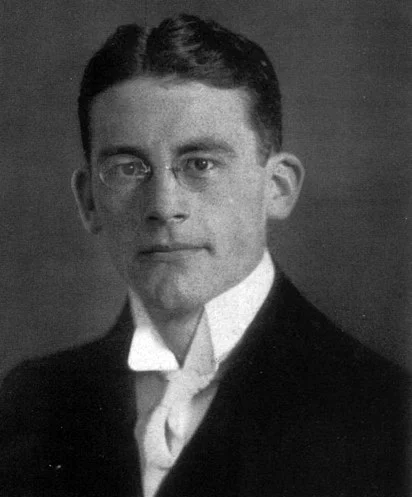
Шмитт — в самом деле выдающийся правовед и философ, а его критика права и парламентаризма сегодня действительно актуальна в связи с ускорением течения истории, когда органы представительной демократии оказываются подчас слишком медлительными. И Зорькин вправе, конечно, иметь любые взгляды на право, но в роли председателя КС он бы выглядел убедительнее, не высказывая их публично. К тому же он забыл предупредить слушателей юридического форума, что Шмитт был еще и «коронованным юристом Третьего рейха» (Ильин, впрочем, тоже, находясь в эмиграции в Берлине, приветствовал приход к власти в Германии Гитлера).
В нашу задачу сейчас не входит спорить ни с Ильиным, ни даже с профессором Зорькиным. Мы лишь стараемся понять образ мысли тех, кто принимает решения о судьбах российского государства.
***
Термин «фашизм» отсылает к «фасциям» — перевязанным пучкам прутьев, которыми вооружались ликторы — телохранители и исполнители указаний высших должностных лиц в древнем Риме, тогдашние «силовики». Аллегория вполне прозрачна: сила — в единстве, и в этом смысле слово «фашизм», исторически нагруженное отрицательными коннотациями, в чем-то тождественно более нейтральному «тоталитаризму».
Расовый мотив в фашизм привнес Гитлер, демонизировав евреев в «Майн Кампф» ( работа справедливо признана в России экстремистской ). Муссолини был вынужден согласиться с ним относительно нежизнеспособности для сражающегося тоталитаризма никакой иной идеологии, кроме нацизма, лишь к концу 30-х годов прошлого века, но опоздал: на фоне военных поражений 1940–1941 годов и разгрома итальянских союзников в 1943-м смерть Муссолини, которого поставили к стенке партизаны, была лишена сопутствующего всей его деятельности пафоса.
Отдельные приметы фашизма в культуре еще не складываются в фашизм как режим, в наборе которого все исследователи выделяют еще один необходимый элемент: признак «движения». Чтобы стать «Движением» с большой буквы или даже «движухой»,
эта идеология должна приобрести массовость и известный градус самопожертвования — сопровождаться романтизацией героической смерти, гибели «во имя», в первую очередь — вождя, олицетворяющего собой все, что есть хорошего.
Действующие власти, как догадываются многие избиратели, гедонистичны, а основная «движуха» тоже наблюдается в основном на диване. На этом основании существующий режим есть некоторые основания считать тоталитарным, но заходить дальше, на мой взгляд, оснований нет. Думаю, с этим согласятся даже критики властей справа, считающие, что денацификация соседней страны производится недостаточно решительно.
Идеи тоталитаризма в своей простоте очень заманчивы, они присутствуют в любом обществе в открытой или латентной форме и в этом смысле образуют какую-то часть общественного мнения и правовой культуры. В странах современной западной демократии почти повсеместно легально действуют крайне правые партии, которые если сами и не называют себя фашистскими, то по сути такими являются. Там, где есть свободная пресса и свободные выборы, в представительных органах есть и кому с ними спорить.
Фашизм как идеология представляет угрозу прежде всего там, где такие партии не только законным образом приходят к власти, как это было и со сторонниками Муссолини и Гитлера, но и затем,
используя исторические обстоятельства, монополизируют власть и соответствующим образом реформируют институты государственного принуждения.
Наиболее ценную часть обширнейшей литературы о фашизме представляют собой работы тех, кому не посчастливилось лично с ним столкнуться, но посчастливилось остаться в живых. Это в первую очередь немцы или успевшие эмигрировать (а некоторые затем и вернуться) немецкие евреи — Карл Ясперс, Ханна Аренд — и представители «Франкфуртской школы»: Эрих Фромм, Теодор Адорно, Макс Хоркхаймер и другие.
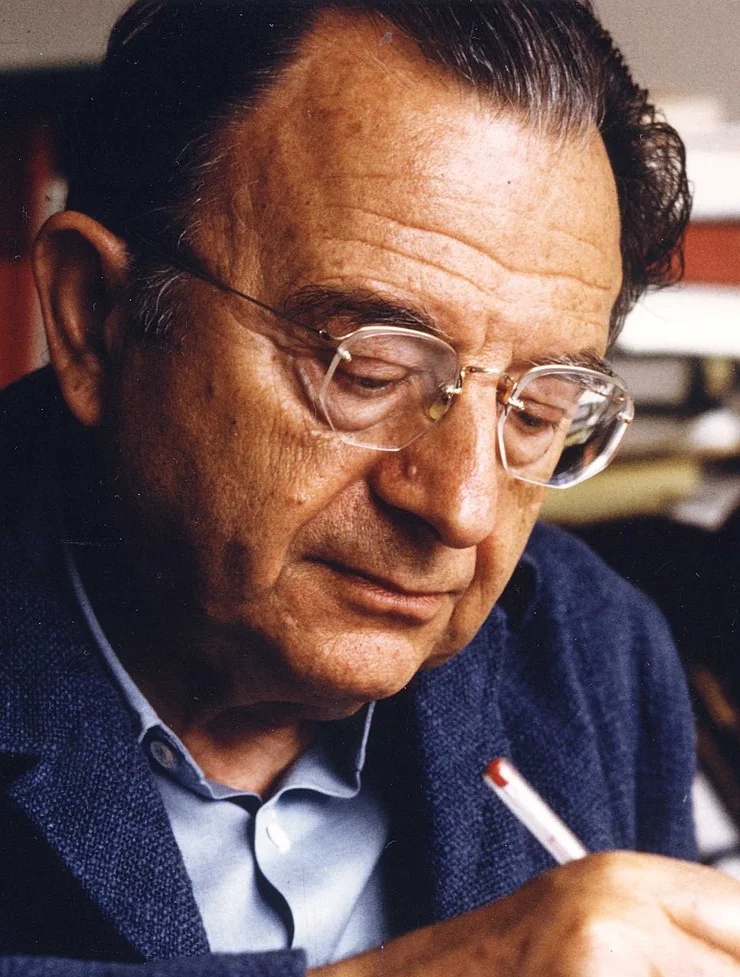
Этих философов и социологов занимает не столько государственное устройство фашистского режима, с которым теоретических сложностей нет, и даже не столько его идеология, сколько отношение к насилию «масс», которое делает возможным его временную победу. Фромм первым сформулировал понятие «авторитарного характера», описав его в терминах «Бегства от свободы» (это название его книги, вышедшей в 1940 году), а Адорно после войны инициировал в США громоздкое «исследование авторитарного характера», фундированное двумя тысячами хитро составленных опросных листов и шкалами корреляций. Его итоги подробно описаны, но мне кажется, что сам подход со стороны правосознания, а не права, был важнее, чем результат, оказавшийся довольно предсказуемым: «авторитарные личности» показали свою склонность к почитанию власти, иррационализму и предрассудкам.
Мне кажется более проницательной Ханна Арендт, которая в вышедших в 1951 году «Истоках тоталитаризма» в качестве его главного признака указывала на политический террор, но в позднейших работах перенесла акцент на конформизм общества, которое не сразу, но все же приняло этот террор как должное. Вот что она пишет в этой связи: «Нас деморализовали не действия врагов, а поведение друзей». Сегодня мы можем ее понять: Киселева в телевизоре можно и выключить, но нет зрелища более поучительного и тяжкого, чем Элла Памфилова, пришедшая к президенту с брошкой в форме известной буквы латинского алфавита.