
Translated material
Sushi diapers
Japanese goods are swept away from Russian counters
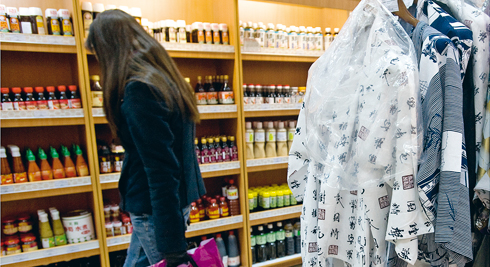
Sushi diapers. The echo of the tragedy in Japan has reached the Russian consumer market. Fans of Japanese cars, food and diapers in alarm: they are afraid that new parties of the usual product can be radioactive. Whether fears are justified, - the New Times found out “Usually we buy the son of Japanese diapers of Merries - they are thin, soft, there is no feeling of synthetics,” says Muscovite Valentina Savina, mother of the one -year -old Dima. “A package of 36 pieces costs 790 rubles, but the quality is worth it.” However, finding your favorite diapers for Valentina is now a problem: the online store in which she always bought them sold its reserves three days after the earthquake. And then he hung an ad on his website for excited parents: rumors about the receipt of “radioactive diapers” to wholesale and retail Russian networks are not true - Japanese diapers are delivered by sea and railway to Russia for 2.5-3 months. “This means that the diapers made in Japan after the disaster on March 11 will arrive at our warehouse earlier in June,” the leadership of the online store explains.
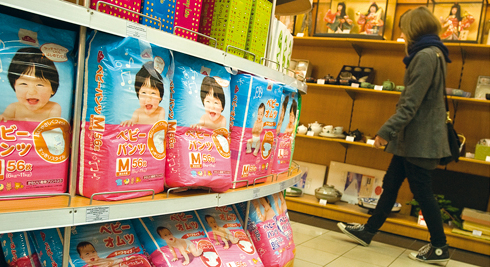
Japanese diapers in Moscow stores are in high demand
“After this explanation, customers call the customers every minute,” complains
Vitaly Kayunchin, General Director of Quiel LLC. According to him, if earlier they took 3-4 packages of diapers, then after March 11 they began to buy them actually wholesale, 50-60 packs: “They scored so much that the grandchildren were enough,” Kayunschin grins, although he is generally not laughing: “I will foresee that we will work out for 1-2 months-and close. At least for the summer. The people are afraid now, and what will happen next, you can imagine. ”
Strategic sauce where is such a panic from?
Alexander Shapochkin, an expert at the Institute of Problems of Safe Development of Nuclear Energy of the Russian Academy of Sciences, believes that the radio fobe of Russians has a historical reason: “In many ways, it is motivated by the fact that we were not told the truth during the Chernobyl disaster.” However, in the case of Japan, such fears are groundless, the expert is sure: according to him, after the tragedy of Hiroshima and Nagasaki, the Japanese began to take radiation safety very carefully - and now its norms in Japan are several orders of magnitude tougher than in Russia, and to a large extent are “reinsurance”. For example, a food product, according to the Russian sanitary norm, should give the background no more than 0.2 microsiverts per hour, and in Japan this threshold is already considered dangerous to health.
However, it is difficult for the Russian consumer to push this. “The reserves ended already a week after March 11,” shrugs his hands
Olga Davydova, director of the Moscow online store "Sakura". - The sauces were dismantled, algae, even the Japanese chewing chewed. We now do not know what to say to customers. ” The excitement is explained simply: customers understand that the assortment that is available now was made until March 11, which means that it is completely safe. “And in a few months the situation will be the opposite,” says Davydova. “People will begin to be afraid of Japanese products.” In this case, they decided to buy their own dosimeter here - to check all the goods from new supplies. “We trust our suppliers, but it’s better to be safe,” the director explains. “We ourselves want to be absolutely confident in our product.”
A
Valery Andreev, General Director of Japro LLC (Moscow), has already acquired a dosimeter - in case the buyers of its Japanese supermarket will have doubts about the safety of the goods. “The distrust of the population will only be strengthened further,” Andreev predicts. “Our buyers frankly say: we’d better take more now, firstly, out of fear that this product will no longer be, and secondly, because they doubt the safety of the following parties.” 17 years ago, “Japro” was discovered for the Japanese living in Moscow, but gradually the supermarket has become so popular among Russians that today they make up 60% of its buyers, and the Japanese themselves are only 30%, the remaining 10% are Americans, Europeans and other foreigners.
All of them today buy sauces, seaweed, confectionery. According to Valery Andreev, there is still some stock of goods in the warehouses: the one that came to Russia “before Fukushima”. But soon it will end, so Japro decided to organize a trial airline on the noodles, dry soups of Miso and sweets. The deliveries of airplanes had never been practiced here before, so they decided to take a chance of a small amount - $ 7 thousand - and now they expect a load with some anxiety: “We, of course, excluded the goods produced in prefectures for whose production there is a ban
* * Rospotrebnadzor imposed a temporary ban on export in the Russian Federation of food products produced in the period after March 11 in the prefectures of Ganm, Fukushima, Chiba, Ibaraki, Nagano and tochigi. - explains Andreev. “But if an increased background is determined at the customs, our cargo simply will not miss.”
Applicants are immediately on the released niche: according to the director of Japro, products, authentic Japanese, are produced in the USA, Germany, Holland - for example, the last Japanese factory for the production of popular soy sauce Kikkomman operates. And in the Sakura online store there are only 10-15% of the assortment of seafood, which are used for the preparation of land and rolls-Japanese origin.
* On March 31, the Rosselkhoznadzor announced his intention to introduce a ban on the supply of fish and fish products from more than 200 Japanese enterprises. Everything else is from Taiwan, Indonesia, China. “It is more profitable to carry this product from China - it is high -quality and inexpensive compared to Japanese,” explains Olga Davydova. “In addition, many rolls that love in Russia were invented in America, which means that products are not at all Japanese products.” For example, Roll "Philadelphia" requires the same -name cheese of German production and Norwegian salmon.
In anticipation of mermaids , it is interesting that in Primorye, where the strict Japanese radiation safety standards are well aware of, panic, like Moscow, is not observed: neither diapers, nor popular Japanese cosmetics, nor household appliances, nor products from the “Japanese” departments of supermarkets from the counter have not disappeared. There is neither rising prices for them, nor excitement demand. In the Migumi store (Vladivostok), specializing in cosmetics and household chemicals, they said that the products come to them from the prefectures of Japan who have not suffered from the blows of the elements - this even says a special announcement. The network of Vladivostok supermarkets Red Mart reported that Japanese foods were purchased a few months in advance, so if the deficit arises (including due to the embargo introduced by Rospotrebnadzor), then only closer to summer. This was confirmed by ionizers and air humidifiers from Japan in Vladivostok.
"
Radiation safety standards in Japan are several orders of magnitude tougher than in Russia
"
So far, only some domestic goods are used in Primorye - individual dosimeters and the drug "Yodomarin", which local residents bought up for preventive purposes. There were no cases of import of radioactive “surprises”. Representatives of Rospotrebnadzor assure that they are thoroughly checked by the level of radiation radiation from everything that is imported from Japan - and products, cosmetics, and even car spare parts.
Perhaps the only area where the consequences of Japanese events have already directly influenced the market situation is the import of used cars from Japan to Russia, which turned in the Far East into one of the key industries
* According to official figures, the Vladivostok customs in 2010 issued more than 73 thousand cars imported from Japan. . A huge number of cars prepared for Russia were damaged by earthquakes and tsunami. This may, firstly, cause interruptions in the supply of second-hand to the ports of the Far East, and secondly, to lead to the emergence of a large number of "tops" on the Russian market, the Vladivostok entrepreneur Yevgeny Balashov warns. Topyaki, or mermaids, in the Far East are called machines that fell under the influence of sea water due to a typhoon or tsunami. Often, such cars have electronics problems, in addition, their body is most susceptible to corrosion.
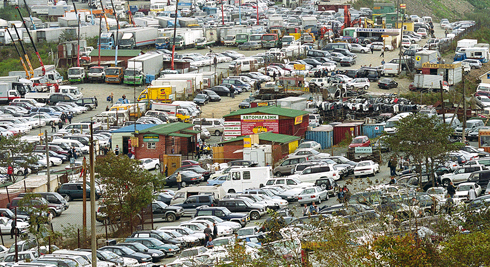
The Vladivostok car market "Green Corner" is filled with Japanese cars. The accident at Fukushima has not changed anything yet
It is possible that these fears are exaggerated: according to reports from Japan, the cars affected by the tsunami in the mass order go under the press. But some auto commercials of Vladivostok reacted to the news quickly and raised prices for their already customs -made cars by an average of $ 1-2 thousand. In addition to the "tops", many are afraid of "phoning" cars to Vladivostok. Therefore, the most entrepreneurial sellers now indicate in their ads the exact date of the bring of a particular car. At the same time, in the Far East, many fear that the Government of the Russian Federation will have a new reason to ban the import of right -hand drive cars into Russia
* In January 2009, the Government of the Russian Federation planned to introduce a ban on the import of cars with the right -wiping "age" over 5 years. Faced with mass protests in the Far East, he abandoned this idea, replacing the ban on increased duties. .
However, in the Far Eastern Customs Administration it is assured that all imports are carefully checked for radiation: customs posts are equipped with amber radiation control systems, customs inspection inspectors also have personal devices. As for the stopping of the production process at a number of Japanese car factories, it can only cause very distant consequences for the Far East due to the fact that not new, but used cars (mainly “passing” age from three to five years) will be taken to the eastern Russian ports. In the worst case, the car market experts are predicted, the place of used “Japanese” in the Far East will be made by cars assembled in Korea and China.
“There is no reason to consider Japanese goods infected, but the market is arranged hard: if there is the slightest opportunity to leave a competitor overboard, it will use it,” says it, ”he says
Peter Shelishch, Chairman of the Union of Consumers of Russia. He does not exclude that fears for Japanese goods can be artificially warmed up, and calls the population to sanity: “The penetration of infected products from Japan is unlikely. There is a rigid export radiation control. In addition, the country, of course, is not interested in scandals associated with the supply of radiation dirty goods. ” Peter Shelishch proposes to refrain from radiophobia: “On March 30 it was reported that in Primorye they found the presence of radioactive iodine in a concentration of more than 100 times lower than the permissible level. If with the same thoroughness they measured the level of radiation in Moscow, they probably would also have found something like that. ”